
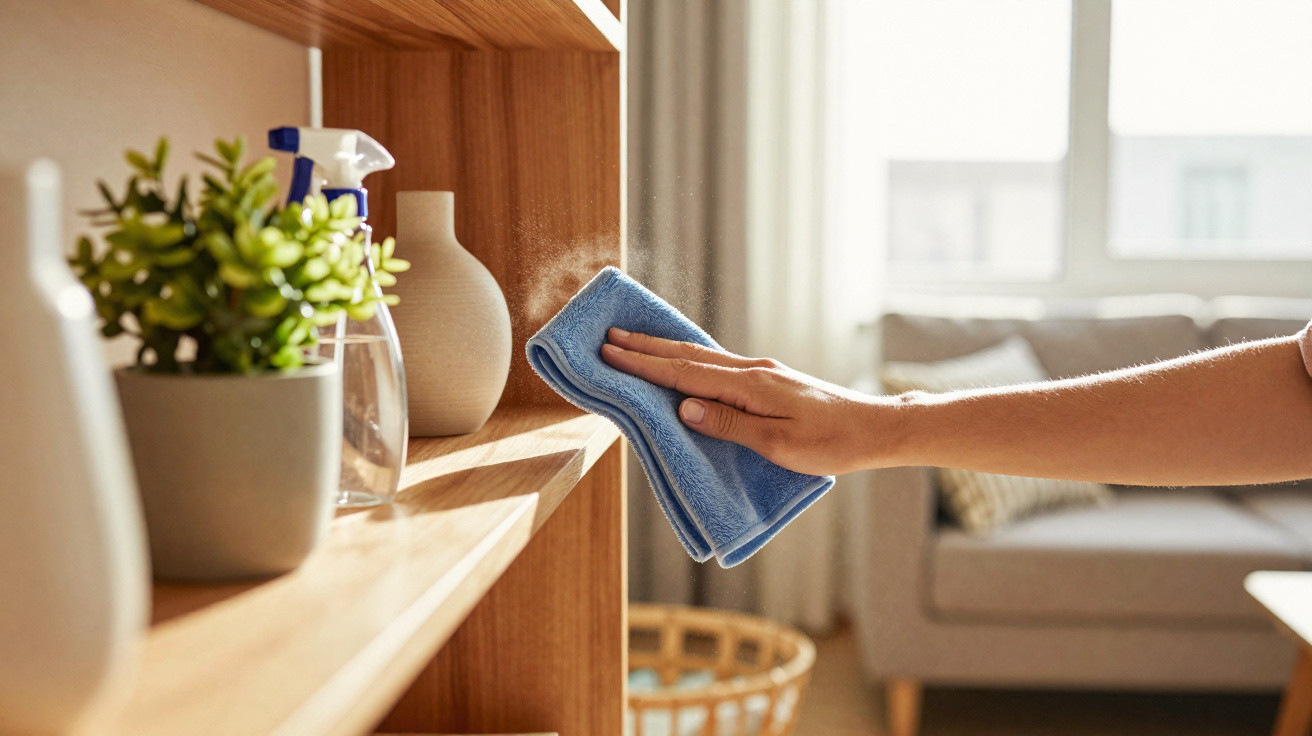
The TV stand gleamed, the coffee table sparkled, and the grey shelf carried the kind of “just cleaned” sheen usually reserved for magazine pages. She took a quick picture for her sister, threw the cloth into the laundry basket and headed to work with the modest, satisfying pride that comes with a neat home.
That night, she set her keys down on that very same coffee table… and stopped short. In the gentle lighting, a dull layer had already returned to the surface: tiny grey specks and a faint coating. Dust. Again. As though the room had grown old within a few hours.
She ran her hand over it, increasingly irritated. Was the flat cursed? Was the road outside too polluted? Or was an unnoticed part of her cleaning routine inviting the dust straight back, over and over again?
The cleaning gesture that makes dust come back faster
Watch somebody “quickly dust” their living room and the pattern is usually familiar. With a dry cloth, they race between surfaces, pushing, flicking and swirling as they go. The priority is speed rather than technique. Dust catches the light, vanishes briefly… then settles silently elsewhere.
It appears productive at first glance. The shelf looks brighter, the TV stand seems less drab and the piano lid no longer looks chalky. Yet the air in the room is now full of micro-particles. A dry wiping motion does not take dust away: it sends it airborne. And anything sent upwards will eventually fall again.
The rebound is especially harsh on black furniture and glass. Within twelve hours, the same grey coating can be back, sometimes looking even worse. It is not necessarily because your home is dirtier than most, but because this everyday habit repeatedly circulates the same dust.
One Monday morning in a London flat, I watched a friend do a “speed clean” before visitors arrived. She picked up an old, entirely dry cotton T-shirt and went at the TV unit as if she were buffing a car. The material squeaked over the screen, speakers and remote control. Small clouds rose into the strip of daylight beneath the curtain.
She was done in ten minutes and pleased with how quickly she had worked. Two hours afterwards, as the kettle came to the boil, she looked puzzled. A pale haze of dust had already formed on the TV stand, particularly around the soundbar. The glass coffee table was no different. The room looked as if it had been left untouched for days.
This is far from unusual. A 2019 UK consumer survey found that nearly 7 out of 10 people “mostly dust with a dry cloth or feather duster.” They were not using a specialist tool or a damp technique, but simply whatever soft item was close by. It delivers an instant impression of cleanliness, followed by a quietly disappointing result the following day.
There is a straightforward reason this “fast dry wipe” approach fails. Dust contains a mixture of skin flakes, textile fibres, hair, soot, pollen and cooking residue. Moving a dry cloth across a surface creates friction that splits bigger particles into finer ones, leaving them lighter and more likely to remain floating in the air.
Static electricity makes matters worse. Dry rubbing produces a small electrical charge. Rather than capturing the dust, the process can charge it and propel it away, ready to settle on the nearest screen, shelf edge or framed photograph. The room improves for a moment, but its air remains laden for hours.
Certain materials are particularly effective dust catapults. Old T-shirts, paper towels and fluffy feather dusters shed fibres of their own while supposedly cleaning. What seems like removal may actually be addition. The habit feels productive, but the physics behind it quietly sabotages your effort.
How to dust so it doesn’t come back in 24 hours
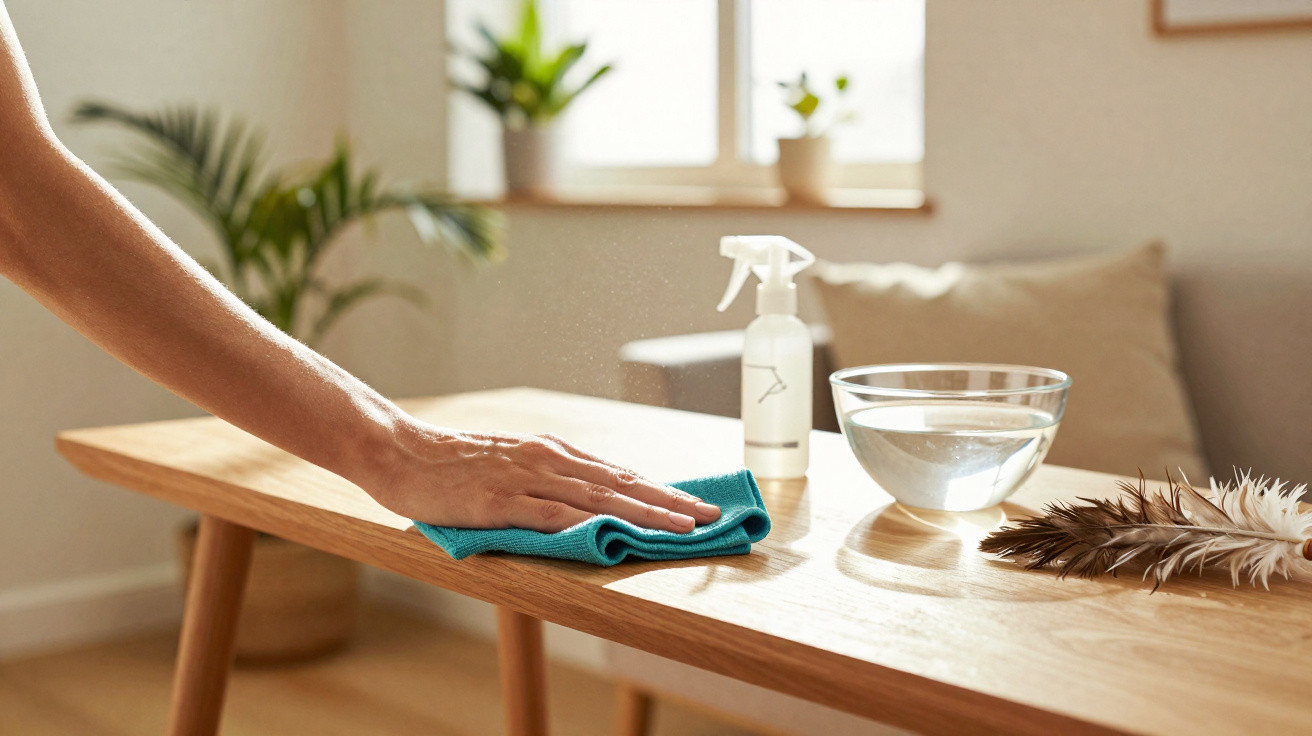
The solution is remarkably simple: stop wiping dry. Use techniques that capture dust instead of redistributing it. Choose a slightly damp or electrostatic method, not a soaking-wet one. A microfibre cloth misted lightly with water or a mild cleaner collects particles and keeps hold of them.
Adjust the order of your cleaning too. Begin at the top and work downwards, moving steadily rather than in frantic zigzags. Tackle the ceiling fan, high shelves, frames and screens before moving to lower furniture. The aim is to give dust a single route downwards… and a single opportunity to be collected. It is the calm opposite of the instinctive “quick wipe”.
For households with allergies or pets, pairing a damp microfibre routine with a vacuum cleaner that has a HEPA filter can alter the feel of a room in under two weeks. There is less unseen dust drifting through the air and less sense that the home has become “re-dirty” by morning. Your eyes tend to register the change before your mind does.
Let’s be honest: hardly anyone manages this every day. Most of us clean whenever time allows, rather than following an ideal schedule. That makes small changes to the way you clean more valuable than expensive equipment that gets used twice. The least helpful choice is keeping the old dry cloth in service simply “because it’s there”.
A common mistake is using the correct cloth… incorrectly. Microfibre performs properly only when it is clean and slightly damp. Once filled with dust, it turns into another tool for spreading it. Use two or three cloths during one session rather than depending on one tired square of fabric from beginning to end.
Another regular error is applying cleaning product directly to furniture. This can leave behind a tacky residue that attracts dust more quickly, particularly on glossy finishes. Spray the cloth instead of the table. Surfaces will remain smooth for longer, while avoiding the strange streaky appearance that can develop on TV screens and piano tops after several cleans.
“Dusting is less about owning the perfect spray and more about respecting the way dust moves. Change the movement, and you change the result,” says a London-based professional cleaner I interviewed after watching her work in a flat with a serious dust problem.
On a fridge door, she made three distinct movements in two minutes: a damp wipe from top to bottom, a swift pass around the rubber seals and then a dry polish on the handle alone. Each action served a clear purpose. There were no large, random circles and no repeated back-and-forth strokes over the same area.
- Replace dry cloths with damp microfibre on every flat surface that you dust more than once a week.
- Start at the highest point and work down, then vacuum the floor with a HEPA vacuum within 30 minutes.
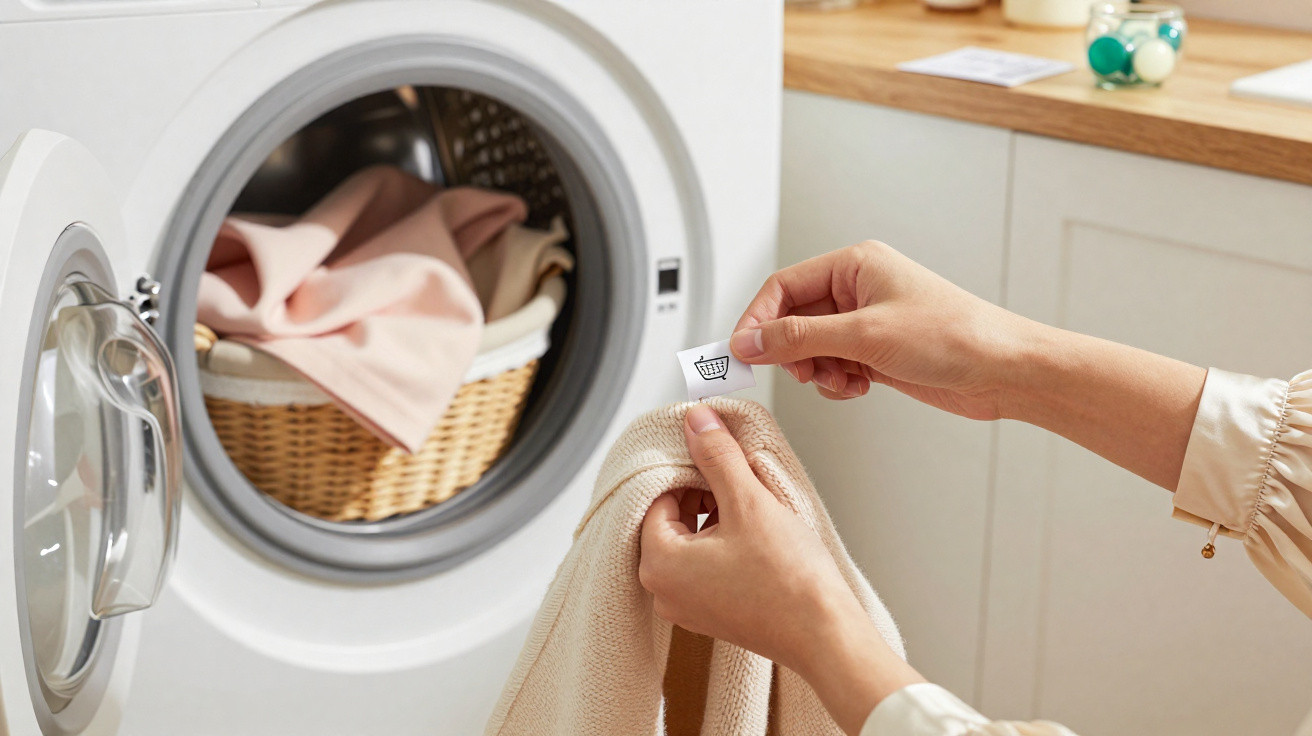
- Wash microfibre without fabric softener to retain its “grab” rather than turning it into a dust skater.
Living with dust without feeling like you’re losing
Dust does not ever completely disappear. It comes in on clothing, drops from hair and enters whenever a window is opened. The goal is not a showroom; it is a home that does not seem to return to “dirty” just 24 hours after cleaning. Giving up this dry-wiping habit can quietly transform how a room feels.
On a shelf cleaned weekly with damp microfibre, dust returns more slowly and less noticeably. After several days, you may see a light veil rather than an obvious film after only one day. The contrast is especially stark on screens and black furniture. Repeating the same measured action establishes a different baseline: less annoyance and less of the “why do I even bother?” feeling.
There is also a deeply human aspect to this: how we feel about the effort we put in. During a hurried Sunday, chores can become a sprint, only for us to resent the house when it fails to stay flawless. Altering one habit is a small, almost unexciting change. Still, it lets your work last longer. On an exhausting evening, that can mean more than any miracle-spray advert.
| Key point | Details | Why it matters to readers |
|---|---|---|
| Dry dusting sends particles into the air | Rubbing with a dry cloth or feather duster breaks dust into finer particles and lifts them into the air, where they can drift for hours before settling on nearby surfaces once more. | This explains why shelves, TV stands and glass tables can appear dusty again the next day, even when you feel you have “just cleaned everything properly”. |
| Damp microfibre captures dust | A lightly moistened microfibre cloth uses its tiny split fibres to collect and retain dust, pollen and pet dander, rather than transferring them from one place to another. | It offers a practical method for cutting visible dust and allergy triggers with one action, without costly cleaning products. |
| Cleaning order affects dust build-up | Cleaning from high to low, then finishing with a HEPA vacuum on the floor, prevents dust from resettling on furniture that has just been wiped. | Each clean lasts longer, meaning less time spent repeating the same job while the home stays fresher between sessions. |
FAQ
- What exactly is the bad dusting habit? It is the automatic habit of wiping surfaces with a dry cloth, old T-shirt or feather duster and calling it “dusting”. This mainly lifts and disperses dust into the air instead of properly taking it out of the room.
- How often should I dust if I use a damp microfibre cloth? For most homes, cleaning the main surfaces once a week is sufficient, with an additional quick pass over screens or black furniture where you spot build-up. Homes with pets or allergies may benefit more from two brief sessions than one lengthy clean.
- Can I just use paper towels instead of microfibre? Paper towels often push dust around and may release fibres, neither of which helps with longer-term build-up. Microfibre is made to capture and hold fine particles, so it makes a more noticeable difference with less work.
- Is it bad to spray furniture polish directly on the surface? Applying polish straight to furniture can leave a sticky layer that draws in dust faster, particularly on dark or shiny pieces. Spraying it onto the cloth first creates a thinner, more even coating that does not catch every particle in the room.
- What if I don’t have a HEPA vacuum? You can still make improvements with a standard vacuum, followed by a slightly damp mop on hard flooring. A HEPA filter is useful for allergies, but the greater benefit comes from avoiding dry dusting on furniture in the first place.
Comments
No comments yet. Be the first to comment!
Leave a Comment