
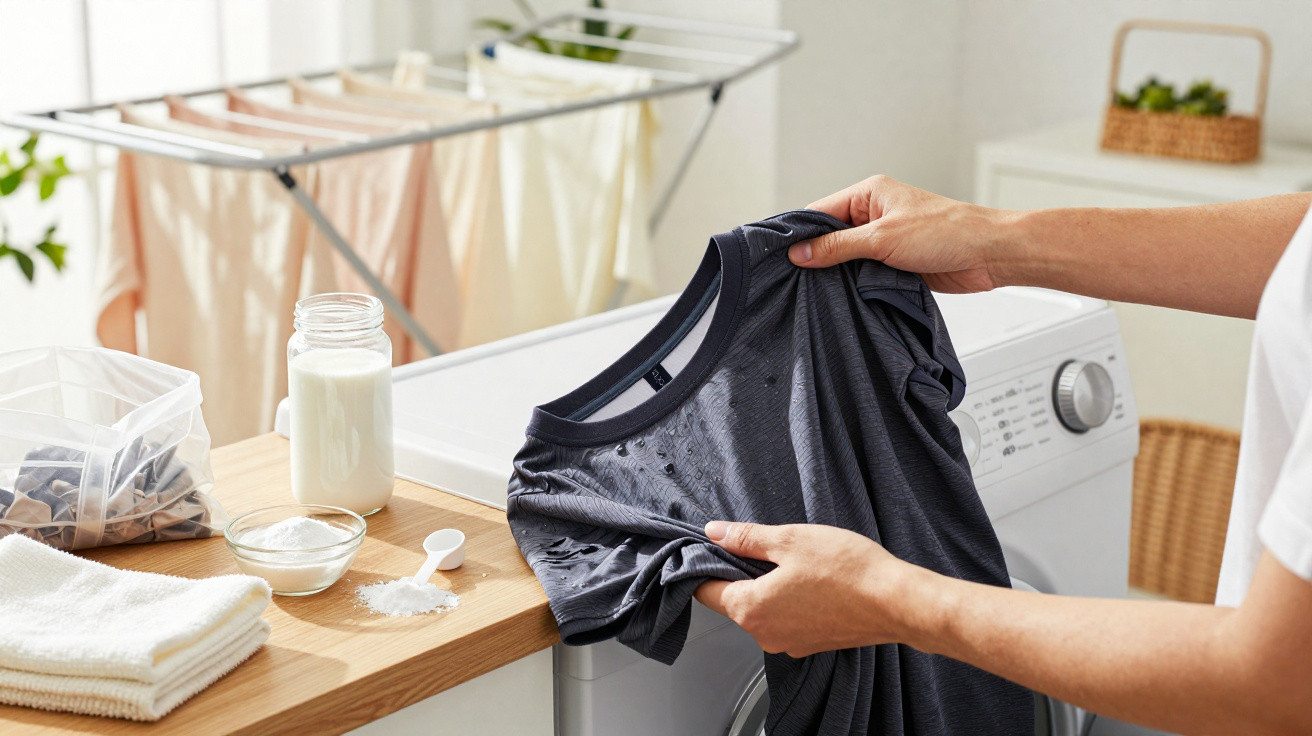
The T-shirt emerged from the washing machine warm, soft and carrying a light scent of lavender detergent.
Ten minutes later, as it hangs on the airer, the reality returns: that persistent sour trace of sweat lurking in the underarms. You smell it once more. It is clean and funky at once. How can that happen after an entire wash cycle?
In the gym changing room, someone fans the air beneath his nose and jokes about his “cursed” running kit. Elsewhere, a mother washes the same leggings for a second time, yet still avoids putting them anywhere near her face. Certain garments seem brand new after every wash, while others appear to preserve a record of every sticky commute and stressful meeting - a scent diary that refuses to disappear.
It is easy to blame the detergent, the washing machine or even ourselves. Yet the usual cause is concealed within the fabric, and what those fibres are doing may be unexpected.
Why some fabrics smell worse than others
Lift a damp load from the washing machine and the contrast is noticeable: a cotton T-shirt smells “clean”, but a synthetic sports top already has a slight gym-like whiff. The fibres have retained more than water. They have held onto skin oils, sweat, bacteria and tiny remnants of your day.
Cotton, linen, wool, polyester and nylon do not perform alike. Some resemble an airy country house, with plenty of ventilation and no long-staying visitors. Others are closer to a crowded nightclub, where everyone remains until dawn. Ironically, the most technical high-performance fabrics are often the ones that hold onto odours most stubbornly. Once that smell settles in, getting rid of it can seem nearly impossible.
On a warm summer evening in London, a commuter gets off a packed train wearing a light-coloured cotton shirt. Beside him, a runner in a close-fitting polyester top has completed a lunchtime run and put the shirt straight into his rucksack. That evening, both garments are washed. By the following day, the cotton shirt smells neutral. The sports top? It still recalls yesterday’s workout.
Textile laboratory research confirms what our noses already suggest. Synthetic fibres, including polyester and nylon, generally retain sweat odour molecules far more readily than cotton or wool. This is not a matter of magic or marketing, but chemistry. Such fibres are attracted to oily substances, including those naturally produced by your skin. When these oils penetrate the material, they provide an ideal feast for bacteria, even after a 40°C spin.
At microscopic level, fabrics are different landscapes. Cotton has a structure that takes in water and allows detergent to penetrate deeply. Polyester repels water more readily and is drawn to fats instead. Although sweat is largely water when it leaves the body, the odours we detect are often oily compounds produced as bacteria break it down.
As a result, polyester and other synthetic fabrics are effectively designed to attract and retain those oily compounds. The washing machine tackles the water-soluble elements, but greasy residue remains comfortably embedded in the fibres. Every wear contributes another fine layer. Across weeks and months, a garment creates a concealed smell archive, which reawakens whenever the material becomes warm or damp. That apparently “clean” sports bra suddenly seems far less clean.
How to actually get smells out of stubborn fabrics
One straightforward approach can make an enormous difference: handle smelly clothing as you would dishes with baked-on grease, rather than a mildly dusty glass. In practice, that means allowing time for a soak. Fill a bowl or sink with warm water, add a scoop of detergent and, for particularly persistent odours, add a cup of white vinegar or a specialist sports wash. Leave T-shirts, leggings or gym socks to soak for at least 30 minutes before even considering pressing “Start”.
This pre-soaking stage gives the water and detergent time to work gradually into the fibres, beginning to loosen the oily coating that protects bacteria. It is hardly glamorous, and it occupies bathroom space. Let’s be honest: nobody genuinely does it every day. But when you eventually try it on that one cursed pair of leggings, the result can be remarkably striking. Your nose will notice it well before any label can.
The most widespread error is not choosing the “wrong” detergent. It is allowing damp clothing to sit for too long, whether in a gym bag, laundry basket or washing machine overnight.
Warm, damp fabric is the bacterial equivalent of a late-night pizza delivery. These organisms multiply rapidly, create fresh odour molecules and burrow further into the fibres. By the time detergent finally reaches the clothes, the smell may already be established where a quick 30-minute programme cannot reach it. In everyday life, this usually occurs on the busiest days, when laundry is the last thing anyone wants to consider.
Another common pitfall is washing everything on cold, short programmes to reduce time and energy use. Good for household bills, but not necessarily for odours. Where your machine allows it, an occasional hot wash for pure cotton towels and bed linen can refresh the odour balance of your laundry, even if your everyday clothes remain on gentler settings.
Some laundry experts describe it like this:
“Odour isn’t just what you smell; it’s what your washing routine is quietly building, day after day.”
That is slightly unsettling, but also quietly freeing, because routines can be changed.
- Empty gym bags as soon as you arrive home, even when washing cannot happen immediately.
- Allow sweaty garments to dry before putting them in the laundry basket.
- Alternate sportswear, so one top is not repeatedly worn damp from one day to the next.
- Use less detergent rather than more, as excess soap can leave smell-trapping residue.
- Every month, run an empty hot maintenance cycle to freshen the washing machine drum.
Living with fabrics that remember your day
On a peaceful Sunday, you open the wardrobe and your favourite hoodie still has a faint trace of last winter’s woodsmoke. A scarf carries a subtle hint of your perfume. Clothing retains more than unpleasant odours: it preserves stories, places and people. In that way, a lingering smell also shows that fabric is alive in its own sense, constantly interacting with your skin, movements and surroundings.
When you know why particular fibres hold onto smells, your choices may begin to change. Perhaps your next gym top will be a looser cotton blend rather than pure polyester. Perhaps you will reserve one or two “high-performance” garments for demanding workouts and choose simpler materials for daily wear. Laundry becomes less of a battle against unexplained bad luck and more like caring for a small, practical ecosystem at home.
Most of us know the moment: you raise a freshly washed shirt to your face before folding it and feel a small pang of disappointment. It is not a failure of cleanliness or character. It is the result of chemistry, everyday disorder and a little fabric engineering. Mention it to friends and the same sighs and jokes about “cursed” leggings and haunted socks will soon follow.
Passing on these tips - soaking overnight, drying clothes thoroughly and selecting fabrics suited to real life rather than an idealised gym advert - can transform a private irritation into a small shared relief. Then the faint scent rising from a warm pile of laundry becomes less mysterious and more like a story you know how to rewrite.
| Key point | Detail | Benefit for the reader |
|---|---|---|
| Role of fibre type | Synthetic fabrics attract and retain greasy molecules more than cotton or wool | Understand why some garments still smell after washing |
| Impact of habits | Damp clothes left in a bundle encourage bacteria and deeply embedded odours | Identify everyday actions that worsen unpleasant smells |
| Practical solutions | Pre-soaking, rapid drying, suitable wash cycles and machine maintenance | Gain practical methods for saving favourite clothes |
FAQ:
- Why do my workout clothes still smell after washing? Many sports garments are made from polyester or nylon, which attract oily sweat residue and offer bacteria somewhere to hide. A standard quick wash often does not completely remove these oils, so the odour returns as the fabric warms up.
- Is vinegar really useful against laundry odours? Yes, if used in moderation. A cup of white vinegar in a pre-soak or rinse can help break down odours and certain residues. To protect fibres over time, avoid adding it to every wash for garments containing a lot of elastic.
- Why don’t cotton T-shirts smell as much as synthetic ones? Cotton absorbs more water and enables detergent to reach further into the fibre. It does not bind as strongly to oily sweat compounds, so odours usually rinse away more easily, particularly at warmer temperatures.
- Can I permanently remove the sour smell from old sportswear? Often, yes: use a long pre-soak, an enzyme-based detergent and proper drying. Where odours have been absorbed for years and the fibres are damaged, some items may never smell entirely “new” again, although many can be saved.
- How quickly should I wash sweaty clothes? Ideally, within one day. If that is not possible, hang them up to dry rather than leaving them bunched in a bag or basket. Dry fabric slows bacterial growth and reduces the accumulation of new odours.




Comments
No comments yet. Be the first to comment!
Leave a Comment