
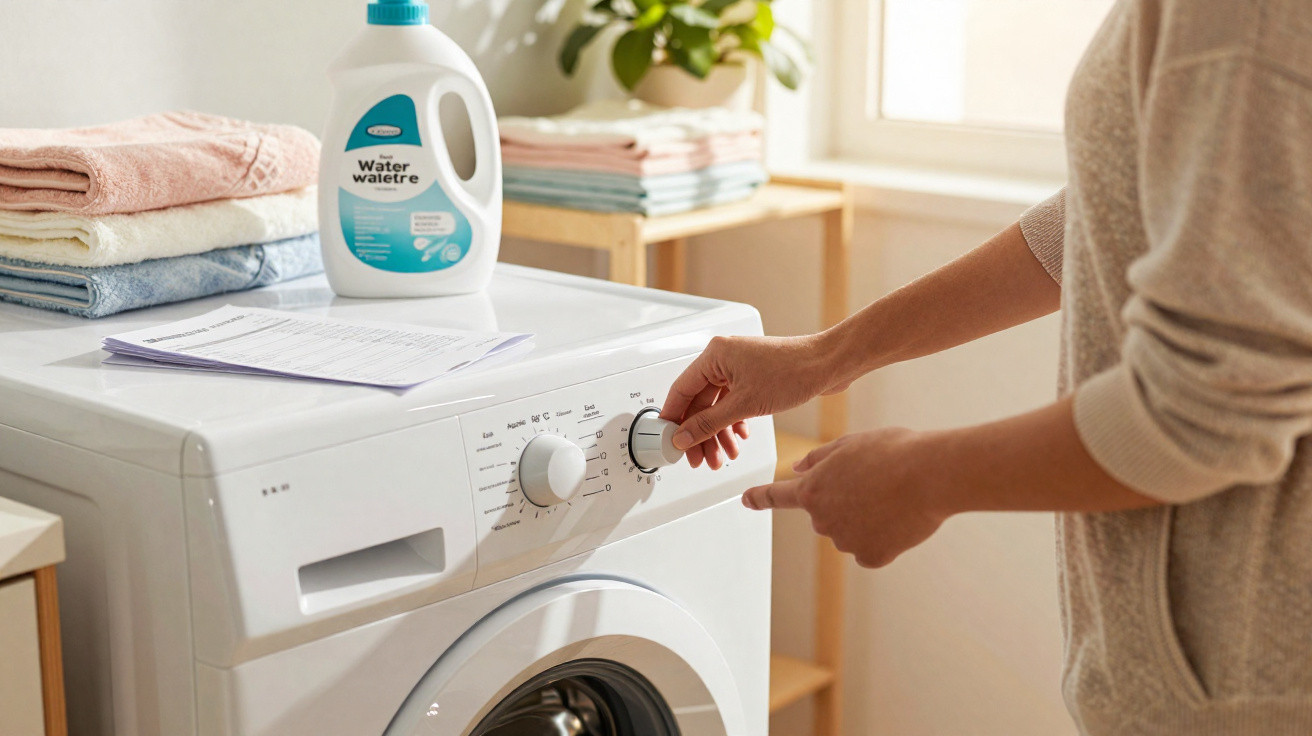
The launderette was nearly deserted, filled only with the muted drone of appliances and the scent of warm cotton mixed with budget detergent. A woman faced an oversized washing machine, her finger paused above the controls as her gaze settled, almost instinctively, on the option many of us choose without a second thought: “Intensive wash – 90°C.” It appeared strong. Reassuring. The ultimate setting, seemingly capable of removing every mark, germ and lingering concern.
She selected it, exhaled, then picked up her phone. Forty minutes on, the machine was still thundering away, while the water meter in the corner whirled like a fan during a heatwave.
But speak to an appliance repair professional and they will often tell you that this seemingly impressive setting is among the worst choices available.
It can gradually damage your clothes, inflate your household bills and, in some cases, harm the machine itself.
All of that sits behind a comforting symbol and a prominent number on the screen.
The washing machine programme repair experts quietly dislike
Ask several appliance engineers which control they would prefer customers to leave alone, and many name the same offender: the long, very hot cotton cycle, commonly set to 90°C.
It may look like the hero of the control panel. In practice, it is an attention-seeker that seldom merits such prominence.
These programmes consume litres of water, continue for a long time and raise the drum temperature beyond what most modern detergents require.
More importantly, they place strain on hoses, seals and electronic components designed for efficiency rather than for laundry being boiled as it was in 1970.
The outcome is a dramatic hum, a more expensive bill, clothes that are not necessarily cleaner… and a greater number of repair call-outs.
A repairer in Manchester told me about one customer who used a 90°C “intensive” programme three times a week, “just to be safe” when washing her children’s clothes.
Although her machine was only three years old, its rubber door seal appeared a decade older: it was rigid, cracked and beginning to leak.
The water-use record on her smart meter was stark: every one of these heavy cotton washes consumed almost twice the water used by her 40°C eco programme.
Her laundry energy consumption alone was broadly comparable with operating an additional fridge.
She believed she was making the wash more hygienic. In fact, she was speeding up wear, using unnecessary water and paying more for electricity to achieve a result that a straightforward 40°C programme could have provided.
The reasoning behind these excessively hot, lengthy cotton programmes comes from a time when detergents were less effective and hygiene was thought to mean “the hotter, the better.”
Current laundry liquids and powders are formulated to work at lower temperatures, frequently around 30–40°C, using enzymes that tackle stains without needing to boil them.
As a result, starting a 90°C “max power” wash for T-shirts and jeans does not make the detergent substantially more effective.
Instead, water and electricity consumption climb sharply, as does the mechanical stress within the appliance.
It is rather like using a flamethrower to make toast: visually impressive, perhaps, but terrible engineering.
Even so, many people select it when stains or germs cause concern.
Smarter washing machine programmes: what repairers actually recommend
The straightforward advice many repairers privately give is this: use a 30°C or 40°C eco programme as your usual setting, keeping the nuclear options for genuinely unusual situations.
Eco programmes may appear lengthy, but they are carefully calibrated, combining lower temperatures, optimised drum action and only the water required.
They treat fabrics more gently while sending considerably less water down the drain.
For particularly dirty washing, repairers suggest a low-temperature pre-wash or a quick rinse first, rather than moving immediately to 90°C.
You’re not washing hospital bedding every day.
Most daily clothing, towels and sportswear will emerge completely clean using these less aggressive settings.
Many households choose that severe cotton programme simply because “it’s what we’ve always done at home.”
After a demanding day at work, it is easy to fill the drum, select the hottest setting and hope it works.
We have all experienced the moment when we put a wash on in a hurry without even checking the display.
Repairers witness the damage that follows: fibres weakened by continual high temperatures, colours becoming dull within months and elasticated waistbands losing their shape after a season.
Then comes the familiar complaint: “This brand isn’t what it used to be.”
At times, neither the garments nor the appliance are to blame. It is the control we continue to press through habit.
Let’s be honest: nobody really does this every day with the instruction manual in hand.
“If people stopped using 90°C for everything, I’d probably lose a chunk of my job. Those extreme cycles age machines far faster than you think, and they waste a scandalous amount of water for normal laundry.”
He gave the family a straightforward checklist, rather like a crib sheet fixed to the wall.
This is the type of advice many professionals would like to see displayed on every washing machine:
- Everyday clothes: 30–40°C eco cycle, no pre-wash.
- Sheets and towels: 40–60°C, standard cotton, not “intensive.”
- Real hygiene needs (illness, accidents): one-off 60°C cycle, not 90°C by default.
- Sportswear: dedicated “synthetics” or “sports” programme, 30–40°C.
- Baby clothes: 40°C with a thorough rinse, not permanent boiling washes.
Follow guidance like this and that showy 90°C beast becomes what it was always meant to be: an occasional fallback, rather than your everyday choice.
Your appliance has an easier time of it, and so does your water bill.
Rethinking what “clean” really means
A subtle shift is taking place in laundry rooms.
We are gradually replacing the belief that “hotter and longer equals cleaner” with a more considered approach: precise, gentle and efficient.
People who swap the heavy 90°C cotton programme for a 40°C eco setting are often surprised to find… nothing.
There is no worse odour, no additional staining and no sense that clothes are “less clean”.
Some even find the reverse: textiles feel softer, colours remain more vibrant and favourite T-shirts last longer.
The most significant difference is out of sight, appearing on the water meter and electricity bill several weeks afterwards.
This small adjustment in routine can spread, too. One person tries it, mentions it to someone else, and a neighbour stops boiling their laundry three times every week.
It encourages a different view of our appliances.
Rather than treating them as angry beasts that must be driven at full power, we can regard them as carefully engineered tools that perform best when we stop battling against them.
That does not require hot washes to be banned forever. It means treating them as you would a fire extinguisher, rather than a candle.
When you begin to see the 90°C cotton cycle as the worst programme for everyday washing, suitable only for real emergencies, the machine’s control panel suddenly feels unfamiliar.
You begin to ask: which is the shortest programme that will still do the job?
What is the lowest temperature that will still leave me confident about my laundry?
Those questions reshape the story every time you press “Start.”
| Key point | Detail | Benefit for the reader |
|---|---|---|
| Avoid using 90°C as the default | Reserved for exceptional cases, it causes substantial wear and excessive consumption | Fewer breakdowns and a washing machine that lasts longer |
| Choose 30–40°C eco cycles | Designed for modern detergents and gentler on textiles | Water and energy savings without compromising cleanliness |
| Match the programme to the laundry type | Use cotton, synthetics, sports or delicate settings according to need | Clothes retain their colour, shape and comfort |
FAQ:
- Is 90°C ever really necessary for laundry? Yes, but rarely. It can be useful for heavily soiled items in special situations, or occasionally for machine maintenance cycles. For everyday clothes and towels, 60°C or less is usually enough.
- Will my clothes be less hygienic at 40°C? No for normal use. Modern detergents are formulated to work at low temperatures, and a full wash cycle with a good product at 40°C is sufficient for routine hygiene.
- Why do my towels smell if I don’t wash them hot? This usually comes from overloading the drum, using too much detergent or not letting towels dry completely. Try a 40–60°C wash, less product and a good airing rather than jumping to 90°C.
- Can hot washes damage my washing machine? Repeated very hot cycles can speed up wear on seals, plastic parts and some electronics. Used occasionally, they’re fine. Used as a default, they tend to shorten the machine’s life.
- What’s the best “everyday” programme to choose? For most households: an eco cycle at 30–40°C, with a spin adapted to your fabrics. Add a slightly hotter wash from time to time for bedding or towels, rather than boiling everything all the time.





Comments
No comments yet. Be the first to comment!
Leave a Comment