
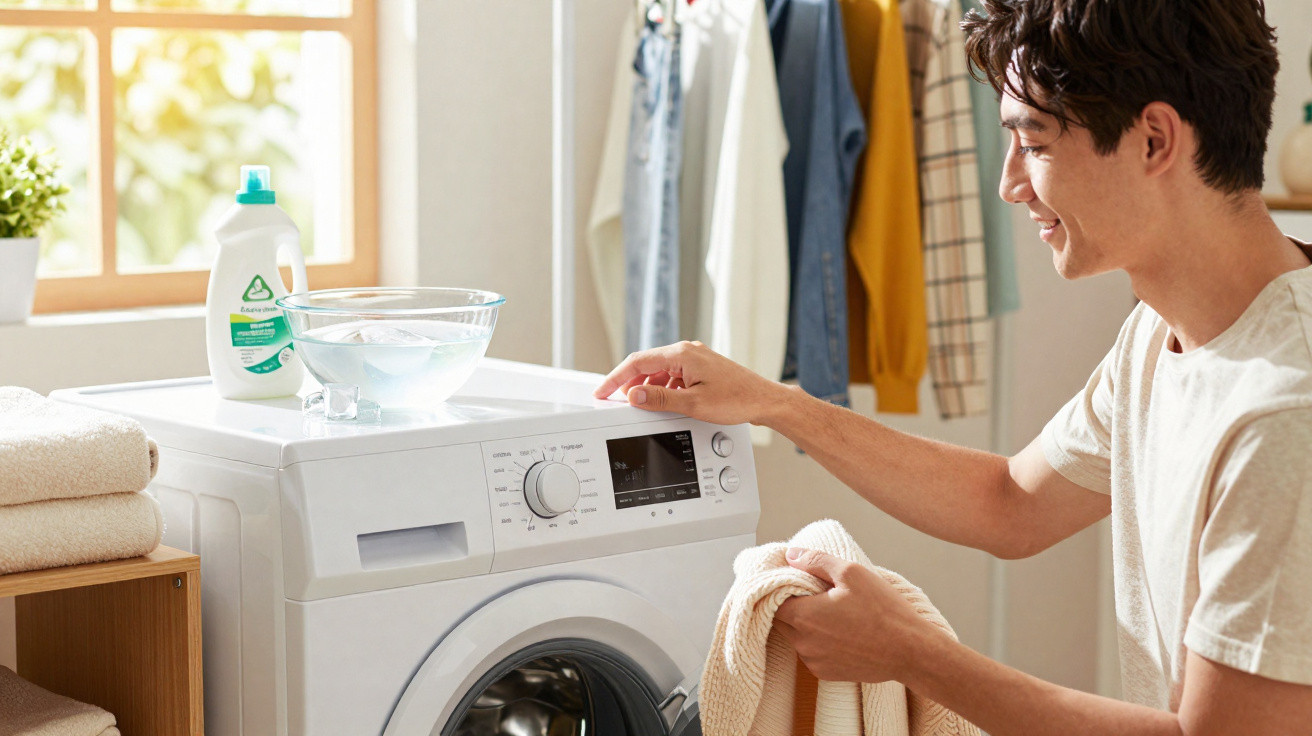
The launderette felt far too warm for a grey Tuesday.
Washing machines droned together, condensation clouded the windows, and customers rearranged heaps of jeans and sports kit as though they were stuck in another routine chore. At the rear, a young father studied the controls on an enormous washer, his thumb paused over “HOT” as though he were preparing to fire a rocket. Beside him, an older woman gently touched his arm, indicated “COLD”, then pointed to her own basket of immaculate white shirts. She offered no speech-only an expression that seemed to say: give it a go.
He gave a small shrug, selected the cold-water programme and left looking equally doubtful and relieved. Twenty-eight minutes later, he removed clothes that looked… ordinary. Clean. Fresh. Nothing damaged or faded. He stared at the drum, as if it had somehow broken the rules.
Perhaps the real secret was never in hot water.
Cold water can be just as powerful as hot
Many of us were raised on the same laundry belief: hotter water means cleaner clothes. Grease, odours and stains-apply heat and they give in. The idea became so ingrained that plenty of people still choose “hot” by reflex, without considering the alternatives. Meanwhile, modern detergents have quietly changed the equation.
Current formulations contain enzymes and surfactants that often work best at lower temperatures. They attach themselves to dirt, perspiration and oils, lifting them from fibres without requiring a scorching wash. Choosing cold is not “doing less”; it means allowing the chemistry to work as the drum turns in a cooler, kinder environment.
One figure surprises many people when they first encounter it. Roughly 75 to 90% of a washing machine’s energy consumption is used to heat the water. It is not spent spinning or rinsing, but on transforming lukewarm tap water into a small sauna. Turn the setting from hot to cold and energy use does not merely reduce slightly-it drops dramatically.
A major US initiative supported by manufacturers found that, if every household completed most laundry loads in cold water, millions of tonnes of CO₂ could be saved each year. That can sound remote until it is brought closer to home. For an average family, this one adjustment can make a noticeable reduction to the electricity bill. It requires neither a smart meter nor a replacement appliance-just a different button.
The underlying science is remarkably straightforward. Everyday dirt, sweat and grime are largely made up of oils, proteins and particles that stick to fabric. Conventional wisdom held that heat was needed to “loosen” them. Today’s detergents contain enzymes that break those compounds down at lower temperatures, rather like tiny Pac-Man characters eating their way through stains.
Hot water is also hard on fibres. It makes them swell, reduces their strength and accelerates fading. Colours run, elastic loses its spring, and printed designs begin to crack. Cold water largely has the reverse effect: it helps fibres retain their form, keeps dye in place for longer and slows that weary, faded appearance. How clean clothes look on wash day is only part of the picture; what also matters is how long they continue to look like themselves.
How to make cold-water laundry work
The easiest change is to reverse your usual setting. For loads that are not heavily soiled, choose cold as standard, moving to warm only when there is a genuine reason to do so. Think of “hot” as an emergency option rather than the default. That shift in approach alone safeguards much of your wardrobe.
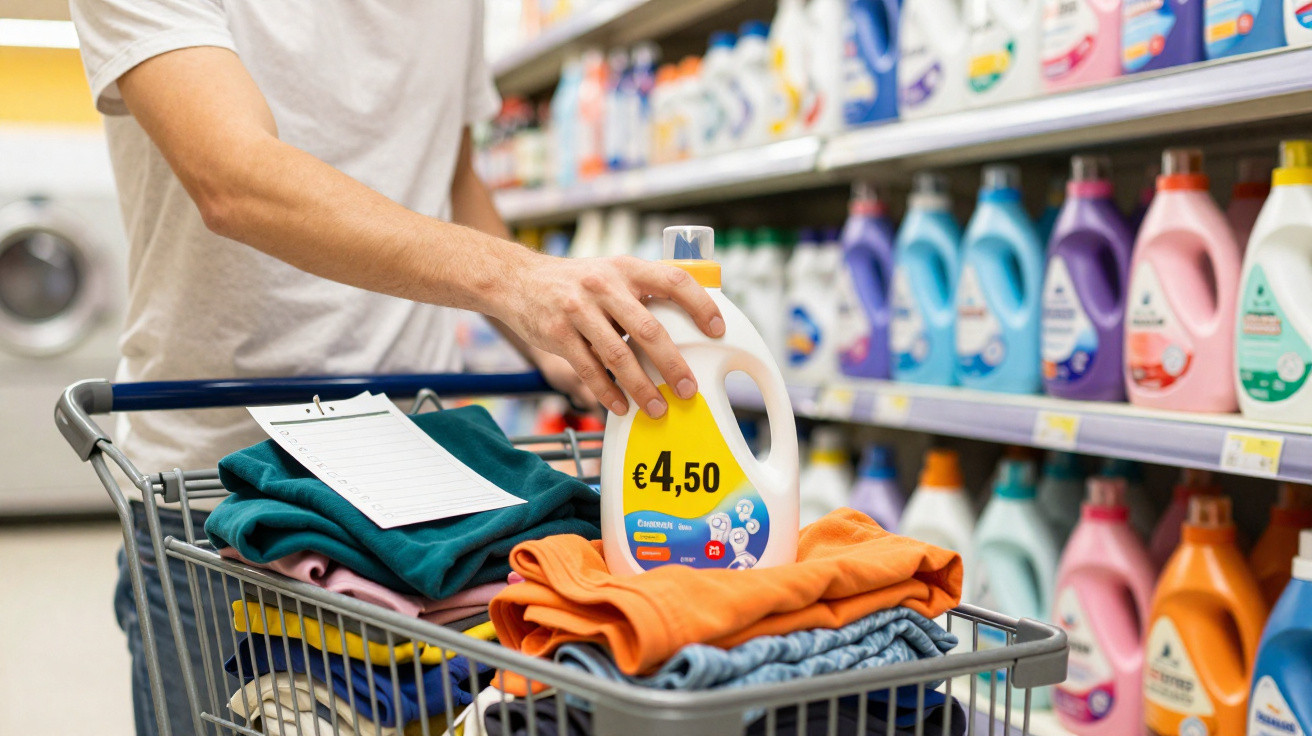
Detergent selection and programme duration are the understated essentials. Check the bottle for “cold water” or “low temperature”. These products dissolve effectively even when the water feels almost freezing. Combine one with a slightly longer programme, giving the detergent time to act, and you can achieve much the same outcome as a hot wash-without effectively cooking the fabric.
We have all done the mildly embarrassing thing of packing the drum so tightly that we have to put our full weight against the door to close it. Let’s be honest: nobody really does it every day, but we do it often enough to damage our clothes. Overfilling is the quickest way to undermine both cold and hot washes. Garments cannot move around, detergent cannot circulate and dirt has nowhere to escape to.
Use this straightforward guide: fill the drum to around three-quarters, leaving sufficient space to slide your hand across the top. At first, it may seem “too empty”, particularly if you are accustomed to cramming in mountain-sized loads. But once you see how clean clothing becomes when it can turn, rub and rinse freely, you may wonder why you ever tried to squeeze in one extra hoodie “just this once”.
Laundry is seldom only about marks and machine settings. One reader told me that, on a quiet Sunday, she began washing her late mother’s blouses exclusively in cold water, treating it almost as a small act of care. “Hot feels aggressive now,” she said. “Cold feels like I’m trying to keep them with me a little longer.” It may sound sentimental, but it reflects what textile specialists say about fibre damage and fading.
“Cold water doesn’t just clean,” explains textile scientist James Garder. “It gives your clothes more life. You’re not burning through them just to feel like you’re doing a ‘deep clean’.”
- Sort laundry according to colour and fabric weight, rather than simply separating “hot” from cold.
- Deal with visible stains promptly using a stain remover, then wash on cold.
- Measure detergent correctly: too little will not clean properly, while too much leaves residue.
- Avoid extra-high spin speeds for delicate items, as they place strain on fibres.
- Air-dry where possible; heat from tumble dryers and hot water compounds the damage.
Clothes that last longer, bills that shrink, habits that shift
There is a quiet pleasure in taking a favourite T-shirt from the wash and finding that it still looks like itself: bright and soft, with its print unbroken and its neckline still in shape. Cold water does not make laundry day poetic, but it moves it closer to the feeling that you are looking after your belongings rather than completing chores on autopilot. On a planet where fast fashion treats clothing as almost disposable, extending its life can feel unexpectedly radical.
Cold washes prolong the life of jeans prone to rapid fading, sportswear that loses its stretch, and dark garments that often become dull around the seams. They achieve this discreetly, with no new gadgets and no performance fuss. Change one default setting and watch your clothes age a little less quickly. Within that modest household action lies another way of thinking about what we wear-and about the energy we use each week without a second thought.
| Key point | Detail | Benefit for the reader |
|---|---|---|
| Cold cleans as well as hot | Modern detergents are designed to work at low temperatures with enzymes | Builds confidence to switch without fearing “less clean” laundry |
| Clothes last longer | Cooler water reduces fibre damage, fading and shrinking | Protects favourite items and saves money on replacements |
| Energy savings are huge | Most washing-machine energy goes into heating water | Reduces bills and environmental impact through one simple habit change |
FAQ:
- Can cold water really remove odours and sweat? Yes, provided you use a good-quality detergent and do not overload the machine. Enzymes target the sweat and bacteria responsible for smells, including during cold programmes.
- What should I still wash on hot or warm? Items requiring hygienic care, such as reusable nappies, towels used after illness or heavily soiled workwear, may still benefit from warm or hot water alongside the appropriate detergent.
- Does cold water prevent clothes from shrinking? It greatly lowers the risk. Shrinkage occurs when heat and mechanical action affect fibres together, so cooler water helps fabrics remain more stable.
- Will my whites stay bright on cold? Yes, if you sort them correctly, treat stains promptly and choose a detergent formulated for whites. Occasional oxygen-based brighteners can help without requiring hot water.
- Do I need a special “cold water” detergent? Not necessarily, but detergents labelled for cold or low temperatures dissolve and perform more effectively in chilly water, especially on quick or eco programmes.





Comments
No comments yet. Be the first to comment!
Leave a Comment