
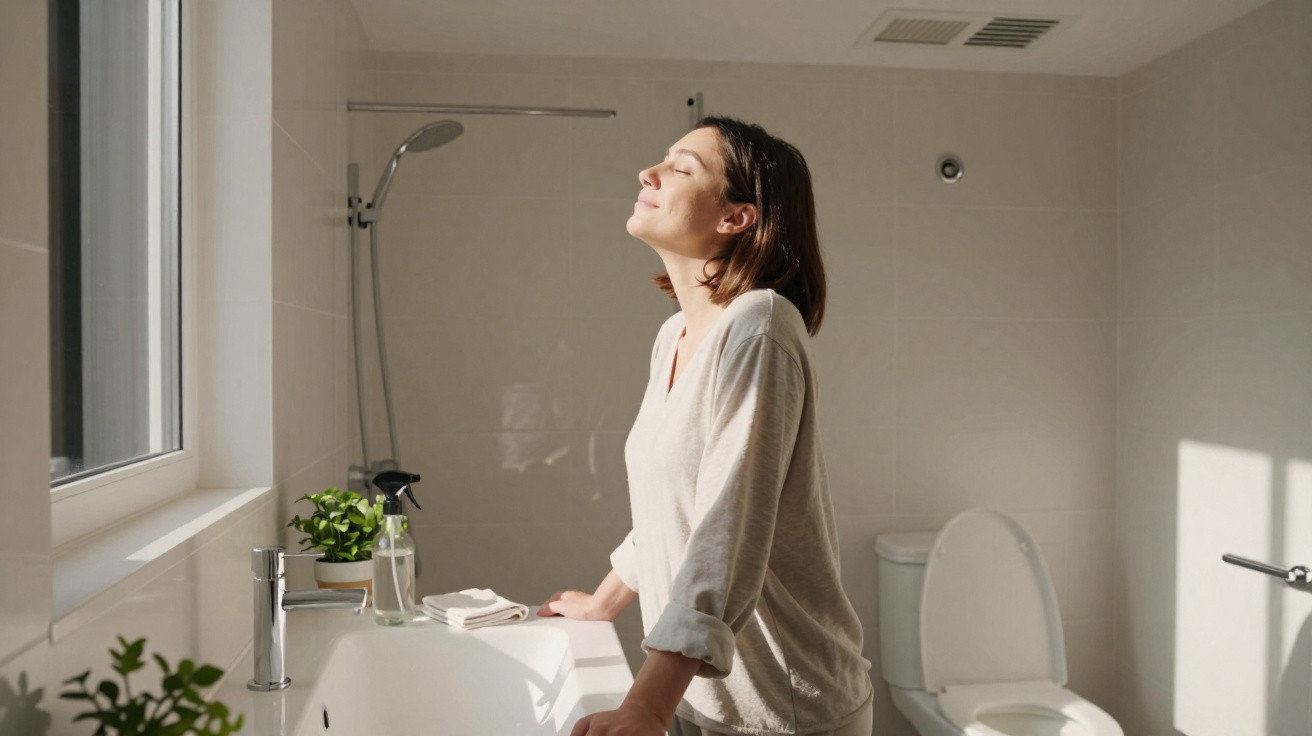
You spray air freshener, wipe the sink, scrub the toilet and stand back to appreciate the effort. For a short while, the room carries an “Ocean Breeze” or “Cotton Fresh” scent. Yet when you return an hour later, that faintly sour, musty, slightly sewer-like odour is still lingering. It is not overwhelming enough to cause a scene, but it is persistent enough to become maddening.
You may begin to question whether you have become nose-blind, or whether your bathroom has some hidden existence that excludes you.
Neither possibility feels reassuring.
When a clean bathroom does not smell clean
The strange thing about bathroom odours is that they often bear no resemblance to what is visible. The tiles can be spotless, the mirror gleaming and the towel neatly folded, while the air still feels dense, humid and somehow wrong. It can feel as though the bathroom is concealing something deep inside.
In most cases, we clean the obvious surfaces because they give an immediate sense of achievement, while overlooking the concealed places where odours genuinely develop.
Think back to the last time you cleaned the bathroom floor. Perhaps you mopped it or used a product promising “24-hour freshness.” But did you move the bin? Pull aside the toilet-brush holder? Clean the silicone seal behind the sink?
Many people find the answer when they move house. They pull out the washing machine or raise a bath panel, only to uncover black sludge, damp dust and clumps of hair. That unnoticed ecosystem may have been giving off tiny smells for months or even years. It was not your imagination: your nose was detecting something real.
Bathroom odours are not caused by “dirt” in the conventional sense. They result from a mix of moisture, bacteria, standing water and trapped organic material: skin cells, hair, soap residue and urine splashes too small to notice. Combine these with warm, steamy conditions and limited ventilation, and the room effectively becomes an odour incubator.
Cleaning products often perfume the problem briefly rather than removing its cause. The bathroom smells “nice” for 20 minutes, before the older odour molecules quietly reassert themselves.
Hidden causes of bathroom odours you rarely consider
Start with the toilet, though not its polished surfaces. The point where the toilet meets the floor is a major suspect. Minute splashes collect around the base, beneath the rim and even on the screws and caps. You may not spot them, but bacteria certainly can.
Use a torch to inspect beneath the seat hinges, behind the bowl and along the silicone seals. It quickly becomes clear why the bathroom never smells entirely “neutral”, regardless of how many blue tablets you put in the cistern.
Then consider the drains: the shower drain, basin drain and, in some bathrooms, a floor drain. Hair, soap and body oils can settle inside the pipes and create a sticky layer that slowly decomposes. This produces a wet-dog-meets-sewer smell, particularly when hot water is running.
One woman I interviewed was convinced her neighbour caused the odour because they shared a vertical pipe. The source was actually much nearer: a compact lump of hair and soap caught directly below her shower grate. She removed it with a bent hanger, gagged once, and her “mystery odor” dropped by 80% in one day.
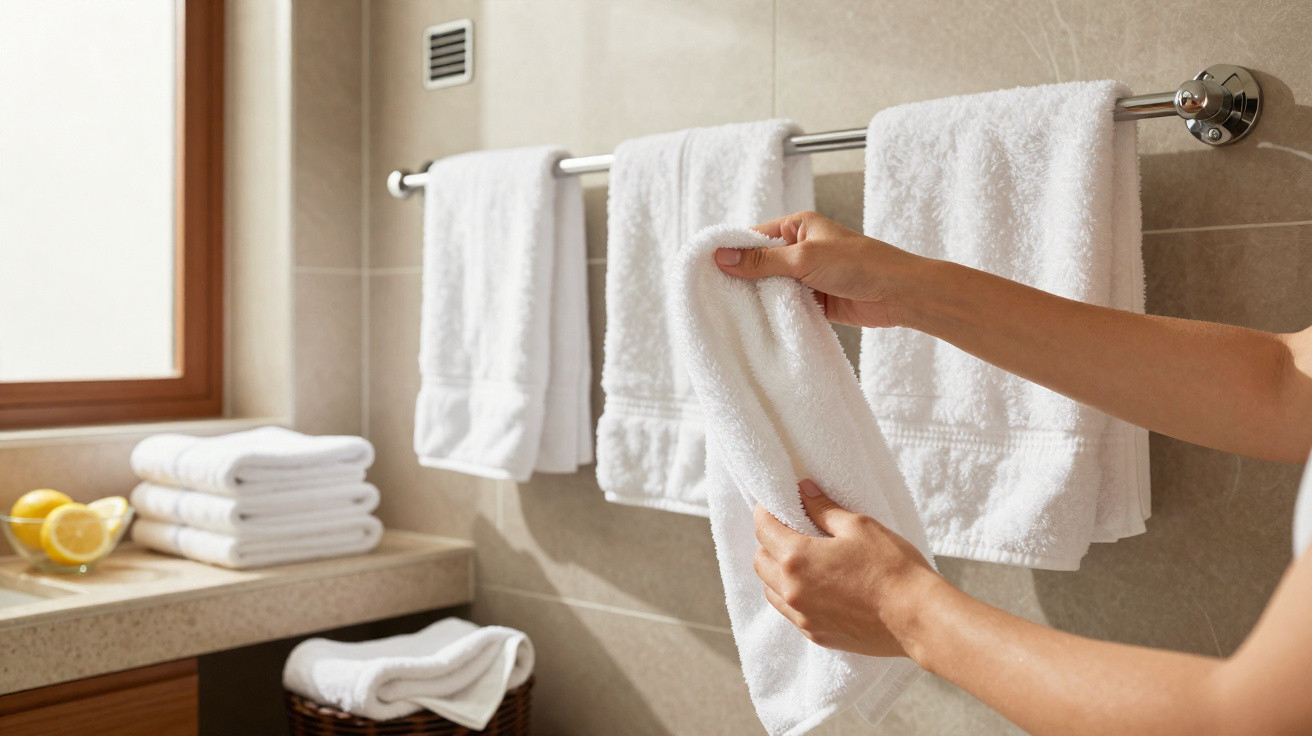
Fabrics are easy to underestimate too. Towels that remain slightly damp, bath mats that never fully dry and a pretty shower curtain with black spots near the bottom all retain humidity and bacteria. Whenever the room warms up, they release a sour or mouldy smell.
Some bathrooms also suffer from inadequate ventilation or blocked vents, leaving steam to hang in the room. Air fresheners and scented candles add fragrance on top, but the air remains stale. A bathroom that never completely dries is a bathroom that will always smell a bit wrong.
What works for bathroom smells - and what you can stop worrying about
The most useful odour-focused deep clean is not especially glamorous. It begins by taking things apart and moving them. Remove the toilet seat from its hinges if possible. Unscrew drain covers. Move the laundry basket, open the vanity unit doors and pull out the bin.
Next, concentrate on three areas: the toilet base, the inside and edges of every drain, and all silicone or rubber seals. Hot water, washing-up liquid and white vinegar, combined with an old toothbrush, can remove odours more effectively than many expensive sprays.
Many people repeatedly scrub the toilet bowl but overlook the toilet brush. It often stands in a pool of brownish water at the base of its holder, quietly fermenting in the corner. Rinse it with very hot water, spray it with disinfectant and allow it to air-dry for several hours before returning it to the holder.
Do not feel bad if this is not part of your constant routine. In reality, nobody does it every day. A strange-smelling bathroom does not mean you have failed at adulthood; it simply means you are human, and bathrooms are deceptive.
“Bathrooms are like small laboratories,” says one professional cleaner I spoke to. “Lots of water, lots of organic matter, very little air. If you don’t let them breathe, they’ll grow their own smell no matter how much you scrub.”
Check your drains once a month
Take out visible hair, pour in boiling water, then add a mixture of bicarbonate of soda and vinegar. It fizzes, smells slightly like a science lesson and can make a substantial difference.Refresh silicone and grout
Apply a vinegar-and-water mixture, leave it to work, then scrub gently using a brush. If the marks remain black or orange, the seal may need replacing.Wash or replace fabrics regularly
Towels, bath mats and shower curtains need hot washes or quick replacements more often than most of us expect. Old dampness attracts odours.Ventilate properly
Leave the door open, open the window if there is one, or run an extractor fan for at least 15–20 minutes after every shower. Dry air has a cleaner smell.Avoid using too many fragrances
Scented sprays may conceal an issue temporarily, but they can also combine with the underlying odour to create an odd “sweet plus sewer” smell. Get the room neutral first, then add fragrance if you want it.
The understated comfort of a genuinely neutral bathroom
There is something unexpectedly soothing about entering a bathroom and smelling nothing at all. No lemon, lavender or pine - simply air. Your brain has nothing to interpret, your body relaxes slightly and that persistent background irritation fades away.
For many people, the change begins when they stop blaming themselves - “I’m so dirty, my house is gross” - and instead see the bathroom for what it is: a wet room that requires airflow as well as bleach.
Once the hidden sources have been dealt with, you may find yourself cleaning less frequently but more deliberately. A quick wipe of the basin, weekly attention to drains, towels that properly dry between showers and a window left open a little longer can all help. They are small, low-drama habits with a substantial long-term benefit.
If the bathroom still smells slightly wrong after all this, the cause may be behind the walls or beneath the floor: an ageing pipe, a faulty trap or a ventilation fault. At that stage, calling a professional stops being a luxury and becomes an act of self-respect.
Either way, you are not alone in this mildly embarrassing struggle. Ask friends, and someone will probably quietly admit to putting incense sticks in a plant pot or keeping a permanent candle on the toilet cistern. We all improvise.
The real change comes from discussing it without embarrassment, sharing the unusual methods that helped and recognising that this small square room says nothing about our value as people. It simply needs to breathe, just as we do.
| Key point | Detail | Value for the reader |
|---|---|---|
| Hidden sources of odor | Toilet base, drains, silicone joints, and damp fabrics often cause smells despite visible cleanliness | Helps target cleaning where it actually changes the smell, not just the look |
| Moisture and poor ventilation | Constant humidity and lack of airflow let bacteria and mould thrive in a “clean” bathroom | Shows why airing out the room can be as powerful as scrubbing |
| Simple, repeatable routine | Monthly drain checks, fabric rotation, brush care, and short focused sessions | Reduces stress, saves time, and keeps the bathroom smelling neutral longer |
FAQ:
Question 1 Why does my bathroom smell bad even when it looks spotless?
Odours commonly come from concealed areas: drains, beneath the toilet base, behind furniture and in damp fabrics. These places can harbour bacteria and stagnant water that continue producing smells even while visible surfaces shine.Question 2 Could the bad smell be coming from my drains?
Yes. Hair, soap residue and body oils collect in pipes and begin to break down. If the odour becomes worse when you run hot water or after showering, the drain is a likely culprit.Question 3 How often should I deep clean my bathroom to avoid odors?
For most homes, a light weekly clean plus a focused monthly “smell check” of drains, the toilet base, fabrics and ventilation is sufficient, unless the bathroom gets heavy use or has very poor airflow.Question 4 Are strong air fresheners a good solution for bathroom smells?
They may hide smells for a while, but they do not eliminate the source. Powerful fragrances can even mingle with the underlying odours and create a stranger, heavier atmosphere.Question 5 When should I call a professional about a persistent bathroom odor?
If you have cleaned both visible and hidden areas, refreshed fabrics, treated the drains and improved ventilation, yet the smell remains strong or sewer-like, it could be a plumbing or ventilation problem. That is the time to involve a plumber or building technician.

Comments
No comments yet. Be the first to comment!
Leave a Comment