
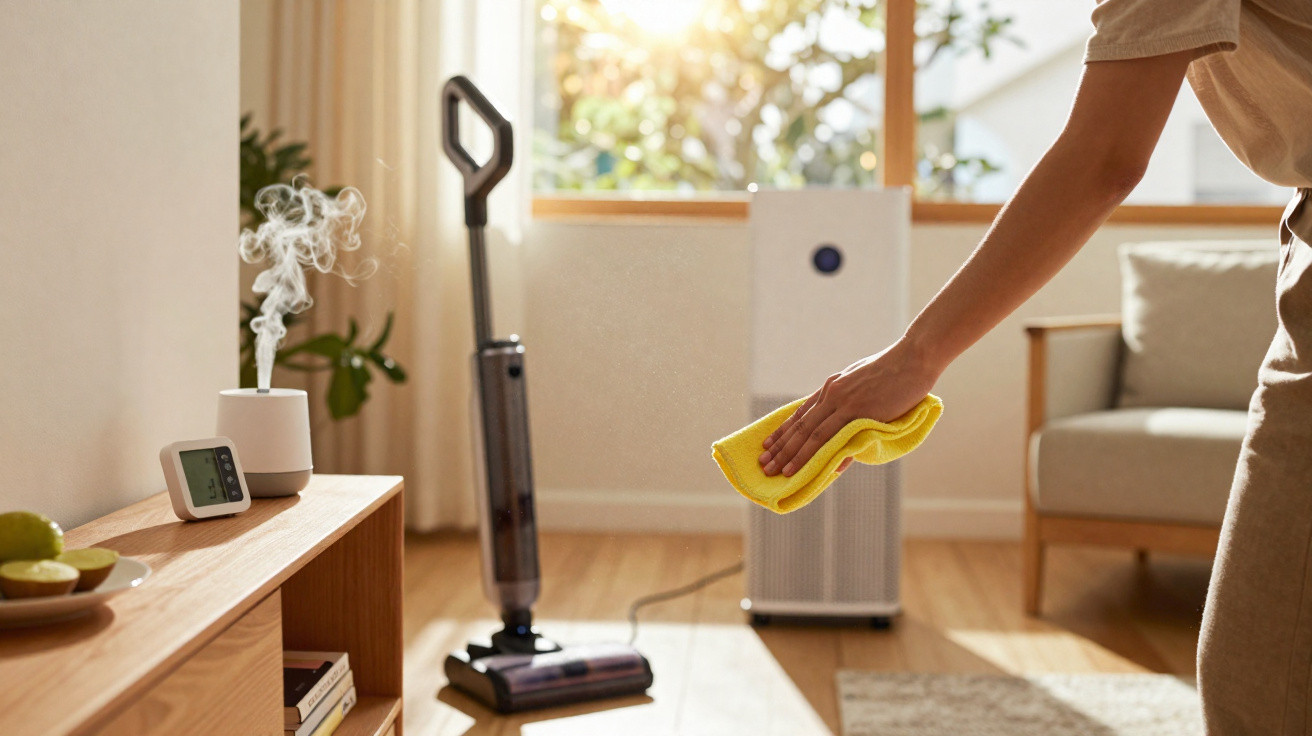
The light was perfect for a change.
It was late afternoon, the sun sat low, and the living-room windows were clean for the first time in weeks. You had wiped down every surface, run the hoover along that frustrating strip behind the sofa, and even beaten the cushions outside like someone in a cleaning advert with far better hair.
Then it happens. You return to the room an hour later and there it is, drifting through the sunbeam like a swarm of tiny invaders. A faint grey coating is already gathering on the TV stand. The dark coffee table suddenly looks as though it has aged by ten years.
You look at it and wonder: how? How can it return this quickly? You had only just cleaned. Your hands still smell of cleaning spray, yet the room you had freshly “done” already seems tired again. Something clearly does not make sense.
The strange life of dust you never see
Most of us think of dust as simply “dirt that appears”: an unwanted visitor that materialises from nowhere the day after you have finally cleaned. But your home is actually a miniature dust factory, working away in the background 24 hours a day.
Each movement, footstep and sofa cushion you sit on releases tiny particles into the air. While you are moving around, they seem insignificant, but one shaft of sunlight makes them impossible to ignore. It is almost as though the room is exposing a secret you were never supposed to notice.
That is why certain homes can look dusty again only a few hours after a clean. The dust did not truly disappear; it was simply waiting to settle.
To put a figure on it, studies indicate that up to 80% of dust in a typical home consists of skin cells, fibres from clothes and furnishings, hair, and microscopic fragments of outdoor dirt brought in on shoes and through the air.
Consider the chain of events. You arrive home, take off your trainers, put your bag on the sofa and toss your jumper over a chair. Each action releases minuscule fibres and particles, nearly invisible as they drift around before gradually settling once more on screens, shelves and furniture.
One researcher described household dust as “a history of everything that has happened in the past few days”. Your most recent walk in the park, your pet sleeping on the rug, preparing dinner last night, and your child’s school run all leave their mark on household surfaces.
The less obvious reason dust seems to return so quickly is not magic; it is gravity and timing. Dust does not drop like rainfall. Bigger particles can settle within minutes, while smaller ones may remain airborne for hours or even days, carried by air currents you scarcely notice.
When you clean, you may simply redistribute these particles or send them up into the air. That pleasing sweep of a dry cloth over a shelf? Half of what you “remove” can lift off, remain suspended, and then settle again in a slow, quiet cycle.
Central heating, fans and even the warmth from your body create subtle currents that keep dust moving. A room may look immaculate at 3 p.m. but a little lacklustre by 7 p.m. The dust is not “new”; it has finally come to rest.
How to clean so dust actually leaves the room
The most important change is to stop seeing dusting as “wiping” and start treating it as “capturing”. A dry cloth resembles a broom in a confetti storm: it shifts particles about. A lightly damp microfibre cloth, by comparison, grips the particles and keeps hold of them.
Work from high to low. Start with light fittings, wardrobe tops, picture frames and shelves, then move to tables before finishing with the floor. This gives falling dust the chance to land where the hoover or mop can collect it. For blinds, clean one slat at a time from top to bottom. It is slow, methodical and almost dull, but remarkably effective.
When vacuuming, avoid rushing. Measured passes pick up more dust than frantic zig-zags before work.
There is something reassuring in realising that your home is not “dirtier than others”; it is simply lived in. Many people accidentally create more dust through the things they enjoy: fluffy throws, open windows beside busy roads, or that one rug that sheds like an anxious cat.
Soft furnishings both attract and produce dust. Sitting heavily on a sofa cushion forces out a small cloud of fibres and older particles that were lodged deep within it. Curtains release dust in much the same way whenever you pull them open dramatically in the morning.
Let’s be honest: nobody genuinely does all of this every day. You are not going to vacuum your mattress or wash your curtains every week. Still, modest habits - shaking throws outdoors rather than in the hallway, replacing old feather cushions with firmer foam ones, and using a doormat properly - can reduce the amount of airborne debris that falls back onto freshly wiped furniture.
Indoor air has a subtle but major influence. The dust that seems to “return” after cleaning is often not fresh dust at all, but the cloud you have just disturbed. The aim is to move at least some of it outside before it can settle again.
“Dust is less about how often you clean and more about how your home breathes,” says one indoor air specialist. “Good ventilation and good habits beat heroic cleaning sprints every time.”
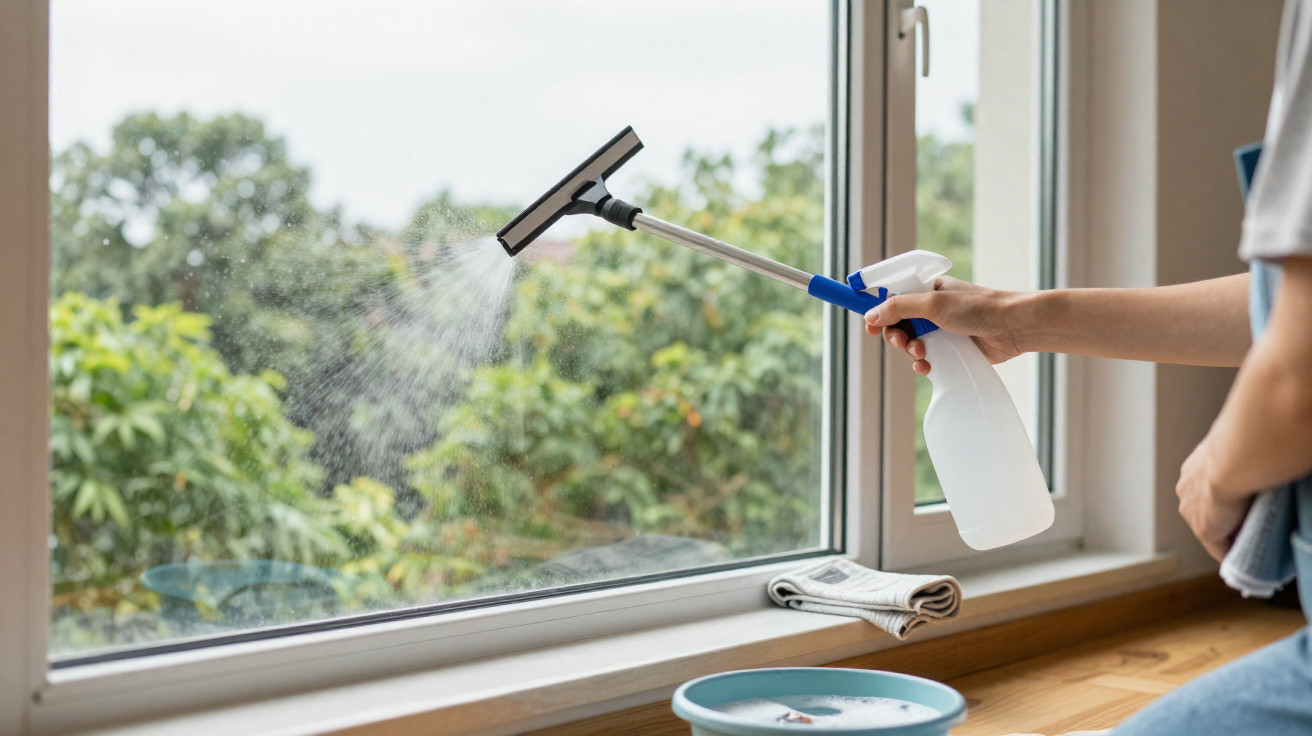
A brief, effective airing session - opening windows fully for 5–10 minutes, particularly after dusting or vacuuming - allows a substantial amount of suspended particles to leave with the outgoing air. By contrast, leaving windows partly open for long periods beside a main road can bring fresh particles indoors throughout the day.
- Use damp microfibre cloths, rather than dry ones, for dusting.
- Dust from high to low, then vacuum slowly using a HEPA filter.
- Shake textiles outdoors instead of inside the room.
- Open windows fully for short periods after cleaning.
- Keep a good doormat and make “shoes off at the door” a habit.
Living with dust without losing your mind
There is a certain relief in accepting that a completely dust-free home is not really possible. Even glossy show flats are wiped down immediately before photographs are taken. What is possible, however, is creating a home where dust does not win the psychological battle.
During a busy week, opt for “strategic” dusting instead of constantly chasing every surface. Focus on the TV stand, bedside tables and kitchen worktops: the places you look at each day. The wardrobe top can wait. Giving priority to where dust is most noticeable often makes a room feel fresher than an exhausting top-to-bottom clean.
Eventually, you will notice the change: less of that dull grey film covering everything, and more of the surfaces you remember choosing in the shop.
On an emotional level, dust is strangely personal. It contains traces of you, the people you live with and the life you share. We have all experienced that moment when new dust appears just after cleaning and somehow makes us feel we have failed at being an adult.
In reality, dust is evidence that life is going on. Clothes are worn, dinners are made and children build pillow forts. Your task is not to erase every sign of this, but to prevent it from becoming a blanket over your everyday life.
The hidden reason dust comes back so fast is almost poetic: your home refuses to stay still. So the meaningful question is not “How do I get rid of dust forever?” but “How do I make peace with it while keeping it in check?” A gently lived-in room, with a light layer of reality on the bookshelf, may be more honest than a sterile space with no air in it.
| Key point | Detail | Why it matters to the reader |
|---|---|---|
| Dust is produced continuously | Fibres, skin, hair and outdoor particles are constantly replenished | It removes the guilt and explains why dust returns so quickly |
| The dusting method matters more than frequency | Damp microfibre, working from top to bottom, and slow filtered vacuuming | It helps reduce visible dust properly after cleaning |
| Indoor air and textiles are decisive | Brief, effective ventilation, textiles shaken outdoors, and carefully chosen rugs and cushions | It helps limit dust that “returns” without extreme daily effort |
FAQ:
- Why does dust show up more on dark furniture? Dark surfaces reveal every light-coloured particle, especially under side light, so the same amount of dust simply looks much worse than on pale wood or white shelves.
- Is most dust really made of dead skin? Not “mostly”, but skin is a significant part. The rest is textile fibres, hair, outdoor dirt, pet dander, and tiny bits from paper, food, and everyday life.
- How often should I actually dust? For most homes, a focused weekly dust of main surfaces, plus a deeper session every month or so, is enough to keep things feeling genuinely clean.
- Does air purifying actually help with dust? Yes, a good air purifier with a HEPA filter can catch a lot of floating particles, especially in rooms with carpets, pets, or allergy sufferers.
- Why does my bedroom seem dustier than other rooms? Bedrooms are full of fabric and skin cells: bedding, mattress, clothes, curtains. Less airflow at night means more particles settle on nearby surfaces.

Comments
No comments yet. Be the first to comment!
Leave a Comment