
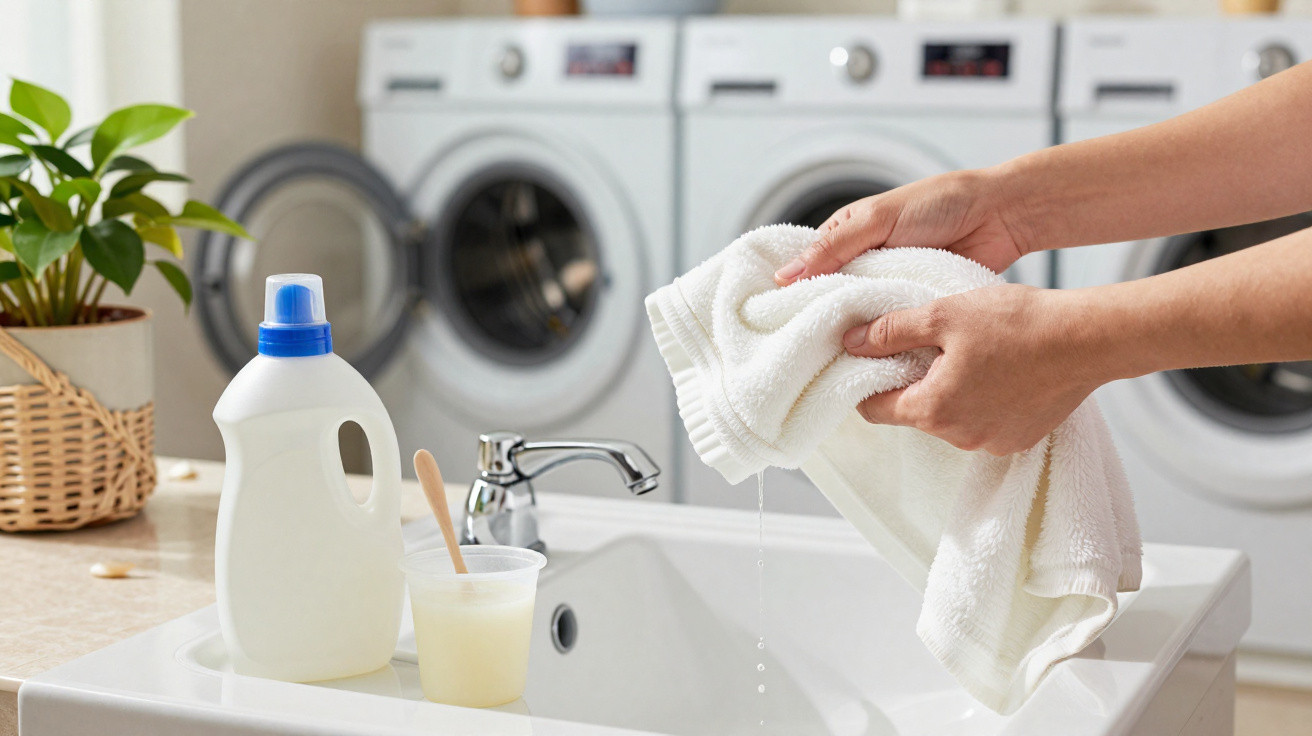
She stepped out of the shower, pressed the towel to her skin… and it merely shifted the water about. There was no pleasing rush of warmth, no swift drying – only an odd, slippery resistance.
She frowned, rubbed more firmly, then turned the towel over. Nothing changed. It felt soft and almost indulgent, yet it was strangely ineffective. In the mirror, the steam cleared from the glass more quickly than the water disappeared from her arms.
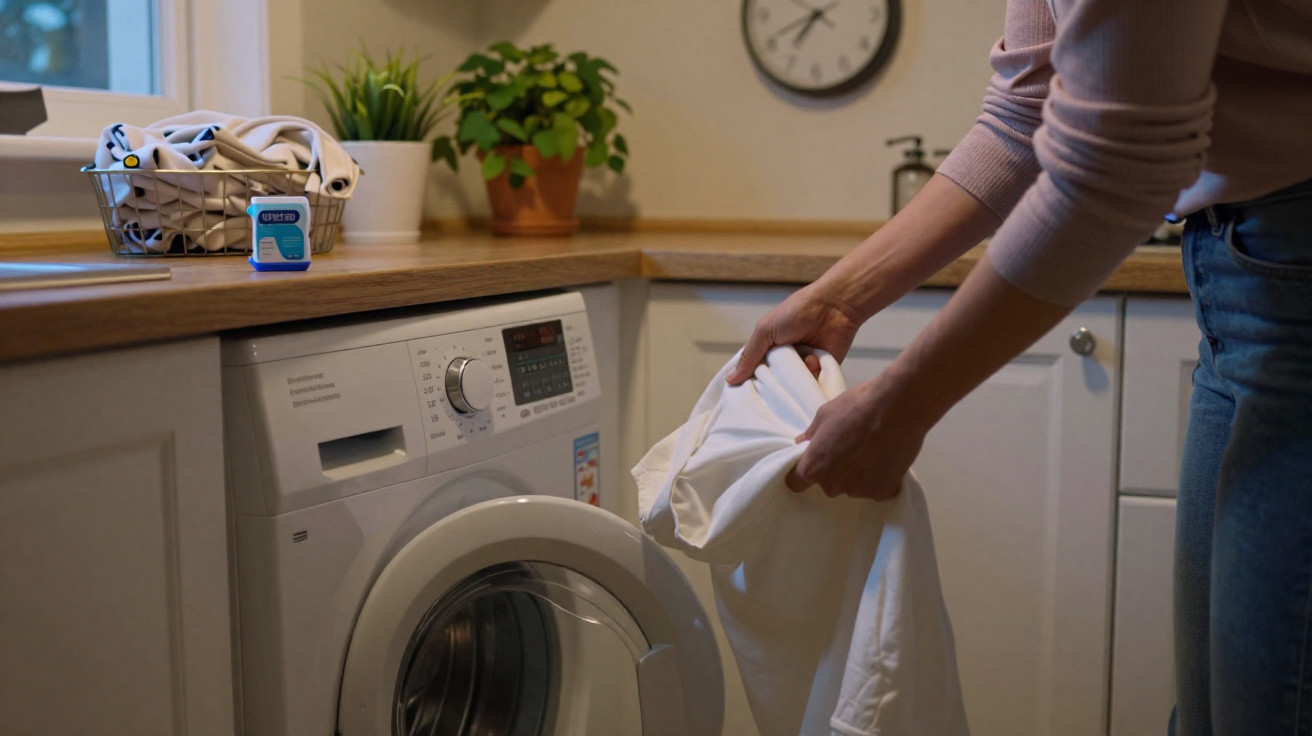
Later, beside the washing machine, she spotted the row of empty fabric softener bottles displayed on the shelf like prizes. She had felt rather pleased with her “hotel towel” routine. Now, she began to suspect those pastel-coloured liquids had been quietly undermining her everyday comfort.
One seemingly minor habit had altered the end of every shower. Not in a way you notice at first… but in one you certainly feel.
Why soft towels can be secretly broken
With bath towels, we tend to judge almost everything by feel. We squeeze them in the shop, run our hands over the loops and picture that immediate cocooning sensation after a hot shower. So, when fabric softener claims to deliver extra softness, it appears an obvious choice.
At first glance, it does seem effective. Towels emerge from the wash fluffy, supple and pleasantly fragranced. You fold and stack them, quietly satisfied with your grown-up household routine. Then, when you next use one, you get that peculiar halfway experience: it is soft, certainly, but somehow fails at its most basic purpose.
That is the unseen price of softness from a bottle. Rather than simply making the fibres softer, you are altering how they interact with water.
Speak to any cleaning enthusiast and you will hear some variation of this account. Someone buys a lovely towel set, adds fabric softener to every wash and, a few months later, cannot understand why they remain damp after towelling off. Some even assume something has changed about their skin – that they are somehow “more wet” after showering.
One woman on a home forum said she suspected her new towels were counterfeit or faulty. She washed them repeatedly with extra softener, believing it would “fix” their stiffness. Instead, she ended up with a pile of towels that looked like clouds but absorbed water like plastic.
We seldom make the connection because it happens gradually. Every wash lays down another fine coating, making the loss of absorbency seem almost imagined. You blame the towel, its manufacturer or the water where you live. All the while, the real offender sits harmlessly on the laundry shelf.
In straightforward terms, fabric softeners generally contain conditioning ingredients and oils that form a coating around fibres. This layer is what makes clothes feel smoother against the skin and retain that “fresh” smell for longer. On a T-shirt, that may be appealing.
For a towel, though, it creates a problem. Towel fibres are made to act like thousands of tiny open hands, catching and retaining water. When those fibres are repeatedly covered by a fine waxy film, they cannot grip as well. Instead of being drawn in, water remains on the surface.
Eventually, this residue can make towels less breathable, leave them slower to dry on the rail and make them more likely to develop a musty odour. You then wash them more frequently, trying to restore freshness with the very product behind the problem. It is a subtle cycle in the laundry room.
How to wash towels so they actually work
One straightforward change can make all the difference: think of towels as tools rather than “regular laundry”. Their purpose is to absorb water, not to impress with fragrance. In practice, that means leaving out fabric softener altogether and prioritising proper washing and rinsing.
Begin with a hot wash using your usual detergent, adding an extra rinse if your machine offers that option. Every few months, give the towels a “reset”: run one wash with a cup of white vinegar instead of detergent, followed by a second wash using half your normal amount of detergent. Vinegar helps remove the unseen waxy coating and soap residue.
Make sure they are dried fully, without cramming too many into the tumble dryer. Air must circulate between the towels so the fibres can open up. The goal is not merely softness; it is that gratifyingly thirsty effect when you hold the towel to your skin and the water simply disappears.
Most people put everything into a single mixed load: jeans, T-shirts, underwear and towels, all turning together in a generous dose of softener. It is quick, seemingly efficient and, yes, often how life works when you are exhausted on a Sunday evening.
However, towels perform better when washed separately. They are bulkier, retain more water and require additional room. Combining them with other materials may mean they are not rinsed thoroughly enough, leaving more detergent and residue trapped in the loops.
Let’s be honest: nobody genuinely manages that every day. Even so, separating towels from clothes half the time will help them stay more absorbent, less smelly and less covered in whatever your softener leaves behind. Small adjustments can make a major difference.
One laundry expert I spoke to put it this way:
“Every drop of softener you pour in is like putting a tiny raincoat on each fiber of your towel. Then you expect it to soak up a storm.”
If you want that soft texture, there are milder methods that will not compromise absorbency. Add a couple of wool dryer balls to the tumble dryer to fluff the fibres naturally and reduce drying time. Give towels a shake before hanging or drying them to loosen the loops.
- Use vinegar from time to time as a rinse aid to remove build-up, rather than in every wash.
- Avoid fabric softener and dryer sheets entirely when washing towels.
- Dry towels completely between uses to prevent that stale, damp odour.
- Wash new towels before using them for the first time, to remove factory coatings.
- Use less detergent, as excess can cling to fibres and make them stiff.
Rethinking comfort, one towel at a time
There is something quietly personal about the items we use immediately after showering. Towels touch us when we are uncovered, before the day has properly begun or as it finally comes to a close. When they no longer work as they should, it becomes a small, recurring annoyance that is rarely acknowledged.
We seek softness because it suggests comfort, care and a modest improvement to an often hurried life. Yet that same desire can turn useful household items into props – attractive in the cupboard but disappointing against the skin. A fluffy towel that cannot absorb water is much like a beautiful mug that leaks.
At a broader level, this is about the way “freshness” and “luxury” are sold to us in bottles. Those pastel liquids offer a sensation rather than performance. Once you begin to notice it, you see how many ordinary habits quietly undermine what you really need: clothes that endure, bedding that breathes and towels that simply… dry.
We have all experienced that moment of stepping from the shower, reaching for a towel and immediately knowing whether it is “one of the good ones”. Those are the towels that just do their job without fuss, with no artificial cloud of perfume following you into the bedroom. They may not look particularly glamorous. They simply work.
Perhaps that is the new form of luxury at home: possessions that fulfil their purpose without demanding any thought from you. And if it begins with something as simple as abandoning fabric softener for towels, its wider effect may surprise you.
| Key point | Detail | Why it matters to the reader |
|---|---|---|
| Fabric softener coats fibres | Softener leaves a thin, waxy film on towel loops | Explains why fluffy towels stop absorbing water effectively |
| Simple washing reset | Hot wash, extra rinse, occasional vinegar cycle | Offers a practical way to revive “dead” towels at home |
| Better habits, less effort | No softener, less detergent, space to tumble-dry | Improves towel performance without complicated routines |
FAQ:
- Can I ever use fabric softener on towels? For bath towels, it is best avoided altogether. Even occasional use contributes to build-up over time and gradually destroys absorbency.
- How do I know if my towels are coated in residue? If they feel soft but do not dry you properly, take longer to dry on the rail or quickly smell musty, they are likely affected by product build-up.
- Will vinegar make my towels smell strange? No. The vinegar scent vanishes during rinsing and drying. What remains is neutral, cleaner fabric.
- Are dryer sheets as bad as liquid softener for towels? Yes. Dryer sheets leave a similar coating on fibres. For towels, avoid them and use wool dryer balls or nothing at all.
- How often should I “reset” my towels with vinegar? Every few months is generally sufficient, or whenever you notice reduced absorbency. Constant over-washing is unnecessary.
Comments
No comments yet. Be the first to comment!
Leave a Comment