
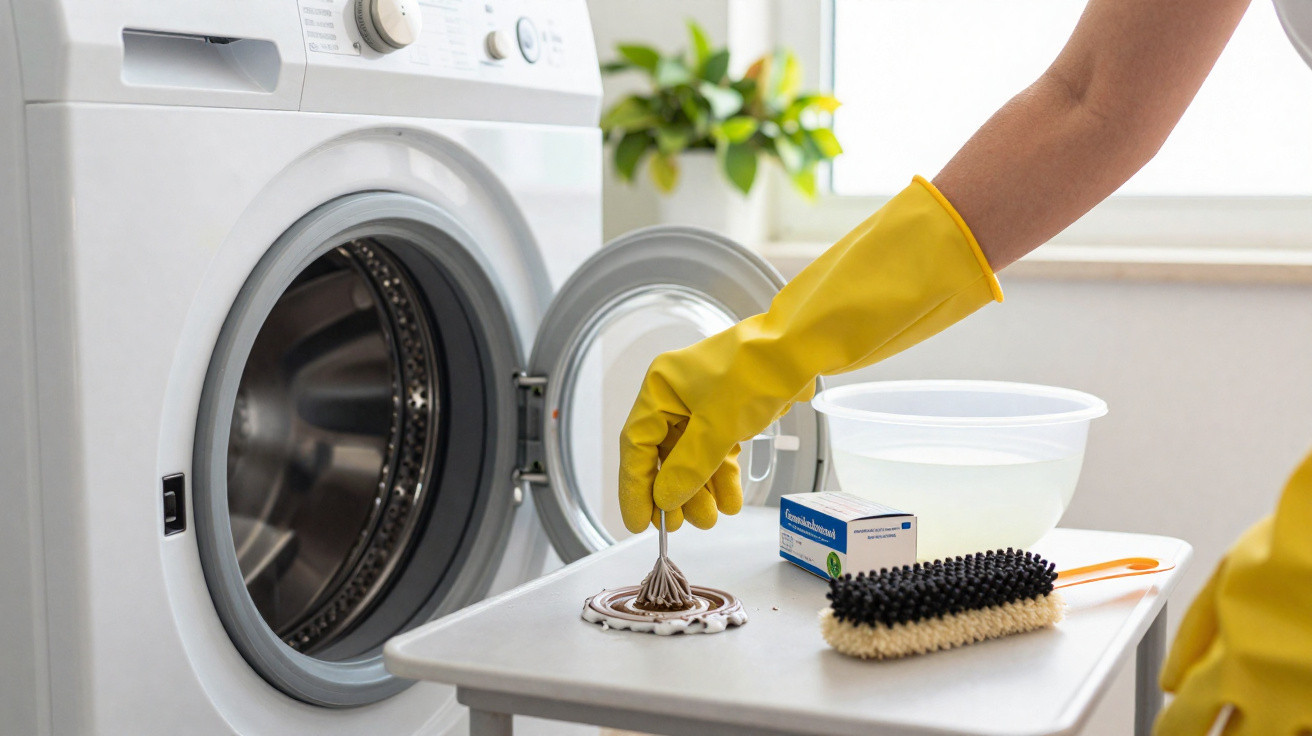
The machine hums as it always does on a Sunday afternoon, providing a lazy backdrop to the scent of washing powder and coffee.
Then the spin cycle starts. The drum clatters like a bargain drum kit, while a sharp, marshy smell takes over the kitchen. It is the sort of smell you tell yourself you will deal with in a week or two. Perhaps three.
You open the door and look at the grey rubber seal, the hazy glass and the detergent drawer, dusty with hardened blue residue in the corners. This appliance cleans everything, but it somehow looks… unclean. Your T-shirts emerge supposedly “clean”, yet the machine feels worn-out, weighed down and almost tacky after years of quick cycles and missing socks.
Your phone lights up: “Washing machine repair – earliest appointment: 9 days.” The price estimate makes you recoil. Then an unpleasant thought appears as you scroll: what if the deep clean that leaves your drum gleaming is quietly funding your repairman?
The hidden grime that is quietly ruining your washing machine
Most washing machines do not fail in spectacular fashion. They rarely erupt in sparks halfway through a spin cycle, surrounded by dramatic smoke and alarms. Instead, they decline gradually: slightly more noise, slightly stronger vibrations, and a smell you blame on detergent, drains or the weather - anything except the appliance itself.
Behind the rubber seal and inside the drum, though, something else is happening. Detergent deposits accumulate on plastic and metal. Tiny fibres and hairs attach themselves to every surface. The warm, humid environment takes care of the rest. Bacteria and mould flourish exactly where you wash baby clothes and gym kit.
The odd thing is that the washing machine continues to operate. Clothes still come out warm and fragranced. You keep adding loads and overlooking the subtle warnings. When you finally book a repair technician, you are not just paying for one failed component. You are paying for years of unseen neglect.
One major UK appliance insurer estimates that as many as 30% of the washing machine “breakdowns” it handles are directly caused by insufficient cleaning and maintenance. It is not always a worn motor or bad luck. It is simply grime. When machines are opened up, technicians find filters clogged with coins and pet hair, pipes coated in sludge and doors darkened by mould.
Any experienced repair technician will recognise the pattern. The most neglected machines are not necessarily owned by careless people; they belong to busy people. Families with three children, house shares where nobody truly “owns” the appliance, and new homeowners managing countless other costs.
A London repairman I spoke to described it this way: he can often smell a “good customer” (for his wallet) before he even gets to the kitchen. There is the sour scent of rubber, damp metal and a detergent drawer that has not been fully removed for years. Poor upkeep does more than create unpleasant odours. It is almost a business model.
There is a harsh logic to it all. A washing machine is essentially a warm, damp box containing spinning metal and electrical components. Everything about it says: “Please don’t leave me filthy.” Detergent builds up because people usually use too much while choosing low-temperature washes. Fabric conditioner leaves behind a sticky coating that never fully rinses away.
That coating traps grime, limescale and detergent crystals. As time passes, hoses become restricted, sensors give inaccurate readings and pumps must work harder. Energy consumption slowly rises. Programmes take longer. Eventually, the machine stops halfway through a cycle and displays an apparently random error code. You may assume it is a baffling electrical fault, while your repairman notices the mould behind the door seal and the grey sludge in the filter - and smiles inwardly.
The 2-hour deep clean routine changes that story. Rather than waiting for a major failure, you use one afternoon every few months to remove one of the easiest sources of your technician’s income.
The 2-hour deep clean that protects your washing machine - and avoids an invoice
Choose a two-hour window when you will be at home anyway: a Saturday morning, a late evening or any quiet point in the day. This is not a full-time undertaking. It is a sequence of brief, slightly unpleasant jobs with waiting periods between them. Put the kettle on, choose a playlist and spread an old towel on the floor.
Begin with the most obvious culprit: the door seal. Carefully pull it towards you and inspect beneath the fold. If you are unlucky, there may be black marks, slimy soap residue and perhaps a solitary sock. Clean it using hot water with a splash of white vinegar, and use an old toothbrush on persistent deposits. No specialist product is required - only a little patience.
Then remove the detergent drawer completely. Many people do not realise that it can be taken all the way out. Rinse it under hot water, scrub off the blue crust and black spots, then wipe the compartment where it fits. This is often the stage that makes people shudder. It is also frequently the reason washing smells “off”.
After dealing with the visible dirt, turn to the machine’s lungs: the filter. Usually concealed behind a small panel at the lower front, it is where wedding rings, coins, pet hair and what feels like half the beach collect. Put a tray or towel beneath it, unscrew it and allow the water to drain out.
What emerges may resemble swamp soup. Take out the filter and wash it beneath hot running water. Remove any strands wound around the small impeller inside, then wipe the housing. This one task can turn a washing machine that “won’t drain properly” back into a reliable workhorse.
Next comes the central part of the deep clean: a hot maintenance cycle. Add no clothing or towels - only the machine and a cleaning product. You can choose a commercial washing machine cleaner, or put a cup of white vinegar and a few tablespoons of baking soda straight into the drum. Select the hottest and longest programme your appliance permits.
While it runs, use a cloth to clean the outside: the controls, buttons, top, sides and even the power cable. Dust and dirt retain moisture, which can gradually reach areas where it does not belong. This is not merely about making the appliance look good for Instagram. It helps the machine breathe.
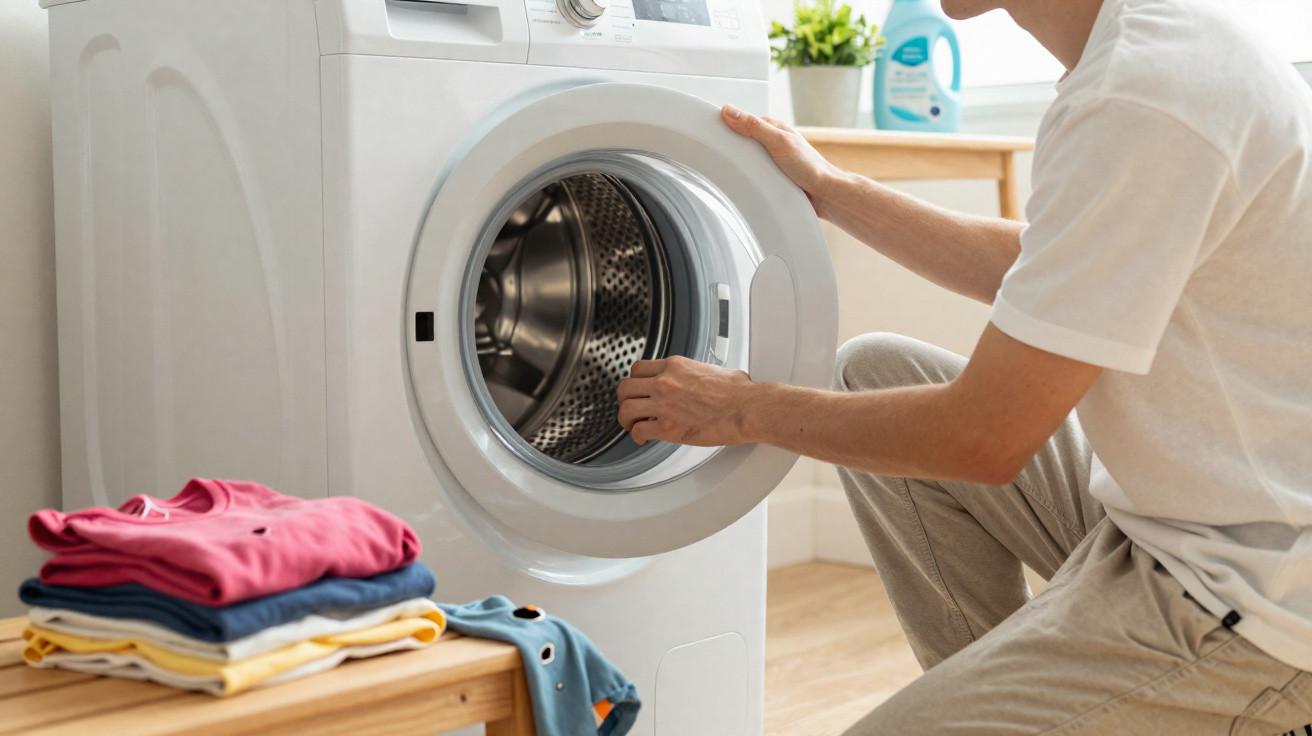
Once the cycle is complete, leave the door fully open and allow the drum to dry completely. This simple habit - leaving the door slightly open between washes - may be the easiest single way to prevent mould returning.
Let’s be honest: nobody really does this every day. Not even people who sell washing machines. Life is too noisy, children need football kits washed at 10 pm, and by the time you remember the appliance, it is already humming through another load.
The answer is not perfection, but routine. A 2-hour deep clean every 1–2 months, alongside small everyday practices such as not drowning laundry in detergent, can make a real difference. Towels smell fresher. Spin cycles become quieter. The nagging worry of “please don’t break today” eases slightly.
There is something unexpectedly satisfying about it on a human level too. You take an appliance that has quietly worked for you for years, often neglected and taken for granted, and give it a sort of spa day. As you wipe and scrub, listening to the empty drum turn hot and clean, it can feel as though you have regained a little control in a home full of things waiting to go wrong.
The biggest error is waiting until there is a problem before doing anything: an unusual noise, an odour or a mark on the rubber seal. By that point, the repairman has already won. Routine deep cleans cannot promise immortality, but they can lengthen the quiet years between invoices.
“Nine out of ten call‑outs I attend on washing machines could have been delayed by years with basic cleaning,” a repair technician in Manchester told me. “I like my job, but honestly, I’d make less money if everyone spent two hours every other month on their machine.”
What does a “good enough” routine look like in everyday life, then? Treat it as a checklist to work through while listening to a podcast, rather than a boot camp that must be completed flawlessly. The aim is not to win an award for the brightest drum. It is to avoid paying for needless breakdowns.
- Every wash – Use less detergent than you think you need. Modern detergents are powerful.
- Every week – Wipe the door seal and leave the door slightly open.
- Every month – Run an empty hot cycle with cleaner or vinegar.
- Every 2 months – Complete the full 2-hour routine: drawer, seal, filter, exterior and hot cycle.
- Once a year – Inspect hoses for bulges, cracks or damp areas around the connections.
Follow this broadly and you are doing more than making an appliance shine. You are quietly preventing future appointments with the person who benefits most when your washing machine finally gives up.
The unexpected pleasure of outsmarting your repairman
After completing the entire 2-hour routine, there is a moment when you open the door and the machine smells of nothing at all. No artificial floral haze. No sour trace of stagnant water. Only clean metal and rubber. It feels surprisingly luxurious, rather like entering a freshly aired hotel room.
Put in a load of washing and watch the opening minutes of the programme. The drum rotates smoothly. Water drains swiftly. There is no strained gurgling from a pump fighting to cope. You shut the door and carry on with the day, but somewhere in the background sits a quiet, self-satisfied certainty: the bill you half expected this year may never arrive.
More broadly, it is about changing how we treat the appliances that silently keep our lives running. Fridges, boilers and washing machines rarely receive any affection until they fail. Yet they form the backbone of a home. Spending two hours deep cleaning your washer also means investing in fewer emergencies, fewer anxious calls and fewer last-minute trips to the laundrette carrying a bag of damp socks.
Some readers may feel a small pang of guilt about the black ring concealed beneath their door seal. Others may be relieved to think they are “already doing most of this, actually”. Both responses are valid. This is less a story about shame than about choice. You can continue insisting the smell is “just the drain.” Or you can pick up a cloth, roll up your sleeves and quietly reduce your repairman’s retirement fund.
| Key point | Detail | Benefit for the reader |
|---|---|---|
| 2-hour deep clean routine | Focuses on the seal, drawer, filter, hot empty cycle and exterior wipe-down | Provides a clear, manageable plan for refreshing an ageing machine in one session |
| Regular light habits | Use less detergent, leave the door open and run a monthly hot wash | Cuts down odours, mould and hidden strain with very little added effort |
| Fewer repair call-outs | Prevents blockages, sensor faults and drainage issues created by grime | Saves money, stress and time spent waiting for a technician to arrive |
FAQ:
- How often should I do a full 2-hour deep clean? Every 1–2 months is a good routine for most homes, particularly if you do several loads each week or have pets and children.
- Can I really use vinegar and baking soda without damaging the machine? When used occasionally and in sensible amounts, vinegar and baking soda are usually safe for most appliances, though you should always consult your manual if you are uncertain.
- My machine already smells bad - is it too late? No. You may need two or three deep cleans in succession, together with a thorough scrub of the filter and seal, but many apparent “lost causes” recover remarkably well.
- Do I still need special washing machine cleaners? They are optional. Strong habits and regular empty hot cycles do most of the hard work; cleaners may help where the build-up is severe or if you prefer a ready-made product.
- Why does my repairman never mention any of this? Some do, while others do not. Preventative care does not create as many call-outs, and many technicians encounter neglected washing machines so frequently that it simply becomes part of their work.




Comments
No comments yet. Be the first to comment!
Leave a Comment