
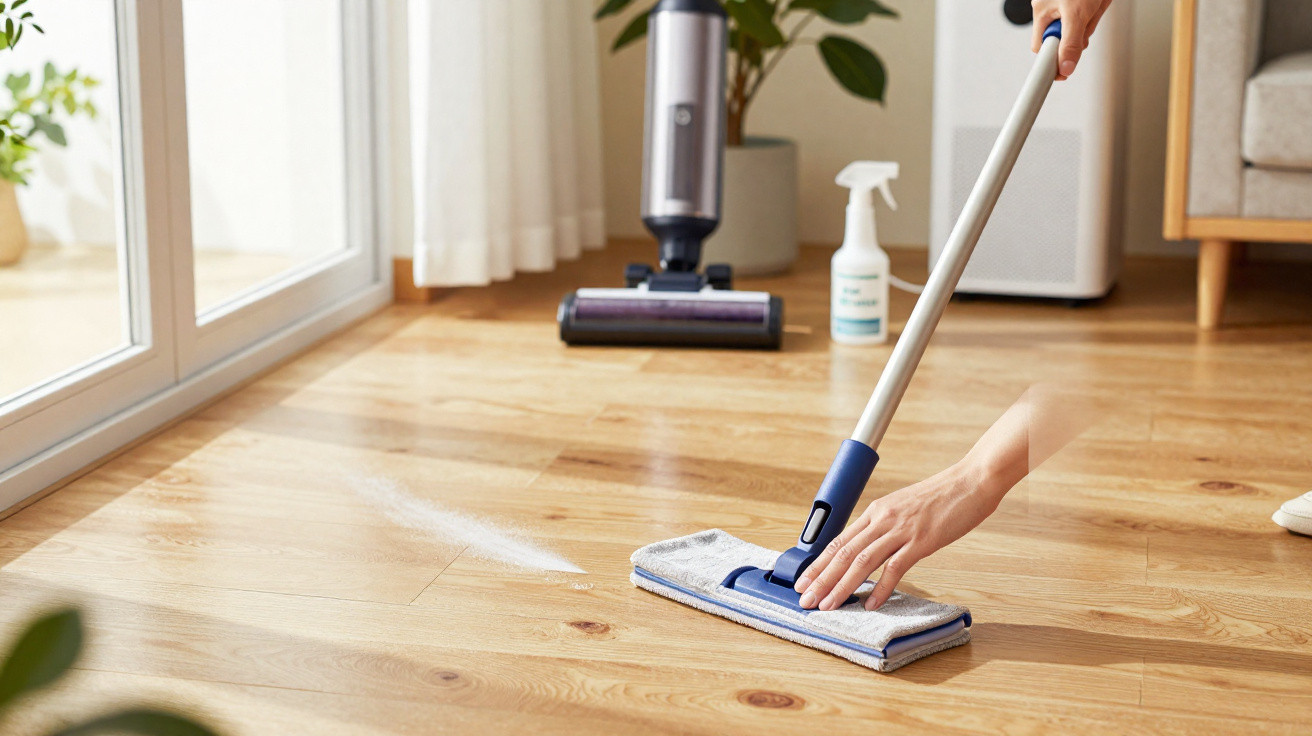
The vacuum cleaner clicks off, and the flat becomes quiet.
For a brief second, you feel pleased with yourself: the crumbs have vanished, the carpet has tidy lines, and the room could be a magazine’s “before / after” photograph. You wind up the cable, take a step back and inhale a little more deeply, sure that the air already seems fresher.
Then, by the following day, there is a dull coating on the TV unit. A pale grey haze sits on the bookcase. Loose hairs seem to taunt you from the skirting boards. It can feel almost offensive.
You vacuum, only for the dust to return as though you had never cleaned at all. It is a peculiar sort of housework déjà vu.
Most of us blame the vacuum cleaner, the pets or an open window. But in sitting rooms and hallways across the country, the same small error is made after every cleaning session.
It is an unseen step that determines whether dust truly leaves your home or simply comes straight back around.
The hidden reason dust keeps coming back so fast
Enter any home ten minutes after it has been vacuumed and take a close look. The carpet appears clean, yet sunlight reveals a faint haze suspended in the air.
Every disturbance - footsteps, a closing door, children running about - moves that haze and gently deposits it on the surfaces you assumed you had just “done”.
That is the catch. We tend to think vacuuming means “dust gone”. In practice, it can mean “dust lifted, then waiting to settle”.
Small particles that bypassed the vacuum bag can remain airborne for half an hour, sometimes longer. Where do they end up? On the coffee table, the black TV unit or the edge of the bed frame.
In a quiet Leeds street, one family allowed a researcher to monitor their indoor air quality for a week. The highest airborne-dust readings did not occur while the children were playing or when the dog shook itself.
Instead, they rose sharply immediately after vacuuming. Each time the cleaner was brought out of the cupboard, the chart resembled a mountain range.
That explains the experience of vacuuming on Sunday and spotting a new grey coating by Tuesday. Not all the dust you see is “new” dust that has come in from outdoors.
A substantial amount has been recycled from your own cleaning session and has simply settled somewhere else.
Once you understand this, it feels different. It is not that you are poor at cleaning or that your home is unusually dirty.
You are merely ending the process at the wrong point and allowing physics to complete it for you - in the least helpful possible way.
This forgotten post-vacuum step that actually gets rid of dust
The real difference-maker is not an expensive vacuum cleaner or a miracle spray. It is what happens during the 20 to 30 minutes after you turn the vacuum off.
That is the period when you either capture the dust or make it welcome to settle in again.
The overlooked step is straightforward: open the room up and wipe again.
Open windows on opposite sides of the home, or use a window and a door, to produce a mild airflow. Allow the invisible cloud of dust to move outside, then give the key surfaces a quick, focused wipe with a damp cloth.
Try this order: vacuum first, then open the windows and internal doors straight away to encourage cross-ventilation. Leave the air circulating for 10–15 minutes while you arrange the cushions or put away the vacuum cleaner.
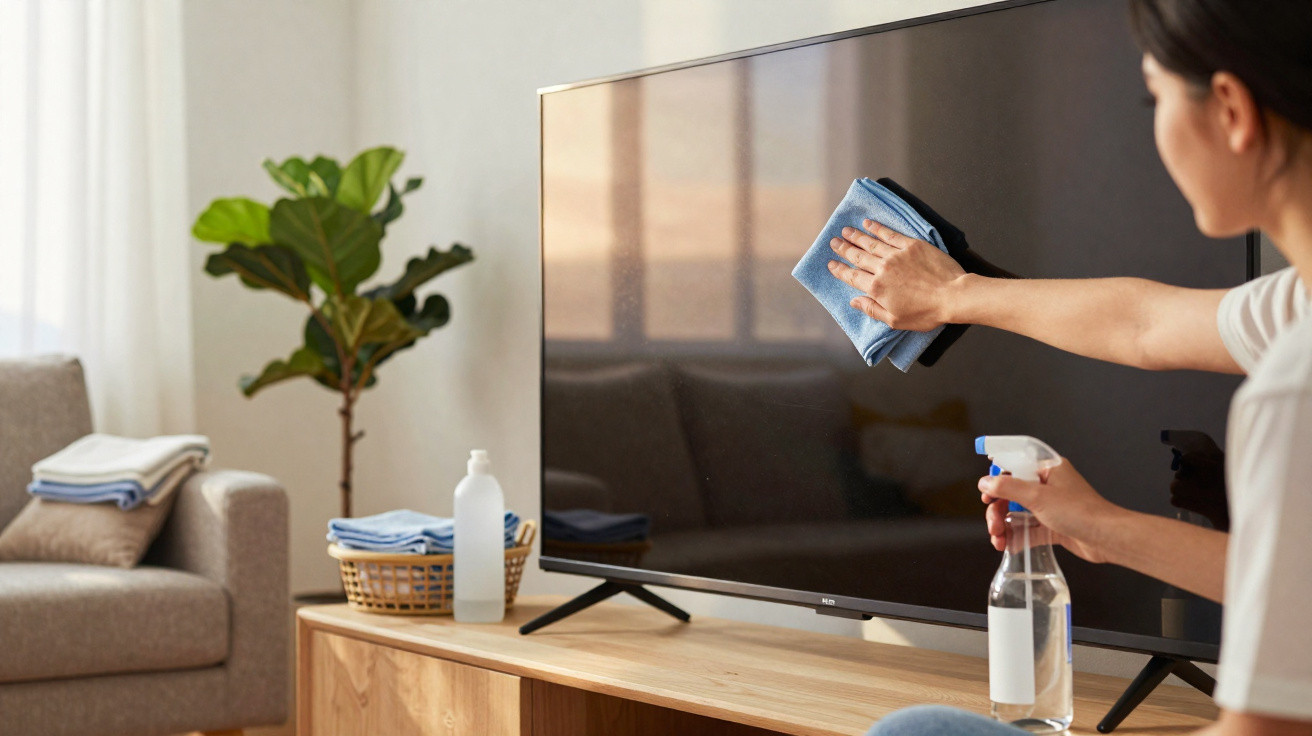
After that, use a slightly damp microfibre cloth on the “dust magnets”: the TV unit, eye-level shelves, bedside tables and the upper edge of the skirting boards.
The dampness of the cloth is important. Dry dusting largely pushes particles around, sending many of them back into the air.
A lightly damp microfibre cloth collects and holds dust rather than giving it another trip around the sitting room.
One Tuesday evening in a small London flat, Emma tested this method after months of feeling that her black coffee table was deliberately winding her up.
She vacuumed the rug and sofa as she normally would, then did something she seldom did in the evening: she opened the sitting-room window fully and left the bedroom window slightly open, allowing a gentle draught to pass through the flat.
As the air circulated, she wiped the screens, coffee table and sideboard with a slightly damp cloth. It was nothing major and took no more than five minutes.
Two days later, she paused in the doorway in surprise: there was no dull coating on the TV, nor any chalky line around the table. There were only the ordinary tiny particles that anyone would find if they looked hard enough.
That is how routines shift: not through an enormous spring-clean, but through one modest extra action that makes the rest feel far less futile.
For Emma, the step did more than cut visible dust - her nose also stopped itching constantly in the evenings.
The reasoning is simple. Vacuuming disturbs particles in carpets, sofas and gaps in the floor. Some are collected by the machine, while others escape into the air.
If you shut the door, turn off the vacuum cleaner and leave, those floating particles must land somewhere. They settle on the closest level surface.
Opening windows and doors to make a draught gives those particles a route out. Even a slight pressure difference between the inside and outside encourages air - and dust - to move outdoors.
The damp cloth then acts as the final net, collecting what remains before it can settle once more.
Think of cleaning as a two-part process rather than a single job: first lift the dust, then take it away.
Miss the second part and you are essentially only moving dust to a different address.
How to do the “post-vacuum reset” without turning cleaning into a full-time job
Here is the approach that suits a busy, real-life home. Vacuum in your usual way, but finish in the room where opening windows is easiest.
The moment you switch the vacuum cleaner off, open at least one window there, along with another window or door elsewhere to form a gentle route for the air.
Keep that airflow going while you make a rapid pass with a damp microfibre cloth.
Aim for one sweep of the surfaces rather than perfection: screens, lower shelves, the table where you eat, bedside tables and any glossy areas where dust shows up first.
If you are thinking, “I don’t have time for this every time I vacuum,” you are not the only one. Let’s be honest: nobody really does this every day.
The key is to treat the complete routine as a reset once or twice a week, with a lighter version between those cleans.
For quick midweek vacuuming, simply open a window for 10 minutes and wipe one “priority zone” - perhaps the room where you spend your evenings or your work area.
Even this limited step affects how much dust remains behind.
One common mistake is spraying polish or a fragranced cleaner directly on to dusty surfaces immediately after vacuuming.
This can turn fine dust into a greasy coating that sticks more firmly and attracts additional dirt.
It is better to keep it simple at first. Choose plain water or a mild mixture on the cloth rather than applying it directly to the furniture.
Use different cloths in different rooms, particularly if somebody in the household has allergies, so that you do not transfer bedroom dust into the sitting room.
There is also an emotional aspect that receives little attention. On a difficult day, when work feels demanding and the house appears as though a small storm has passed through, cleaning can feel like evidence that you are not coping.
On a better day, the very same routine can become a quiet reminder that you still have some control.
“The goal isn’t a dust-free home - that doesn’t exist. The real goal is a home where dust isn’t running the show.”
A small ritual after vacuuming can offer exactly that: not perfection, but a gentle change in who is in control.
It becomes easier still when reduced to a few simple actions.
- Open two points - a window and door, or two windows - immediately after vacuuming.
- Let the air circulate for 10–20 minutes while you put the vacuum cleaner away.
- Make one quick pass with a damp microfibre cloth over the most noticeable surfaces.
- Follow the complete routine once or twice a week, and take a lighter approach on other days.
On screen, it looks like a checklist. In daily life, it turns into habit.
You vacuum, reach automatically for the window latch, and find the cloth folded and ready on the radiator.
The small change that makes your home feel genuinely “clean” longer
There is something unexpectedly satisfying about waking the day after cleaning and finding… nothing remarkable. No intense shine or hotel-standard perfection.
Just the calm absence of that fine grey film on the shelves, along with the faint fresh scent of a room that has properly aired.
This overlooked step after vacuuming is not a miracle trick. It is a modest adjustment to how we understand dust.
Rather than tackling it one surface at a time, you begin to see the air itself as both part of the issue and part of the answer.
We all know the moment when sunlight streams through a window and reveals a blizzard of tiny particles we had not realised were there.
That sight does not mean your home is dirtier than everyone else’s. It simply exposes what most people try not to notice.
Opening your home immediately after vacuuming lets the dust you have disturbed find its way out rather than choose a fresh place to land. It is a quiet rejection of that never-ending, low-level battle.
You still live, cook, shed skin cells and bring pollen indoors on your clothes. Living leaves traces, and that is normal.
What changes is the pattern. Dust no longer beats you back to the surfaces two days after a clean. Your effort lasts longer.
You may notice that you can have someone round without frantically wiping the TV five minutes before the doorbell rings.
Some people will adopt the complete ritual, while others will take only one element - the damp cloth, the open window or the once-a-week “reset”.
That is absolutely fine. Homes are personal, as are the routines that make them liveable.
Still, once you have realised that much of your “mystery dust” was simply cleaning left unfinished, it is difficult to ignore.
You may pause with your hand on the vacuum switch and think: this time, I’m not stopping here.
| Key point | Detail | Benefit for the reader |
|---|---|---|
| Post-vacuum dust cloud | Vacuuming raises dust into the air, where it remains for 20–30 minutes before settling again. | Explains why surfaces can look dusty again so soon after cleaning. |
| Ventilation step | Opening windows and doors to create cross-ventilation immediately after vacuuming allows dust to escape. | A straightforward, free action that helps every cleaning session last longer. |
| Damp microfibre wipe | Make a quick pass over key surfaces with a slightly damp cloth after airing the room. | Captures the remaining dust rather than simply shifting it elsewhere. |
FAQ:
- Do I really need to open windows every time I vacuum? Not every single time, but doing so during your main weekly clean makes a noticeable difference. For quick midweek vacuuming, even 5–10 minutes of fresh air is useful.
- What if I live next to a busy road and the air outside feels dirty? Open windows at quieter times or for shorter periods. You can also use windows on the quieter side of the building while leaving those facing the road shut.
- Can an air purifier replace the open-window step? It can help, particularly with very fine particles and allergies, but it does not fully replace brief, effective ventilation. Combining the two works best.
- Is a steam mop or carpet cleaner better than a vacuum for dust? Both are useful for deep cleaning, but neither removes the need to vacuum regularly or to deal with airborne dust afterwards.
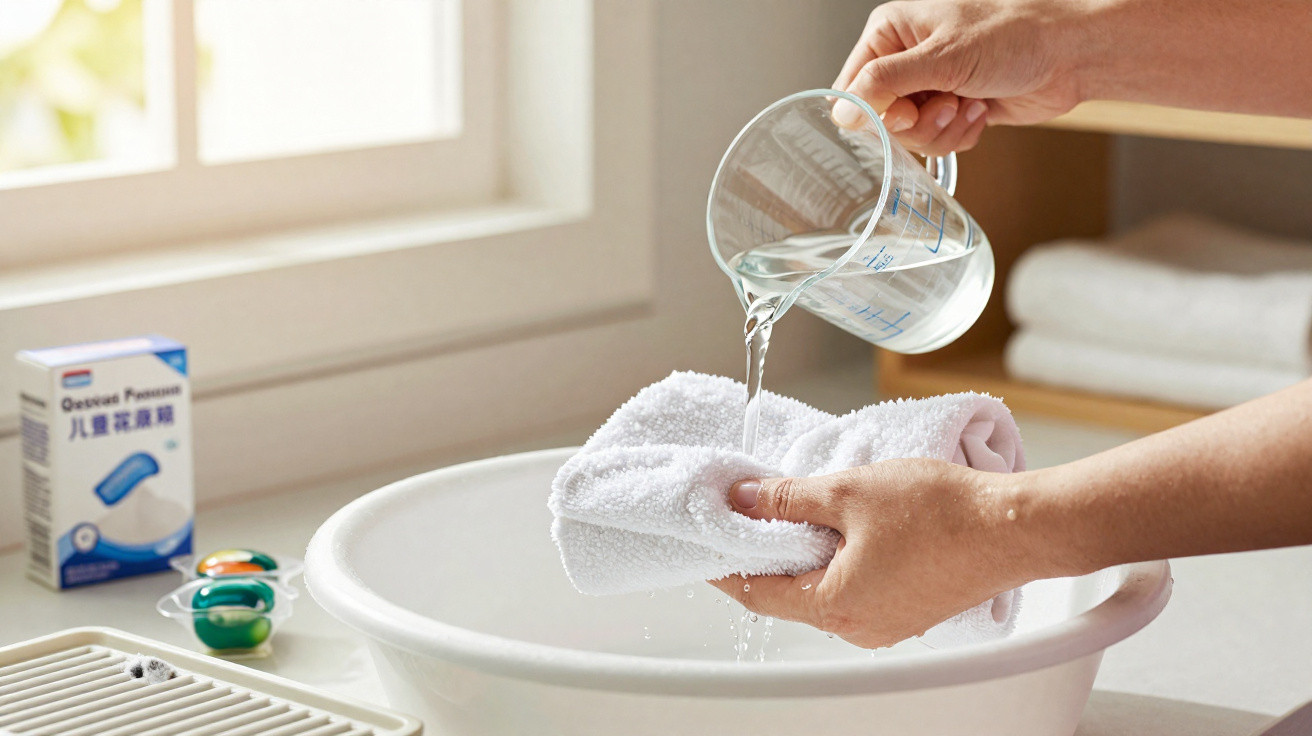
- How damp should the microfibre cloth be? It should be only slightly moist: when squeezed, no drops should come out. If it is too wet, it will leave streaks and spread grime; if it is too dry, it will move dust about instead of trapping it.

Comments
No comments yet. Be the first to comment!
Leave a Comment