
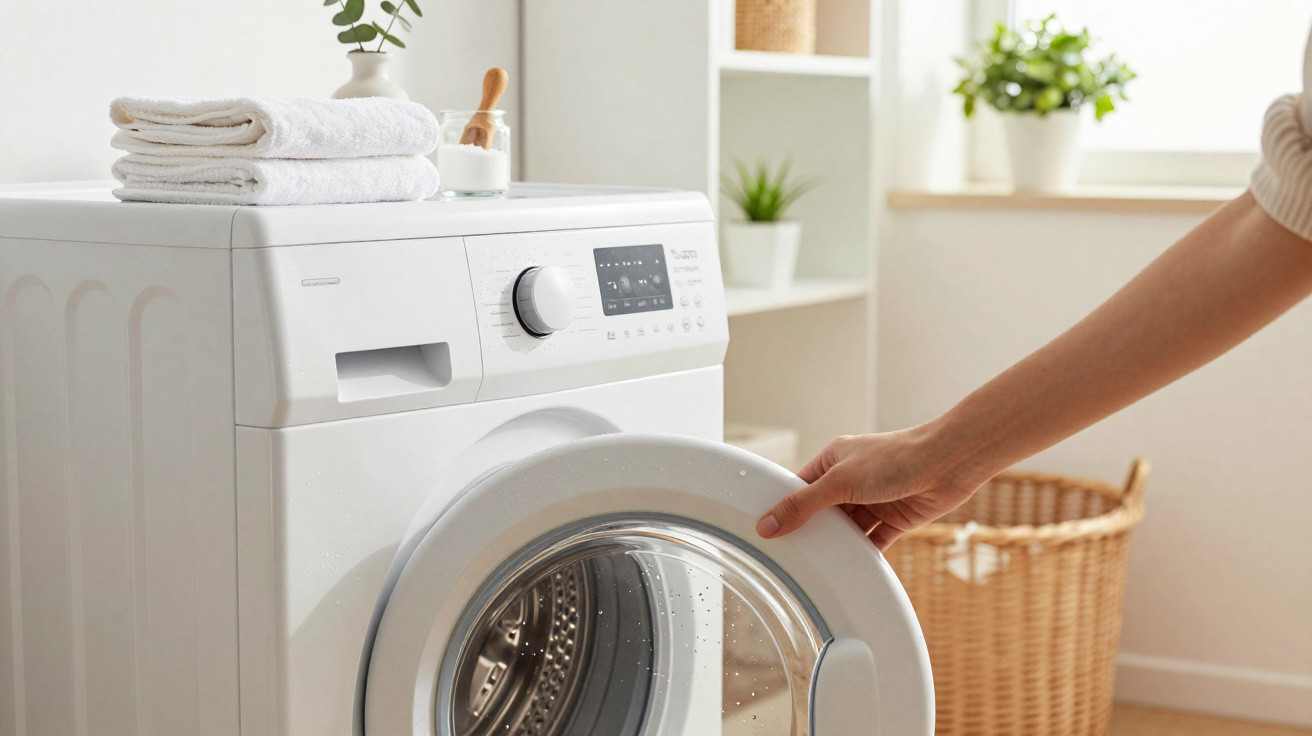
The laundry room was still, apart from a faint sour odour that seemed permanently suspended in the air.
Emma bent over her washing machine, scowling as she sniffed the drum like a detective inspecting a crime scene. Her clothes emerged “clean”, but towels and T-shirts always retained a damp, changing-room-like smell. She had cleaned the drawer, run hot cycles with vinegar and switched detergent twice. Nothing made a lasting difference.
One evening at a friend’s home, she spotted something seemingly unimportant: their washing machine lid was always raised. Not occasionally - always. “Oh, I leave it open so it doesn’t smell,” her friend said, as though it were completely obvious. Emma copied the approach at home. No new cleaning products. No expensive accessories. Only air and time.
Within a week, the smell had disappeared - as if somebody had silently opened a window inside the machine. That small, almost effortless action began to seem remarkably clever.
Why that persistent washing machine smell keeps returning
If opening your washing machine has ever greeted you with an odour somewhere between a wet dog and an old gym bag, you are certainly not alone. Many people assume their washing was particularly dirty, or that their detergent “isn’t strong enough”. Usually, though, the issue develops quietly in the gap between loads. The drum never has a chance to air out properly.
Immediately after a cycle, the drum walls remain wet, the rubber seal is damp, and small traces of detergent and fabric conditioner stick to hidden corners. Closing the lid then traps warm, humid air inside. It creates precisely the sort of enclosed environment where mould and bacteria can settle in, slowly and unnoticed.
After taking hold, they do not simply disappear during the following spin cycle. Odours absorb into the rubber gasket, filter and detergent drawer. You may wash more frequently, choose hotter cycles and add extra products. Yet the machine is being asked to work harder against a problem largely caused by one straightforward habit: shutting it too quickly, too soon and too often.
Household hygiene researchers repeatedly identify the same trend: both front-loading and top-loading machines, particularly in busy households, can develop microbial biofilms inside their drums and seals. These biofilms are sticky microscopic colonies that adhere to surfaces and persist through wash after wash. One study found that more than half of the machines tested contained bacteria associated with unpleasant odours, despite appearing spotless externally.
Picture a damp towel left overnight inside a sports bag. It is not dramatically dirty; it is simply wet, folded up and deprived of air. A washing machine is essentially a bigger, more polished version of that bag. Once its lid closes, the drum becomes a sealed cave - warm, damp and ideal for microorganisms that flourish in darkness and stale moisture. Dry air is their greatest enemy, but we seldom allow enough of it inside.
When that odour takes hold, it spreads into everything. Towels no longer seem genuinely fresh. Black T-shirts can start smelling odd halfway through the day. Some people even blame their own perspiration, when the real cause has been sitting in the machine’s sealed drum all along. Yet the most affordable and straightforward “deodoriser” for your washer is right in front of you: an open lid and a little patience.
The simple habit that helps your washing machine breathe again
The small change that makes the difference is this: once the wash has ended and you have removed everything from the drum, leave the lid or door open. Not slightly open - properly open. Treat it like opening a window after a hot shower. The trapped steam needs an escape route. Let the machine air for at least a few hours and, ideally, keep it open between loads.
If space is limited or you are concerned about children and pets, leave it just ajar with a towel or small object so it cannot seal closed. There is no need for a fan, diffuser or specialist deodorising device. Air simply needs to circulate, allowing the drum, rubber seals and internal crevices to dry rather than stay clammy. Dry surfaces are much less attractive to mould and bacteria.
After several days of giving the washer time to air, most people notice two changes. First, the subtle swamp-like odour in the laundry area diminishes. Second, clean washing smells of detergent again - and nothing else. There is no odd “background note”. It can feel as though you have replaced the machine, when in fact you have merely stopped locking moisture inside the existing one.
Let’s be honest: hardly anyone manages this every single day. We move quickly from task to task, shut the door and forget about it. This is how a frustrating odour turns into something “normal” that you simply tolerate. On a hectic weekday morning, getting children dressed or locating a clean shirt for a video call understandably feels more important than remembering the invisible climate inside a metal drum.
One reader I spoke with, Mark, does three to four loads a day in a small flat with no window in the laundry alcove. He once bought scented beads, powerful fabric conditioners and even fragranced drawer liners in an attempt to defeat the smell. The results never lasted. Then he made one adjustment: he began leaving the washer door slightly open overnight, using a simple magnetic hook to prevent it opening too far.
A week later, his towels no longer smelled as though they had been left in a basement. He removed the “extras” from his shopping list and now uses a basic fragrance-free detergent. The laundry corner still has no window and no sophisticated ventilation, but the machine no longer acts like a swamp disguised as an appliance. One small routine outperformed a basketful of products.
The reasoning is very simple. Mould, mildew and many bacteria responsible for odours thrive in damp conditions. They feed on residual detergent, fabric conditioner, skin cells and fibres left behind after every wash. Shutting the lid straight away gives them a warm, moist and dark incubator. Leaving it open takes away the environment they need most.
Imagine the washing machine drum as an oversized drinking glass. Rinse a glass, leave a little water in it, then put it in a cupboard. Eventually, it will develop a stale smell. Rinse that same glass and leave it to dry on a rack in the open air, and it will remain neutral and ready to use. The drum is no different. It follows the same basic principle: dry surfaces smell less and support less growth. That is why airflow between loads is more effective than even the strongest “fresh linen” scent.
Making the washing machine open-lid trick an easy routine
The best practice is also the least glamorous: as soon as you remove the washing, open the lid fully and leave it alone. No ritual and no timer required. Simply leave it open. If you do laundry in the evening, make this your final little task before turning out the light in the utility room or kitchen. Like brushing your teeth or locking the front door, it can become a calm end-of-day habit.
If other people in your household keep closing it after you, attach a small note to the top saying: “Leave me open to stay fresh.” It may sound silly, but it can help. With front-loaders, occasionally wipe the rubber seal, then keep the door ajar with a simple doorstop or folded cloth. For top-loaders, raising the lid after every load is usually sufficient. Perfection is not the aim. The aim is for the drum to be dry more often than it is wet.
People often feel quietly ashamed of how they maintain their machines. They may say they “should” run a cleaning cycle weekly, scrub the gasket, disinfect the drawer and clean the filter with a toothbrush. Daily life is not always so manageable. Children become ill, work builds up and laundry plans collapse. The benefit of leaving the lid open is that it requires almost no effort while delivering a great deal in return.
A frequent mistake is shutting the washing machine as soon as it beeps, particularly when you are rushed. Another is allowing wet clothes to sit in the drum for hours before drying them. That combination - stagnant washing and a closed lid - is practically a lesson in creating stubborn odours. If it happened to you this week, you are not alone. On a human level, the open-lid habit works because it is forgiving. Miss a deep clean, but continue airing the drum, and you are already making progress against that stale, mouldy underlying smell.
Some appliance technicians put it just as plainly:
“Nine times out of ten, when someone complains that their washer stinks, the drum is basically living in a permanent sauna. Let it dry, and it stops complaining.”
To make the routine even simpler, keep this quick mental sticky note in mind:
- After every wash: empty the drum fully, then leave the lid or door open.
- Once a week: wipe the seal and detergent drawer using a damp cloth.
- Once a month: run an empty hot cycle with a little white vinegar or washing machine cleaner.
- Whenever you notice an odour: check whether the lid has been closed for days.
- Any day you forget: start again with the next load. No guilt - just air.
Following these steps does not make you a hygiene robot. It simply brings your home into line with how moisture and microbes actually behave. That alone can alter how your laundry smells and feels, and may even affect how long your machine lasts before it requires repairs.
Living with a fresher washing machine, one open lid at a time
After maintaining the open-lid habit for a while, a subtle shift occurs. The laundry area feels a little less off-putting and a little less like, “ugh, what died in here?”. You begin to rely on clean clothes actually smelling clean, even by the fifth wear of your favourite jumper. Friends can borrow a towel without returning it with the polite, tense smile that says, “Thanks, but also… what is that smell?”
Some homes experience a small chain reaction of improvements. They stop relying so heavily on perfume-laden products to conceal unpleasant odours. They run fewer hot empty cycles simply to “reset” the machine, reducing water and energy use without necessarily thinking about it that way. They start to see the washer not as a sealed magical box, but as a damp object that needs air just like any other wet surface. A little realism enters the picture, along with less frustration.
On an emotional level, there is comfort in getting to grips with these small, quiet techniques. We rarely mention them at dinner parties, yet they influence the intimate details of home life. The scent of clean bedding after a long week. The pleasure of pressing your face into a towel that is truly fresh rather than chemically masked. The reassurance that the sour, murky odour has gone not because you purchased something new, but because you adjusted something small, familiar and stubborn in your routine.
Leaving the lid open will not fix every laundry issue. It will not fold shirts, separate tangled socks or prevent a teenager from cramming one enormous mixed load into the drum. Even so, this understated action changes how the machine exists between washes. It lets you work with the realities of moisture and air rather than against them. That may be the most overlooked household improvement you can make this year: a door left open, a drum allowed to breathe and clothes that finally smell like the life you want to live in them.
| Key point | Detail | Benefit for the reader |
|---|---|---|
| Leave the lid open | Allows the drum to dry between washes | Drastically reduces musty odours |
| Dry seals and hidden areas | Simply wipe the seals and drawer once a week | Prevents biofilm and visible mould from forming |
| Maintain a regular cleaning cycle | Run a monthly empty high-temperature wash with vinegar or cleaner | Extends the machine’s lifespan and keeps odours under control |
FAQ:
- Should I always leave the washing machine lid open? Yes, whenever your available space and safety considerations permit. Keeping it open between loads allows the drum to dry, which is the easiest way to prevent musty odours.
- How long should I leave the door or lid open after a wash? A few hours will help, but leaving it open until the next load gives the interior enough time to dry completely.
- What if I have children or pets and cannot leave it fully open? Leave it slightly ajar with a small object or catch - enough for air to circulate while making access more difficult.
- Will leaving the machine open damage it or waste energy? No. When switched off, an open lid uses no energy and does not damage components; it simply lets moisture evaporate.
- Is leaving the lid open enough to stop all smells? It tackles a major part of the issue, but occasional cleaning of the seal and drawer, plus a monthly hot cycle, is even more effective.




Comments
No comments yet. Be the first to comment!
Leave a Comment