
You know that creeping embarrassment when someone sends a message saying, “I’m nearby, can I pop in?
” and you look around to find laundry slung across the sofa, crumbs sparkling beneath the coffee table and that mysterious mug you planned to wash four days ago. Then comes the frantic clear-up: stuffing things into cupboards, pushing shoes beneath the bed and hoping nobody opens the wrong door. Your home does not resemble the serene, white, sun-filled rooms on Instagram; it looks like actual life. Busy, overflowing, slightly sticky actual life.
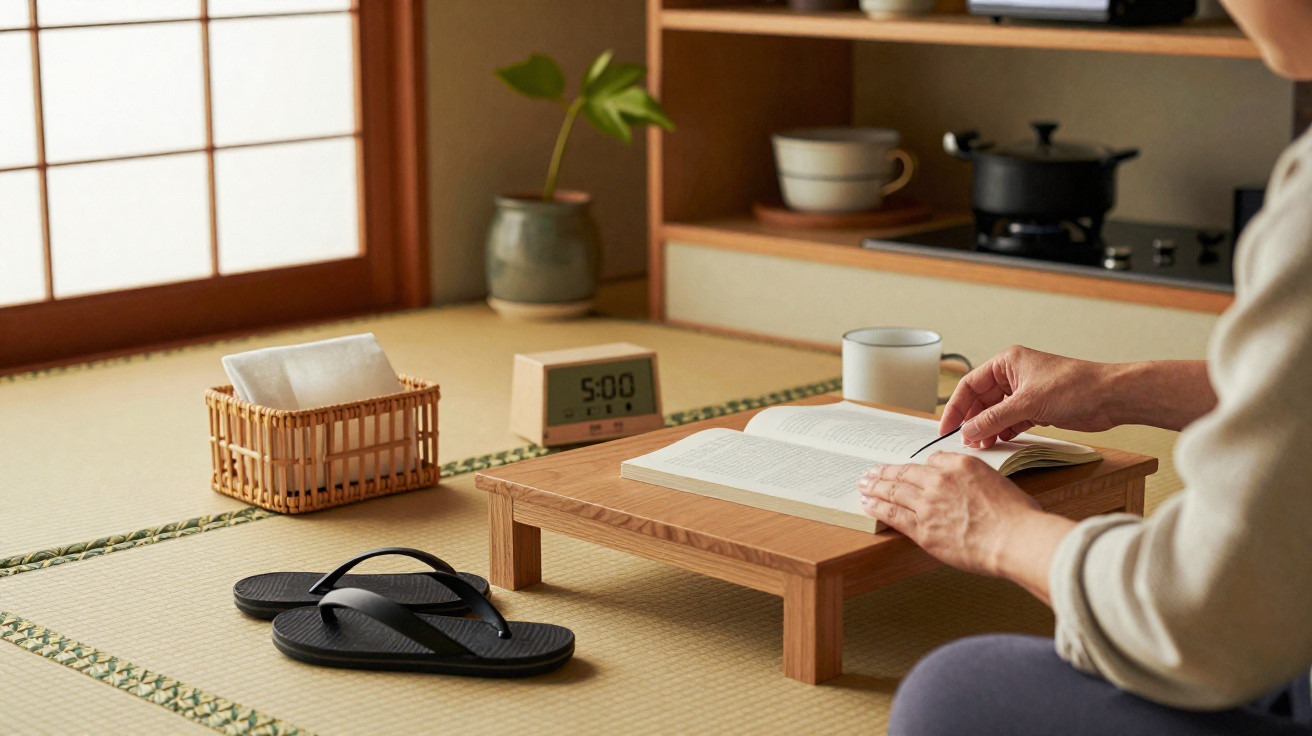
Now imagine a compact Tokyo flat, perhaps no larger than your living room and kitchen put together. There is no storage room and no “junk drawer” swallowing every random item. Yet it somehow feels airy, peaceful and clear. There is no epic weekend cleaning session, no three-hour scrub involving a podcast and rubber gloves. Instead, there is a small daily ritual that stops mess from ever taking over. The oddest thing is that it takes only five minutes.
The tiny habit that quietly runs the whole show
Ask people in Japan and you may hear it called different things, but the principle stays the same: give your home a quick, deliberate reset each day, even if it does not seem “bad enough” to need cleaning. It is neither a full tidy-up nor a spring clean. It is simply five minutes of non-negotiable action. Think of it less as “a cleaning session” and more as “brushing your teeth, but for your home”.
The approach is straightforward. Select a regular time, commonly just before you leave in the morning or before bed, then spend five minutes moving through your space with one clear purpose: put every visible item back where it belongs, wipe anything plainly dirty and leave one area looking clearly “done”. That is all. There is no need to reorganise drawers, empty the wardrobe or follow a 25-step productivity plan you will abandon after a week.
Many visitors to Japan are struck by how easily this habit can go unnoticed. A mug gets rinsed as soon as it is set down. A cushion is straightened when someone gets up. A towel is folded while the bathwater drains. Separately, these actions seem insignificant. Done every day, though, they prevent the dramatic “before” and “after” stage altogether. The home simply never crosses the line into chaos.
Why five minutes beats your weekend deep clean
The five-minute rule has a quietly honest quality. It accepts that you are unlikely to get a totally empty weekend, endless energy and a sudden urge to scrub the skirting boards. You are busy and tired, and that imaginary “cleaning day” is not about to rescue you. So it reduces the job until almost no resistance remains. After all, how do you argue with five minutes?
Psychologists might explain its success using the rather dull terms habit formation and decision fatigue. Put simply, the more decisions a task requires, the less likely you are to start it. “Should I clean now? What should I do first? Do I need to get the hoover out?” The Japanese five-minute reset avoids those questions entirely. It happens at the same time each day and lasts the same brief period. The choice has already been made.
There is a softer side to it as well. Tidying for five minutes each day means your home no longer becomes a battlefield tackled once a month; it becomes somewhere you maintain through small, almost caring actions. Over time, being surrounded by this changes your relationship with cleaning. It is no longer a punishment for allowing things to get out of hand. It becomes a gentle routine, like making the kettle boil or locking up at night.
The morning sweep: how it really looks in Japanese homes
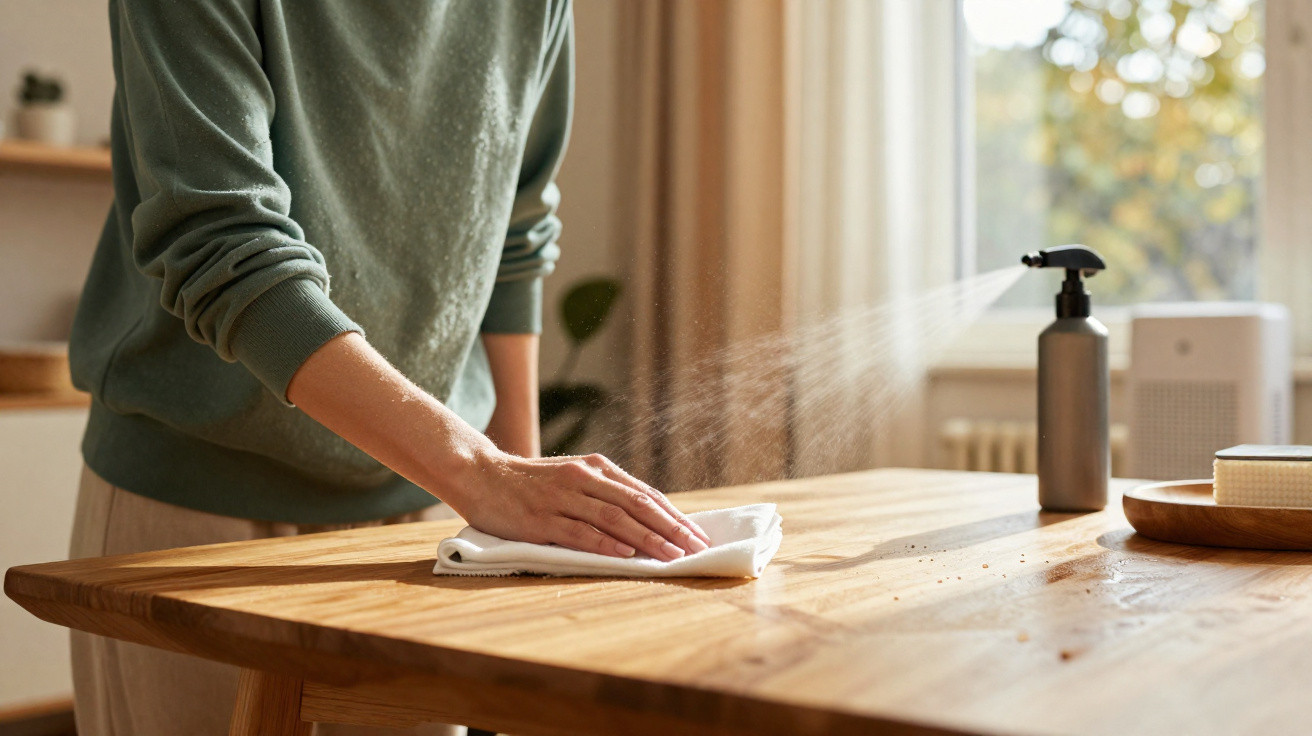
I once stayed with a friend in a cramped Tokyo apartment, and he had mastered this approach. Every morning, before making coffee, he would quietly move from room to room. He gave the duvet a quick shake, opened a window for a burst of cold air, put the previous day’s clothes straight into the laundry basket and ran a damp cloth over the small kitchen counter as the kettle boiled. In roughly three minutes, the whole flat appeared to breathe out.
He did not describe it as a routine, and he definitely did not consider it “minimalism”. It was merely something he had seen his parents and grandparents do unfailingly. He said his grandfather, raised in a small wooden house, was preoccupied with dust because it signalled neglect - and neglect was viewed almost as a moral failing. Spending five minutes a day showed respect for the place you lived in; it was not an attempt to achieve a Pinterest-perfect look.
We all know the moment: you stare at a chaotic kitchen and promise, “Right, this weekend I’m doing a full deep clean.” Then Friday arrives, the week has worn you down and the prospect of three hours on your knees with a sponge seems absurd. That is the gap the morning sweep fills. It does not require motivation. It is simply the next thing you do, like washing your face or picking up your keys.
The one-spot rule that changes everything
Many Japanese households quietly add a useful variation: the “one-spot rule”. In those five minutes, you pick one area that has to look undeniably finished by the end of the day. It could be the kitchen counter, the coffee table or the bathroom sink. Rather than attempting to put the entire home right, you ensure that this single area always appears ready for visitors.
This is when the rhythm of the habit becomes unexpectedly rewarding. Even on an exhausting day, you complete your five minutes and at least that one space looks good. On better days, you may continue for longer because you have already begun. That small island of order - a cleared, wiped counter or a folded throw on the sofa - tends to spread by itself. It settles your eyes, and your mind somehow follows.
A single reliably tidy corner can alter the feel of an entire room. Your eyes settle on something “done” rather than something “to-do”. Next time you pass it, you are more inclined to hang up your coat instead of dropping it on the chair that once held a permanent mountain of clothes. It is the same understated psychology that makes hotel rooms feel calming: uncluttered flat surfaces and nothing demanding attention. You can bring a touch of that feeling home, five minutes at a time.
The cultural backbone: not magic, just mindset
It is easy to look at Japanese homes and assume they are neat because people there are naturally tidy or minimalist. For everyone else, that can be a reassuring explanation: “They’re just built different, I could never.” The truth is far less mysterious. Much Japanese housing is compact, storage is scarce and clutter quickly becomes suffocating. There is simply not enough room for disorder to grow unchecked.
There is also a longstanding tradition of looking after communal places, and that influences how people care for their homes. In Japan, schoolchildren clean their own classrooms and corridors. Office workers may spend several minutes each morning wiping desks and emptying bins together rather than waiting for a cleaner to arrive after working hours. Growing up this way makes personal responsibility for your surroundings feel natural.
Of course, nobody manages this flawlessly every day for an entire lifetime. People in Japan miss days, leave home late and put off washing a dish “for later” just like everyone else. The distinction is the powerful social and cultural prompt to resume quickly. Mess is treated as temporary rather than permanent. You slip for one or two days, then quietly return to the habit. No guilt or drama - simply back to the five minutes.
How to copy the Japanese five-minute cleaning habit without pretending you’re in Tokyo
This is where many of us get it wrong: we decide to “live like the Japanese” and immediately attempt to declutter our whole lives in one heroic evening, equipped with bin bags and guilt. We then burn out, the clutter returns and we conclude that people online must be lying about how simple it is. The five-minute habit takes the reverse route. Start very small, allow it to be messy and imperfect, and let the difference gradually build.
For a typical UK flat or house, a practical version could be this: choose a fixed anchor, such as immediately after breakfast or just before brushing your teeth at night. Set an actual five-minute timer on your phone. During that time, reset the visible surfaces in your main living area only: put dishes in the sink or dishwasher, throw rubbish in the bin, fold blankets and return remote controls and chargers to their proper places.
Next, introduce the “one-spot rule”. It might be the kitchen worktop beside the kettle, your bedside table or the space you see first on opening the front door. Give that area extra attention during the five minutes: wipe it quickly, keep it free of clutter and remove anything that does not belong there. Treat it as a small sanctuary of order, even if the rest of the home has not caught up yet.
Small, specific, and very boring (that’s why it works)
You do not need attractive baskets or an entire collection of labelled jars for this habit. It requires just three unexciting things: a fixed time, a brief duration and definite rules for what “done” means during those minutes. Do not bargain with yourself. Instead, think, “Right, five-minute reset,” and start moving before your brain can complain.
Some people find it simpler to attach the ritual to a sound or physical cue: the kettle clicking on, the washing machine beginning its cycle or a favourite playlist playing softly nearby. That small ritualistic signal can prompt your body to begin even when your mind is reluctant. Five minutes later, yesterday’s takeaway smell has left the counter, the living room looks 30% better and you have not had to turn into a different person to achieve it.
The aim is prevention, not perfection. It is not “my home could be in a magazine,” but “my home never gets bad enough to make me feel ashamed when the doorbell rings.” Once that change registers, you begin to protect those five minutes fiercely. They return your weekends to you. They also bring back that odd, quiet pride when you turn off the lights at night and notice a room that appears cared for.
What changes when mess stops shouting at you
People who maintain this habit often mention an unexpected result: their home’s emotional noise becomes quieter. The constant background hum of “I should really clean that, I need to sort that pile, I’m such a mess,” begins to disappear. The guilt eases. Your rooms may still be small, dated or mismatched, but they stop feeling like proof that you have failed at being an adult.
There is another, deeper aspect too. By spending five minutes caring for your surroundings, you are also quietly telling yourself that you deserve a home that feels pleasant, rather than merely “good enough to get by”. It may sound dramatic, but anyone who has lived with chaos for a long time knows how heavily it weighs on the shoulders. A clear counter and a clean mug by the kettle in the morning are small acts of self-respect.
Most Japanese homes aren’t spotless because someone spent all day scrubbing. They seem “spotless” because mess is never given the time to establish itself. Five minutes here and five minutes there, repeated again and again, is not glamorous. It will never become a TikTok viral sensation. Yet it quietly produces something most of us badly want: a home that feels kind to live in.
Start tonight, and notice tomorrow morning
If you want to try it, you need no new system, book or trolley loaded with organisers. Tonight, before bed, set a five-minute timer and pick your one spot. Clear it, wipe it and make it look strangely hotel-like. Unless you have time, leave everything else alone. Then turn out the lights and walk away.
In the morning, notice how you feel when you see that one small, completed area of your home. Perhaps nothing life-changing occurs. Perhaps you only experience a small, almost silly flicker of, “Oh. That’s nice.” That is the feeling Japanese homes quietly pursue each day - not a gleaming show home, but the gentle comfort of a space that has been cared for.
If five minutes can give you even a little bit of that, it might be the most powerful “cleaning hack” you ever try.

Comments
No comments yet. Be the first to comment!
Leave a Comment