
Sunlight stretched across the newly mopped floorboards, the room carried a faint lemon scent, and you felt that small burst of pride that follows a thorough clean. Then the children came in. Then the dog. Then somebody crossed the room in socks that had clearly been nowhere near clean. By mid-afternoon, the sheen had disappeared, leaving the floor looking streaky and worn, as though it had not been cleaned for days.
You may know that deflating feeling. Saturday morning has gone on scrubbing and mopping, your back is beginning to protest, yet by evening the floor is dull, sticky or blotchy once more. Why does it happen so quickly? Why do certain floors remain bright and fresh for days while others look grimy before the kettle has boiled a second time?
The awkward truth is that many of us repeat the same small, unseen error whenever we clean. It is an error that spreads grime rather than removing it.
The sneaky mistake that ruins clean floors in hours
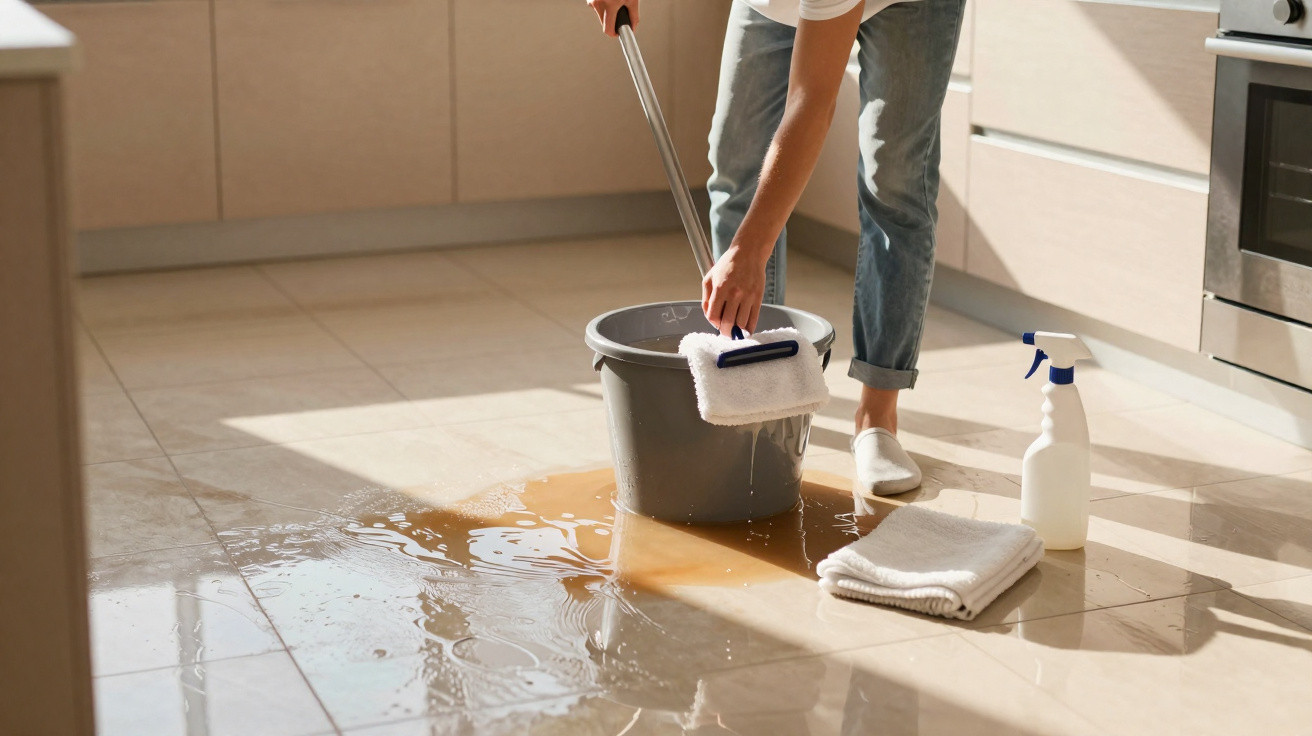
Most people blame dust, muddy footwear or pets for dirty-looking floors. In fact, the less exciting culprit is dirty water. The cleaning error most likely to undo your hard work is mopping an entire floor with the same grey, used water and an over-saturated mop. What appears to be cleaning is often simply moving diluted dirt from one area of the room to another.
After a few passes, the water in the bucket already contains a mixture of fine grit, grease, soap residue and whatever else was on the surface. Continuing to mop with it does not rinse the floor; it coats it again in a thin layer of dirt and detergent.
A London cleaning company recently monitored what happened in a typical family flat during one week. One parent mopped the kitchen and hallway exactly as most of us would: one bucket, one measure of product and no change of water. The other parent was told to do nothing at all beyond living normally. Two days later, swabs from the “cleaned” floor revealed almost the same amount of residue as those from the untouched hallway.
The photographs from the test look strangely familiar. Initially, the mopped kitchen tiles seem wet and bright. Within half a day, the busy areas look cloudy, a murky grey line remains around the skirting boards, and streaks become visible in direct light. The family were certain they had cleaned “properly”. The laboratory findings merely confirmed what many of us suspect: the shine fades because old dirt is being put straight back onto the floor.
There is some science behind that dull appearance, too. Most supermarket floor cleaners combine surfactants - the ingredients that lift grease - with small quantities of fragrance and solvent. As the water in the bucket becomes murky, those surfactants attach themselves to tiny dirt particles. Each time the mop returns to that mixture, its fibres absorb the grimy solution, which dries into a dull coating on the surface.
On tiles, this layer creates streaks and uneven patches. On vinyl, it may feel tacky under bare feet and draw in more dust within hours. On wood, it takes the shine from the finish and makes every footprint more noticeable. The floor is not somehow becoming dirty again: the grime was never completely removed.
The right way to mop so floors actually stay clean
The answer is not a more expensive cleaner. It is about separating dirt from the water more frequently. Professional cleaners seldom mop an entire home using a single bucket. They clean in sections, using fresh solution for every zone and wringing the mop until it is damp rather than dripping. This one adjustment matters far more than changing cleaning brands repeatedly.
Treat the bucket as a short-term container for dirt, rather than a magic formula that remains clean indefinitely. When the water reaches a cloudy, weak-tea colour, it has done its job. Tip it away, quickly rinse the bucket and mop, then refill with fresh warm water and a small amount of cleaner. Using shorter passes, rinsing often and allowing the floor to air-dry undisturbed will keep the surface genuinely clean instead of leaving it coated.
Many of us make the same minor mistakes. We use far too much product because “more must be better”, only to leave sticky residue that holds on to every bit of dust that lands on it. We rush through mopping in five frantic minutes and miss the sweeping or vacuuming stage, allowing grit to scrape across the surface and become lodged in corners. Or we rely on one old string mop that has effectively become a fabric museum of the previous five years.
After a tiring day, it is easy to splash the mop around quickly and say the job is finished. Let’s be honest: nobody really does this every day. That is perfectly fine. The aim is not perfection, but a manageable routine that prevents the dispiriting “it’s filthy again already” feeling and leaves a floor that still looks respectable when an unexpected visitor rings the doorbell.
A professional housekeeper I spoke to put it bluntly:
“Most people don’t have dirty floors because they’re messy. They have dirty floors because they don’t separate the dirt from the water. Once you get that, everything changes.”
Here is an easy way to remember the principle without making it complicated:
- Always clean dry first: sweep or vacuum quickly.
- If possible, use two buckets: one for clean solution and one for rinsing.
- Replace the water as soon as it appears cloudy, rather than waiting until you have “finished”.
- Use a mop that is lightly damp, never soaking wet, particularly on wood.
- Allow the floor to dry without disturbance so it does not immediately collect fresh dust.
Small tweaks that make floors look cleaner for days
Once you stop reusing dirty water, other adjustments start to make much more sense. Flat microfibre mops, for instance, are not merely fashionable. They retain less water, so they leave behind less residue, while their fibres are made to capture fine particles instead of dragging them around. Used with a bucket with an effective wringer or a spray-mop system, they make light, controlled passes possible.
Dilution is another understated difference-maker. Most floor cleaners perform better at a slightly weaker concentration than you might expect. A stronger solution produces a thicker layer that is more difficult to rinse off, causing precisely the hazy appearance that develops by afternoon. Try it next time: use half the recommended amount in warm water and mop a small area with fresh solution. You may be surprised by how much brighter the floor looks once dry.
Then there is everyday life. Perhaps you share your home with a muddy dog, football boots, a partner who will not take off their shoes, or a baby who appears to scatter snacks in every direction. The intention is not to monitor every crumb, but to establish small habits that protect a freshly cleaned floor without making the house feel like a showroom.
A robust doormat both inside and outside every entrance reduces the amount of dirt that ever reaches the tiles. Quickly dry-mopping or vacuuming high-traffic areas every few days means the water will remain cleaner for longer when you do mop properly. If you truly hate mopping, a straightforward spray mop with replaceable microfibre pads may be ideal, because it encourages one essential habit: using fresh, clean liquid every time.
A cleaning trainer captured the point perfectly when she told me,
“A floor that looks clean for days isn’t about hard work. It’s about not undoing your own effort.”
When you are tired and tempted to hurry, this short mental checklist can help keep the idea in focus:
- Sweep first – remove crumbs and grit before wet cleaning.
- Watch the water – once it is cloudy, it is working against you.
- Respect your floor type – wood, tile and vinyl each cope with different amounts of moisture.
- Go easy on product – too much cleaner = dullness sooner.
- Stop early instead of “powering through” with filthy solution.
There is something surprisingly revealing about floors. They display footprints, spills, hurried mornings and crumbs from late-night snacks. When a floor looks drab only hours after cleaning, it can feel like a silent judgement of your effort, as though the house is shrugging and saying, “Nice try”. During a busy week, that feeling can weigh more heavily than we admit.
Changing that single habit - refusing to spread dirty water around - does more than make the surface brighter. It changes cleaning from a “Sisyphean task” into a small ritual you can win. Mop one section, pour away the murky water without feeling guilty, and watch the floor dry to a soft, even sheen. The following morning, the light catches it and it still looks good. It may not be magazine-perfect, but it looks good in real life.
On a grey Tuesday, that modest success matters. It is the difference between walking into the kitchen and thinking “what’s the point?” and quietly appreciating that your socks are not collecting mysterious stickiness. Once you have noticed what a bucket of genuinely clean water can achieve, returning to the old method is difficult - regardless of how rushed the day feels.
| Key point | Detail | Why it matters to the reader |
|---|---|---|
| Change the water regularly | Do not clean the whole home with one murky bucket | Prevents a dirty film from being deposited again and making the floor dull within hours |
| Less product, better method | Use a light dose, sweep beforehand, and mop with a damp rather than soaking-wet mop | Reduces streaks, sticky residue and rapid dullness |
| Match the tool to the floor | Use microfibre for tile/vinyl, very little water on wood, and two-compartment buckets where possible | Protects each floor type and prolongs its clean appearance between cleans |
FAQ:
- How often should I change the mop water when cleaning? Change it as soon as it becomes cloudy or slightly grey. In an average kitchen, this may mean changing it halfway through, or more frequently if the floor is especially dirty.
- Why does my floor feel sticky after mopping? A sticky floor usually means there was too much cleaner in the water or that dirty water was used for too long, leaving residue that collects dust while it dries.
- Is a microfibre mop really better than a traditional string mop? For most homes, yes. Microfibre captures fine particles rather than moving them around and uses less water, helping floors dry faster and cleaner.
- Can I use the same method on wooden floors? Yes, but keep the mop only lightly damp rather than wet, and replace the water even more often so that you do not spread a dirty film across delicate finishes.
- Do I really need two buckets to clean properly? No, although one bucket for rinsing and another for clean solution makes the process easier. If you have only one bucket, empty and refill it more often so you are not mopping with murky water.
Comments
No comments yet. Be the first to comment!
Leave a Comment