
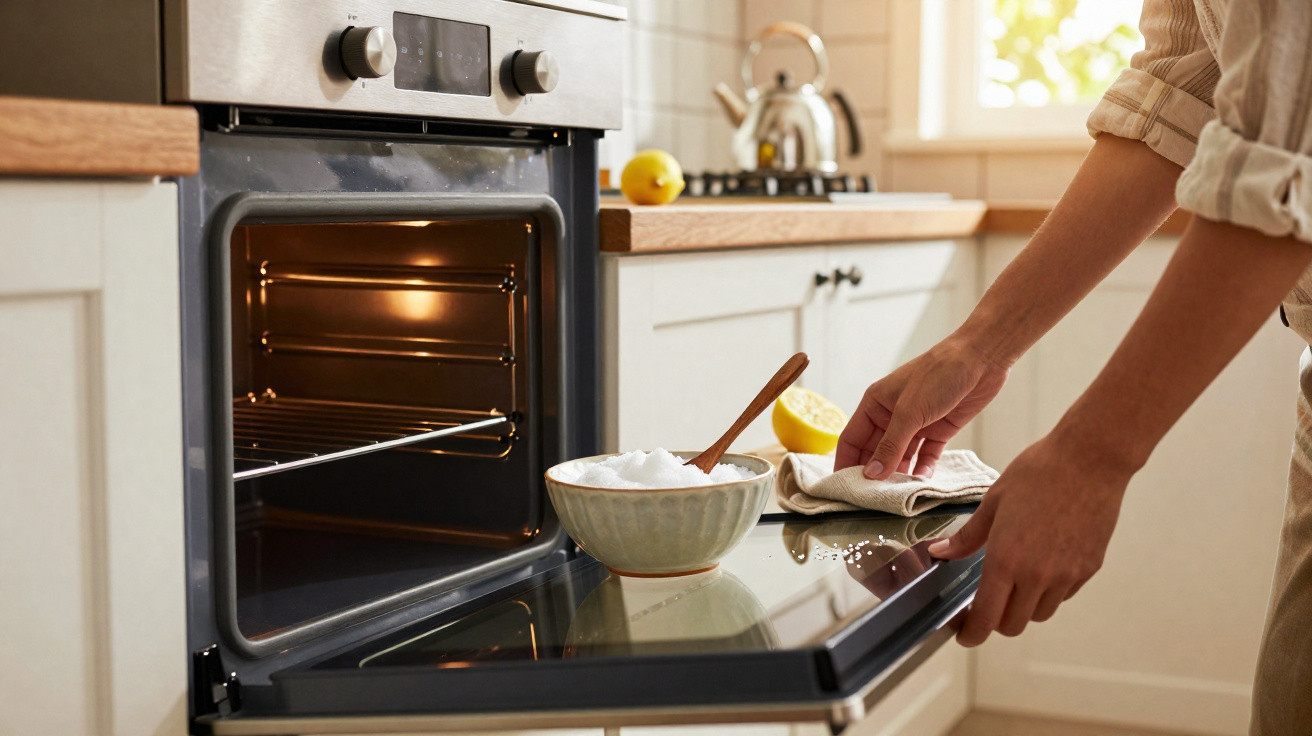
The glass has turned brown, the walls feel sticky, and a lump at the back may once have been cheese. Even so, there is no need for a cupboard packed with aggressive chemicals or hours of hard scrubbing. One homemade paste, applied properly, can remove grime, reduce odours and restore that “just installed” feel.
The small change that can transform your oven
Many people only tackle the oven once the mess becomes impossible to overlook, which makes cleaning seem like an enormous task. A more manageable approach is to use a straightforward baking soda paste regularly, as a small follow-up job after particularly messy meals.
A thick paste of baking soda and water can unstick burnt-on grease, soften carbonised patches and leave the oven smelling much cleaner.
Baking soda, also known as sodium bicarbonate, is gently alkaline. Grease and much food residue are acidic or fatty, so the alkali helps to loosen and break down the dirt when they come into contact. Its fine particles provide enough texture to remove residue without scratching oven metal or glass.
A basic oven-cleaning method that works most of the time
This is a useful routine to rely on: it is inexpensive, requires little effort and is gentle on surfaces as well as your lungs.
- Turn the oven off and allow it to cool until it feels warm rather than hot.
- In a bowl, combine about 240 ml of baking soda with a small amount of warm water.
- Mix until it forms a thick, spreadable cream instead of a runny liquid.
- Apply the paste across the oven base and walls, concentrating on dark or sticky patches.
- Keep the mixture away from heating elements, fans and the light bulb.
- Leave it to work for:
- roughly 30 minutes for minor splashes
- overnight for thick, baked-on residue
- Remove the paste with a damp, well-wrung cloth or sponge, rinsing it frequently.
The paste should come away in grey and brown layers. Although the oven may not look completely factory-new, the glass should become clearer, the metal brighter and cooking odours less harsh, with less smoky residue when the oven is heated again.
A stronger clean with baking soda and vinegar
At times, the basic paste needs extra help. White vinegar provides that boost. It fizzes when it meets baking soda, and the acid-and-alkali reaction beneath those bubbles can help release stubborn dirt.
Spraying white vinegar over dried baking soda paste creates a foaming action that loosens clinging dirt and makes wiping far easier.
Use the fizz to your advantage
- After leaving the baking soda paste for either 30 minutes or overnight, leave it where it is.
- Fill a spray bottle with white vinegar.
- Spray the vinegar over the paste; it will foam and bubble immediately.
- Let it sit for a further 20–30 minutes.
- Wipe away the mixture with a damp cloth, rinsing until every grainy trace has gone.
Vinegar can also neutralise lingering food odours, leaving a fresher smell without a heavy artificial fragrance.
A lemon option for lingering oven odours
Lemon may help when a stale, greasy smell escapes each time you open the oven. It works through grease while leaving a light, sharp scent that can feel fresher than chemical perfumes.
Two ways to use lemon in the oven
- Mix a generous squeeze of lemon juice into the baking soda paste before applying it.
- Alternatively, rub half a cut lemon directly onto greasy splashes, particularly around the door and glass.
Leave the lemon on the affected surfaces for around an hour, then wipe everything clean with a damp cloth. Lemon juice contains citric acid, which can help break down fat and neutralise odours instead of merely covering them up.
When extra grip is needed: baking soda and salt
For an oven base, roasting tray or shelf that appears beyond rescue, combining baking soda with coarse salt adds mild abrasive action.
- Put baking soda and coarse salt together in a bowl.
- Add only enough water to create a gritty paste.
- Cover the worst patches with the mixture and leave it in place.
- If the oven manual permits it, warm the oven briefly to approximately 50°C, then turn it off and allow it to cool until just warm before wiping.
As you wipe, the salt crystals help lift stubborn deposits. They remain gentler than metal scourers, however, which may harm enamel and glass.
The steam method for anyone who dislikes scrubbing
If intensive scrubbing makes you want to close the oven door and ignore the problem, steam can do much of the difficult work instead.
A shallow dish of hot water and vinegar or lemon juice turns the oven into a mini steam room that softens burned-on grime.
- Fill an ovenproof dish with boiling water, then add a glass of white vinegar or lemon juice.
- Place the dish on the centre shelf.
- Heat the oven to 100–140°C for 15–30 minutes.
- Switch it off, then wait until the oven is safe to touch.
- Use a damp cloth to wipe softened residue from the walls and glass.
Steam loosens dried-on splatters, so any later baking soda cleaning is quicker and requires less physical effort.
Safety, special features and easily missed details
Ovens differ considerably. Some include self-cleaning functions, while others have delicate enamel or catalytic side liners. Checking the manual before the first thorough clean can prevent costly errors.
| Oven type | What to check | Suggested approach |
|---|---|---|
| Standard electric or gas | Condition of seals and glass, location of elements | Avoid soaking elements and seals; use baking soda paste on metal and glass only |
| Pyrolytic (self-cleaning) | Manufacturer’s rules for using the self-clean function | Use the pyrolytic cycle for heavy jobs, baking soda only for light upkeep |
| Catalytic liners | Whether abrasives are allowed | Skip salt and scouring pads; lightly wipe, let liners regenerate at high heat |
- Always ensure the oven is switched off and has cooled to a safe temperature before cleaning.
- Never pour liquids directly over heating elements, gas burners or the light fitting.
- Where possible, take out shelves and trays to wash them in the sink.
- Inspect the door seal, as a damaged gasket can allow heat to escape and increase energy bills.
Why baking soda, vinegar and lemon work so well
Baking soda is part of a group of alkaline substances commonly called alkalis. In simple terms, it has a pH higher than 7. Many everyday kitchen marks, including tomato splashes and baked-on cheese, are mildly acidic. When an alkali comes into contact with an acid, a reaction can make sticky residue easier to remove.
Vinegar and lemon juice work in the opposite way because they are acidic. Alongside baking soda, they can help deal with mineral deposits, soap films and persistent odours. The visible fizz is carbon dioxide gas released when acid meets bicarbonate. This gas lifts and stirs the paste, helping it take dirt away as you wipe.
How often to clean the oven and the cost of neglect
A full deep clean is not necessary every week. In most households, the following schedule is enough:
- Quickly wipe spills away after the oven has cooled following an especially messy roast or bake.
- Clean with baking soda paste every one to two months in a regularly used family oven.
- Use steam and paste, or a self-clean cycle, a few times each year if you frequently cook at high temperatures.
Burnt grease left for months causes more than an unattractive oven. It may smoke at high temperatures, affect the taste of fresh dishes and make oven thermostats work harder because grime layers interfere with heat distribution. Over time, this can reduce the lifespan of heating elements and raise energy consumption.
Real-life scenario: a post-Christmas oven rescue
Imagine a typical British or American kitchen after a busy festive period: turkey fat across the oven base, sweet glaze splashed over the glass and stuffing crumbs baked into the rear corner. Rather than immediately using a powerful bleach-based spray, you could:
- Run a 20-minute steam cycle using water and vinegar to soften the mess.
- Coat the worst areas in baking soda paste and leave it overnight.
- Spray with vinegar the following morning, allow it to foam, then wipe clean.
- Finish by rubbing lemon over the glass for a clearer view and a fresher smell.
This layered method keeps fumes to a minimum, limits exposure to harsh chemicals and requires only a few store-cupboard ingredients. The result is a cleaner, more pleasant oven to use, subtly improving the experience of cooking in the following weeks.



Comments
No comments yet. Be the first to comment!
Leave a Comment