
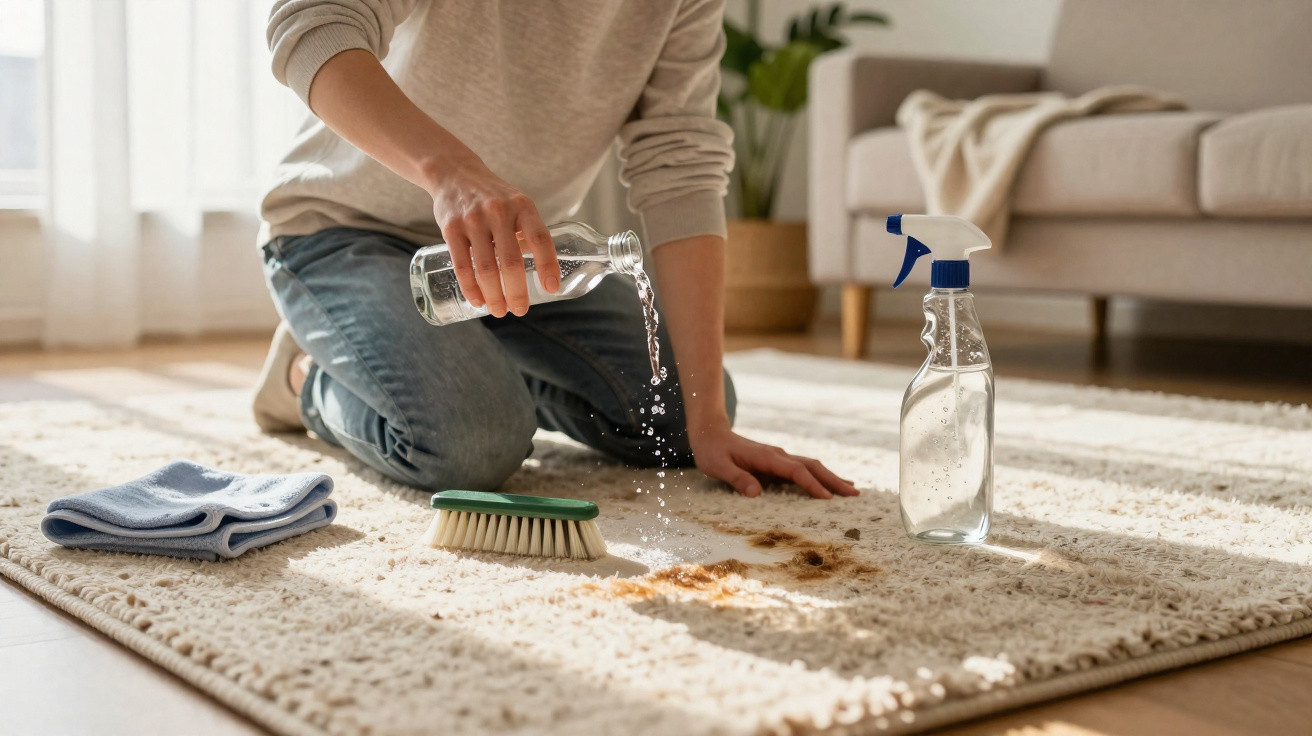
It skids diagonally across the living-room carpet, suddenly revealing the marks left by wet boots, hot-chocolate rings and that dreary mix of road salt and dried mud. You vacuum it, change direction, stamp your foot to “wake up the fibres”. Nothing works. The carpet looks worn out, much like you on a Monday morning.
A professional cleaner recently told me he can identify the season simply by looking at his clients’ carpets. “Ah, this one has had school boots and three weeks of sleet through it,” he laughed, pinching a greyish section of carpet. Most people assume they need an extraction machine or an expensive specialist product to restore the brightness it had before winter. Professionals, however, reach for something much more ordinary. And it is sitting in your fridge.
Why carpets look exhausted after winter
Look at your carpet on an evening of freezing rain. It becomes the boundary between the grimy outdoors and the comfort of home. Children drop their bags, the dog shakes its paws and visitors keep their shoes on for “just five minutes”. Over time, the fibres fill with mud particles, de-icing salt and dust from radiators. The colour dulls, the pile flattens and the texture turns rough.
The visual change is insidious. A carpet does not go from beige to brown overnight. Instead, it gradually drifts towards an indistinct shade of “dirty grey”. You get used to it. Until one day, a shaft of sunlight finally reaches the room and highlights the contrast between the middle of the carpet and the part hidden beneath the sofa. Suddenly, you remember the colour it had when you bought it. And it stings a little.
Professionals refer to “winter build-up” as a phenomenon in its own right: a combination of damp dirt, repeated friction and poorly rinsed household-cleaning residues. Meltwater and rain carry minerals and microscopic particles that cling to the fibres. Instinctively, people scrub hard with a soaking cloth, use too much soap and leave it to dry. The result is a sticky film that traps dirt instead of removing it. That is why some carpets look clean but still appear dull and “lifeless”.
The sparkling-water trick professionals use without making a fuss
The method is almost embarrassingly simple. Professionals pour well-chilled sparkling water into a clean spray bottle, then mist it lightly over dull areas or small, recent stains. There is no need to soak the carpet. A fine spray is enough, like a light mist. They let it fizz for a few seconds, then blot with a pale microfibre cloth, lifting the dirt rather than spreading it around.
The useful part is the combination of bubbles and minerals. Sparkling water helps loosen particles lodged in the fibres and “rinse away” soap residues that mute the colour. Blotting rather than rubbing prevents damage to the weave and stops the pile becoming even more flattened. Very often, this simple routine alone brings renewed life to the central areas of a carpet that has taken a winter battering. It is the sort of result that makes a guest ask: “Did you buy a new carpet?”
The same mistakes happen time and again. People pour on too much sparkling water, rub in circles, add an aggressive stain remover “to help”, then wonder why they are left with a lighter ring or a rough-feeling pile. Let us be honest: nobody really does this every day. You deal with it when a stain becomes too obvious or when you can no longer bear that greyish patch in front of the sofa. And that is perfectly fine. The point is not to turn your home into a cleaning laboratory, but to know the right method to use on the rare occasions when you properly tackle it.
Professionals also stress the value of patience. Sparkling water is not a magic wand for a three-year-old wine stain. It works particularly well on winter grime: mud marks, salt, recently spilled sugary drinks and the dull film that settles in over weeks of cold weather.
“Sparkling water is our discreet Swiss Army knife,” says Chris, a carpet cleaner in Manchester for fifteen years. “People sometimes laugh when they see me take out a bottle of soda water. Then they look at the difference on the carpet, and that is when they fall silent.”
To keep things straightforward, remember this quick guide:
- Use: chilled sparkling water, a clean spray bottle and a pale microfibre cloth
- Avoid: saturating the carpet, mixing it with bleach or strong stain remover, and rubbing in circles
- Bonus: always finish by vacuuming once the carpet is completely dry
How to make this small ritual part of your routine
It is a scene many people will recognise: on a late-winter Sunday, tea in hand, you look around the living room and think everything could do with freshening up. Your first instinct is to put on a wash, clear the coffee table and plump up the cushions. The carpet usually comes last. We have all had that moment when we bend down to half-heartedly rub a stain, then give up after 30 seconds because “it will never come out”. Then we put it off until next year.
That is where sparkling water changes things. You can use it as a small winter “reset” without making an excessive effort. Pick two or three strategic spots: the entrance, the area in front of the sofa and the corner where the children play. Spray, blot and let it air-dry, with the windows slightly open if possible. The aim is not perfection, but that small “before and after” effect that makes you want to walk across the room barefoot again.
This routine also has an overlooked mental benefit. Seeing a carpet regain some colour and its pile lift slightly is a quiet signal that the season is changing and the home can breathe again. Professionals often notice this with clients: once one area has been revived, people tend to take a little more care by removing their shoes, putting down a second doormat or dealing with small accidents more quickly. There is no guilt-tripping involved; it is simply because the difference is so noticeable.
Ultimately, this sparkling-water trick says something about how we live through winter. We share our homes with mud, salt, tiredness and evenings that seem to stretch on. Carpets absorb all of it without complaint. Bringing one back to life with a simple, everyday gesture is a little like silently thanking this piece of fabric that has endured our soaked boots, pyjama Sundays, scattered toys and late-night binge-watching. Some people will share this tip purely because it is practical. Others will see it as a small way to make daily life feel a little less grey. Both reasons are equally valid.
| Key point | Detail | Benefit for the reader |
|---|---|---|
| Soda water instead of aggressive products | Sparkling water helps lift dirt and soap residue without damaging the fibres | A gentle, low-cost solution already found in most homes |
| Blotting technique, not rubbing | Mist lightly, then blot with a pale microfibre cloth | Reduces the risk of rings, protects the carpet pile and improves its appearance |
| Targeted use on winter areas | Entrances, in front of the sofa, play corners, and recent mud or drink stains | Saves time, creates a quick visual impact and gives the feeling of a “revived” home without a major clean |
FAQ:
- Will any sparkling water work? Yes, provided it is plain sparkling water with no sugar or flavouring. Flavoured or sweetened versions may leave a sticky residue and attract even more dirt.
- Can I use this method on every type of carpet? It is suitable for most synthetic and wool carpets, but always test it first on an inconspicuous area, particularly on very delicate fibres or antique carpets.
- Does it replace a full professional clean? No, it is a useful in-between option. Sparkling water is ideal for refreshing a carpet and limiting build-up, not for treating one that has been neglected for years.
- How many times a year should I use this tip? For winter build-up, one or two targeted sessions at the end of the season are enough, alongside occasional treatment for fresh stains.
- Do I need to rinse with clean water after using sparkling water? If you used only a small amount and blotted well, it is unnecessary. If you used more generously, lightly wipe with a damp cloth, then allow it to dry thoroughly before walking on it.

Comments
No comments yet. Be the first to comment!
Leave a Comment