

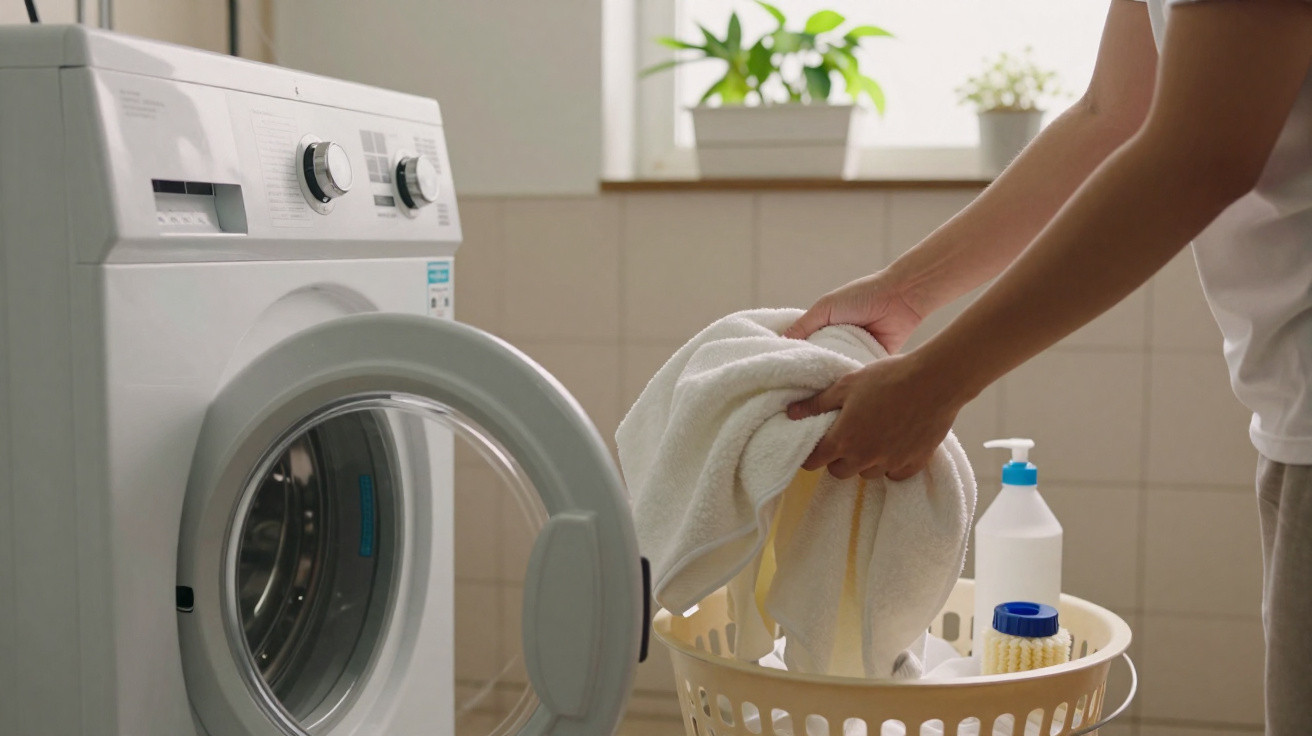
The laundry basket is overflowing again: the sort of quiet disorder that sits in the corner of an ordinary week. You fill the washing machine, press start and forget about it, then later transfer the soft, clean-scented clothes to the tumble dryer. They come out warm, fluffy and seemingly flawless. You bury your face in a towel, ready for that sharp “fresh laundry” feeling.
But a faint stale smell drifts up instead. It is not quite dirty, yet it is not clean either: a musty, humid odour that sticks to cotton and spoils the sense that everything is finally in order.
You wash everything again. You swap detergents, use more fabric conditioner, then less, then try another scent. The smell vanishes temporarily, only to return on a rainy day, with thick towels or whenever you are short of time.
Eventually, you begin to question whether the issue is your sense of smell. Or the machine. Or the flat.
The true cause is hiding somewhere else.
The hidden culprit behind that musty “clean” laundry smell
Detergent is usually the first thing people blame, as though the bottle on the shelf has somehow put a curse on the washing. But most tales of musty laundry do not begin at the supermarket. They begin in dim, slightly damp areas: inside the drum, around the rubber door seal, behind the lint filter and deep within the tumble dryer vent.
That “musty” scent nearly always comes down to one thing: moisture that did not fully disappear. Humidity remains caught in fibres, appliance components and the small places you never look at.
The clothes may feel dry, but they are not.
A plumber I spoke to recently said that the appliance issue he encounters most often is not a faulty machine at all. It is odour. He had just visited a family in a small flat whose towels smelled strongly of a cellar, despite being dried on high heat. The reason? Their tumble dryer vent was so blocked by lint and damp deposits that the steam had nowhere to escape.
The humidity simply circulated back into the washing, creating a frustrating loop.
In a UK survey by a major home brand, almost 40% of respondents said their laundry “often” still smelled strange after washing and drying. This is not a minor nuisance affecting a few people. It is nearly half of us discreetly smelling T-shirts in the hallway.
Imagine fabric fibres as tiny sponges. They take in water and release it gradually while drying. When the surrounding air is already full of steam, or the machine cannot remove humid air effectively, those sponges never become completely dry. Microbes thrive in this middle ground: neither soaking wet nor fully dry.
They feed on traces of sweat, skin cells, detergent residue and even fragrance molecules. That is where the musty odour begins.
The issue, then, is not really your detergent. It is the invisible humidity ecosystem you have created without realising it.
How to break the musty cycle: small moves that change everything
The most straightforward difference-maker is speed. Do not leave wet washing compressed in the drum, even for “just an hour” that quietly becomes three. Once the wash cycle has finished, take it out as soon as everyday life permits. Loosen the items slightly before drying rather than pushing a compact ball of damp fabric into the machine.
It also helps to view your tumble dryer as a system that needs to breathe, rather than simply a heated box. The air needs an exit. Clean the lint filter before every load, rather than waiting until it is visibly packed.
In practical terms, replace heavy, strongly scented fabric conditioner with a lighter approach: less product and more airflow. Intense fragrance disguises mustiness only briefly; it cannot resolve the moisture that allows it to develop. Avoid very hot short cycles in favour of a medium setting with a longer, gentler drying period, particularly for heavier materials such as towels and hoodies.
Inspect your tumble dryer vent at least twice a year. Let’s be honest: nobody really does this every day. But when you eventually remove that dense grey mat of lint, the mystery of the musty smell starts to make sense.
Your clothes were never able to breathe properly.
The room itself matters too. A tumble dryer squeezed into a small enclosed space holds steam in much like a windowless bathroom after a long shower. Leave the door ajar. Open a window where possible. Give the humidity a route out.
A laundry expert I interviewed put it this way:
“Fresh-smelling laundry isn’t about perfume. It’s about letting clothes stop being wet, completely and quickly, at every stage of the process.”
For easy everyday improvements, remember this short checklist:
- Empty the washing machine promptly; do not leave wet laundry sitting inside.
- Clean the lint filter before every drying cycle.
- Inspect and clear the tumble dryer vent regularly.
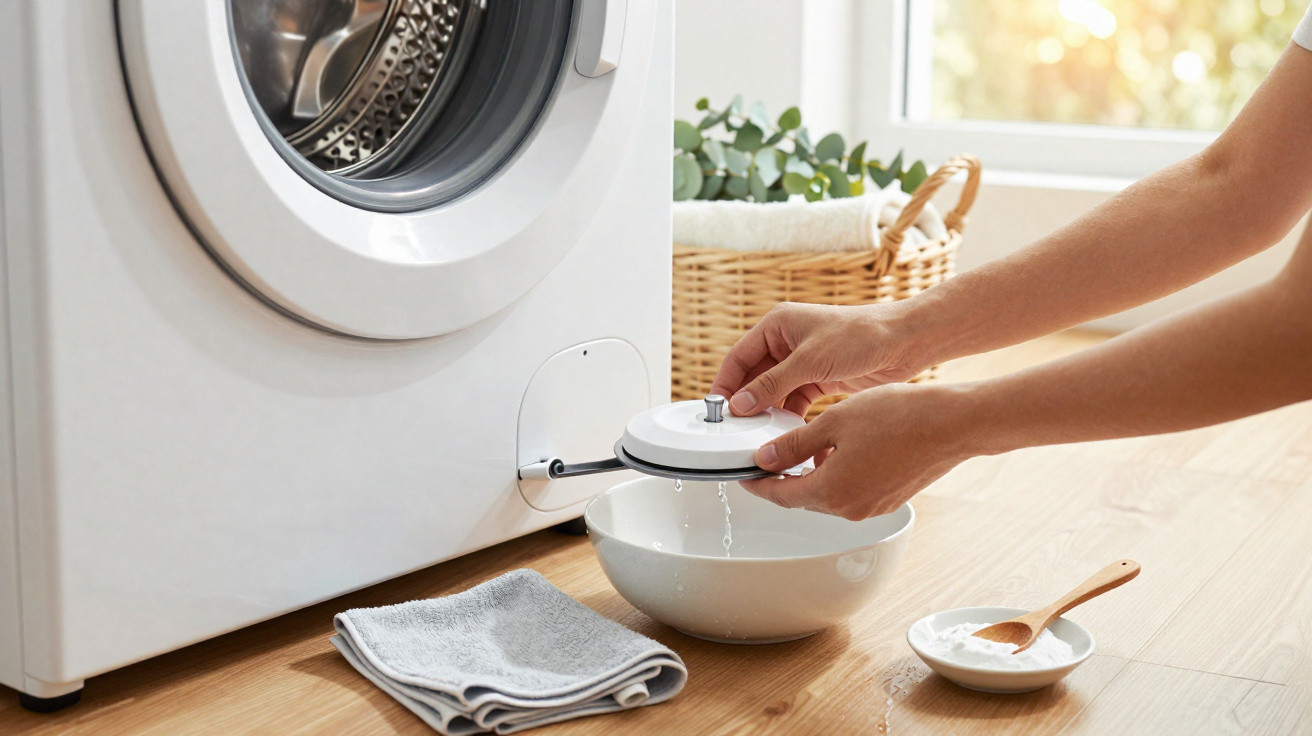
- Keep the washing machine door and detergent drawer open between uses.
- Allow bulky items extra room and time to dry.
Rethinking “clean”: what your laundry is really telling you
In one sense, this goes beyond socks and towels. When laundry smells musty after drying, it reveals something about the neglected corners of our homes: the areas we shut away, overfill, seal up and forget.
We move quickly, put an entire week of living through one machine cycle and hope that a “fresh linen” fragrance will cover the untidy reality. Sometimes it does. Frequently, it does not.
On a difficult day, that faint odour can feel like criticism: you washed, dried and folded everything, did your best, and something is still wrong. On a better day, it is simply information. It suggests that your tumble dryer is clogged with lint, the vent is partly obstructed or the laundry corner in your bathroom is always a little too damp.
On a particularly honest day, it is a reminder that shortcuts come at a price. “It will be fine this time” can become a routine that quietly accumulates in the pipes, filters and fibres around you.
We have all experienced a freshly washed jumper smelling like somebody else’s damp cellar. It is easy to take that personally and think, “my place must be gross” or “I’m doing something wrong”. In truth, the explanation is far more mechanical, almost dull. Water goes in, water comes out. There is airflow, or there is none.
Yet once you start noticing it, there is something strangely reassuring about the process. Less magic, more cause and effect. Less guilt, more small, fixable gestures.
And when you identify the real culprit, that first genuinely fresh towel feels like a small domestic triumph you will not forget.
| Key point | Detail | Why it matters to the reader |
|---|---|---|
| Hidden humidity | Laundry that appears dry but remains slightly damp deep within the fibres | Understand why the musty smell returns even after several washes |
| Machine and vents | Lint filters, rubber seals and exhaust vents clogged with debris | Identify exactly where to act to remove the source of the issue |
| New habits | Removing laundry quickly, airing the room and using suitable cycles | Adopt a few simple routines for laundry that stays genuinely fresh |
FAQ:
- Why does my laundry smell musty even after drying? The most common cause is trapped moisture. Clothes can seem dry on the outside while fibres underneath remain a little damp, especially when the tumble dryer, vent or room has inadequate airflow.
- Is my washing machine causing the smell? Quite often, yes. Build-up in the drum, rubber door seal or detergent drawer can provide a home for bacteria and mould. Leaving the door open after each wash and occasionally running an empty hot cycle can make a real difference.
- Does fabric conditioner make the musty smell worse? It can do. Heavy conditioners leave behind a coating that holds moisture and odours in the fabric. Using a smaller amount, or moving to a lighter product, often lessens mustiness over time.
- How often should I clean my tumble dryer vent? For most households, at least once or twice each year. If you run large loads, dry plenty of towels or notice that drying takes longer, it may need cleaning more often.
- Can musty-smelling clothes be saved, or do I need to throw them away? They can nearly always be rescued. Wash them again on a warmer cycle, use less detergent, dry them fully with good airflow, and correct the moisture problem in your machine or room so that the odour does not return.


Comments
No comments yet. Be the first to comment!
Leave a Comment