
In many homes, pricey cleaners pile up, yet an unassuming staple from the bread bin outperforms them all - especially on delicate surfaces.
Anyone with children, older furniture or fragile décor at home will know the headache: stains, dust and even tiny shards of glass that ordinary cleaners struggle to shift. Before you reach for yet another specialist bottle, it’s worth checking the bread basket. There you’ll find a helper our grandparents already relied on - and one that’s now making a surprising comeback.
A household tip from the bread basket beats high-tech cleaners
Shelves crammed with sprays, specialist sponges and cloths with nano coatings: the cleaning industry thrives on the promise that every type of dirt needs its own formula. In reality, many sensitive surfaces remain awkward. Emulsion paint, oil paintings, antique mirrors or wafer-thin glass can react badly to the wrong product. This is where a classic comes in: fresh, white bread crumb.
More specifically, soft, light-coloured sliced bread with the crust removed. The inner crumb acts like a natural, ultra-gentle sponge that picks up dust, graphite, tiny particles and even invisible glass slivers - without scrubbing and without chemicals.
“The soft bread crumb works like a microscopic catching net: it lifts the dirt - and leaves the surface alone.”
This trick is centuries old, has long been used in restoration workshops, and is now returning to everyday use. The reason is simple: it’s inexpensive, environmentally friendly and unexpectedly effective.
Why bread crumb can clean so well
Its airy structure traps even the tiniest glass fragments
Inside bread crumb are countless tiny air pockets. This porous structure forms during baking as the dough ferments. Those very cavities make bread an excellent collector for minute debris.
When a glass breaks, sweeping and vacuuming often leave behind microscopic shards. You can’t see them, but they can still end up in bare feet or paws. If you pass a piece of soft bread crumb over the area, or gently press it onto the floor, the fragments catch in the elastic interior.
That lowers the risk of glass dust becoming airborne or settling elsewhere. Afterwards, the bread goes into the general waste - along with the dangerous particles.
Elastic rather than abrasive: dirt is absorbed, not pushed around
Unlike a dry cloth or a brush, bread crumb doesn’t shove dirt ahead of it. It conforms to the surface, presses lightly into small indentations and holds dust, graphite or loose particles within itself.
- no rubbing required
- very little pressure on the surface
- no scratching from hard fibres or abrasive particles
- fully biodegradable
That makes this household method particularly suitable for surfaces that can be damaged quickly if treated incorrectly: matt emulsion paint, older varnishes, delicate paper, or very thin glass.
Where bread crumb shines as a gentle cleaner
Removing dust from oil paintings and older pictures
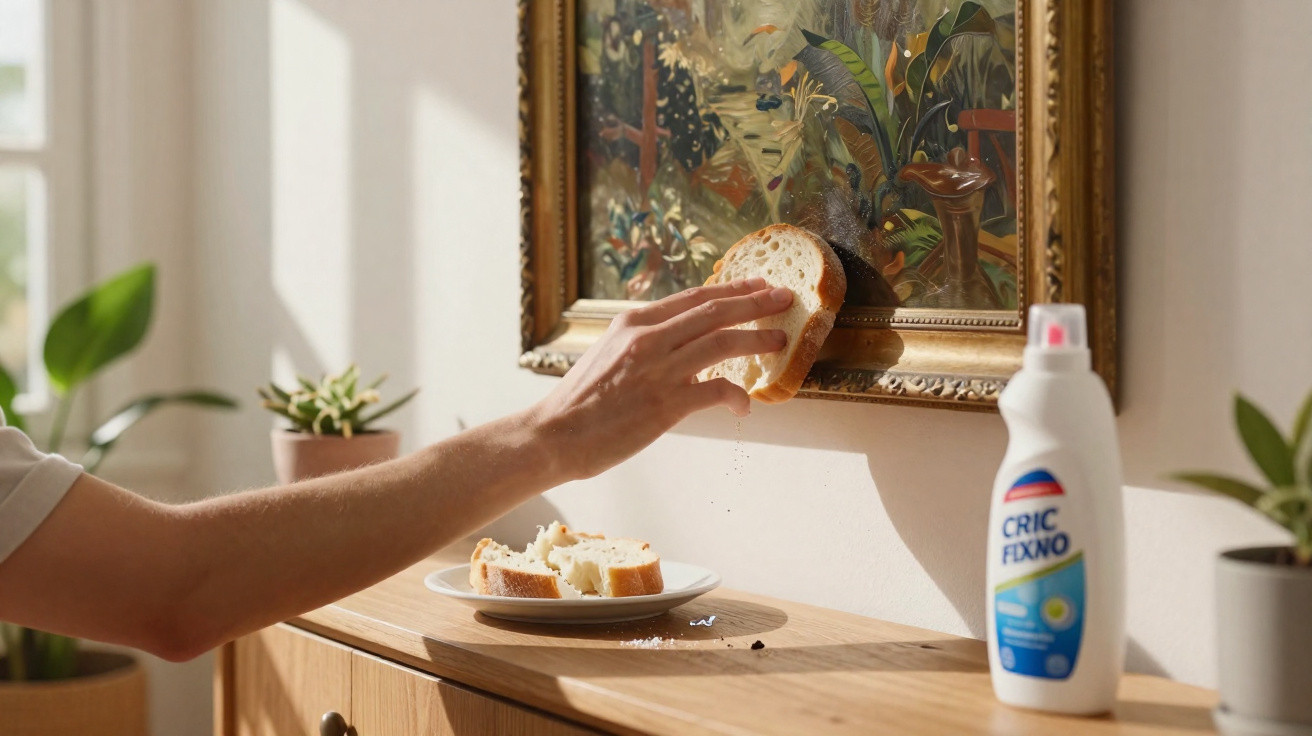
If you have an older oil painting on the wall, cleaning it can feel risky. Water may cause the ground layer to swell, solvents can attack the paint, and microfibre cloths can be too harsh. Restorers have used soft bread crumb for a long time as an initial, gentle cleaning step.
The method: pinch off a small piece of fresh, soft crumb and lightly compress it between your fingers until it forms a compact yet still springy ball. Then dab this ball carefully onto the painting’s surface. The bread lifts dust and loose grime while leaving the paint layer untouched.
Important: don’t rub and don’t wipe back and forth. If you’re unsure, test the technique at the edge of the picture first. And if the artwork is particularly valuable, a specialist workshop is the right place to go - bread crumb has been part of their toolkit for decades.
Lifting pencil marks from light-coloured walls
In family homes, walls often become impromptu drawing boards. Pencil marks and fine scribbles can seem permanent because erasers may leave smears or roughen the paint.
With bread crumb, the approach is much gentler. The soft mass behaves like a very fine, natural version of a kneadable eraser. It gradually absorbs the graphite without visibly stripping the paint or creating patches of different sheen.
How to do it:
- Pull off a small, fresh piece of crumb with no crust.
- Knead it into a soft ball.
- Dab gently onto the pencil line - don’t scrub.
- As soon as the bread turns dark, switch to a fresh piece.
Especially in rented properties, this can help postpone repainting - saving both money and stress.
Cleaning delicate glass and mirrors without risking scratches
Very thin glasses, older mirrors with worn backing, or display-cabinet panes can react badly to kitchen roll and some fabric cloths. Tiny hard particles can act like sandpaper. Bread crumb works differently: you don’t slide it over the surface; you press it on and lift it away.
The crumb gathers dust and grit without scouring. That reduces the chance of fine scratches that build up over time and dull the shine.
Which bread works - and which doesn’t?
Why light bread without crust is clearly best
Not every loaf is suitable for cleaning. The best option is plain, light sliced bread or a sandwich loaf with no hard crust. The crumb is:
- evenly airy with fine pores
- soft enough to mould
- neither too wet nor crumbly
Darker breads with seeds and grains can cause scratches. Mixed rye loaves are often too sticky or too firm. Very dry, stale bread also loses its elasticity and breaks apart quickly instead of holding on to dirt.
A practical bonus: you can put leftover bread to good use rather than binning it immediately - as long as the crumb isn’t completely dried out and there’s no sign of mould.
The right technique: dab, don’t scrub
Success depends less on the bread itself and more on how you use it. The basic rule is: dab, don’t wipe.
| Correct | Incorrect |
|---|---|
| use a small amount of bread crumb | use large, awkward pieces |
| dab vertically and press briefly | rub horizontally or in circles |
| change pieces often | keep using heavily soiled crumb |
| sweep the area dry first to remove loose dust | dab onto coarse dirt or moisture |
If you follow this routine, you can work with very little risk. With extremely delicate or high-value items, a quick test in an inconspicuous spot is essential.
Why the bread trick makes ecological sense
Many cleaning cupboards contain products that are rarely used, yet rely on fragrances, preservatives and aggressive ingredients. They can pollute waterways, irritate airways and create a hard-to-track chemical mix in the home.
Bread crumb contains only what’s in the dough - typically flour, water, a little yeast and salt. That makes it fully compostable and biodegradable. After use on dust and dirt, it belongs in the general waste and doesn’t burden waste water or indoor air.
“Using bread crumb for cleaning saves specialist products, reduces packaging waste and avoids unnecessary chemicals - without sacrificing cleanliness.”
For households with small children, pets or allergy sufferers, this natural approach can be a noticeable benefit: fewer fragrances, fewer aerosols and less contact with irritating substances.
Where this household method reaches its limits
For all its strengths, bread crumb won’t replace everything in the cupboard. Greasy kitchen grime, limescale marks in the bathroom, mould or stubborn baked-on residue need other tools. On very damp surfaces, bread swells and collapses into mush - it has no place there.
If you own particularly valuable artworks, don’t rely solely on online tips. Professional restorers may use bread crumb in some cases, but they combine it with other precisely matched methods. For everyday objects, family photos behind glass, simple frames and standard wall paint, the bread trick is a good fit.
Practical additions and sensible combinations
In day-to-day use, bread crumb pairs well with other gentle methods. One example: first remove loose dust with a soft duster, then use bread crumb to tackle specific problem spots. That keeps bread use to a minimum and makes the overall finish look more even.
It also helps to run through three simple questions before turning bread into a cleaning tool:
- Is the surface dry and not greasy?
- Is the material sensitive to rubbing or chemicals?
- Is the dirt made up of dust, graphite, small particles or shards?
If the answer is yes to all three, bread crumb has a strong chance to show what it can do. Once you’ve tried it a few times, you may find yourself reaching for the bread bin instead of the next spray bottle - and noticing just how much unnecessary chemistry you can cut from the household.
Comments
No comments yet. Be the first to comment!
Leave a Comment