
A kitchen staple that costs just a few pence can sort the problem in as little as an hour.
The first time you step out on to your terrace in spring, it usually hits you straight away: the surface feels slimy, has taken on a green tinge and is deceptively slippery. Many people immediately think of a high-pressure washer or pricey specialist chemicals. Yet a straightforward real-world example from abroad shows that an everyday household product can do an impressive job for very little money - with no Karcher and no hours of hard scrubbing.
Why terraces become dangerously slippery after winter
Terraces sit outdoors year-round, taking the full force of rain and wind - and often getting very little direct sunshine. That combination creates ideal conditions for moss, algae and thin films of grime. These fine deposits work their way into joints and across the surface of slabs, staying damp for weeks at a time.
The result is a neglected-looking area that is, above all, hazardous underfoot. Many homeowners start avoiding outdoor tables and chairs because they worry about falls - especially when children or older people live in the household.
Up to now, most people have relied on two standard options:
- A high-pressure washer, which is expensive to buy, takes up storage space and can damage joints or more delicate stone.
- Chemical anti-moss treatments, which often contain biocides and can be problematic for the environment, pets and plants.
This is exactly where a surprisingly simple alternative comes in - one that cleaning experts recommend more and more often: ordinary household vinegar, specifically colourless table vinegar, commonly referred to as “white vinegar” or “household vinegar”.
"Instead of heavy equipment, in many cases all you need is a bucket, a bottle of cheap household vinegar and a bit of time to let it work."
The vinegar method: a cleaner terrace in about an hour
In a widely shared account, a terrace owner described how she made her completely moss-covered patio usable again using nothing more than a vinegar-and-water mix. The set-up was minimal, and the change was striking.
Step 1: Remove loose dirt
She began with a thorough sweep. Leaves, soil, small stones and twigs were cleared away with a broom. This matters because vinegar needs to reach the actual algae and moss films - otherwise it is wasted on loose debris.
Step 2: Mix a bucket of vinegar solution
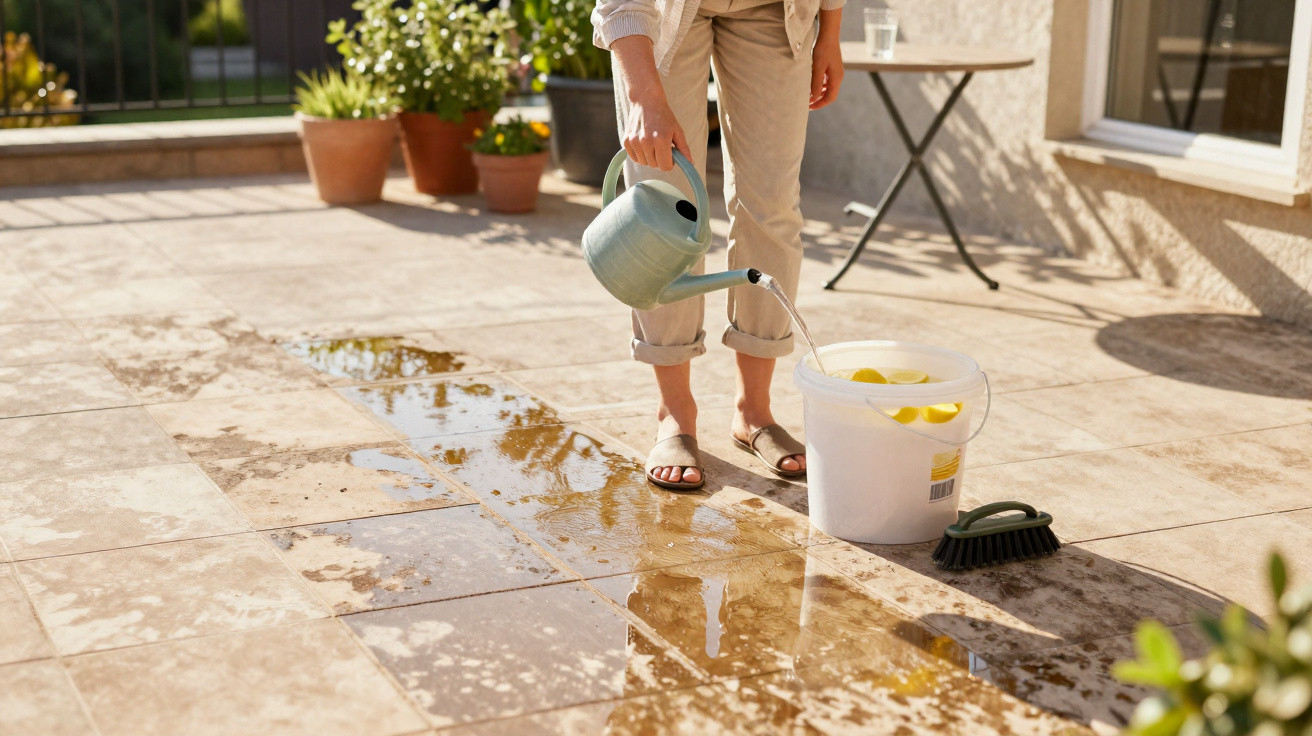
Next, she filled a bucket with a blend of lukewarm water and household vinegar, roughly in a 1:1 ratio. She used a very low-cost supermarket vinegar that worked out at well under one euro per bottle.
Rather than applying it only in spots, she poured the mixture generously over the worst-affected slabs. The darkest, greenest and most stained patches were left with a good, wet coating.
Step 3: Let it soak instead of scrubbing
The key to this approach is the contact time. She left the solution sitting on the surface for around an hour, allowing the vinegar to loosen the build-up and seep into the joints.
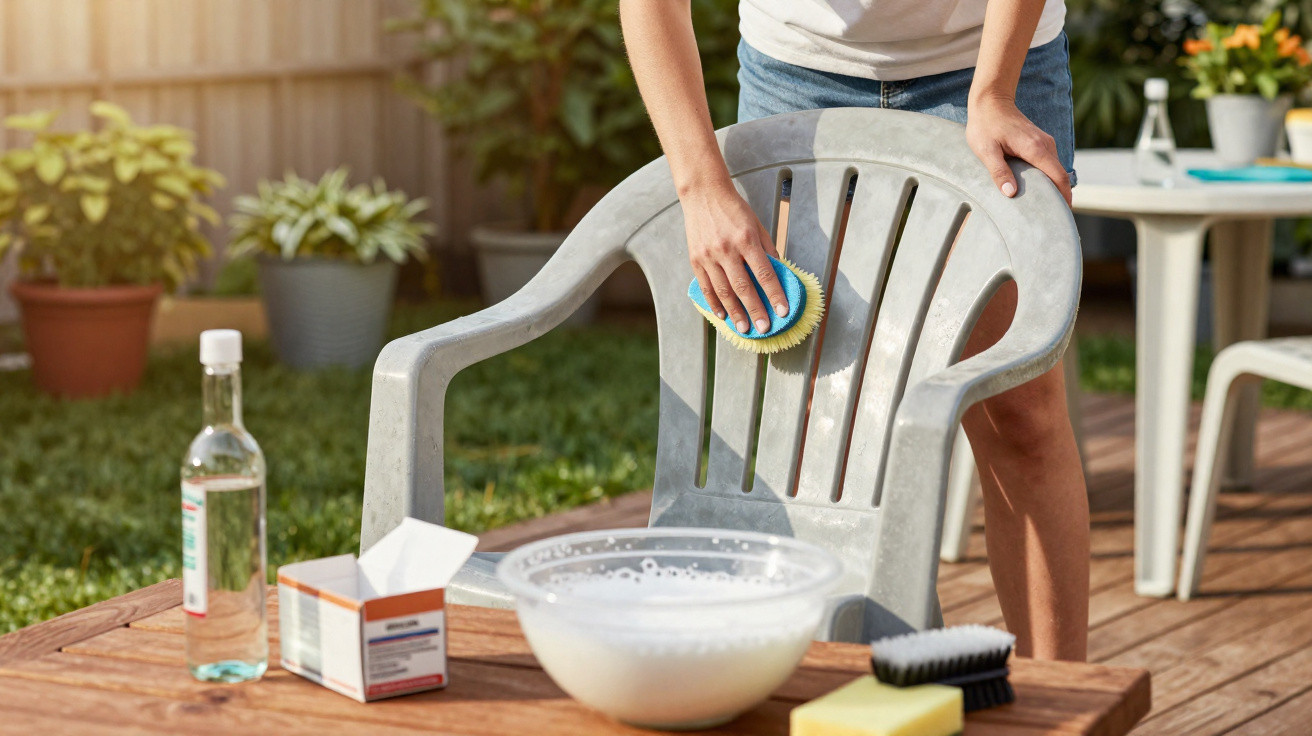
There was little mention of exhausting scrubbing. Only after the waiting time did she use a stiff-bristled brush and a little warm washing-up water. Even then, light-to-moderate brushing was usually enough rather than a full-on effort.
Step 4: Rinse with clean water
Finally, she rinsed everything off with clean water - using either a garden hose or a watering can. The slabs that had looked green and blotchy appeared noticeably lighter and cleaner. She said she used only part of the vinegar bottle and still felt as though she was standing on an almost new terrace.
"One or two bottles of household vinegar often cost less than a sandwich - but can make an entire terrace look visibly better."
Which terraces vinegar suits - and which it doesn’t
Vinegar is a mild but effective acidic cleaner. That makes it useful against algae and moss, but also potentially risky for certain materials. For that reason, professionals advise paying close attention to what your surface is made from.
Suitable surfaces for cleaning with vinegar
- Concrete slabs and exposed-aggregate concrete
- Traditional concrete paving blocks
- Outdoor-laid, non-porous porcelain tiles
- Balcony floors made from concrete or glazed tiles
On these surfaces, vinegar typically works well without leaving visible damage - as long as the mix is not extremely strong and you do not leave it sitting for days.
Take care with natural stone and sensitive materials
These are far more reactive:
- Marble
- Granite
- Limestone and slate
- Polished natural stone
- Oiled or waxed timber decking boards
On such surfaces, the acid can etch the finish, dull it or leave marks. If you are unsure what you have, experts strongly recommend testing a small, inconspicuous area first. Only if nothing changes after a day or two is it worth tackling a larger section.
Important safety and environmental points
Even though household vinegar seems gentler than a bottle of specialist cleaner, a few basics still matter:
- Protect plants: vinegar can damage roots and leaves. Cover borders and potted plants near the edge, or rinse thoroughly with plenty of water afterwards.
- Never mix with chlorine products: combining vinegar with bleach or chlorine-based cleaners can release toxic gases.
- Protect shoes and hands: if you have sensitive skin, gloves are worthwhile to avoid irritation.
- Watch where it drains: on small balconies, do not let the liquid run unchecked into rainwater channels made from zinc or other sensitive metals.
"Vinegar may be simple, but it is still an acidic cleaning agent - using it thoughtfully protects materials, the environment and your own health."
Alternative household options for delicate terraces
For natural stone or wooden terraces, gentler alternatives can be a better fit. Classic soap-based products are particularly popular because they cut through greasy grime while being less aggressive to the surface.
A quick overview of gentler alternatives
- Black soap: a liquid plant-oil soap, heavily diluted with warm water, works well on stone with a more delicate structure.
- Marseille soap: grated soap flakes dissolved in a bucket; mildly alkaline, yet often more compatible with many natural stones than acid.
- Special wood-deck shampoo: for timber boards on balconies or terraces, manufacturers offer dedicated cleaners designed not to dry out the wood.
These options usually require a bit more brushing than the vinegar method, but they can leave the surface in better condition when you are dealing with high-quality stone or hardwood.
How often to clean your terrace this way
Many owners leave it until the surface is already dangerously slippery. A better approach is to deal with it earlier. Planning one or two deep cleans a year - once in spring and possibly again in autumn - significantly reduces moss growth.
If an area is very shaded or stays damp, a shorter interval may be worthwhile. Small spaces such as city balconies can be handled with the vinegar trick within a morning, without dragging a high-pressure washer up from the cellar.
Practical tips: keeping the routine genuinely hassle-free
To make sure the method works not just once but in everyday life, a few simple habits help:
- After strong autumn winds, do not leave leaves and soil sitting for weeks - sweep them away early.
- Store your broom, brush and bucket somewhere accessible for your spring clean, rather than hunting for everything each time.
- Keep vinegar and, if needed, soap stocked in the cleaning cupboard - the cost is low and the outdoor results can be very noticeable.
- Choose a dry day so the vinegar is not immediately diluted again by rain.
If you stick to these points, the effort is usually modest while the terrace becomes much safer and cleaner - and you can enjoy that first coffee outdoors again without thinking about falls or expensive equipment.

Comments
No comments yet. Be the first to comment!
Leave a Comment