
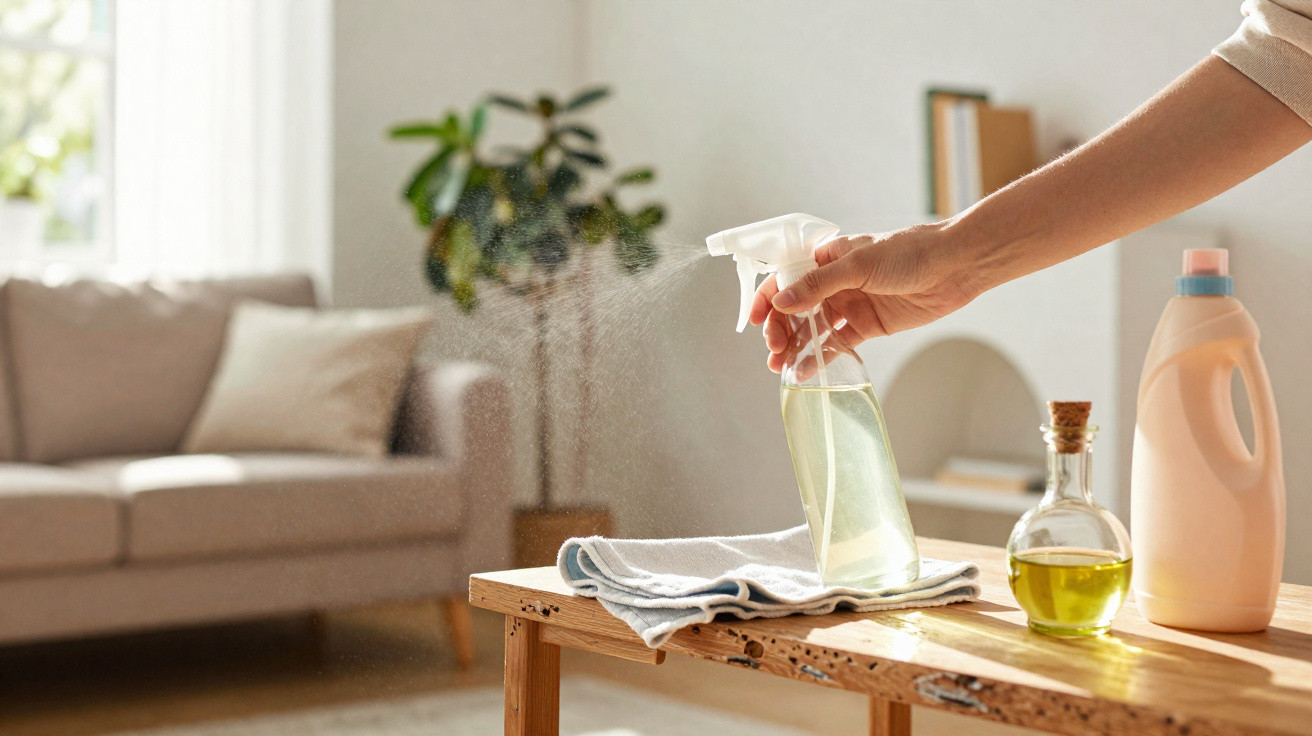
Dust shows up even in homes that are cleaned regularly. The good news is that you can treat surfaces with a simple blend of ingredients most people already have at home, helping dust settle much more slowly - without relying on pricey specialist cleaners from the supermarket.
Why dust comes back so quickly
Dust is not just an unsightly layer of harmless-looking particles. It is a mix of skin flakes, hair, pet fur, fibres from clothing and soft furnishings, plus tiny grains of sand and dirt brought in from outside. In every household, this combination is produced constantly.
You notice the grey film fastest on dark furniture and high-gloss finishes. For people with allergies, it can become a real issue: dust traps pollen and mites, irritates the mucous membranes, and can even make headaches or tiredness worse.
"If you only wipe dry, you often spread dust around more than you truly remove it - and after a few days, everything is visible again."
With the right technique and a well-made home remedy, you cannot stop every single speck of dust - but you can extend the time between cleaning sessions.
Homemade anti-dust spray made from four kitchen ingredients
Rather than reaching for specialist products from the household aisle, it is often enough to look in your own kitchen. With a handful of basics, you can make a spray that binds dust, gently cleans, and leaves a light protective film on furniture.
Recipe: how to mix the anti-dust spray
- 2 glasses of water (preferably boiled or filtered; about 500 ml in total)
- 1 glass of white vinegar (about 250 ml)
- 2 tablespoons of olive oil
- a small squirt of washing-up liquid
Pour everything into a clean spray bottle and shake vigorously. The washing-up liquid helps lift grease and filmy grime. The vinegar has a mild disinfecting effect and helps prevent streaks. The olive oil forms an ultra-thin layer on the surface, making it harder for dust to cling straight away.
Important: give the bottle a quick shake before each use so the water, vinegar and oil recombine.
How to apply the spray properly
Instead of spraying directly onto furniture, simply dampen a microfibre cloth lightly with the mixture.
- Lay out the microfibre cloth.
- Apply 2–3 sprays onto the cloth.
- Wipe surfaces using long, steady strokes.
- Rinse the cloth in between if dirt build-up is heavier.
The slightly damp cloth combined with the oil content helps dust particles stick to the cloth rather than being stirred up into the air. Many people find that after one or two uses, shelves, sideboards or TV units look clean for several extra days.
What if you dislike the smell of vinegar?
White vinegar can leave a fairly sharp smell at first, but it typically disappears quickly. If you are sensitive to it, you can add a few drops of essential oil, for example:
- lemon or orange for a fresh scent
- lavender for a softer, calmer note
- eucalyptus if you want your airways to feel clearer more quickly
Be careful not to add too much: 5–10 drops per spray bottle is more than enough.
Gentle anti-static trick using fabric softener
A second approach uses something many people already keep in the bathroom or utility cupboard: fabric softener. It reduces static build-up in textiles - and that same effect can be useful on smooth surfaces.
However, fabric softener should not be sprayed onto furniture undiluted. Its fragrances and dyes may stain delicate finishes or leave a sticky residue. When diluted with water, it works far more gently.
Recipe: anti-static spray with fabric softener
For a straightforward anti-dust spray using fabric softener, you only need two components:
- boiled or distilled water
- around half a capful of fabric softener
Add both to a spray bottle, shake briefly - done. The same rule applies here: do not spray straight onto furniture; spray onto a cloth first.
"The fabric-softener film removes the charge from the surface that attracts dust particles - dust clings more slowly, and the time between wipes gets longer."
This mixture is well suited to plastic surfaces, painted furniture, shelves or doors. For untreated wood or very high-end solid-wood furniture, test it first on an inconspicuous spot.
How often should you clean with it?
Depending on where you live, how you ventilate, and whether you have pets, the timing varies. As a rough guide:
| Household type | Recommended dusting |
|---|---|
| Single person, city flat, no pets | every 7–10 days |
| Family with children | once a week |
| Household with pets | every 3–5 days |
| Allergy household | closer to the shorter end of the range |
If you use the sprays described above, you can often stretch this rhythm a little without the home looking uncared for.
Tips for hard-to-reach areas
Dust tends to cling most stubbornly in gaps, behind radiators, or on top of cupboards. A few simple tricks make the job easier:
- Wrap an old cotton T-shirt around a wooden spoon, lightly dampen it with anti-dust spray, and run it behind radiators.
- Only use dusters if they actually trap particles - cheap ones often flick dust into the air rather than collecting it.
- Line high cupboards in the kitchen or bedroom with newspaper or foil and replace it regularly.
- Wipe the tops of door frames and picture frames routinely - an surprising amount of dust settles there.
What allergy sufferers should keep in mind
If you react strongly to household dust, take a few points especially seriously when cleaning. Wet or slightly damp methods are best so dust is not stirred up. A vacuum cleaner with a HEPA filter also helps prevent the finest particles being blown back into the room.
The sprays above can help, but they do not replace solid baseline hygiene: wash bed linen hot regularly, do not only vacuum carpets but also wet-clean them at longer intervals, vacuum mattresses, and remember upholstered furniture.
Where home remedies reach their limits
Vinegar is not suitable for every surface. On natural stone such as marble or certain limestone, the acid can cause damage. In those cases, switch to neutral cleaners. With waxed wood, always test in an inconspicuous area first to ensure the oil does not leave marks.
If you own very delicate or antique furniture, it is sensible to seek advice from the manufacturer or a specialist retailer before experimenting with vinegar or fabric softener. For standard furniture, the mixtures are generally unproblematic when used sparingly.
More order, less dust - how the two are linked
The more items you keep on a surface, the more places dust has to settle. Ornaments, figurines, small boxes - they may look lovely, but each one needs dusting individually. Clearing surfaces a little saves time and frustration.
Textiles matter too. Open shelving packed with blankets, cushions and fabric baskets feels cosy, but it continually releases fibres into the air. Closed cupboards and storage boxes reduce the amount of dust noticeably.
In the end, there is no single “miracle cleaner” for a low-dust home. What makes the difference is combining smart cleaning, simple home remedies, and a few adjusted habits. Still, the two sprays made with vinegar, oil and fabric softener can make everyday upkeep noticeably easier - and your shelves do not have to gleam every week for the home to feel well cared for.

Comments
No comments yet. Be the first to comment!
Leave a Comment