
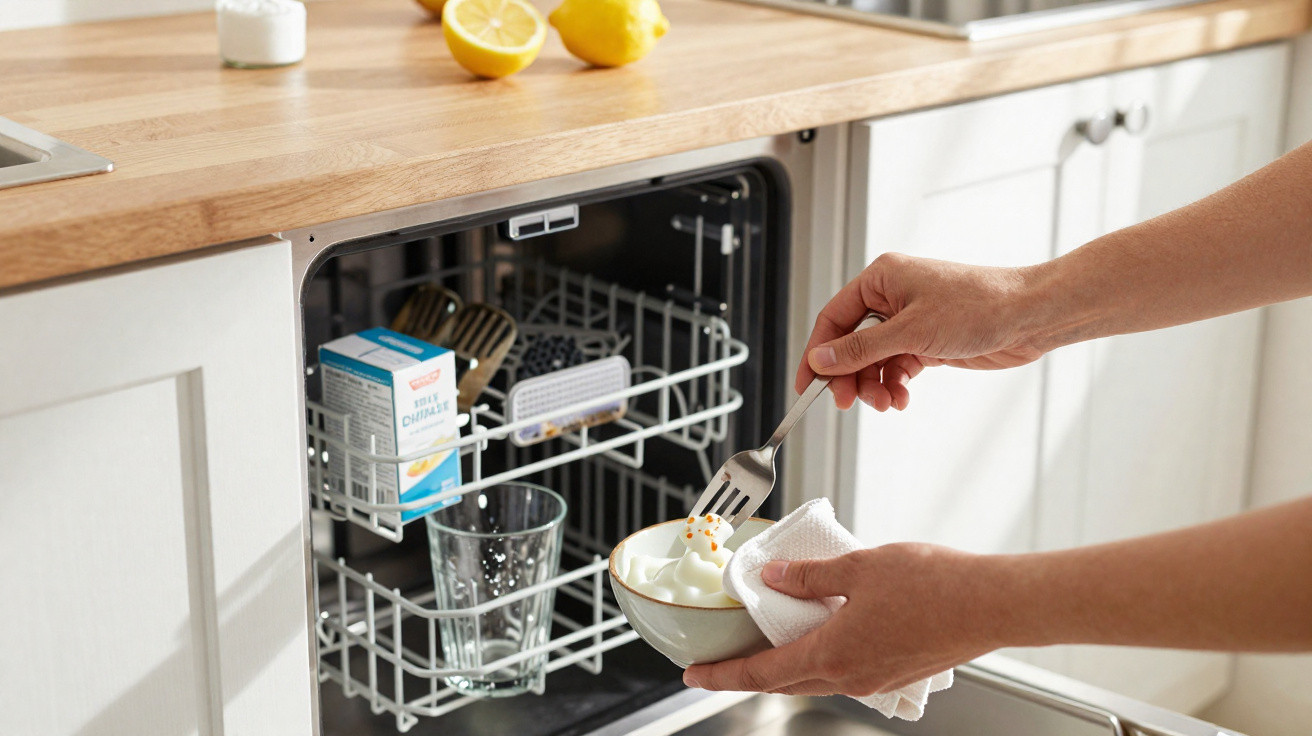
Many households will recognise the situation: plates and glasses come out looking spotless, yet knives, forks and spoons show rusty specks or dark discolouration. It is easy to blame the appliance or the detergent - or to assume the “stainless” in stainless steel is merely marketing. In reality, these marks are usually the result of understandable interactions between metal and water. The reassuring part is that, with a few straightforward habits, you can reduce the problem significantly.
Why stainless steel can rust in the dishwasher at all
Stainless steel has a reputation for being almost indestructible. Even so, tiny rust spots can still appear on cutlery. One key reason is that not all “stainless steel” is the same.
Many forks and spoons are made from high-grade stainless steel with a low carbon content. This type tends to resist corrosion relatively well. Knives are different: to produce a sharp edge that lasts, manufacturers typically use steel with a higher carbon content. That improves cutting performance, but it also reduces corrosion resistance.
That is why knives are, of all items in the cutlery basket, most often the ones affected by rust spots.
Inside a dishwasher, several tough conditions come together at once:
- very hot water
- aggressive cleaning agents
- moisture lingering in the machine for a long time
- possibly too much regeneration salt, or an incorrect salt setting
In these circumstances, the protective passive layer on the stainless-steel surface can be compromised. Once that happens, even tiny foreign particles or contact with existing corrosion can be enough to trigger rust marks.
When silver turns black rather than rusty
Rust is often confused with the dark tarnish seen on silver cutlery. Pure silver and silver-plated items do not form a classic rust layer; instead, they tarnish through a chemical reaction with sulphur compounds in the air, leaving a dark film.
As a rule, silver should not go in the dishwasher. Chlorine-containing cleaners and high temperatures attack the metal and can cause permanent damage. If you own real silver, wash it by hand and dry it thoroughly straight away.
Hidden contributors: salt, water hardness and an old cutlery basket
Modern dishwashers use regeneration salt to soften hard tap water. This helps protect the machine and reduces limescale spots. However, if the salt consumption is set incorrectly, overly salty water can come into contact with metal items.
Water hardness also plays a part: very hard water contains a lot of minerals, which can deposit on surfaces and weaken stainless steel’s protective layer. If you live in a hard-water area, check the hardness setting on the appliance and adjust it strictly in line with the manufacturer’s instructions.
Another commonly missed cause is existing rust inside the dishwasher itself - for example, a damaged cutlery basket or rack wires where the plastic coating has chipped off. True rust can form there, then transfer to cutlery as fine particles - effectively “flying rust”.
Common everyday mistakes that encourage rust
Certain routine dishwasher habits can make the issue worse without you noticing.
- Cutlery is left in the closed machine for hours, sometimes overnight, after the programme finishes.
- The door is not opened after the wash, so moisture builds up inside.
- Very long programmes with a drying phase run, and then residual damp is left sitting.
- Different metals are placed tightly together in the basket, for example stainless steel and silver.
The longer cutlery sits in a warm, humid environment, the higher the likelihood of rust specks or discolouration developing.
Simple habits that prevent rust spots
In most cases, you can reduce the causes with a few small behaviour changes. You do not need to replace the dishwasher, and you do not have to buy new cutlery straight away.
The most important step: don’t leave the machine damp after the programme ends - empty it promptly.
Practical measures at a glance:
- Empty the dishwasher straight away: once the programme ends, open the machine and remove cutlery and crockery as soon as possible.
- Leave the door ajar: if you cannot unload immediately, at least open the door a little so steam can escape and moisture does not accumulate inside.
- Check the cutlery basket: repair or replace baskets and holders where plastic has chipped or rust is visible.
- Dose salt correctly: check your tap water hardness with your water supplier and match the dishwasher setting accordingly.
- Separate metals: do not wash silver cutlery in the dishwasher. Avoid placing different metals (for example coated knives) tightly against each other.
How to restore cutlery that is already affected
If you can already see damage, it does not automatically mean the cutlery is finished. With light discolouration on stainless steel, a lot can be improved.
Removing light rust spots from stainless steel
For surface-level oxidation, a simple household method can help:
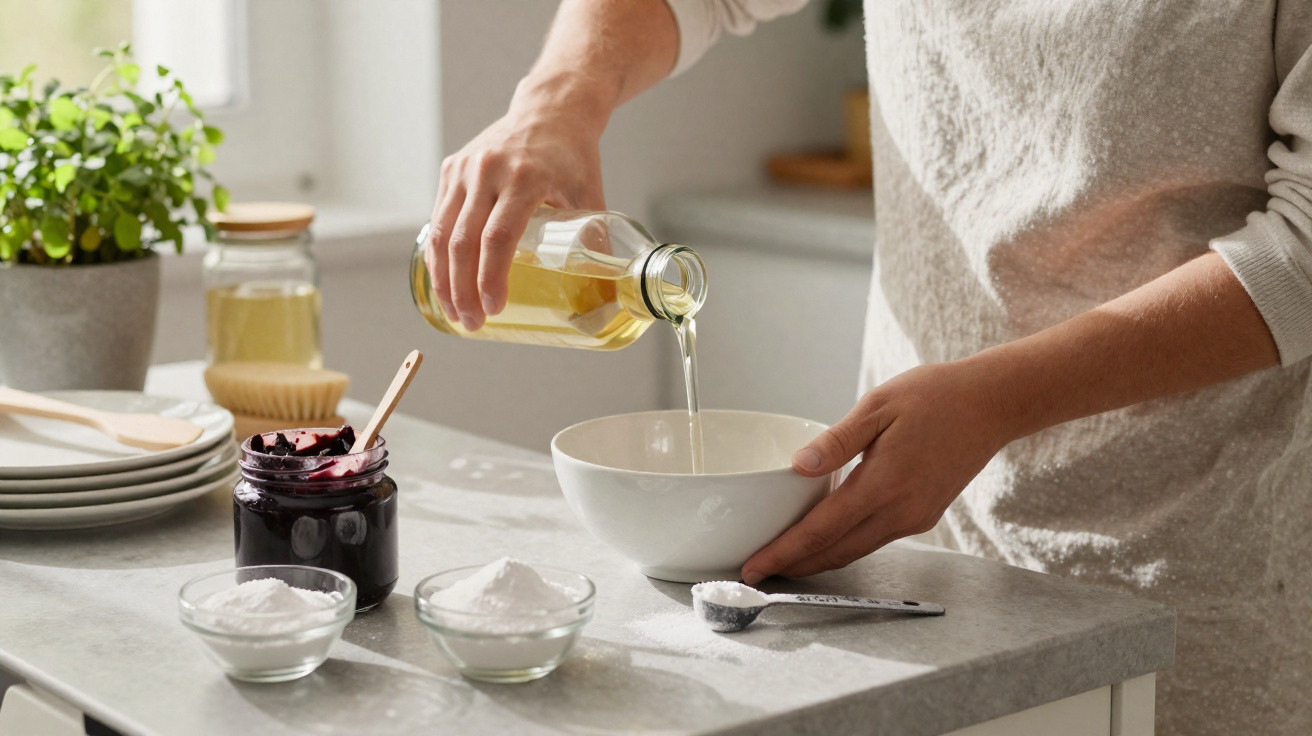
- Mix a little bicarbonate of soda or baking powder with a small amount of water to form a paste.
- Gently rub the affected areas with the paste using a soft cloth.
- Rinse with clean water and dry immediately and carefully.
As an alternative, a brief contact with white household vinegar can work. Important: do not leave cutlery soaking in vinegar for hours, as the acid can attack the metal unnecessarily.
Brightening tarnished silver again
If silver has gone black, a small chemistry trick - familiar to many from the kitchen - can help:
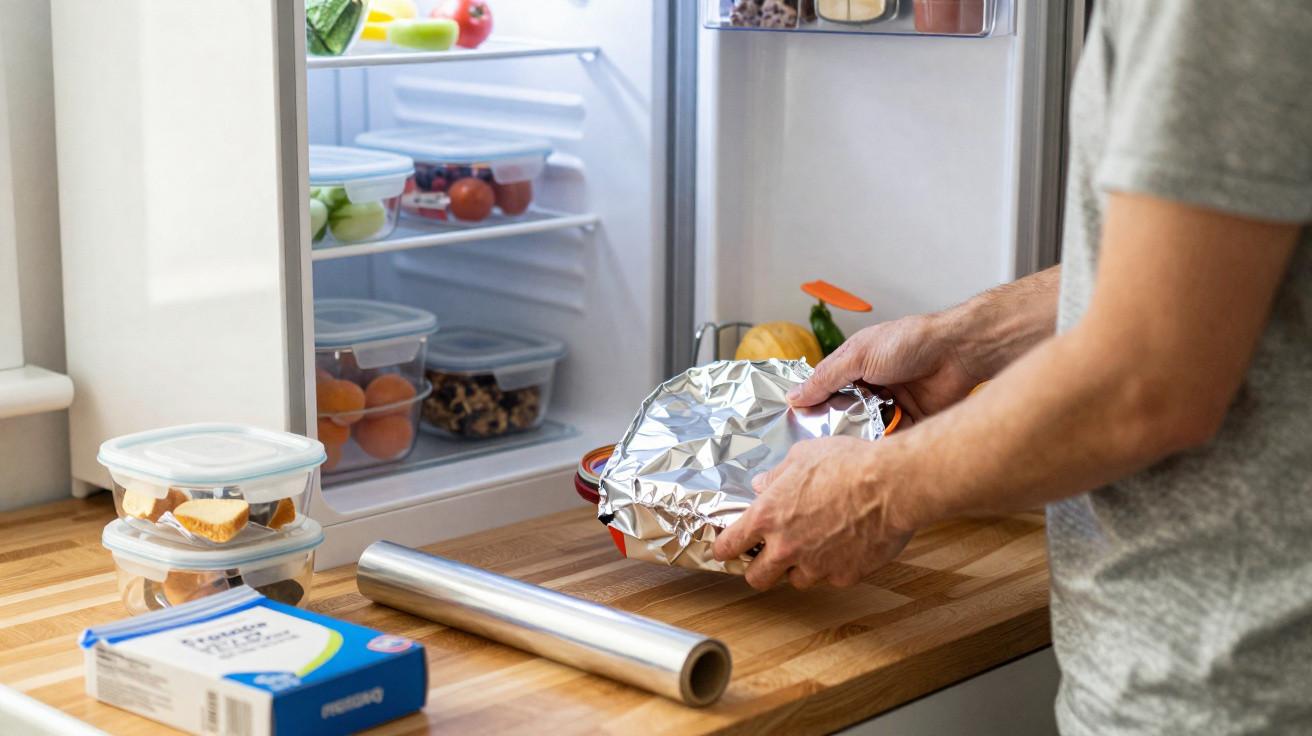
- Fill a bowl with hot, almost boiling water.
- Line the bottom with aluminium foil.
- Add one to two spoonfuls of bicarbonate of soda or baking powder.
- Place the silver items in the bowl and wait a few minutes.
During the reaction, sulphur shifts from the silver surface to the aluminium foil, and the silver looks noticeably brighter again. Rinse under clean water and dry thoroughly.
If rust specks keep appearing in exactly the same places on stainless steel, or if deep tiny holes form (so-called pitting corrosion), the metal has already been permanently attacked. The pieces are often still usable, but they will look aged. In that case, it is better to wash those items by hand in future and store them dry.
How to recognise higher-quality cutlery
Over the long term, cutlery quality makes a real difference. High-grade stainless steel with the right alloy is far less sensitive to dishwasher conditions.
When buying a new set, check the markings. Labels such as “18/10” indicate stainless steel with a higher chromium and nickel content. This type is generally corrosion-resistant and better suited to dishwashers. Knives often use different steels so they stay sharp; careful maintenance makes a noticeable difference to their service life.
Why moisture after the wash is such a problem
Many dishwasher programmes finish with a drying phase. Even so, the interior is rarely completely dry. If the door stays closed afterwards, a warm, humid microclimate forms - exactly the environment corrosion thrives in.
That is why it helps to open the door slightly once the programme ends, even on models with automatic door opening. If you often run the dishwasher overnight and only unload in the morning, it is worth checking whether you can use a shorter programme in the evening so you can unload the same day.
For households in areas with extremely hard water, it may also be useful to add an external water filter or softener. This reduces limescale build-up and protects not only the cutlery, but the machine itself.
With a basic understanding of metal, water and detergents, you cannot eliminate dishwasher rust entirely, but you can keep it under much better control. If you dry cutlery quickly, separate metals, set the machine correctly and look after affected pieces deliberately, you will enjoy shiny knives, forks and spoons for much longer.


Comments
No comments yet. Be the first to comment!
Leave a Comment