
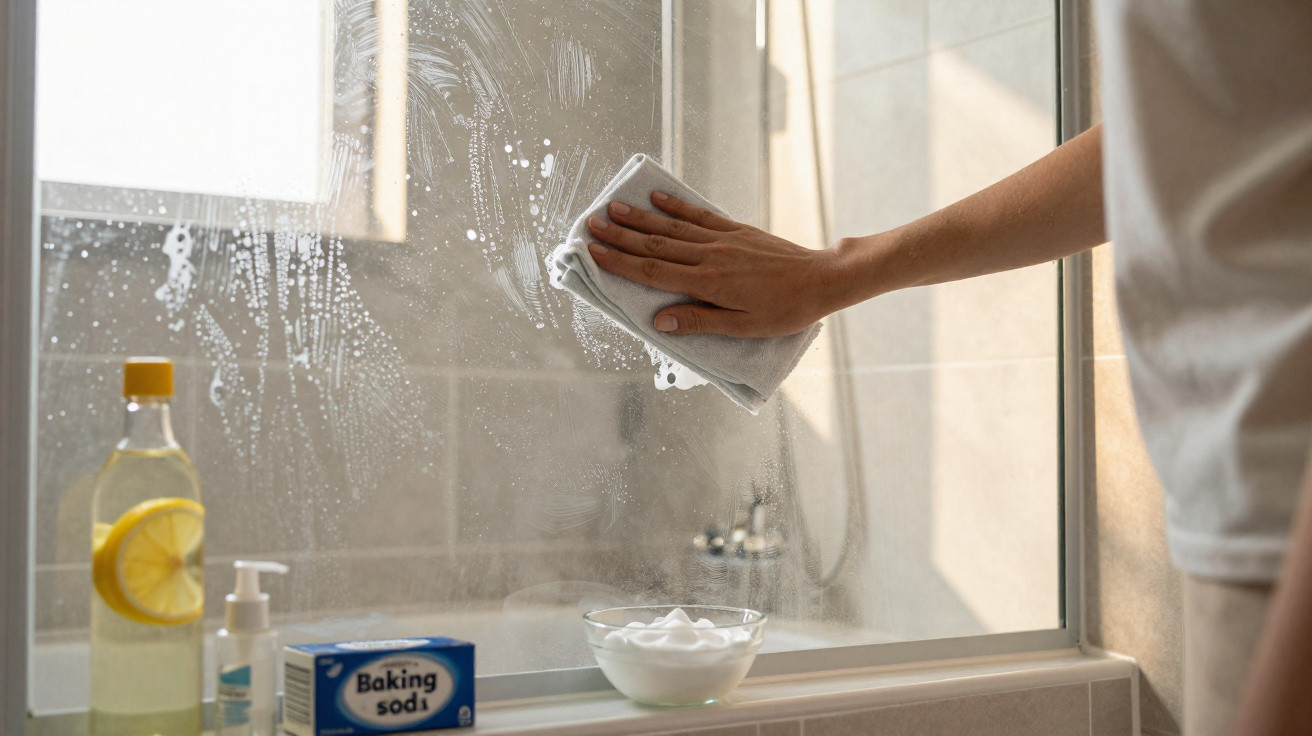
Instead of continually buying new specialist cleaners, many households are now relying on a straightforward blend of three cupboard staples. It tackles stubborn limescale, is kind to glass, avoids harsh chemicals - and costs only a few cents each time you use it.
Why shower glass turns cloudy so quickly
The culprit is the water itself. Tap water carries minerals such as calcium and magnesium. When you shower, the warm water spreads as a thin film over the glass screen. Once that moisture evaporates, the minerals are left behind.
Over time, this leads to:
- white spots and tide marks
- a milky haze across the glass
- rough patches where soap residue clings even more firmly
If you leave it for weeks, you’ll eventually notice that even after a thorough clean the panel no longer looks properly clear. That’s because multiple layers of limescale build up on top of each other and can partly attack the glass surface. The glass then looks worn, slightly yellowed, and difficult to restore.
Why cream cleaner and abrasive sponges cause trouble
Out of frustration, plenty of people reach for scouring powder, cream cleaner, or the green side of a washing-up sponge. In the short term, it can seem effective because the layer is scraped off mechanically. Over the long term, it’s a mistake.
The gritty particles and fibres create fine scratches in the glass. You often can’t see them with the naked eye, but they still have consequences:
- Limescale lodges more quickly in the micro-scratches.
- The glass looks duller and duller.
- Cleaners work less well because the surface is no longer smooth.
“A smooth surface is easier to clean than a scratched one - if you scrub hard now, you’re creating more work for yourself later.”
A better approach is to use mild acids, allow enough dwell time, and stick to soft tools that won’t scratch.
Three simple ingredients that reliably dissolve limescale
This method uses a homemade gel cleaner. It’s made from three basic ingredients that many people already have in the kitchen:
| Ingredient | Function |
|---|---|
| Household vinegar (approx. 8%) | dissolves limescale deposits thanks to a mild acid |
| Citric acid (powder) | boosts limescale removal and helps with stubborn build-up |
| Cornflour (cornstarch/maize starch) | thickens the mixture so it clings to the wall |
Vinegar and citric acid are gentle acids that chemically attack limescale without damaging the glass. The starch turns the blend into a gel that sticks to a vertical shower screen, allowing it to work for longer.
“The trick isn’t a stronger acid - it’s the combination of a mild recipe and enough contact time on the glass surface.”
How to make the anti-limescale gel cleaner
For one batch - comfortably enough for a shower screen - you’ll need roughly:
- 300 ml cold water
- 1 tablespoon cornflour
- 1 tablespoon citric acid (powder)
- 100 ml household vinegar (about 8%)
Step-by-step instructions
- Whisk the cornflour into the cold water until completely smooth.
- Heat gently over a medium heat, stirring, until it becomes a clear, slightly thick gel.
- Take the pan off the hob and let it cool briefly.
- Stir in the citric acid until it has fully dissolved.
- Add the vinegar and mix thoroughly.
- Leave to cool, then pour into a bottle or a wide-necked container.
The ingredients cost about 50 cents in total - and that can replace several bottles of shop-bought bathroom cleaner. You can keep the gel in the fridge for a few days, but stir it well before the next use.
How to use the gel on a shower screen
Before descaling properly, a quick bit of preparation helps:
- Rinse the shower screen with warm water to remove hair, dust, and fresh soap residue.
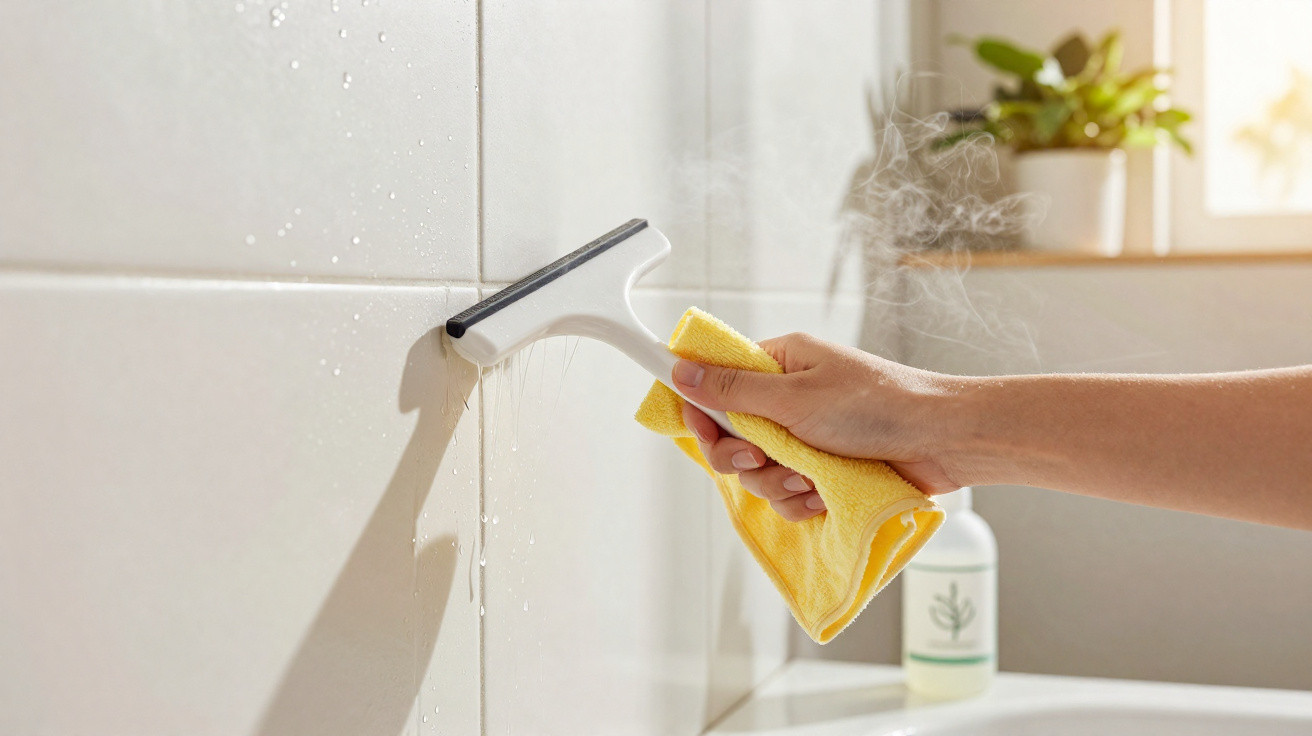
- Remove large droplets with a cloth or squeegee so the gel adheres better.
- Put on household gloves to protect your skin.
Apply the gel and let it work
Spread the gel generously over the affected areas. This is easy with:
- a soft sponge
- a silicone spatula
- or your gloved hand
Key point: don’t scrub. You simply want an even layer. Then give it time:
- for typical limescale: 15–30 minutes
- for heavy, older build-up: up to 60 minutes
During this period, the acid loosens limescale and soap residue layer by layer from the glass.
Gently wipe, then rinse thoroughly
Once the dwell time is up, go over the surface with the soft, non-scratch side of a sponge or a microfibre cloth. A few light passes are enough - the gel will already have done most of the work.
Then rinse with plenty of warm water until you can’t see or feel any residue, and dry the screen with a clean cloth or a rubber squeegee. That prevents a fresh water film from sitting on the glass and immediately forming new limescale.
“If you dry at the end, you win: every shower that finishes without a water film significantly delays new limescale spots.”
Special materials: what to watch out for
Not every shower screen is plain glass. Many manufacturers use coated or specialist materials that can react more sensitively.
Coated glass with a water-repellent finish
Some glass panels come with a hydrophobic coating designed to make water bead and run off more quickly. In that case:
- Test the gel first in an inconspicuous corner.
- If it reacts sensitively, dilute the mixture further with water.
- Follow the manufacturer’s cleaning guidance.
Plastic or acrylic panels
These surfaces are softer than glass and scratch more easily. To stay on the safe side:
- Dilute the mixture noticeably.
- Use only very soft cloths - no scouring sponges.
- Keep the dwell time shorter and plan on two applications instead.
Take care with natural stone
Shower trays or wall panels made from marble or granite are sensitive to acids. The homemade gel cleaner should not be used on these surfaces. Acid can permanently etch or discolour the stone. For natural stone, only use cleaners specifically labelled as acid-free.
The best prevention: a small routine instead of a major scrub
After you’ve battled a heavily scaled shower screen once, you probably won’t want to repeat the job every month. With a few simple habits, the glass stays clearer for much longer:
- After every shower, pull off the water with a rubber squeegee.
- Keep a microfibre cloth handy and quickly wipe handles and edges.
- Use the gel cleaner once a month, before thick layers develop.
- Enjoy warm showers, but not scalding hot ones - the hotter it is, the more limescale is left behind as it dries.
If you stick to this routine, you’ll rely on aggressive products less often and spend less time cleaning the bathroom. The shower screen keeps its “like new” look for longer, and the effort is spread across small steps rather than one big cleaning session.
Why mild acids work so well on limescale
At its core, limescale is made up of calcium compounds. Acids convert these compounds into water-soluble salts and carbon dioxide. Even relatively weak acids, such as vinegar or citric acid, are sufficient - provided they’re given enough time to work.
That’s exactly where the gel format helps: rather than running straight off the surface, it stays in place. The acid sits against the deposits for longer and works more effectively. The glass itself doesn’t react to these mild acids, so the surface remains intact as long as you avoid abrasive particles.
For many households, it’s a practical middle ground: fewer chemical fumes, lower costs, and results that hold up in everyday life - even in areas with very hard water.
Comments
No comments yet. Be the first to comment!
Leave a Comment