
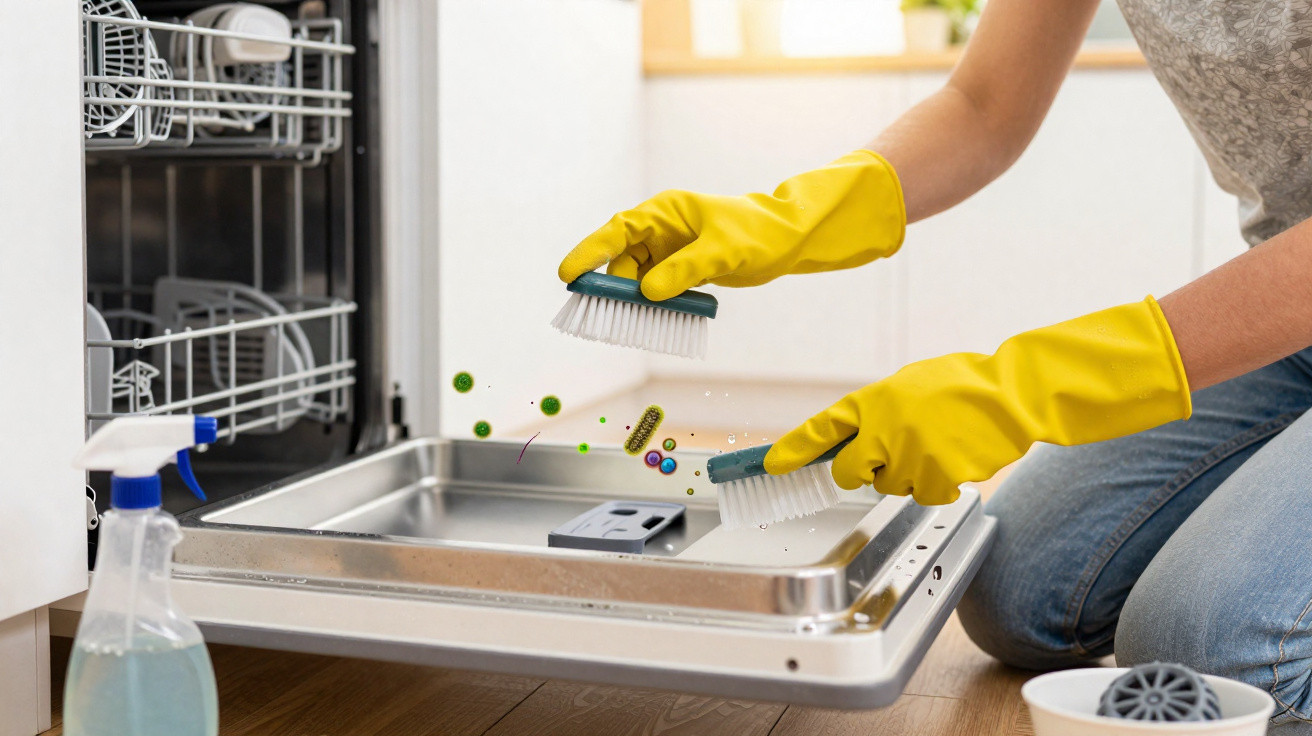
A dishwasher is often treated as the kitchen’s hygiene hero: load the plates, press a button, and everything comes out clean-or so we hope. However, both newer and older studies paint a more complicated picture. In almost every household machine, stubborn biofilms made up of bacteria and fungi can develop. The good news is that a few targeted actions can significantly reduce the microbial load.
What researchers found inside dishwashers
A widely cited 2018 study took a closer look at 24 domestic dishwashers. Samples were collected mainly from the rubber seals around the door-exactly the area where moisture, food residues and leftover detergent tend to accumulate.
"In all the appliances examined, the researchers found dense biofilms of bacteria and yeast fungi on the rubber seals."
Within these slimy layers were microbes including the genera Pseudomonas, Escherichia and Acinetobacter. Many of these are considered so-called opportunistic pathogens: usually harmless for healthy people, but potentially problematic for those who are severely immunocompromised.
Yeasts from the genus Candida appeared particularly often. In this study, they were detected in every appliance. Researchers also found so-called “black yeasts”-darkly pigmented fungi that are extremely resilient and can withstand high temperatures, cleaning agents and salt.
Why a dishwasher is an ideal biotope for germs
At first glance, a dishwasher interior seems hostile to life: hot water, detergent, salt, and dramatic swings between wet and dry phases. Yet it is precisely these extremes that make it attractive to certain microorganisms.
- Warm and damp: Residual water and condensation create a consistently moist habitat.
- Alkaline conditions: Detergents raise the pH; many everyday microbes struggle, but specialised species cope well.
- A constant supply of nutrients: Food remnants, fats, starches and proteins provide ongoing fuel.
- Protected niches: Rubber seals, corners, filters and spray arms are not fully flushed through.
Microorganisms take advantage of these conditions to form biofilms-slimy layers in which bacteria and fungi protect themselves with their own matrix. Inside that matrix, they exchange nutrients and signals, and become far more resistant to heat and chemicals.
When economy programmes become a hygiene problem
To save water and electricity, many households now rely almost exclusively on Eco or short programmes running at 30 to 45 °C. That can reduce bills, but it does not necessarily support hygiene.
"Low temperatures reduce energy consumption, but leave biofilms inside the appliance largely unaffected."
Temperatures that are too low do not reliably kill heat-tolerant microbes. They mainly rinse away loose surface layers. Even fungi that can make people with weakened immune systems unwell may remain protected deeper within the film.
What enters your kitchen when you open the door
Anyone who opens the dishwasher right after a cycle will recognise the hot cloud of steam that escapes. A 2024 study suggests this is not only water vapour: tiny droplets carrying spores and bacteria can also be swept out.
These aerosols may briefly spread through the kitchen air. For healthy people, this is generally not a major risk. However, in households with someone who is severely immunocompromised-such as after chemotherapy or with serious lung disease-it is worth paying closer attention to appliance hygiene.
Another factor: washing-up sponges and brushes left damp next to the machine provide ideal surfaces for microbes. They often stay wet for days and can develop biofilms similar to those inside the dishwasher.
Three targeted steps that genuinely clean your dishwasher
With a deep clean plus a few small routines, germ levels in a dishwasher can be reduced substantially. The key is to tackle the critical areas regularly.
1. Scrub the rubber seals thoroughly
The door seal is a hotspot for fungi and bacteria. Simply wiping it with a damp cloth is not enough.
- Open the door wide and carefully fold back the entire seal so all grooves are exposed.
- Dip an old toothbrush into a mixture of warm water and white household vinegar.
- Brush the seal firmly section by section, including folds and corners.
- If deposits are particularly greasy, add a little liquid soap or black soap cleaner.
- Then wipe with clean water and allow to dry thoroughly.
Acetic acid lowers the pH locally and disrupts the protective layer of many fungi. The toothbrush’s mechanical friction helps lift the film-something chemical cleaners alone often fail to break.
2. Clean the filter and sump weekly
The filter collects everything washed off your dishes: food scraps, bones, eggshells and coffee grounds. This mixture can decay, smell unpleasant, and act as a feast for microbes.
- Remove the filter by twisting or unclipping it as the manufacturer instructs.
- Rinse thoroughly under very hot water, removing larger debris.
- Use a soft brush or sponge to scrub the mesh and edges.
- Wipe the area underneath in the sump with a cloth.
- Sprinkle a little bicarbonate of soda (bicarbonate) into the filter area to help reduce odours.
"A clean filter protects spray arms and pumps from blockages and noticeably reduces odour and microbial load."
3. Maintain the spray arms and run a hot empty cycle
Blocked spray arms distribute water unevenly and leave corners of the machine persistently damp-exactly where biofilms thrive.
A small monthly service is worthwhile:
- Remove the spray arms (where possible) as described in the user manual.
- Rinse under running water and clear every nozzle hole with a cocktail stick or thin wire.
- Refit the arms and ensure they click securely into place.
- Run a hot programme at at least 60 °C with no dishes inside.
- Add six tablespoons of citric acid powder to the empty interior to dissolve limescale.
After such an empty run, the internal surfaces are noticeably smoother, limescale residues disappear, and microbes have less to cling to.
How to stop new biofilms from forming
A one-off deep clean only lasts if day-to-day habits support it. Small changes can slow the rebuild of microbial films.
- Use the high-temperature option occasionally: One hot cycle per week provides a thermal shock for many germs.
- Leave the door ajar after washing: The interior dries faster, shrinking damp zones.
- Scrape off heavy food residues first: Quickly scrape plates rather than fully pre-washing-this protects both the environment and the machine.
- Dose salt and rinse aid correctly: Too little can weaken cleaning; too much can stress seals and metal parts.
- Wipe the interior now and then: Use a damp cloth and mild cleaner over the walls, especially near the bottom.
Who should be especially careful about hygiene
For most people, a dishwasher remains a low health risk despite being a potential reservoir for microbes. The appliance cleans intensively, and clean crockery usually dries well afterwards.
The situation is more sensitive in households with:
- transplant patients
- people with very severe immunosuppression
- chronic lung diseases
- premature babies or seriously ill infants
In these cases, a strict cleaning schedule is sensible, potentially alongside advice from doctors. In some situations, hospitals recommend higher temperatures, more frequent empty hot cycles, and very consistent filter maintenance.
How to interpret common terms about germs in dishwashers
Many technical terms sound alarming, but in everyday life they are often less dramatic than they seem. This quick overview helps put them into context:
| Term | Meaning | Relevance at home |
|---|---|---|
| Biofilm | Slimy layer of microorganisms and a protective matrix | Sits on seals, filters and spray arms-hard to remove |
| Opportunistic bacteria | Mainly dangerous for people who are severely weakened | Found in many damp areas around the home |
| Yeasts | Single-celled fungi, sometimes part of the normal flora | Widespread in dishwashers, usually unproblematic for healthy people |
| Black yeasts | Highly resilient, darkly pigmented fungi | Can sit in appliance biofilms and respond poorly to mild cleaning |
Understanding these terms makes it easier to plan realistic hygiene measures-avoiding unnecessary panic without downplaying genuine risks.
How often is a deep clean really worth doing?
The right frequency depends heavily on how the machine is used. In a single-person household running two cycles a week, a deep clean every two to three months is usually sufficient. Families who wash daily and cook many starchy or protein-rich meals should maintain the appliance far more often.
A practical rule of thumb:
- Filter and sump: once a week
- Rubber seals: brush thoroughly every two to four weeks
- Spray arms and a hot empty cycle: about once a month
This keeps the dishwasher not only in good working order but also more hygienic-and the items you handle every day do not just feel clean, they have gone through a much lower-germ process.


Comments
No comments yet. Be the first to comment!
Leave a Comment