
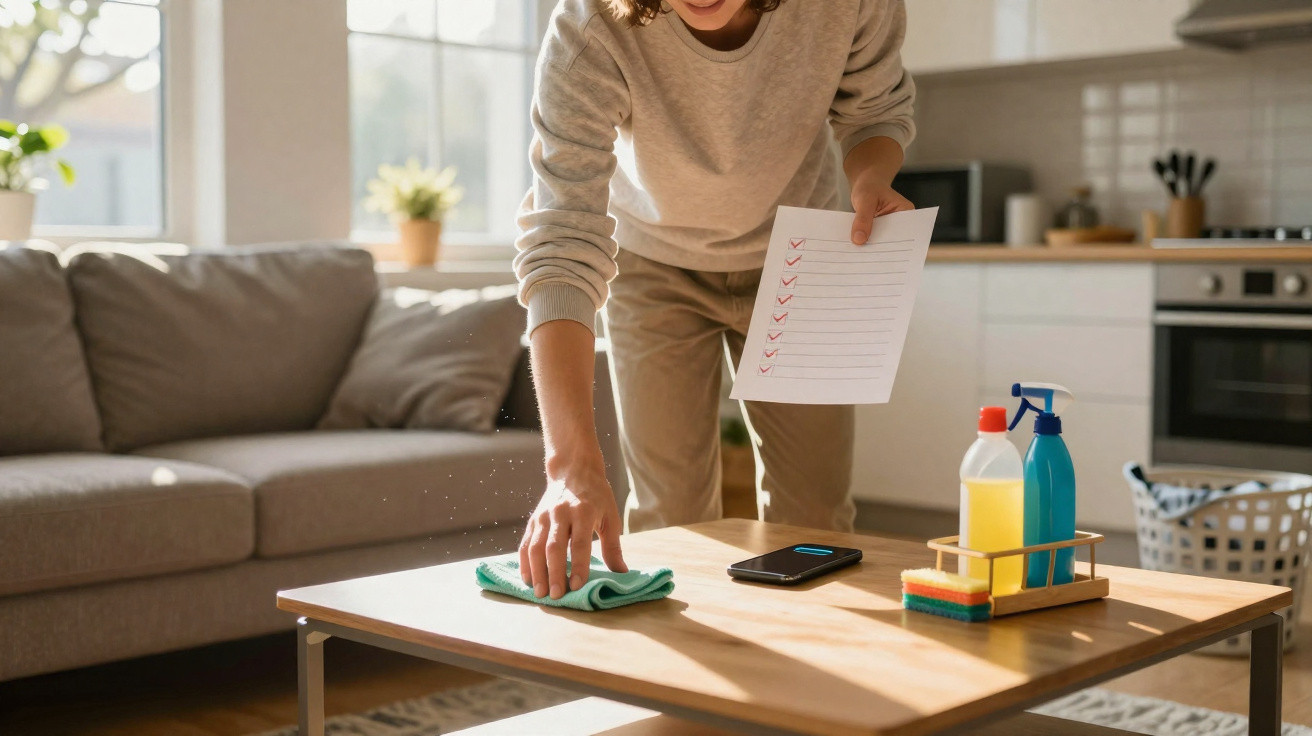
You look at the time. People are “dropping by” in 20 minutes, the sink resembles the aftermath of a pottery lesson, and there’s a suspicious crunch under your socks as you cross the living room. You snatch a cloth and some multi-purpose spray and, all of a sudden, you’re speed-running your home like it’s a level in a video game.
The infamous “quick clean.”
It usually begins with the best intentions and a hazy promise of “ten minutes, max.”
Then 40 minutes pass: you’re overheated, inexplicably rearranging the bookshelf, and your guests are messaging to say they’re downstairs.
So, in real terms, how long is a quick clean supposed to take?
The five-minute miracle quick clean myth
We’ve all been sold the fantasy of a five-minute reset. Influencers float through immaculate kitchens with a neatly folded microfibre cloth and a candle, as though clutter simply retreats when the camera starts rolling.
Everyday life doesn’t work like that.
Even when you move fast, a genuine “quick clean” still costs time. Between tracking down the spray, choosing the “right” playlist, and shifting the chair that’s been in the wrong spot since 2022, five minutes disappears instantly.
In practice, “I’ll just do a quick clean” often translates to “I’m about to underestimate this job by at least 50%.”
Now imagine this.
You get a text: “We’re outside your place in 30, cool?” Your mind immediately opens the “panic clean” tab.
First stop: the kitchen. Plates go into the dishwasher (or, if we’re being honest, into the oven), crumbs get swept into your palm, and you attack the sticky ring from last night’s glass of wine with real commitment.
Next: the bathroom. You wipe the basin, swap the hand towel, and pull the shower curtain closed like a theatre backdrop that conveniently hides last week’s shampoo bottles.
After that, you do a rapid pass of the living room: scoop up the laundry pile under a throw, light something that smells vaguely of vanilla, and try to make it look intentional.
Then you check the clock.
Twenty to thirty minutes. Every. Single. Time.
There’s a simple reason your “ten-minute clean” almost never fits into ten actual minutes. People tend to misread cleaning in two predictable ways: they blur “quick clean” into “deep clean”, and they tackle by room rather than by task.
A usable quick clean is about what it looks and feels like, not flawless results. You’re not transforming the house; you’re changing what your eyes and nose notice first: surfaces, smells, and the obvious clutter hot spots.
When you accept that, the realistic rule is straightforward: for an average-sized home, a basic, targeted quick clean is roughly 20 minutes on a normal day, and up to 30 when chaos has been through.
Anything claiming less is usually marketing, not real life.
The real-world 20-minute quick clean (and what to leave)
A workable quick clean often fits into a 20-minute loop made up of crisp, repeatable tasks. Think of it as a short routine you can run, rather than frantic wandering with a sponge.
A common structure that genuinely helps:
- 5 minutes in the kitchen: dishes rinsed or stacked, worktops wiped, obvious rubbish out.
- 5 minutes in the living room: put visible clutter into a basket, plump up cushions, wipe surfaces, quick sweep or hoover the main walkways.
- 5 minutes in the bathroom: basin wiped, mirror quick swipe, toilet seat and flush button cleaned, fresh hand towel.
- 5 minutes of “floating time” for the hallway, the half-shut bedroom door, and the one irritating spot that always bothers you.
That’s a quick clean grounded in reality, not wishful thinking.
The biggest thief of time is scope creep. You begin by wiping the bathroom sink and, before you know it, you’re reorganising the entire cupboard because you’ve discovered three nearly empty toothpaste tubes and suncream from 2018.
This is where being kind to yourself matters. You’re not lazy; you’re simply human-most of us see one messy thing and feel compelled to fix the whole system.
In a true quick clean, the goal is to stop that spiral. Leave the insides of cupboards and drawers, anything under the bed, and “projects” like folding every item by colour.
Those belong in a different block of time.
A quick clean is triage, not therapy for your home.
Here’s a blunt truth many of us need: almost nobody maintains this perfectly every single day. What people actually do is rotate through phases-several good days, then a stretch of exhaustion, then one guilty mega-clean.
If you want quick cleaning to feel manageable rather than punishing, stick to one rule: stop when the timer goes off.
Not “when it feels done” and not “after I just fix this one more thing.”
Set a timer for 20 minutes and treat it as a firm boundary. That’s how a quick clean stays quick.
Over time, your brain learns there’s a clear finish line, and it becomes easier to resist turning it into a three-hour marathon.
How to make your quick clean genuinely feel quick
If you want speed, set yourself up first-preparation does a large part of the work. Keep a small “grab and go” kit in one consistent place: multi-purpose spray, a glass cloth, a microfibre cloth, small rubbish bags, and disposable wipes if you use them.
When that kit is ready, you cut out the aimless searching-the wasted minute spent roaming the house trying to find the “good” sponge.
Start every quick clean the same way: timer on, music or a podcast on, and one guiding line in your head - “I’m only doing what people can see at a glance.”
Kitchen worktops, coffee table, bathroom basin, front door area.
Those four spots change the feel of your home far more than scrubbing a skirting board ever will.
Most quick cleans go off track because of two familiar errors. First, you take on too much at once: you look at the whole room and your brain locks up.
Make the job smaller. Tell yourself, “Right now I’m only clearing surfaces” or “I’m only dealing with the floor.” Once that’s finished, move on.
Second mistake: shame cleaning. You scan the mess and think, “How did I let it get this bad?”-and that heaviness slows everything down.
Replace judgement with curiosity - “Okay, this week got heavy, what’s the minimum I can do so tonight feels calmer?”
Quick cleaning works best when it feels like care, not punishment.
Sometimes, the most realistic definition of “clean enough” is this: “I can open the door to someone without apologizing for the state of the place.” That’s not low standards. That’s a humane one.
- Kitchen zone (6–7 minutes) Stack or soak dishes, wipe worktops and table, clear visible rubbish, quick sweep under the table or in front of the worktop.
- Living room zone (5–7 minutes) Throw clutter into one basket, straighten cushions and throws, wipe the coffee table and TV area, run the hoover where people walk.
- Bathroom zone (4–5 minutes) Wipe basin and tap, swipe mirror, clean toilet seat and handle, replace towel, empty overflowing bin if needed.
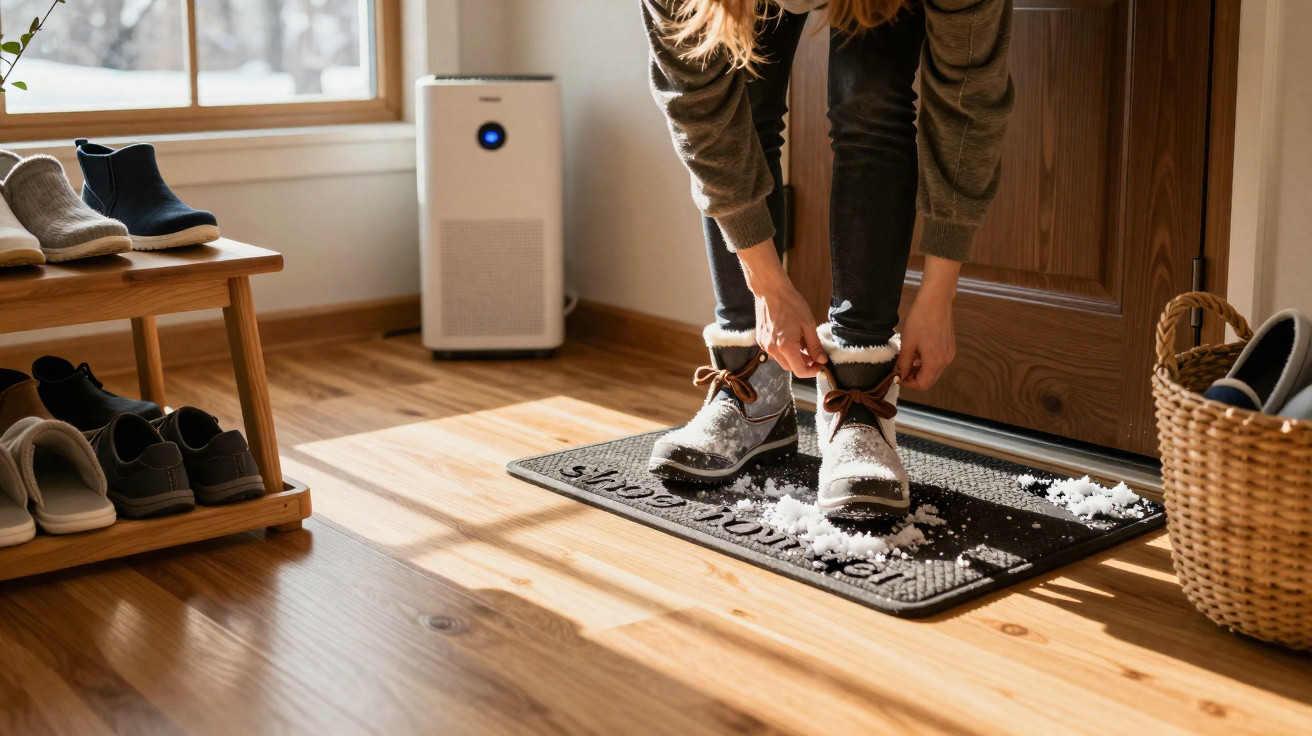
- Entrance zone (2–3 minutes) Line up shoes, hang coats, clear post out of sight, give the floor a quick sweep so the first step inside feels calm.
When “quick” is more permission than a stopwatch
Once you let go of the five-minute fantasy, the question shifts. It becomes less “How little time can I spend?” and more “What amount of effort gives me the most relief for the least energy?”
For a lot of people, the sweet spot is 15 to 25 minutes. It’s long enough to make a visible difference, and short enough that you don’t have to bargain with yourself for an hour before you start.
And there will be days when even ten minutes feels like climbing a hill in wet socks. On those days, a “quick clean” might simply mean clearing the sink and wiping one surface before bed-and that still counts.
The goal isn’t perfection; it’s getting back enough control that your home stops shouting at you when you come through the door.
What matters is that you decide what “quick” means for your life right now, not someone else’s aesthetic video.
| Key point | Detail | Value for the reader |
|---|---|---|
| Realistic time frame | A proper quick clean typically takes 20–30 minutes in an average home | Cuts guilt created by unrealistic five-minute expectations |
| Priority zones | Put your attention on the kitchen, living room, bathroom, and entrance only | Delivers the biggest “this feels clean” impact in the least time |
| Simple routine | Use the same small checklist each time with a timer and a basic kit | Makes cleaning feel quicker, lighter, and easier to begin |
FAQs:
- How long should a daily quick clean take? For most people, 15–20 minutes is enough to reset visible areas if you’re doing it fairly often and mess isn’t extreme.
- What if my place is really messy - is a quick clean still possible? Yes, but shrink it to just one or two zones, like kitchen and bathroom, for 20–30 minutes and accept that the rest can wait.
- Is it better to quick clean every day or do one big weekly clean? A mix works best: short daily resets so things don’t explode, with a longer weekly session for deeper tasks.
- Which room should I start with for a fast clean? Start where impact is highest for you: usually the kitchen or living room, or the spot you see first when you walk in.
- Do I need special products for speed cleaning? No, a good multipurpose spray, one cloth, and a trash bag will cover 80% of what a quick clean requires.

Comments
No comments yet. Be the first to comment!
Leave a Comment