
Fresh - almost soapy. Yet the second Emma pulled open the washing machine door, a gust of stale, damp air rolled out, like breath from an old cellar. The towels she’d just washed felt dense and weary. She pressed a T‑shirt to her face and grimaced. That faint, musty smell again. Same detergent. Same programme. Same machine. But something was clearly wrong.
She tried washing everything again on a hotter cycle. She swapped detergents. She stopped cramming the drum. Still, the smell kept returning - appearing and disappearing like an unwelcome visitor who never quite goes away. One evening, trawling forums with wet socks hanging nearby, she saw a short comment that changed everything: “Have you cleaned the filter?”
She hadn’t even realised her machine had a filter.
And that’s where the real story begins.
When clean laundry doesn’t smell clean at all
It’s a strangely common moment: you open the washer, reach in for warm, freshly spun clothes… and you’re met with that faint “wet basement” smell. The fabric looks clean. It even feels clean. But the odour clings - especially to towels and sportswear. So you dump it all back in for another rinse, hoping the problem will somehow vanish.
On a busy weekday, hardly anyone wants to poke around inside a washing machine. You blame the detergent, the fabric conditioner, the weather, even your water supply. But the culprit is often tucked away in a small, ignored spot right at the bottom of the appliance: the filter. Quietly blocked. Quietly breeding.
In a recent UK home appliance survey, technicians said that a large share of “smelly laundry” call‑outs came down to one simple issue: a clogged filter. One service engineer described pulling out filters stuffed with coins, hair elastics, dog fur - even a tooth. All that trapped debris sits in a small pocket of warm, humid water every time you run a cycle.
That warm water never fully clears. Traces of detergent and conditioner stick to the mess. Over weeks, then months, it turns into a sticky grey slime - like wet lint blended with mud. It doesn’t look dangerous, just unpleasant. But it’s an ideal feeding ground for bacteria and mould. Before long, the “clean” water that washes your clothes is passing this tiny swamp on every cycle.
Once you understand how it works, the smell is easy to explain. The filter’s job is to catch whatever the drum sends its way: pet hair, fluff from pockets, bits of tissue you forgot to remove, even tiny stones caught in jean hems. Each wash adds a little more. As the flow path narrows, the pump has to work harder - and more water lingers where it shouldn’t.
That leftover water turns stagnant between washes. Microorganisms multiply, feeding on detergent residues, body oils and organic debris trapped in the filter. They give off volatile compounds that smell damp, earthy and sour. Those molecules don’t stay neatly contained in the filter - they travel back with the water into the drum and then cling to your fabrics. By the time you clock it, your clothes have become sponges for somebody else’s dirty work.
The simple routine that saves your clothes (and your nose)
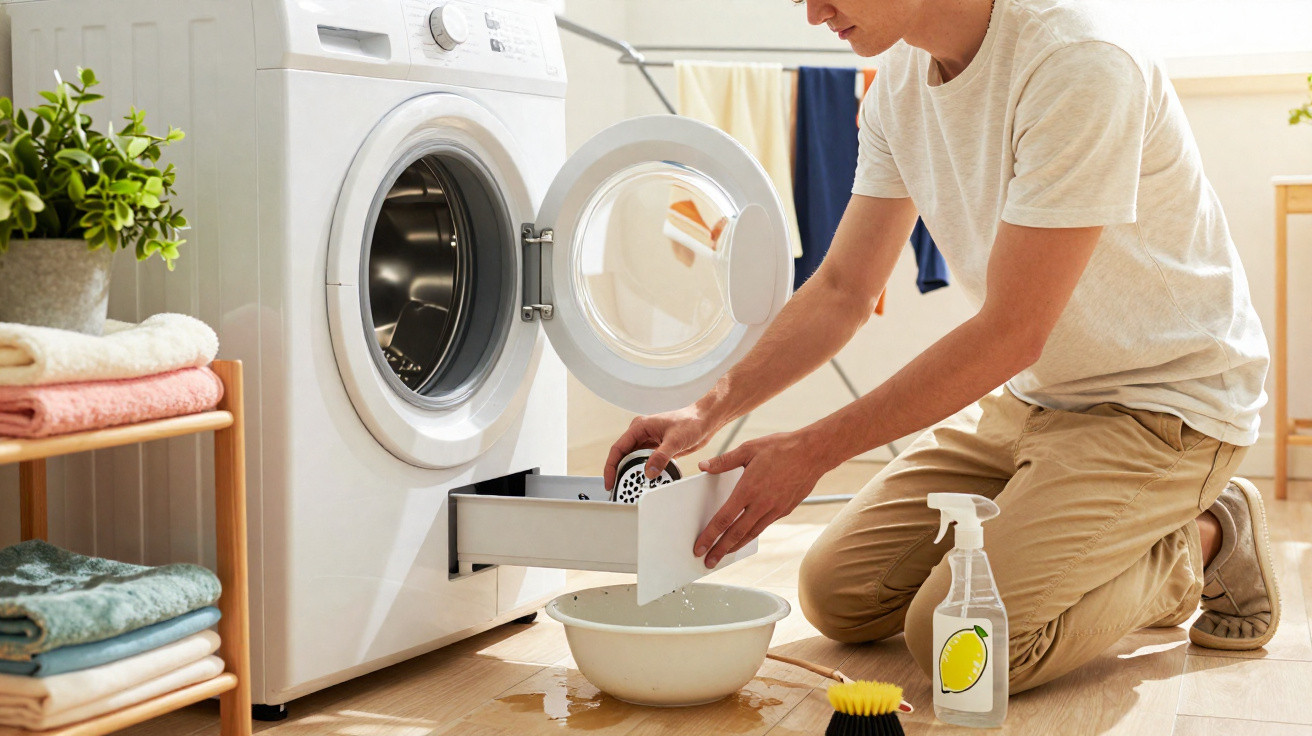
Cleaning a washing machine filter can sound like a technical job, but in most cases it’s a 10‑minute routine. On many front‑loaders, the filter sits behind a small flap at the bottom right of the machine. Slide a shallow tray or an old towel underneath, because some water will spill out. Turn the cap slowly, let the water drain, then pull the filter straight out.
The first time you do it, don’t be shocked if it looks like you’ve discovered a lint creature. Pick off hair, threads and any obvious debris by hand. Rinse the filter under hot tap water, using an old toothbrush to scrub residue from the plastic and the mesh. Wipe the compartment where the filter fits with a cloth, pulling out any remaining gunk. Then refit the filter securely. That’s the heart of it: open, clear, rinse, wipe, close.
Most people only remember this maintenance step after something fails - the machine won’t drain, warning lights flash, or a sock seems to have vanished suspiciously. But a slow, creeping smell is often the earliest sign. When you’re short on time, it’s easy to ignore. You run another cycle with extra conditioner, maybe add a laundry perfume. It masks the musty note for a while, but the filter is still down there, stewing.
On a human level, this isn’t about being a “perfect” homeowner. It’s about realising that a hidden part of your machine shapes everyday things: how your clothes feel on your skin, how your bathroom smells, and how confident you feel pulling on a T‑shirt after a long day. One small habit protects all that unseen comfort.
“I used to think my machine was broken,” says Laura, a mother of three who runs four loads a week. “The towels smelled like they’d been left outside in the rain. Cleaning the filter felt almost too simple, like it couldn’t be the answer. But the difference after that first clean was unreal.”
After that first proper clean, it helps to keep a short checklist in mind:
- Rinse the filter every 4–6 weeks if you wash often or have pets.
- Leave the door and detergent drawer slightly open between washes.
- Run an empty hot cycle with a machine cleaner or white vinegar once a month.
These small routines create a quiet kind of hygiene around your laundry. Not a rigid rulebook - more a rhythm that stops the machine turning into a swamp behind a glossy white door.
A fresh machine changes more than just the smell
Once you start paying attention to the filter, you’ll notice other subtle cues. The washer empties faster. The spin feels steadier. Clothes come out less waterlogged, instead of heavy with leftover moisture. The musty smell fades from the laundry basket, then from the bathroom, then from the hallway where you hang clothes to dry.
You might even catch yourself doing something slightly ridiculous: taking a clean towel, pressing it to your face and breathing in, just to confirm. This time it smells of cotton, detergent and a trace of your home - not that closed‑in dampness that used to nag in the background. The shift is small, but it quietly makes day‑to‑day life easier.
In a way, cleaning the filter is about regaining control over something that felt mysterious and a bit disappointing. You assumed you were doing everything “right”: buying decent detergent, choosing the correct programmes, folding and stacking carefully. Then the smell undermined all that effort. By reaching into the machine - literally - you reconnect the hidden inner workings with the clean shirt you put on in the morning.
Once you’ve seen the sludge that was lurking there, it’s difficult to go back to pretending it isn’t.
| Key point | Detail | Why it matters to you |
|---|---|---|
| The filter builds up residue | Hair, lint, fabric fibres and debris get trapped in a damp area | Understand why clothes can smell musty even after a recent wash |
| A simple cleaning routine | Open the flap, drain the water, rinse the filter, wipe the housing | Have a practical action that gets rid of bad odours |
| Everyday comfort improves | Better drainage, fresher laundry, fewer bacteria | Enjoy laundry that genuinely smells clean and a machine that lasts longer |
FAQ:
- How often should I clean my washing machine filter? For most households, every 4–6 weeks is a good rhythm. If you have pets, small children, or wash very frequently, doing it once a month keeps smells under control.
- Will a dirty filter always cause a musty smell? Not always, but it’s one of the most common hidden causes. A blocked filter often works together with low‑temperature washes and a closed door to create that stale odour.
- Can I use vinegar or baking soda instead of cleaning the filter? You can run maintenance cycles with vinegar or baking soda, which helps, but they don’t remove coins, hair or physical debris. The filter still needs to be taken out and rinsed.
- Is it safe to clean the filter myself? Yes, if you follow the manual, turn the machine off and let it cool after a hot cycle. Most filters are designed for users to access without tools.
- What if my clothes still smell after I’ve cleaned the filter? Then it’s worth checking the door seal, detergent drawer, and running an empty hot wash. Persistent smells can also come from washing at low temperatures all the time or leaving damp clothes in the drum for hours.





Comments
No comments yet. Be the first to comment!
Leave a Comment