
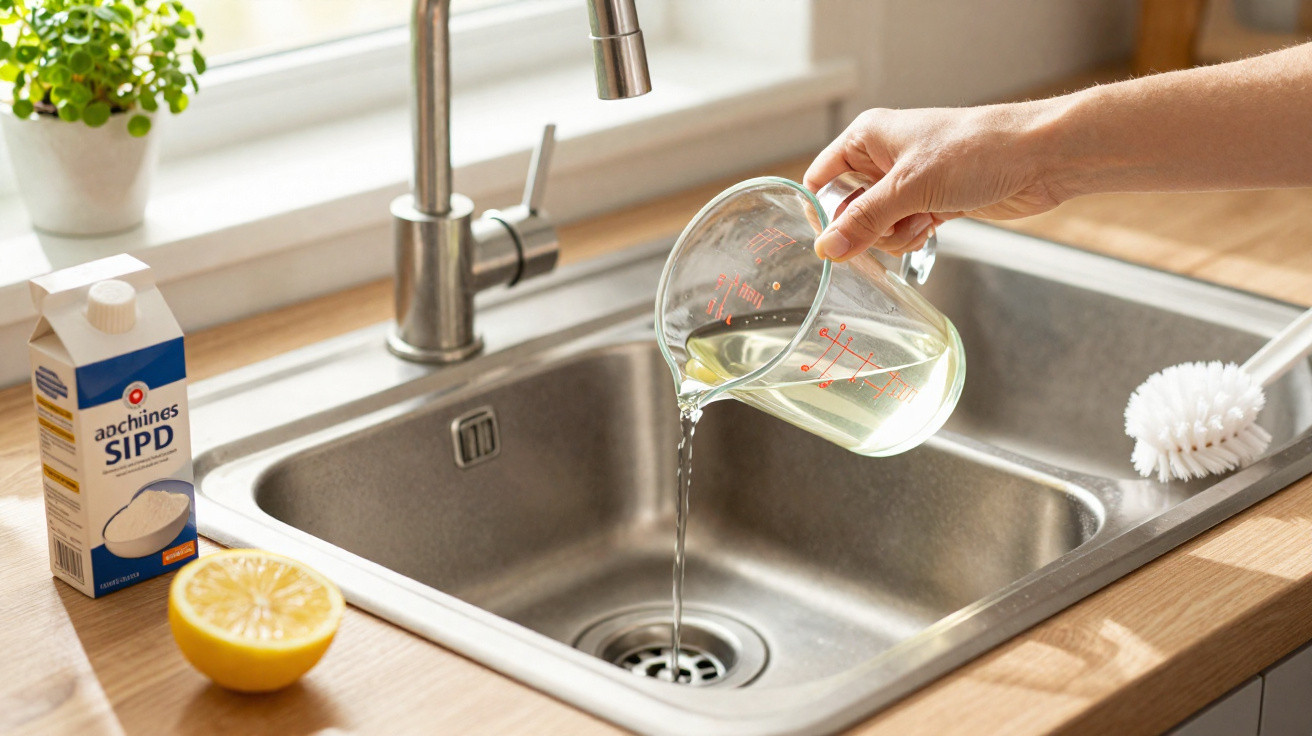
The kitchen was gleaming: the bin had been emptied, the sponge was brand new, and everything looked as it should. And still, whenever the tap was turned on, a sharp, swampy whiff drifted up from the sink - the kind that makes you question just how clean your home really is.
I stood there watching the water whirl away, wondering what was hiding beneath that polished metal ring. Old scraps? A layer of congealed washing-up liquid? Something living in the pipes that really shouldn’t be thought about before breakfast. I could almost see last year’s plumber’s invoice in my mind, and I had no desire to repeat that.
So I did what most of us do: I searched online, then I rang someone’s gran. And from both places, the same advice kept turning up - straightforward, almost irritatingly so. One ordinary kitchen liquid, once a week.
The sort you’ve probably already got sitting by the hob.
The unseen culprit lurking in your sink
Kitchen odours don’t usually arrive with fanfare. They creep in gradually - the way one forgotten plate can make a fresh room feel stale by morning. Under the sink, it’s even more subtle. You run hot water, wash up, rinse leftovers into the drain, and move on. Meanwhile, the smell quietly gets worse.
Inside the pipework, a thin coating builds up along the sides. Plumbers call it “biofilm”: a tidy term for a stubborn mix of grease, soap residue, food bits and bacteria. It traps smells the way a sponge holds dirty water. You tend to notice it only when running water disturbs the air sitting in the drain.
What catches many people out is that it often isn’t a true “blockage” at all. It’s that tacky layer clinging to the surfaces the water passes over.
I spoke to a maintenance worker who deals with dozens of kitchen sinks in flats every month. He said the pattern rarely changes. Residents report “sewer gas” or “rotten egg” smells and assume something has failed somewhere deep in the system. Then he turns on the tap, bends over the bowl, and almost smirks - because he’s seen it countless times.
He doesn’t begin with a drain snake or a pricey chemical gel. He starts by sniffing, then looking, and only then does he reach for a very basic setup: a torch, a spanner, and a bottle of something you’d expect to pour over a salad, not down a drain. In many cases, it’s a cleaning job rather than a repair.
One household he visited even stopped cooking fish because they were convinced that was the culprit. For months they scrubbed every visible surface, swapped sponges daily, and lit scented candles. The real source was sitting just beneath the strainer, in the curved section of pipe, steadily producing that smell whenever warm water ran through.
So why does it get particularly intense there? The U-shaped section under your sink - the P-trap - is designed to hold a small amount of water. That standing water acts as a seal, preventing sewer gases from rising back into the room. But when grease and tiny food particles wash through, they don’t always disappear. They stick to the sides and collect above that water line, in one of the warmest and dampest parts of the pipe.
Bacteria thrive in that setup. They feed, multiply, and give off gases that our brains interpret as “something’s not right.” Once the film is established, each surge of water stirs those trapped gases and pushes them up into your kitchen.
The key isn’t going in aggressively. It’s breaking down and shifting that sticky layer before it settles in for good.
The weekly white vinegar trick that quietly saves your drains
This is the routine many grandmothers swear by - and, quietly, plenty of plumbers don’t argue with it: plain white vinegar. No fancy branding, no “lemon splash active foam triple power” promises. Just the clear bottle that costs very little, often used once for a dressing and then left at the back of the cupboard.
Once a week - evenings tend to work well - pour about 250 ml (roughly one cup) of white vinegar straight into the sink drain. Leave it alone for at least 30 minutes. No running water, no washing up, no “just a quick rinse”. The vinegar’s acidity helps soften and loosen the biofilm build-up.
When the time’s up, run hot water for a solid 30 to 60 seconds. That rinse helps flush away what the vinegar has gently lifted from the pipe walls. It’s not a theatrical fix - no foaming eruption, no dramatic hissing - just a quiet reset of the odour source hiding in the drain.
Let’s be honest: nobody really does this every day. Weekly is achievable, particularly if you cook regularly. If your kitchen has already tipped into full “what on earth died in here” territory, you can do the vinegar treatment twice in the same week to get things moving in the right direction. For especially persistent smells, some people prefer to warm the vinegar slightly first - not boiling, just warm - so it pours more easily and feels more active as it travels through the pipe.
One important caution: don’t combine vinegar with strong commercial drain cleaners. Those products rely on harsh chemicals that can react poorly with acids. If you’ve recently used a heavy-duty cleaner, allow time for it to clear before switching to this gentler habit.
If you’ve got a waste disposal unit, you can also add a handful of ice cubes and a small splash of vinegar, then switch it on for a few seconds. The ice helps scour, the vinegar helps loosen - basic, a bit noisy, and oddly satisfying.
A plumber I spoke to put it this way:
“People call me when their drain smells like a dead animal. Half the time, if they’d been pouring a cup of vinegar a week, I’d never meet them. Which is bad for my wallet, great for their nose.”
There’s a small bit of reassurance in making it a habit, too: one weekly action that says you’re staying on top of it. No drama, no late-night scrolling for miracle gels in neon packaging - just a bottle that costs less than a coffee and keeps things peaceful under the sink.
- Use plain white vinegar – not balsamic, not wine vinegar, and not flavoured varieties.
- One cup, once a week – after the kitchen’s finished for the day, when the sink can sit undisturbed.
- Let it sit – give it at least 30 minutes before flushing with hot water.
- Avoid mixing it with harsh chemicals – keep the method simple and safe.
- Watch for warning signs – gurgling, slow draining, or standing water may mean it’s time to call a professional.
Living with quieter pipes and a calmer kitchen
There’s something reassuring about a fix this low-tech standing between you and that sour sink smell. No subscription, no gadget - just a clear liquid in a plastic bottle, tipped once a week into the metal circle that swallows almost everything.
We’ve all had that moment when a guest leans towards the sink and you silently hope they don’t pull a face. Smells feel personal; they say more about us than any décor choice or neatly arranged spice rack. A vinegar routine won’t make your kitchen instantly Instagram-ready, but it does subtly improve what it’s like to live in.
That may be why the advice spreads so easily - from neighbours chatting, to viral posts, to those half-serious, half-whispered “do you know what actually works?” conversations. It isn’t glamorous, and it won’t earn you a sponsorship. But it returns your plumbing to what it should be: out of sight, unremarkable, and not part of your day.
| Key point | Detail | Why it matters to you |
|---|---|---|
| Weekly white vinegar | Pour one cup into the sink, leave for 30 minutes, then flush with hot water | Prevent most bad smells without expensive products |
| Targets biofilm | The acidity helps lift grease, food residue and bacteria | Explains why smells come back - and how to keep them down |
| Simple long-term habit | Regular maintenance rather than emergency action | Lowers the risk of blockages, plumber call-outs and awkward moments |
FAQ:
- Can I use apple cider vinegar instead of white vinegar? Yes, it works, but white vinegar is cheaper, less likely to stain, and usually more effective for cleaning drains.
- Is this safe for all kinds of pipes? For standard household plumbing, white vinegar is generally considered gentle and safe when used in the small amounts described here.
- How long until the smell actually goes away? Light odors may fade after one treatment; stronger, long-term smells can take several weekly rounds to noticeably improve.
- What if my drain is already slow or almost blocked? Vinegar alone may not be enough; you might need mechanical cleaning or a professional before starting the weekly routine.
- Can I mix vinegar with baking soda for a stronger effect? You can, but the fizzing mostly looks impressive; the weekly plain vinegar flush is usually enough to prevent most smells.



Comments
No comments yet. Be the first to comment!
Leave a Comment