
Do you ever wonder whether a washing line in the garden can truly change how your clothes wear? Most of us have seen a favourite T-shirt wear thin at the shoulders, or found that leggings have become strangely scratchy overnight.
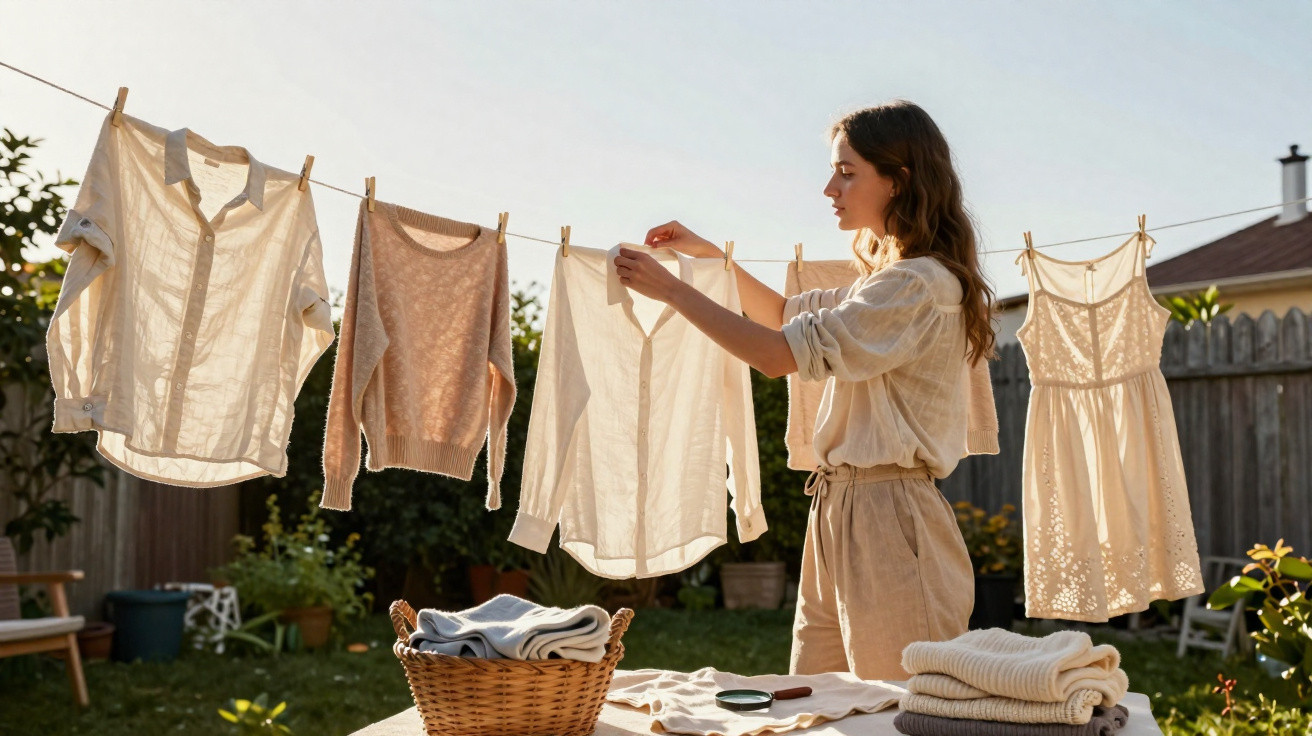
On a gentle morning behind a little city museum, Marta, a textile conservator, fastens a linen shirt to a drooping line stretched between two plum trees. Her movements are measured and assured, like those of a tailor adjusting a jacket. She flattens the sleeve, draws the hem lightly taut and stands back, studying the weave. The breeze takes over, raising the cloth and catching the light in its warp and weft. Beyond the brick wall, cars whisper along the road. A cat slips through the shade. Marta speaks of museum clothing as though time and fresh air can restore it. She uses the word “resilience” once, then leaves a pause. The shirt dries crease-free. Something understated is at work.
Why outdoor drying protects fibres and reduces static, according to a conservator
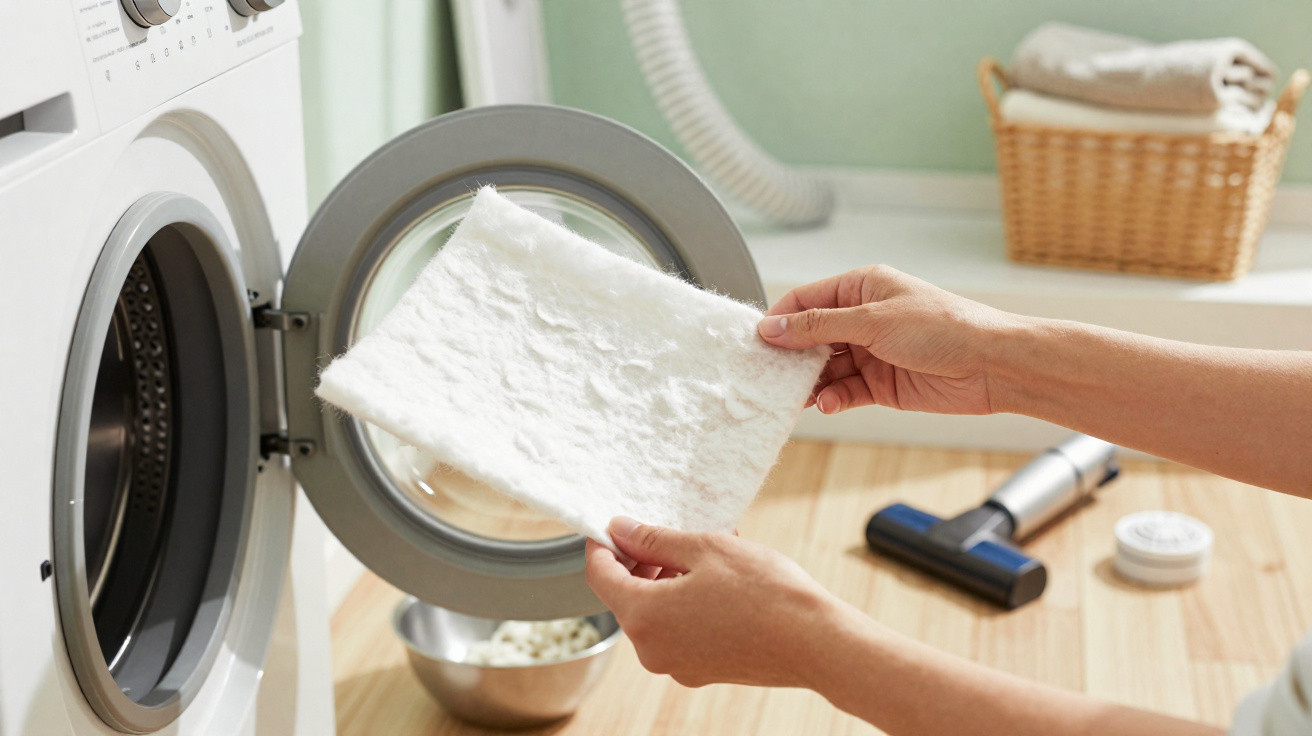
Marta’s first observation is straightforward: tumble dryers are miniature storms. Inside the drum, textiles repeatedly strike the machine and one another in intense heat. That friction wears down fibres, roughens their surface and promotes pilling. On a washing line, garments stay largely still, exposed to air and held with only enough tension to retain their form. The fabric can rest, while the twist of its yarns returns towards alignment.
Delicate fabrics in museum laboratories seldom go near a machine. Conservators clean them in cool water, blot away moisture, then dry them flat or on lines using padded clips. Across decades of handling them, they notice the effect: cotton retains its substance and wool keeps its spring. Several laboratory studies support that instinct. Researchers have recorded significant losses in cotton tensile strength following repeated tumble-drying cycles, whereas air-dried specimens remained nearer their original condition. If well-used towels have seemed thinner after a season of frequent drying, you are not imagining it.
Static is a separate issue, although the remedy remains much the same. It flourishes in friction and extremely dry air, both common in a heated drum. Outside, natural humidity creates a microscopic layer on fibres, allowing electrical charge to dissipate. Air currents move clothing without scouring it, while metal lines or slightly damp hemp rope can conduct charge away to earth. Polyester and nylon are especially prone to clinging; they produce less crackle on the line because the conditions are gentler. Strong sunshine can bleach dyes and make fibres brittle, so Marta chooses dappled sun or airy shade. The breeze handles the rest. Nature is quiet, but it’s not passive.
How to line-dry like a conservator
Give every item one shake before hanging it, then smooth it into place. For shirts, peg the side seams, or put them on a hanger and secure the hanger rather than the garment itself. Ease the hems straight so the grain lies correctly; this gentle tension helps the material set as it dries. Turn dark colours inside out and, when the sun is fierce, use shade or the rear of a balcony where air can still circulate.
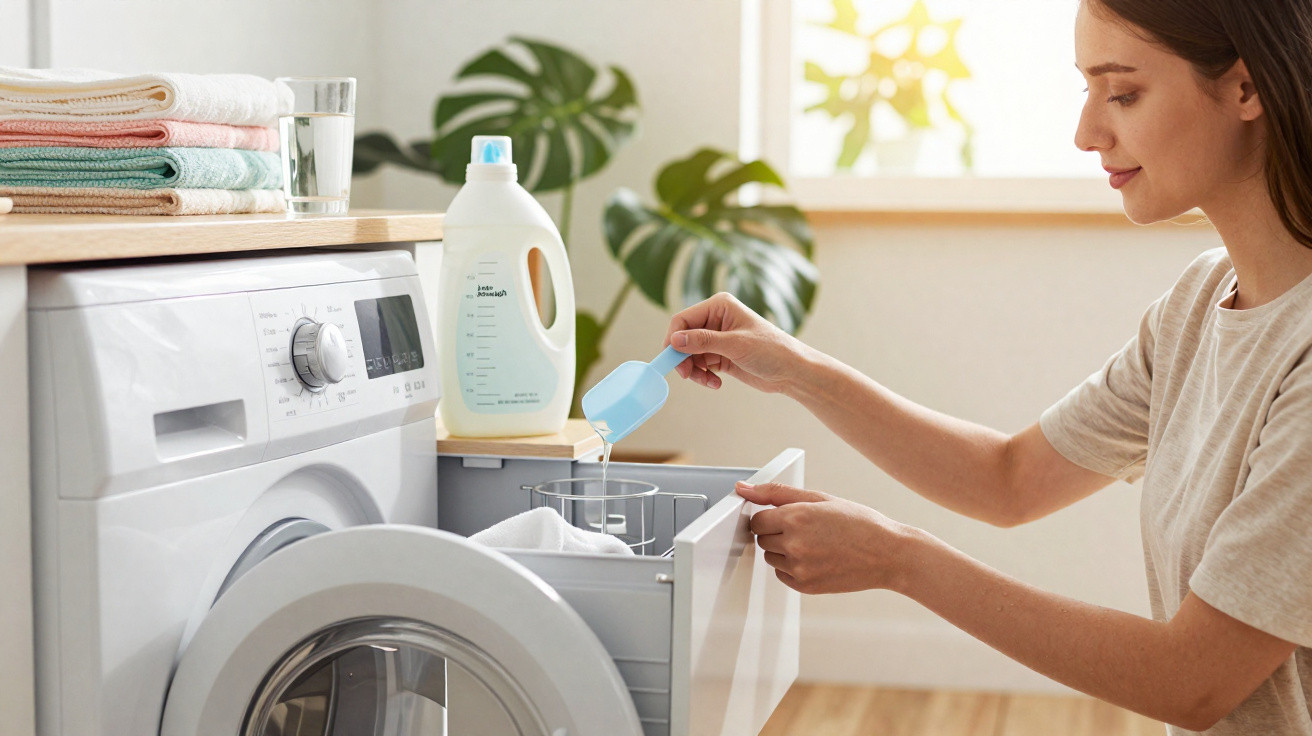
Leave room between pieces so that they do not touch, and do not peg over shoulders, where marks can develop. Wrap wet knitwear in a towel, press rather than wring it, then lay it flat on an outdoor drying rack. Bring laundry inside before evening to avoid dampness. A tablespoon of white vinegar in the rinse softens mineral deposits in water and can lessen static in synthetic fabrics, with no fragrance needed. Allow towels to dry completely, then scrunch them by hand to revive the pile. Realistically, hardly anyone does that daily. But using these methods for your favourite garments is worthwhile.
Marta laughs when I ask whether she has a hidden technique, before sharing one nonetheless.
“Use the line like a frame,” she says. “You’re not just drying. You’re setting the cloth back to itself, gently.”
She stores a modest kit beside the door. It is simple, and it does the job.
- Soft, broad clothes pegs or padded clips
- A pair of hangers for shirts and dresses
- A mesh drying rack for knitwear and delicate lingerie
- A clean spray bottle for misting persistent creases
- String or elastic for securing hangers against the wind
The slow ritual that helps clothes last
Outdoor drying brings together economy and attentiveness. It requires a little extra time, then repays it in subtler benefits: fewer pills on jumpers, less snapping and clinging as you pull on a T-shirt, and colours that retain their richness for longer. Even the energy bill seems quietly pleased from its place in the kitchen.
It also has a feeling that does not easily belong on a task list: rows of shirts, the click of pegs, the small gesture of straightening a cuff. You start seeing your clothes again, not as laundry, but as things that accompany you. Fabric doesn’t demand much-just air, a little space, and your hands. Ask a neighbour for their drying tips. Test it with one wash load, then choose how much of that calm you would like to keep.
| Key point | Detail | Benefit for the reader |
|---|---|---|
| Outdoor drying preserves strength | Gentle airflow and light tension reduce abrasion and allow bonds to “reset” | Clothes feel more robust and last longer |
| Static reduces naturally | Greater humidity and the absence of drum friction restrict charge build-up | No clinging, fewer shocks and less need for fabric softener |
| Shade is your friend | Dry in open shade or dappled light to protect dyes and fibres | Colours remain true and fabrics retain their feel |
FAQ:
- Does sunlight strengthen fabric? Not quite. Sunlight speeds up drying, but ultraviolet light can fade dyes and weaken fibres over time. Choose shade, or early-morning and late-evening light.
- Why do my clothes feel stiff after line drying? Minerals in hard water can stiffen fibres as garments dry. Add a little white vinegar to the rinse, shake items thoroughly and scrunch towels by hand to raise the pile.
- Can I line-dry in winter? Yes. Cold, dry air still removes moisture. Clothes can “freeze-dry”, then complete drying indoors on a rack. It takes longer, but is gentler than a full hot cycle.
- What about pollen and allergies? On days with high pollen levels, dry laundry under cover in the shade or indoors beside an open window. A 5-minute air-only tumble can remove pollen without using heat.
- Will outdoor drying reduce pilling? It can help. Reduced mechanical impact means fewer surface fibres break, so materials pill less than they do during heavy tumble-drying cycles.


Comments
No comments yet. Be the first to comment!
Leave a Comment