
One week, your shower curtain is bright white; the next, it has a grey waterline and pink speckles that refuse to wash out properly. Wipe it down and they reappear. Wash it, and somehow they come back even sooner.
Steam drifted over the mirror while the radiator ticked away like warming knuckles. When I pulled the curtain across, I winced at the faint musty smell, the pale shading around its lower edge and the tiny coral-pink spots caught in the pleats. Even before the water had heated, that stale, tile-damp odour was already there. Most of us know the feeling: the curtain grazes your leg and you jerk away, equally disgusted and exhausted by the thought of dealing with it. The extractor fan rattled, opening the window would have made the room 5°C colder, and the morning was already slipping away. Fortunately, the answer is surprisingly straightforward.
Why winter makes a white shower curtain turn grey
When cold outdoor air meets hot shower water, moisture gets trapped exactly where the curtain hangs. It takes longer to dry, creating ideal conditions for biofilm: the sticky coating made from soap residue, skin cells and minerals on fabric or plastic. Mould and bacteria cling to this layer, which is why marks return even after thorough cleaning. The odour is the lingering damp, gently sour smell caught in the folds and at the hem, where water remains for longest.
At one flat in Manchester, Priya used bleach every Sunday between October and January, but pink trails were visible again by Wednesday. After showers, her bathroom reached roughly 72% relative humidity and needed more than an hour to fall below 60%. She began to spot an orange stripe where the curtain touched the bath edge: typical “pink mould” - actually a bacterium - living off leftover shampoo. Wiping it gave her a day of relief, while a machine wash lasted three days. Winter kept getting there first.
The science behind it is simple. Mould spores exist everywhere, but they require moisture, food and a surface they can hold on to. Soap scum is brunch. Vinyl and polyester can retain static, allowing spray to stick, dry unevenly and leave behind a tacky layer. Chlorine bleach removes colour, but it can also make plastic rougher and cause yellowing over time, ironically giving fresh growth more to grip. Vinegar reduces pH, salt pulls moisture from cells, and hydrogen peroxide oxidises the biofilm matrix. Used in the right way, these steps turn the curtain from a feast into an unwelcoming surface.
The shower curtain salt-cure, peroxide mist and airflow pinch
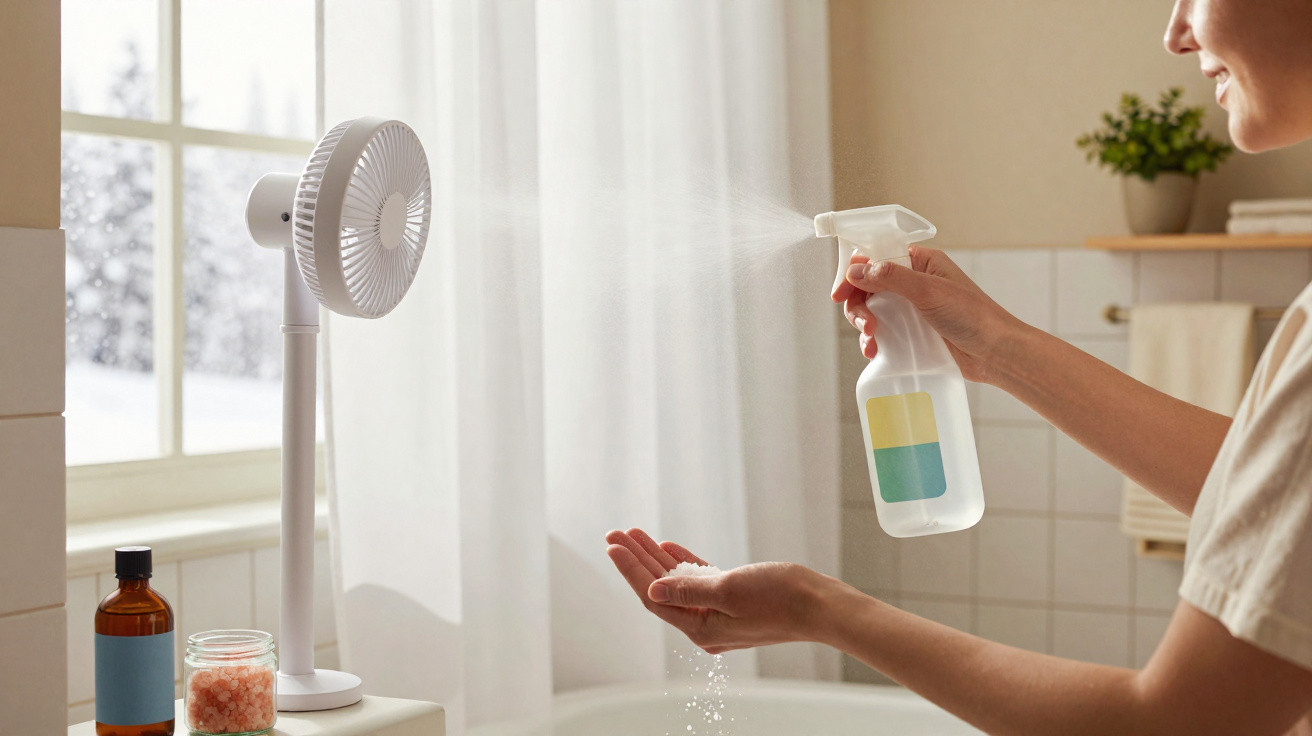
Start with one full reset, then follow it with a very small routine. The reset is a salt-cure: place the clean curtain in warm water for 60 minutes with 250 g of table salt and 250 ml of white vinegar, moving the hem around so it absorbs the solution properly. Rinse it thoroughly, rehang it, then allow it to dry completely while closed so the folds are spread out. Next, prepare a peroxide mist. In a 500 ml spray bottle, mix 250 ml of 3% hydrogen peroxide, 230 ml of cool water, 1 tsp of washing-up liquid, and 5 drops of tea tree or clove. Label the bottle. After every shower, give the hem and seams six quick sprays, pull the curtain shut smoothly, and attach a wooden peg to its lowest corner to make a drip point. This small airflow “pinch” tackles the persistently wet edge where the problem begins.
The curtain should dry more quickly, have no noticeable smell, and stop developing pink freckles. Watch out for a few common mistakes: leaving the curtain bunched open, which holds dampness in its folds; using bleach every week, which can thin and yellow vinyl; and overlooking the rings, where slime can hide. Once a month, rinse the spray nozzle with warm water. On the same spray-and-peg day, wipe the rings too - it takes 30 seconds and requires no fuss. Realistically, hardly anyone will do this daily. Aim to do it after the steamiest showers or on laundry day instead, and that is enough.
There is one further chemistry rule. Never mix vinegar and peroxide in one bottle, and do not apply one immediately after the other without rinsing. Keep the vinegar-and-salt soak for the reset, then use peroxide as ongoing maintenance, rinsing with clean water between different products during washing. This gives you vinegar’s brightening effect, salt’s osmotic “no thanks”, and peroxide’s clean action without creating unwanted reactions.
“The peg trick changed everything,” said Jen, a hotel housekeeper I shadowed for a morning. “It sounds silly, but that drip point dries the hem. Dry hem, no slime.”
- Carry out one reset: soak with salt and vinegar, rinse thoroughly and dry completely.
- For a light daily step: apply six sprays of the peroxide mixture to the hem and seams.
- Create an airflow pinch: keep the curtain closed flat and place one peg on the lowest corner.
- Every week: wipe the rings and the bath edge where the hem sits.
- Every 6–8 weeks: repeat the salt-cure if winter continues for a long time.
A winter routine you can genuinely maintain
There is something unexpectedly reassuring about a shower curtain remaining white throughout February. It removes one small but persistent chore from your mental list, which matters during winter’s dreary middle stretch. This method works because it adapts to the season: a one-off salt layer that makes the material less inviting, a very light peroxide habit that disrupts biofilm, and a minor adjustment to the way the curtain hangs so air can finish the job. Test it in a guest bathroom or on the grimiest curtain in your home, and see the pink spread slow down. Send a photo to the friend who insists bleach is best, or use a magnetic clip instead of a peg if your bath edge slopes. The approach can be adapted. The result - entering a bathroom that smells of nothing and looks like fresh laundry - catches on faster than mould.
| Key point | Detail | Benefit for the reader |
|---|---|---|
| Salt-cure barrier | A 60-minute soak in warm water with 250 g salt + 250 ml white vinegar, followed by rinsing and drying | Makes the surface less welcoming to mould and helps whites stay bright |
| Peroxide mist | Mix 250 ml 3% hydrogen peroxide, 230 ml water, 1 tsp washing-up liquid, 5 drops tea tree | Gently oxidises biofilm without yellowing vinyl or producing choking fumes |
| Airflow pinch | Hang the curtain closed and fasten a peg at the lowest hem corner to create a drip point | Helps the hem dry faster, preventing the slime line where growth starts |
FAQ
- Can I just use bleach instead? It can remove stains quickly, but it may roughen vinyl and fade fabric, making regrowth easier and colours look dull. If you do use it, use it sparingly, dilute it well, and rinse completely before applying any other product.
- Will peroxide fade a coloured curtain? 3% peroxide is mild, although it may lighten certain dyes. Test it on a corner close to the hem first. If the colour lifts, use a paste of bicarb and washing-up liquid instead, followed by rinses with plain water.
- How often should I repeat the salt-cure? Every 6–8 weeks during winter is an effective interval. It renews the thin mineral barrier and resets pH, helping the quick daily mist work more effectively.
- No bathtub here-what’s my option? Spread the curtain flat on a clean floor over towels, wipe both sides with a warm salt-and-vinegar solution, leave it for 15 minutes, then wipe it with clean water and hang it to dry before beginning the peroxide routine.
- What if my curtain is fabric, not PEVA or vinyl? Put it on a cold wash with a tablespoon of bicarb and a few towels to provide friction, then hang it while wet so it can dry flat. Do the salt-cure in a basin, and continue using the peroxide mist and peg. Fabric hems benefit especially from that drip point.
Comments
No comments yet. Be the first to comment!
Leave a Comment