
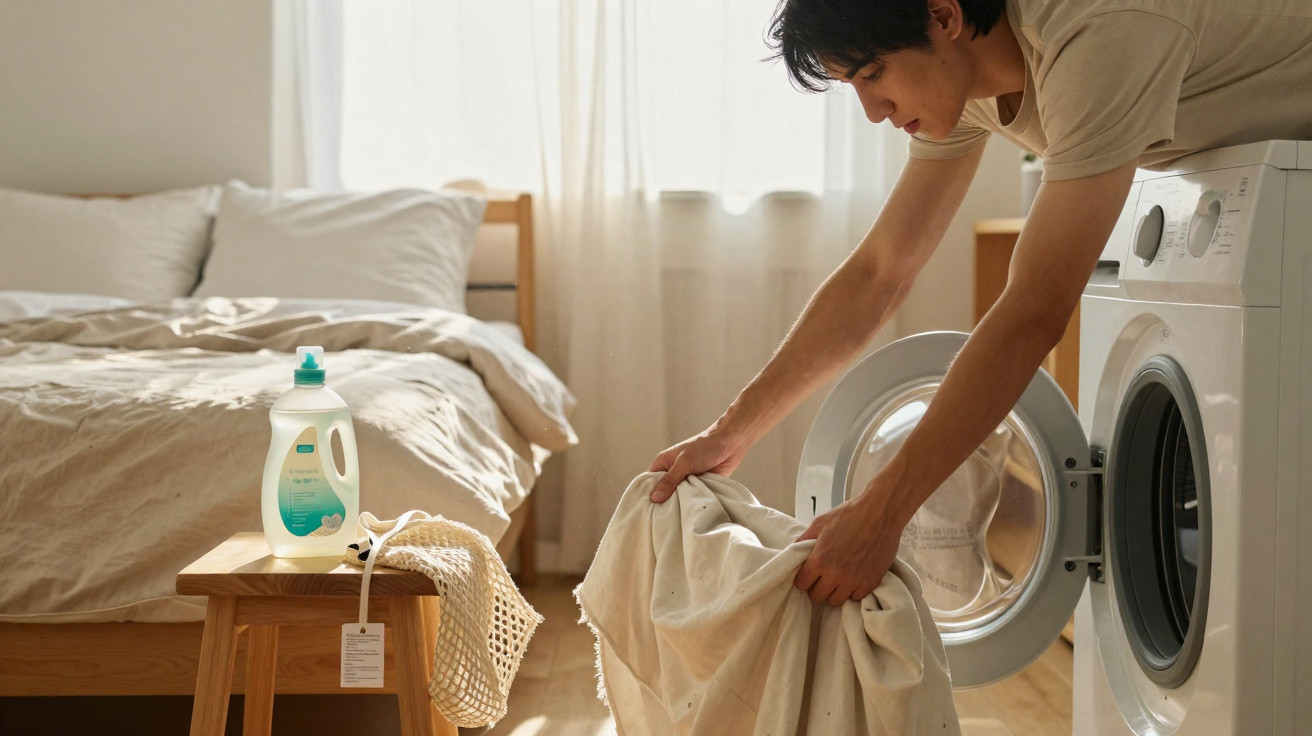
Freshly laundered sheets sit in a rumpled pile, warm from the tumble dryer and scented with “Alpine Breeze” despite never having been anywhere near a mountain. As you pull a fitted sheet over the mattress, you spot a small worn area by one corner and stop. Surely you only bought this set last year?
We are often taught that spotless bedding means a spotless life: wash more, worry less. But that logic starts to fall apart when costly linen begins to pill, lose colour and tear far sooner than expected.
Something inside that revolving drum may be gradually damaging the sheets you love most.
When fresh sheets become too much of a good thing
There is an odd sense of satisfaction in stripping the bed and immediately putting the sheets into the wash. The laundry basket fills up, the machine drum is loaded and the detergent disperses through the water. It can feel as though you are doing the sensible thing, rinsing away worries along with the marks.
However, each complete wash is a small storm for your bedding to endure: hot water, a spinning metal drum, chemical surfactants and physical agitation. With every cycle, the fibres become a little more abraded. Fabrics that once felt soft and silky can begin to feel faintly rough. Brilliant white slowly becomes duller, while printed patterns start to look worn. It is not an overnight change; it happens gradually.
On an ordinary Tuesday much like any other, a self-care routine may be quietly reducing the lifespan of every item on your bed.
Ask hotel housekeepers what surprises them about domestic laundry habits, and many give the same answer: people wash as if they operate a fully occupied hotel. One UK survey found that some households wash bedding every two or three days “for hygiene”. That may sound commendable, but hotels plan and budget for constant sheet replacement. Most household budgets do not.
Consider Emma, who happily washed her new Egyptian cotton set twice a week. Within six months, the previously smooth pillowcases were covered in small bobbles. The fitted-sheet corners became so thin that they were nearly see-through. She blamed the quality of the brand, left an angry review and purchased another set. She continued with the same routine and got the same outcome.
This pattern is repeated in countless bathrooms and utility rooms. It is not because people are negligent, but because few of us question the habitual move of putting bedding straight into the laundry basket.
Every washing cycle creates friction. Fibres scrape against one another, the drum, metal components and the zips on other garments. The surface of the yarn is affected first; then it breaks down and forms pills. Hot water and strong detergents remove colour and undermine natural fibres such as cotton and linen. Repeated tumble-dryer heat then effectively bakes the remaining fibres, making them less elastic.
Imagine fabric as a rope formed from thousands of fine hairs. Running your hand along it occasionally will leave it resilient. Continually scraping and twisting it, though, will make those tiny hairs snap. Your sheet is that rope, and each unnecessary wash is another pass of the hand along its surface.
Washing sheets more wisely without overprotecting them
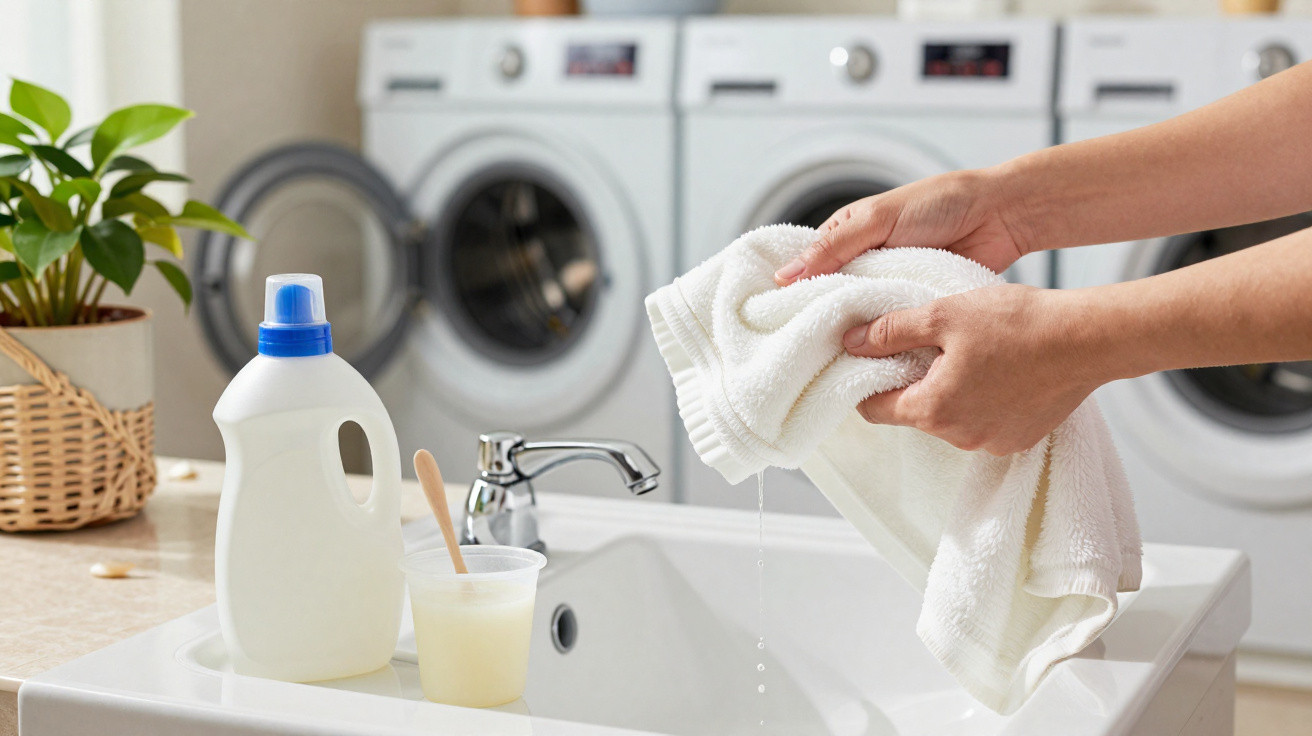
The understated way to preserve fabric quality is not to stop washing altogether. Instead, make each wash more considered and less aggressive. Begin with the essentials: cooler water, shorter programmes and a reduced spin speed. Your sheets do not require the same treatment as mud-covered gym kit.
Opt for liquid detergent, avoid heavy “whitening boosters” in everyday loads and do not use more detergent than necessary. The dense foam in the machine is not proof of better cleaning. It simply means more chemicals are left on the fibres, gradually drying them out. Where possible, dry sheets on a washing line or indoor airer, at least part of the way, then use the tumble dryer briefly to soften them.
Make one modest change at a time and your bedding can begin to age in years rather than wash cycles.
For many ordinary households, a practical routine is washing sheets every 7 to 10 days rather than every two or three. During hot, humid weather, or if you sweat heavily, reduce that interval to once a week. If you shower before bed, wear pyjamas and do not allow pets on the bed, you may reasonably leave it a little longer without entering unpleasant territory.
Let us be honest: nobody truly follows perfect routines every day. The flawless schedules seen online rarely reflect how people actually live. Alternate between two or three bedding sets, allowing each set time to rest between use and washing. That break matters more than it might seem.
If somebody in the home is unwell, has allergies or has difficulty with dust mites, washing more frequently during those periods makes sense. Treat these circumstances as exceptions rather than the normal benchmark for the entire year. Your bedding – and your energy bills – will quietly benefit.
There is also a part of this subject that has nothing to do with thread counts or fibre science. It concerns the personal comfort of the bed itself. We have all slipped between sheets washed earlier that day, still carrying a trace of sunshine or lavender, and felt a small, unexpected sense of relief.
As textile expert Marina Lopez told me:
“Bedding should feel like it’s getting better with age, not worse. If it looks exhausted after a few months, it’s not always bad quality. Often, it’s simply being over‑handled by water, heat and chemistry.”
To maintain that feeling of bedding improving with age, these guidelines can help:
- Wash every 7–10 days in cool water on a gentle cycle.
- Use a mild detergent at half the usual dose.
- Avoid fabric softener on high-quality cotton and linen.
- Line-dry whenever possible; tumble-dry on low only when needed.
- Rotate at least two sets, giving each one a break between uses.
Balancing hygiene, comfort and the life of your bedding
Once you recognise that a washing machine can be both helpful and harmful to fabric, it is difficult to ignore. This does not mean approaching laundry day with anxiety. It means paying attention to small clues: a corner beginning to wear thin, slight coarseness along a pillowcase edge or the fading of a once-deep navy shade.
These signs of wear are not personal failings. They reflect an ongoing relationship between your routines and your textiles. At times, you may decide that more frequent washing is worthwhile because your skin requires it or your child has allergies. At other times, you may realise that the machine is being loaded from habit or worry rather than genuine need.
After reflecting on this, some people begin to regard their bedding in much the same way as their own skin: not as something to scrub relentlessly, but as something to understand and look after. Perhaps that is the real change: moving from automatic cleaning towards deliberate care.
| Key point | Detail | Why it matters to the reader |
|---|---|---|
| Sensible frequency | Wash sheets every 7 to 10 days in most households | Limits wear without compromising hygiene |
| Gentle cycle and products | Use cold or lukewarm water, a delicate cycle, minimal detergent and no heavy fabric softener | Preserves the texture, colour and lifespan of bedding |
| Dry carefully | Air-dry or use a low-heat programme, and rotate several bedding sets | Reduces shrinkage, fibre breakage and replacement costs |
FAQ: How often should you wash sheets?
- How often should I really wash my sheets? For most healthy adults, every 7–10 days is a good approach. In warm weather, if you sweat heavily or allow pets to sleep on the bed, once a week is a sensible routine.
- Does washing bedding in hot water make it wear out faster? Yes. Regular hot washes weaken fibres and may fade colours. Keep hot water for particular cases, such as illness, dust-mite treatment or heavily soiled bedding.
- Are fabric softeners bad for my sheets? For high-quality cotton and linen, they can be. Frequent use of fabric softener may coat fibres, reduce breathability and shorten their useful life. Mild detergent and thorough rinsing are generally sufficient.
- Is air-drying really better than using a dryer? In most situations, yes. Air-drying is gentler and places less strain on fibres. If you prefer the softness from a tumble dryer, use a short cycle at low heat after the sheets have partly air-dried.
- What type of bedding lasts the longest with regular washing? Good-quality cotton percale or linen usually wears well when washed on gentle settings. If lasting softness and breathability matter to you, avoid very cheap microfibre blends.


Comments
No comments yet. Be the first to comment!
Leave a Comment