
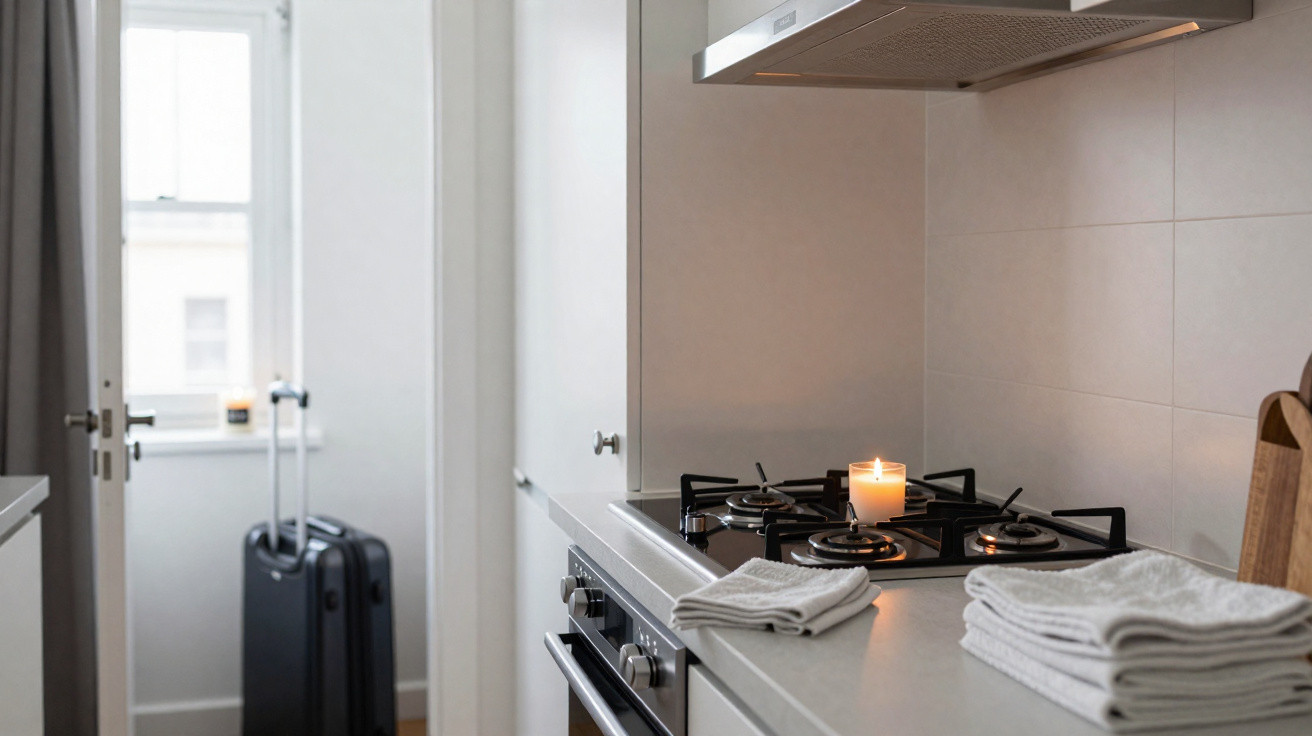
Hosts understand this: amid the frantic gap between check-outs and check-ins, they use one modest tool to turn a space from “lived-in” to “fresh” within minutes - a candle, deployed in a very particular manner.
The front door snaps shut. A wheeled suitcase jolts over two steps. Further along the corridor, the neighbour’s curry spices remain in the air, subtle but persistent. A damp cloth rests neatly folded on the kitchen worktop; surfaces are clean, sheets are sharp, and time is racing. I’m following a Superhost in South London during a 45-minute turnover, and the final detail is neither the scatter cushion nor the coffee pods - it is the air. She lights a candle, switches on the extractor, and grins like a bartender guarding a secret recipe. The atmosphere changes, the flat seems to tell a different story, and the room feels like a freshly laundered shirt. It isn’t what you might expect.
Why a “clean” smell matters more than a spotless floor
When you enter a home, your brain reaches a judgement in seconds. Your eyes assess the surfaces, yet scent confirms the conclusion. Hosts make use of this instinct because a light, crisp aroma suggests care, effort and hygiene before anyone has spoken.
Mia, who lets a two-bedroom property in Manchester’s Northern Quarter, showed me her brief routine before check-in. She opens two windows, cleans the hob, and then carries out what she calls a “10-minute air reset” using a candle and the cooker hood. Her reviews regularly praise the cleanliness, including weeks when, by her own admission, the vacuum cleaner missed a corner. That first impression matters.
There is more than atmosphere behind it. Odour molecules attach themselves to fabrics and remain suspended in stagnant air; a small, consistent flame creates micro-currents that shift them, while a low extractor fan draws them out. A gently scented candle adds a recognisable “clean” signal - cotton, citrus or green tea - which the brain associates with fresh washing. Scent, used gently, doesn’t lie; it reframes what the room is saying.
The candle trick: a step-by-step guide
This is the method experienced hosts rely on when the clock is against them. Open a couple of windows slightly for three minutes while tidying. Set an unscented beeswax tea light on the hob, turn the extractor to its lowest setting, and light it. In the bathroom, light a small “fresh linen” or “citrus peel” candle, then close the door. After eight to twelve minutes, extinguish both candles, close the windows and allow the rooms to settle.
Most people use too much fragrance and too little ventilation, then question why their home smells like a candle shop. Use only a small amount, choose neutral notes and work with the airflow. Cut wicks to 5 mm to avoid soot, and select clean-burning waxes such as soy or beeswax for a restrained scent throw. Let’s be honest: nobody actually does this every day.
Hosts also consider the overall tone. The aim is for a home to smell like freshly washed sheets drying beside an open window, rather than a perfume counter. Where a guest has scent sensitivities, avoid fragrance entirely and use the extractor-plus-beeswax combination to ease lingering cooking odours. A gentle lift beats a heavy mask every single time.
“I light a beeswax tea light under the hood while I fold towels. By the time I’ve tucked the duvet, the flat smells like it had a breeze.” - Amara, Superhost, Bristol
- Wick length: 5 mm to minimise smoke and maintain a steady flame.
- Placement: the kitchen hob for the extractor’s draw; a bathroom shelf at eye level.
- Burn time: 8–12 minutes maximum; extinguish before guests arrive.
- Scents that suggest “clean”: cotton, citrus, green tea and soft mineral notes.
- Flame-free alternative: heat the top of a candle with a hairdryer for 30 seconds.
Small decisions that transform the air
We have all experienced a home that still carries a trace of the previous evening’s meal despite a thorough clean. The answer is almost tediously straightforward: air movement paired with the faintest note of familiar freshness. Hosts are not trying to create fragrance; they are seeking neutrality with a gentle cue.
Beeswax and good-quality soy wax burn more cleanly than cheap paraffin mixes, which may produce smoke and leave behind a coating. If pets are in the property, use unscented beeswax for the kitchen method and either a tiny candle in the bathroom or no candle at all. Your guest should notice the feeling of clean, not the product you used.
Keep flames clear of curtains, do not leave a candle unattended, and regard it as a practical tool rather than decoration. If fire is a concern, use a wax warmer or put two drops of lemon essential oil on a cotton pad near the extractor instead of lighting a candle. The objective remains unchanged: calm, fresh, unobtrusive air.
The appeal of the candle trick is that it fits effortlessly around the rest of the cleaning routine. It takes virtually no time, works alongside the tasks already being done, and alters a room’s story without making a fuss. Try it once and you will notice the difference - and will probably keep a tea light beside the scourer afterwards.
| Key point | Detail | Benefit for the reader |
|---|---|---|
| Extractor + beeswax tea light | A low fan removes odours as a small flame circulates the air | A quick, subtle refresh without overpowering perfume |
| Neutral “clean” scent in small spaces | Fresh linen or citrus in the bathroom for 8–12 minutes | Conveys cleanliness without becoming overwhelming |
| Short burn, trimmed wick | A 5 mm wick; extinguish before guests arrive | Cleaner burning, no soot and a safer routine |
FAQ:
- Does beeswax really help with odours? It burns cleanly, and many hosts say it softens stale smells, particularly when used beneath an extractor. This is more about airflow than magic.
- How long should I burn the candles? Eight to twelve minutes is enough for a small flat. Put them out before guests arrive.
- What scent feels “clean” to most people? Cotton, citrus peel, green tea and light mineral notes commonly evoke fresh laundry and open windows.
- What if my guests are scent-sensitive? Avoid fragrance, use an unscented beeswax tea light with the extractor, and depend on ventilation.
- Is there a no-flame option? Yes: warm the top of a candle with a hairdryer for 30 seconds, use a wax warmer, or place a few drops of lemon on a cotton pad near the hood.



Comments
No comments yet. Be the first to comment!
Leave a Comment