

At home, it can seem like a fussy detail. In hotels, though, it is the sort of make-or-break touch guests register without quite understanding why. There is a straightforward professional technique behind that immediate, crystal-clear sparkle.
The breakfast room had not quite woken up. Beside the pass stood a junior waiter, with two polishing cloths draped from his apron like pennants and steam curling from a kettle. He moved quickly but carefully, rotating stems through the warm mist before placing every glass on the shelf with a neat click. I watched the cloudiness disappear as though a curtain were being drawn back. It was neither magic nor hard graft. It was a technique, repeated quietly between coffee top-ups and rattling plates. It struck me that clarity is a practice rather than a miracle. And that practice has a name.
Why glass becomes cloudy - and what the haze actually is
To an untrained eye, every cloudy patch appears identical. In reality, it is not. In most households, hard water is the main cause, depositing microscopic mineral salts that dry into a fine coating on the glass. Detergent residue sticks to this layer, meaning each wash gradually adds another veil of dullness. Hard water is the silent culprit. Vast areas of the UK, from London to the Midlands, contend with it daily, so a dishwasher can quietly give your favourite tumblers a frosted look well before they ever get chipped.
Most of us know the feeling: a guest asks for a drink and we automatically choose the one glass that looks least embarrassing. I witnessed the same concern at a seaside hotel bar on a wedding day. A barman had fifty flutes laid out and discovered that half of them looked milky. There was no time to run another dishwasher cycle. He poured hot water and vinegar into a gastronorm pan, immersed the glasses, steamed them, then polished them in a rhythm that resembled a dance. Within ten minutes, the haze had disappeared and the champagne looked clear and true again.
There is also a second, more persistent problem: etching. This is not a coating sitting on the glass; it is harm to the glass itself. Aggressive detergents, excessive heat and lengthy wash cycles can wear away the surface, creating microscopic pits that scatter light. A film can be removed, but etching cannot. The test is based on simple reasoning: rub the hazy area with a hot cloth soaked in distilled white vinegar. If it clears, minerals or soap are to blame. If it remains unchanged, the surface has been permanently roughened. At that point, the aim changes from “restore” to “mask and protect”.
The hotel trick for cloudy glasses: soak, steam and polish like a professional
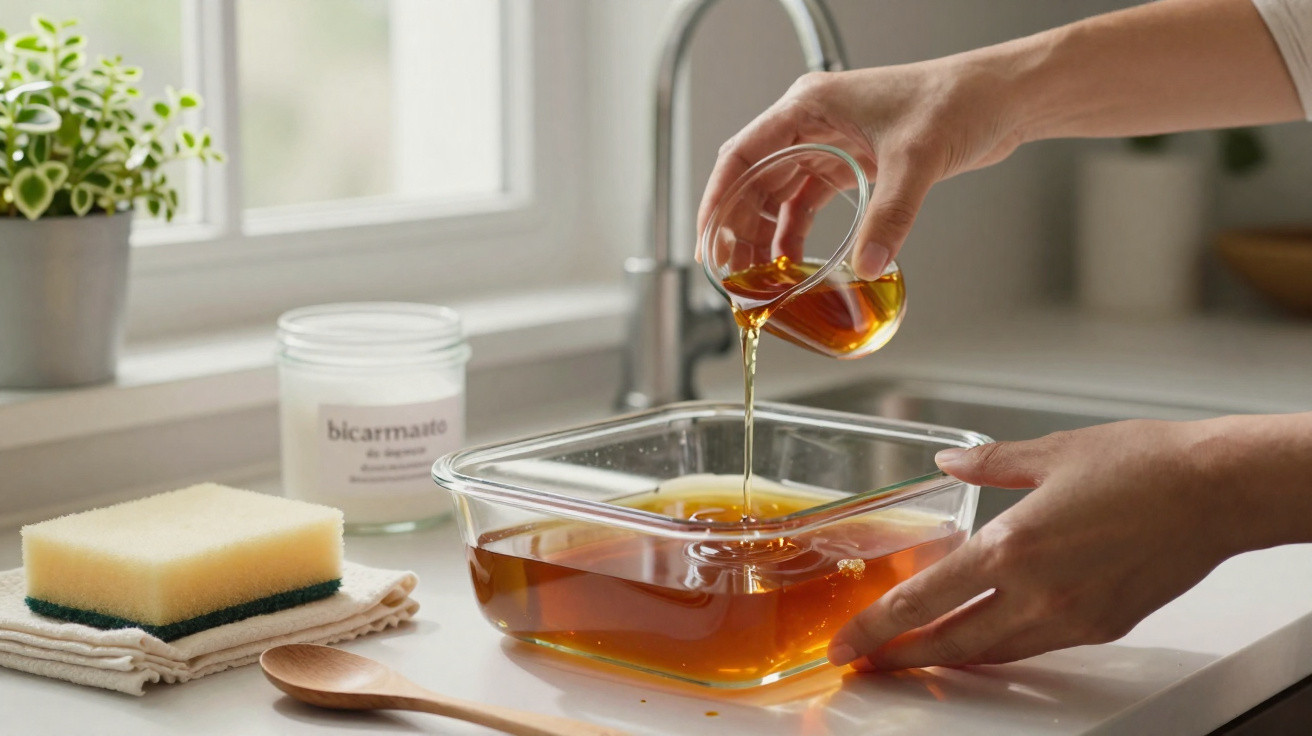
This is the process hotels use when flawless clarity is needed quickly. Fill a basin with very hot water, then add one part distilled white vinegar to four parts water, along with a teaspoon of citric acid if available. Leave the glasses submerged for 5–10 minutes so the mineral film can soften. Remove one glass and shake away the droplets. Should any mistiness remain, gently buff the bowl with a damp microfibre cloth dusted with a pinch of bicarbonate of soda for mild abrasion. Give it a quick rinse under hot running water to refresh the surface. Soak, steam, polish: that’s the sequence.
Then comes the finishing touch that makes the difference. Boil a kettle and let it steam. Holding each glass securely, position it above the spout so the bowl meets the steam for three or four seconds. Do not bring it any closer. That warm mist releases the final film and warms the surface - the precise moment to move swiftly to polishing. Use two lint-free cloths: one for holding the base and stem, and another for shaping and polishing the bowl. Make smooth circular movements from the base towards the rim. Two cloths beat one. Realistically, this is not something anyone will do daily.
The usual issues are simple and manageable. Do not place lead crystal in boiling water or expose it to prolonged steam; brief, gentle treatment is best. Steer clear of paper towels, which shed lint that becomes obvious in bright light. If you can still smell vinegar, either too much was used or the hot rinse was missed; a ten-second rinse will resolve it. When service is rushed, a faint blast of cool air from a hairdryer can rapidly dry the rims, although your hands and polishing cloths do most of the important work.
“We don’t scrub, we soften. Then we bring the shine back with heat and patience.” - Head Housekeeper, Mayfair boutique hotel
- Distilled white vinegar: the reliable workhorse for dissolving minerals
- Citric acid powder: an optional boost for stubborn limescale
- Two microfibre polishing cloths: lint-free, and ideally oversized
- A kettle for controlled steam: quick, consistent and portable
- Thin cotton gloves: hold stems without leaving fingerprints
- A drying rack with airflow: preserves that hard-won clarity
Your turn - and the small rituals that preserve the sparkle
Something rather pleasing happens when a glass is genuinely clean. Water appears colder. Wine seems to breathe differently. You might reserve the complete hotel trick for special occasions and dinner parties, which is perfectly reasonable. Keep a compact kit beneath the sink, put aside dishwasher glasses that emerge cloudy, and restore them in batches with a kettle and two cloths during ten peaceful minutes. The effect feels out of proportion to the effort - the finest kind of household magic.
| Key point | Detail | Why it matters to the reader |
|---|---|---|
| Identify the haze | Mineral film clears with hot vinegar; etched glass does not | Prevents pointless scrubbing and creates the right expectation |
| Use heat wisely | A short burst of steam followed by an immediate two-cloth polish | Produces a streak-free, hotel-standard shine quickly |
| Small kit, major reward | Vinegar, microfibre cloths, kettle, with citric acid optional | An inexpensive routine to repeat before guests arrive |
FAQ:
- What is the hotel trick in one sentence? Soak glasses in hot diluted vinegar to dissolve the film, steam them briefly, then polish them at once using two lint-free cloths.
- Can etched, permanently cloudy glasses be repaired? No - etching is surface damage. Careful polishing may improve the shine, but the milky appearance will not disappear completely.
- Is vinegar safe for crystal and fine stemware? Yes, when diluted and hot, with short soaking times. Avoid extreme temperature changes and lengthy immersion; handle gently and support the bowl.
- How often should I do this? Whenever haze becomes noticeable. In hard-water areas, a quick soak and polish every few weeks keeps the cupboard crystal-clear.
- What should I do if the vinegar smell remains? Finish with a hot-water rinse and a brief steam polish. Any remaining trace evaporates as the glass warms and dries.



Comments
No comments yet. Be the first to comment!
Leave a Comment