
You may have changed detergent, selected hotter washes and even left the door open to air. Yet the smell returns because one small, easily overlooked component is silently gathering grime you never notice.
It was a Tuesday evening: plates were piling up after dinner and the washing was running late. When I opened the machine, a faint sour waft escaped, like a gym bag left in a car boot. One neighbour insisted it was “just the seal”, while someone online recommended vinegar, and I was close to buying a different detergent on the spot. The odour was unmoved. It came from somewhere deeper.
I eventually found it behind a small square flap at the bottom of the front panel, close to the floor: a cap that is awkward to turn with cold fingers and conceals a space most of us prefer to ignore. The cause is smaller than a teacup.
The forgotten cause: the drain pump filter
Most of us clean the door seal, remove crumbs from the detergent drawer and assume the job is finished. But the drain pump filter is usually neglected, despite collecting lint, coins, hair grips, pet fur and detergent sludge in a damp compartment. Sitting in stagnant water for weeks, that mixture becomes musty. It does not demand your attention; it simply adds its own fermented note to laundry that ought to smell of clean cotton.
Take Kate from Leeds, whose washing machine smelled like a wet dog after rainfall. She had cleaned every visible surface and even attacked the seal with a toothbrush. Once she opened the filter, she found a button, a £1 coin, two elastic bands and a lump of grey sludge resembling overcooked porridge. Her next wash smelled of… nothing. That is exactly how clean laundry should smell.
The reason is straightforward. As part of the drainage route, the filter receives tiny traces of residue on every wash. Combine this with low-temperature cycles, slightly too much detergent and short eco programmes, and a biofilm gradually develops. This layer holds onto odours while sulphur-loving bacteria settle in. Whenever the pump runs, a trace of that air can move back into the drum - not enough to be overpowering, but enough to cling to fabric fibres.
How to clean the drain pump filter in less than 10 minutes
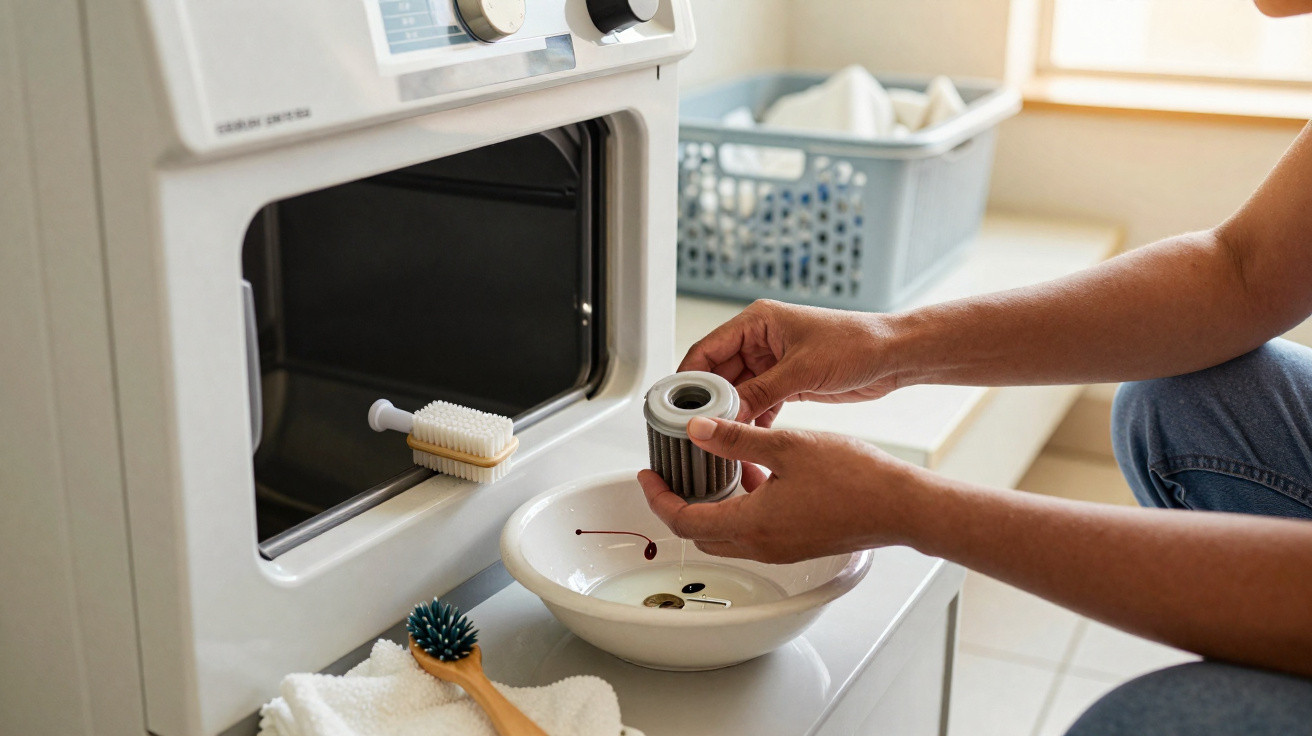
Switch off the power, then open the small square flap at the lower front of the washing machine. Put a shallow tray or baking sheet beneath it, along with a towel. Many machines include a small drainage hose: remove its cap and allow the water to drain slowly before turning the large round filter cap anti-clockwise. Expect some splashing. Take out the filter, rinse it with hot water and use an old toothbrush to remove the sludge.
Use a torch to look inside the compartment. With one finger, gently turn the impeller to make sure nothing is trapped. Wipe the housing, clean the filter’s rubber O-ring and replace it securely - tighten it by hand, then give it a slight extra turn. Run a quick rinse programme to flush the drainage line. Clean it monthly if you use the machine frequently, or every 6–8 weeks if your household does less washing. Allow the little flap to dry before clicking it shut. Honestly, nobody manages that every day.
Avoid using boiling water or strong bleach here, as these can damage plastic parts and seals. If the impeller will not turn easily, do not force it; carefully remove whatever is caught using tweezers. We have all experienced the moment when a sock liner or pet hair makes a washing machine sound as though it has swallowed gravel. If the cap is stuck, use a rubber glove for extra grip rather than pliers, which may crack it. Your nose will confirm the job is complete before your eyes do.
“If a washer smells, I check the pump filter before anything else. Nine times out of ten, that’s where the funk lives.” - Dan P., appliance engineer
- Monthly reset: clean the pump filter, remove and rinse the detergent drawer, then run a 60°C maintenance wash.
- After every wash: leave the door and detergent drawer slightly open so the drum and cavity can dry.
- Use the correct amount: excess detergent feeds residue rather than improving cleanliness.
Prevent washing machine odours without making laundry a chore
After clearing the drain pump filter, the remaining upkeep is minimal. Keep detergent doses simple and accurate, include a hot maintenance wash from time to time, and let the machine air overnight. A clean filter eases the strain on the drain, helps the pump work properly and tackles smells at their origin. Towels should barely smell of anything, which is the aim.
There is a certain satisfaction in solving a household mystery with nothing more than a towel and a teaspoon. You do not need specialist tablets or another routine that will be forgotten by Friday. All it takes is ten unhurried minutes and somewhere to catch the drips. The machine you depend on daily has one concealed compartment; empty it and the whole appliance can breathe more easily.
Some people rely on vinegar, others use biocycle, while some purchase scented beads. Each of these simply chases an odour that already has a home. The filter is that home. Empty it and clean laundry gets its blank canvas back. The next time a friend complains about their washing machine, you might show them that little door. Passing on a solution that feels like a magic trick is rather generous.
| Key point | Detail | Benefit for the reader |
|---|---|---|
| Hidden culprit | The drain pump filter collects lint, hair, coins and detergent sludge | Identifies the real source of recurring odours |
| Quick fix | Open the lower flap, drain, twist, rinse, wipe and refit in 10 minutes | A simple, low-cost routine with quick results |
| Prevention | Clean monthly, run a hot maintenance wash and air the door and drawer | Prevents odours and prolongs the machine’s life |
FAQ
- Where is the drain pump filter on most machines? Look for a small square flap on the lower front of the washing machine. Behind it, there is usually a round cap and, on some models, a small drainage hose.
- What happens if water gushes out when I open it? Place a shallow tray and a towel underneath. If your machine has a small drainage hose, empty that first to prevent a flood, then open the cap gradually.
- How often should I clean the filter? Clean it monthly in busy households, every 6–8 weeks for lighter use, and after any wash that produces lots of lint or pet hair.
- Do top-loading machines have a filter like this? Some do, but many top-loading machines have lint filters inside the drum or agitator. Consult the manual for the precise location and cleaning method.
- Will a vinegar cycle remove the smell on its own? It may freshen the drum, but it cannot remove coins, hair and sludge trapped in the filter. Clean the filter first, then run a hot maintenance wash.




Comments
No comments yet. Be the first to comment!
Leave a Comment