
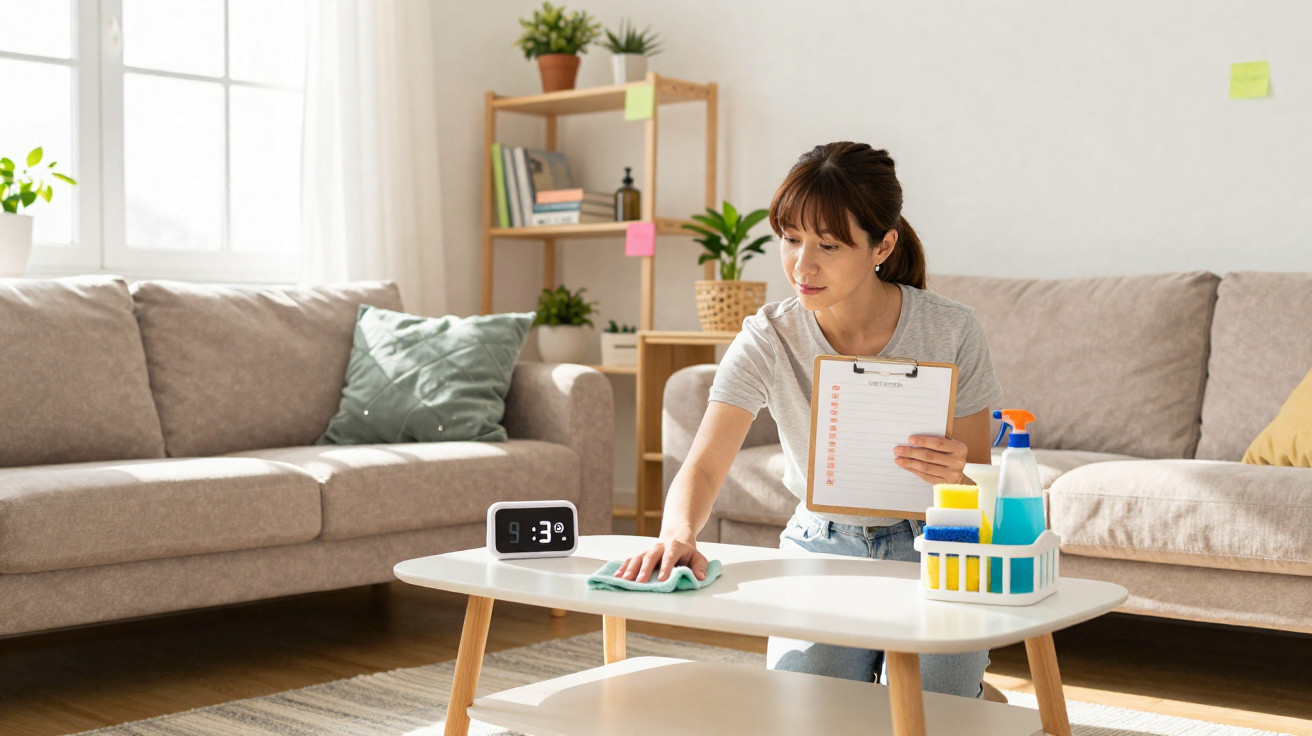
The vacuum cleaner is buzzing, the sponge is soaking wet and the laundry basket is overflowing.
You have already sacrificed your Saturday morning, yet the house somehow still looks… untidy. You shift a pile from the table to the sofa, clean the worktop, then return to where you started, only to find it seems as though nothing has changed. Time is disappearing, while the grime remains.
You check the clock and feel that familiar flash of irritation. Why does cleaning such a small home take so much time? You are hot, fed up and quietly bitter about the flawless “clean home” look on Instagram. Your actual home is a cycle of unfinished areas and cleaning products left uncapped on every available surface.
Then an unexpected thought occurs: perhaps dust is not the issue. Perhaps it is the way you move around the house. One straightforward habit may be quietly doubling your cleaning time.
The hidden mistake that ruins your cleaning time
The main problem is not the products you choose or how regularly you clean. It is the habit of flitting between jobs before completing any of them. You begin wiping the kitchen worktop, notice crumbs on the floor, fetch the broom, then see a sock in the hallway and carry it off. Ten minutes pass, and nothing appears properly finished.
That continual switching can feel productive. You are on the move, you are occupied and your hands never stop. However, your brain pays a cost whenever your attention shifts. The outcome is a home filled with areas that are “nearly” clean, alongside the draining sense that you are never getting ahead. The exhaustion you experience at the end is not caused by the mop; it comes from the disorder.
Imagine an ordinary evening. You decide to “quickly tidy up”. You have half-filled the dishwasher when you remember the washing in the machine. On your way there, you rearrange the shoes by the front door. In the bedroom, you begin folding clean clothes, spot dust on the bedside table and reach for a cloth. When you finally get back to the kitchen, the sink water is cold and your motivation has vanished.
Productivity researchers refer to this as “context switching”. Whenever you move between different kinds of tasks, your brain needs a few seconds to refocus. It may sound insignificant, but across an hour of cleaning, those seconds consume considerable time and energy. It is no surprise that everything seems to take twice as long as it ought to. Your home is not working against you; your cleaning pattern is.
There is a subtle emotional cost, too. Because your surroundings never look complete, you can feel as if you have failed, even after an hour of cleaning. That is when resentment starts to build: towards your partner, children, housemate or even the space itself. The frustrating truth is that a minor change of approach can transform this, without the need to buy a single product. The enemy is not the mess; it is the zigzag.
The zone method that cuts cleaning time in half
The solution to this scattered approach is almost ridiculously straightforward: clean in zones rather than following impulses. Choose one space - the kitchen worktop, bathroom basin or a corner of the sofa - and stay there until it is completely finished. Not “nearly finished”. Properly finished. Empty the bin, wipe the surface, put items away and rinse the cloth.
Treat it as though you are placing a border around one small section of your home. While you are within that border, everything else is irrelevant. Do not follow a sock into another room. Do not respond to the quiet temptation of a grubby mirror. Complete the area you selected before moving to another one. At first, it can seem slower because you are actively resisting distractions. Within ten minutes, though, the benefit is clear: one area is genuinely done.
Here is a practical way to begin. Set a timer for 10 or 15 minutes and select a micro-zone: “only the area around the bathroom basin”, “only the coffee table and sofa”, or “only the kitchen worktop beside the hob”. Before you begin, collect everything required - a cloth, spray, bin bag and basket for belongings that need to go elsewhere. Then remain within that area until the timer goes off.
Your brain will probably suggest, “Oh! Quickly grab that thing in the hallway!” Let the impulse go unanswered. Once the timer ends, take in that completed zone. That visible sense of achievement provides momentum. It is also why this approach works on tiring evenings, when willpower is at its weakest. The result is clear rather than abstract.
In practical terms, the zone method reduces cleaning time because you are not repeatedly crossing your home every 30 seconds. You are not continually bending down to collect a single item before abandoning it halfway through. For a brief, concentrated period, you reuse the same product and repeat the same movements. There is less walking, fewer choices and a lighter mental burden.
The greatest mistake is attempting too much at once. People decide to “do the whole kitchen”, run out of energy halfway through and slip back into their previous habits. Begin with comically small spaces: one surface, one corner, one obvious result. Let us be honest: nobody really does this every day throughout the entire home, and that is absolutely fine.
There is also a guilt trap. You may look at a completed zone and, instead of feeling pleased, focus on everything around it that remains messy. Try changing that perspective. One peaceful, clean corner is not evidence of failure; it is a base camp. Tomorrow, add another one, and then another. That is how homes change in real life, rather than through one dramatic TikTok transition.
“Once I stopped rushing from room to room and just finished one tiny area at a time, cleaning felt less like punishment and more like a reset,” confided Emma, 34, who works shifts and used to spend her only day off buried in laundry and crumbs.
To make the process simpler, use a basic mental checklist for each zone. There is nothing elaborate about it, only a brief routine you repeat from one area to the next.
- Remove anything that does not belong in the zone and place it in a basket.
- Dispose of any obvious rubbish.
- Wipe or vacuum the surface directly in front of you.
- Return only the items that genuinely belong there.
- Take three seconds to step back and look at the outcome.
This small routine creates a steady rhythm. Eventually, your body can perform it almost automatically, and the mental chaos eases a little.
Rethinking what a “clean house” means
A deeper issue sits behind this widespread mistake. Many of us have an unspoken idea of how a “properly clean” home ought to appear. It is often shaped by magazine interiors, reels or childhood memories. When everyday life does not match that image, we try to compensate by doing more at greater speed, darting from one stain to the next as though haste could close the gap.
Once you accept that one fully completed zone is worth more than ten partly cleaned rooms, you begin gently changing that internal story. You are saying that this corner matters, your time matters and small completed tasks count. Cleaning suddenly becomes a set of short, achievable missions rather than an endless struggle. You are not pursuing perfection; you are gathering “done” moments.
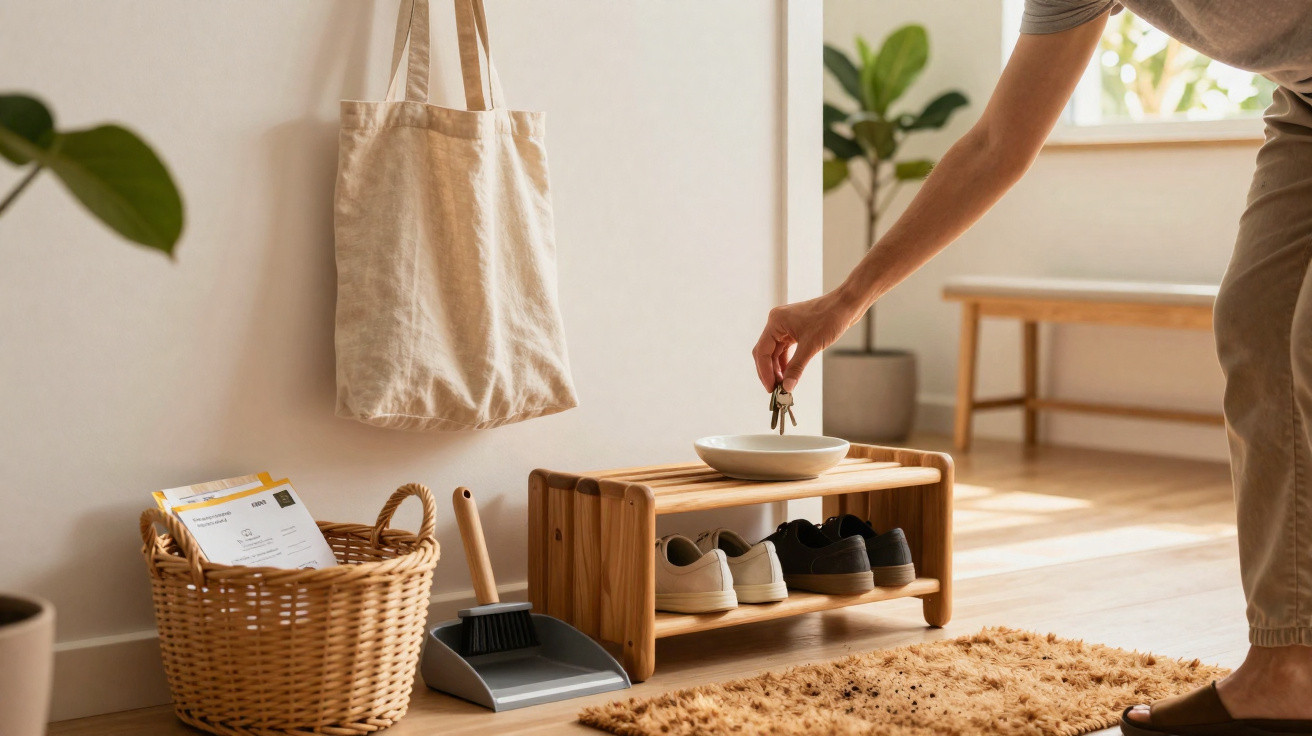
On a calm evening, look around and identify one area you would like to feel peaceful tomorrow morning. It may be the sink, the coffee table or the place where everyone leaves their keys and post. Give it ten minutes of focused attention, then leave everything else alone. Allow that one completed space to welcome you at breakfast. That calm, light and almost understated feeling is what guides you towards a new rhythm.
We often overlook how strongly our surroundings influence our mood. A perfectly clean home is not essential for peace of mind. Yet a handful of clearly completed pockets of order can alter how your day begins and how it ends. During a difficult week, they become small anchors. During a good week, they show that your time does not have to vanish into endless, chaotic scrubbing. On a human level, that is the real benefit.
| Key point | Detail | Benefit for the reader |
|---|---|---|
| The real “enemy” | Constantly moving from one task to another instead of completing one | Understand why cleaning takes twice as long |
| Zone method | Select a small zone, complete it 100%, then move to the next | Save time, see visible results and stay motivated |
| Simple routines | A mini checklist repeated in every zone to establish a rhythm | Reduce mental load and make cleaning more automatic |
FAQ:
- What exactly is the “common mistake” that doubles cleaning time? It is the habit of moving between tasks or rooms without fully completing anything, creating constant “context switching” and wasting energy.
- How long should I spend on each cleaning zone? Begin with 10 to 15 minutes for each small zone. At first, it should feel almost too easy, so that you finish with a clear sense of completion rather than exhaustion.
- Can this method work if I have children or pets? Yes. Choose micro-zones, such as the coffee table or entrance mat, and give children one simple task, such as putting toys into a basket while you wipe or vacuum.
- What if my home is already very cluttered? Start with “visible wins”: one worktop, one chair or one small surface. As you repeat the zone routine, you will naturally begin decluttering the possessions that never seem to have a place.
- Do I need special products or tools to clean by zones? No. A basic kit - a cloth, all-purpose cleaner, bin bag and a basket for misplaced items - is sufficient. Its effectiveness comes from focus and sequence, rather than expensive products.


Comments
No comments yet. Be the first to comment!
Leave a Comment