
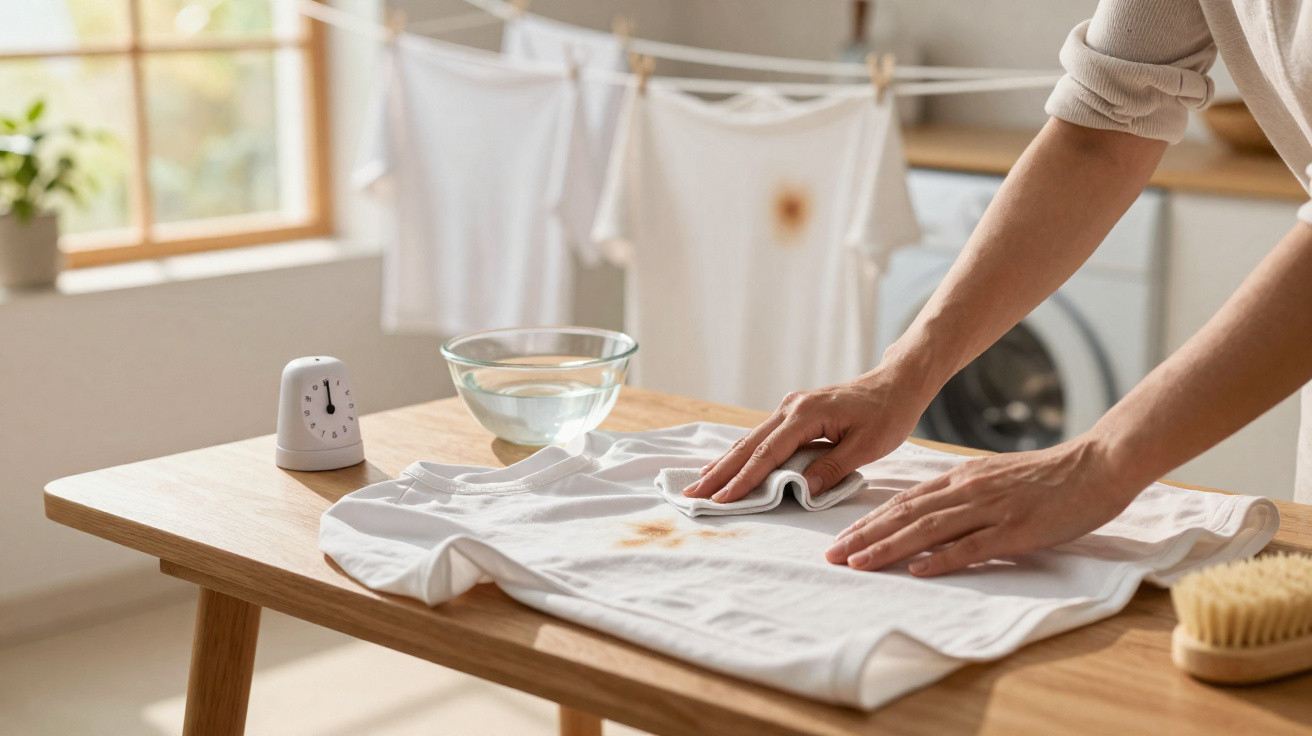
The shirt appeared spotless.
Straight from the washing machine, it carried the scent of lavender and sunshine. Yet when the material caught the window light, the problem showed itself once more: a pale yellow ring from the coffee that had spilled all over it last month. You had scrubbed it, soaked it, searched online, and tested that “miracle” baking-soda-and-washing-up-liquid remedy. It had faded, certainly. It had not vanished.
There is a reason certain stains return like an unwelcome memory. They penetrate, spread, oxidise and conceal themselves. Then, the moment you risk wearing white in daylight or sitting on the sofa with visitors, they show up again. A stain is not simply grime: it is chemistry, timing and, sometimes, the fabric’s own determination to hold on.
One understated technique, however, consistently outperforms most viral tricks.
Why some stains never truly disappear
The first surprise comes when you realise a stain is only “gone” until the fabric dries. Damp material is deceptive. It becomes darker, looks more even and creates a false sense of success. Once the shirt is dry, though, the mark slowly returns, like a watermark on aged paper.
Stains act like tiny intruders. They move through fibres and attach themselves to proteins, fats, dyes and tannins. Once that bond has formed, an ordinary quick wash is less a solution than a polite request.
Worse still, using the wrong approach can force them further into the fabric.
One Tuesday night, in a small London kitchen, I saw a friend tackle a red-wine spill on her beige sofa. She used salt, white wine, sparkling water and washing-up liquid. Every fresh remedy was added over the previous one, each based on a promise she had found online.
By the end of the evening, the stain had altered in shape, spread further and become fuzzy around the edges. Weeks afterwards, a pinkish haze was still visible exactly where the glass had fallen. The upholstery had not merely retained the wine; it seemed to have soaked up every bit of panic as well.
We tend to assume that extra product means extra cleaning power. However, research from a European laundry laboratory found that nearly 40% of supposedly permanent stains on clothing had actually been made worse by people combining treatments at random: using hot water on protein stains, rubbing rather than blotting, or applying colour-safe bleach to unstable dyes.
The science is straightforward. Stains broadly fall into several families: protein stains, such as blood, sweat and milk; oil and fat stains, including make-up and salad dressing; tannin stains, such as tea, coffee and wine; dye stains, including ink and sauces; plus a few outliers, such as rust and grass. Every group responds differently to heat, water and chemical products.
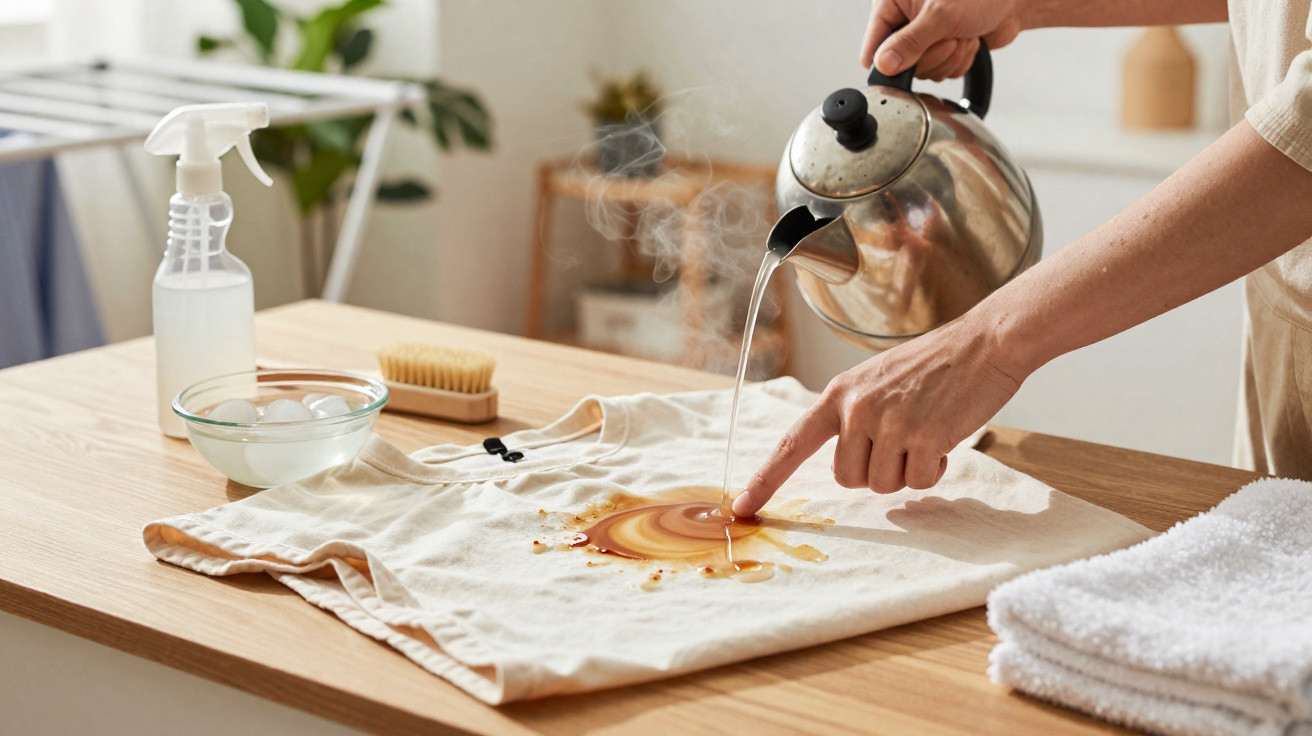
Heat may effectively “cook” proteins into the fibres, transforming a light trace into a lingering ghost. Scrubbing can drive colour deeper, as though it were being stamped into place. Bleach may remove colour from the fabric as well as the stain, creating a pale patch that can look worse than the original mark.
The greatest problem is not the stain itself, but what happens during the first two minutes after it appears. That is when many people unknowingly lose the fight.
The stain-removal method that quietly works - and why people ignore it
The strongest method is not particularly exciting. There is no magical shortcut, viral foam or overnight transformation. Instead, it is a plain, almost clinical order of actions: identify, dilute, treat and wash.
Begin by working out which stain family you are dealing with. Does it look shiny and oily? It is probably fat-based. Is it dark and liquid, like coffee or wine? It is likely a tannin stain. Is it sticky and a little crusted, like blood or egg? That points to protein. No laboratory coat is needed; simply take a moment to look carefully.
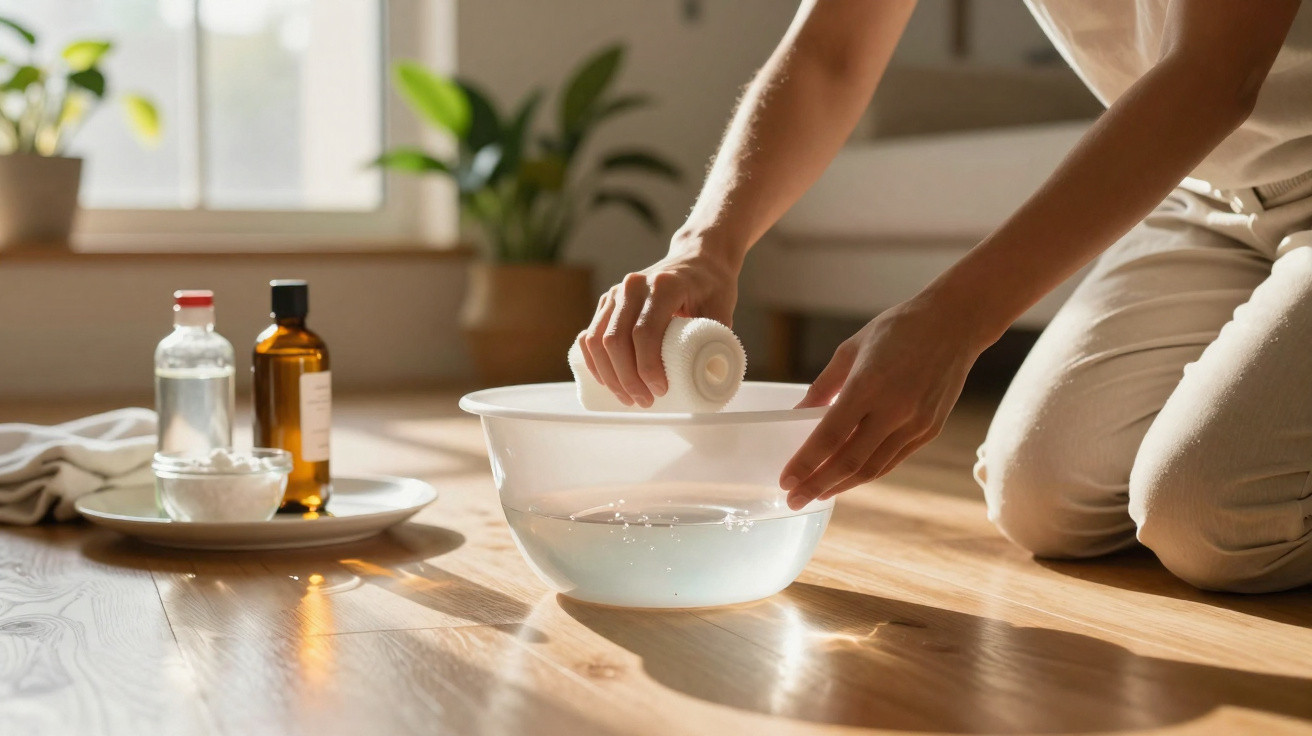
Next, move quickly without being rough. Blot rather than rub. Use cool water for protein stains and lukewarm water for most other types. Always work from the outer edge towards the centre to prevent the mark spreading. Only then should you use a targeted treatment: an enzyme cleaner for proteins, a small amount of washing-up liquid for grease, or an oxygen-based stain remover for older marks.
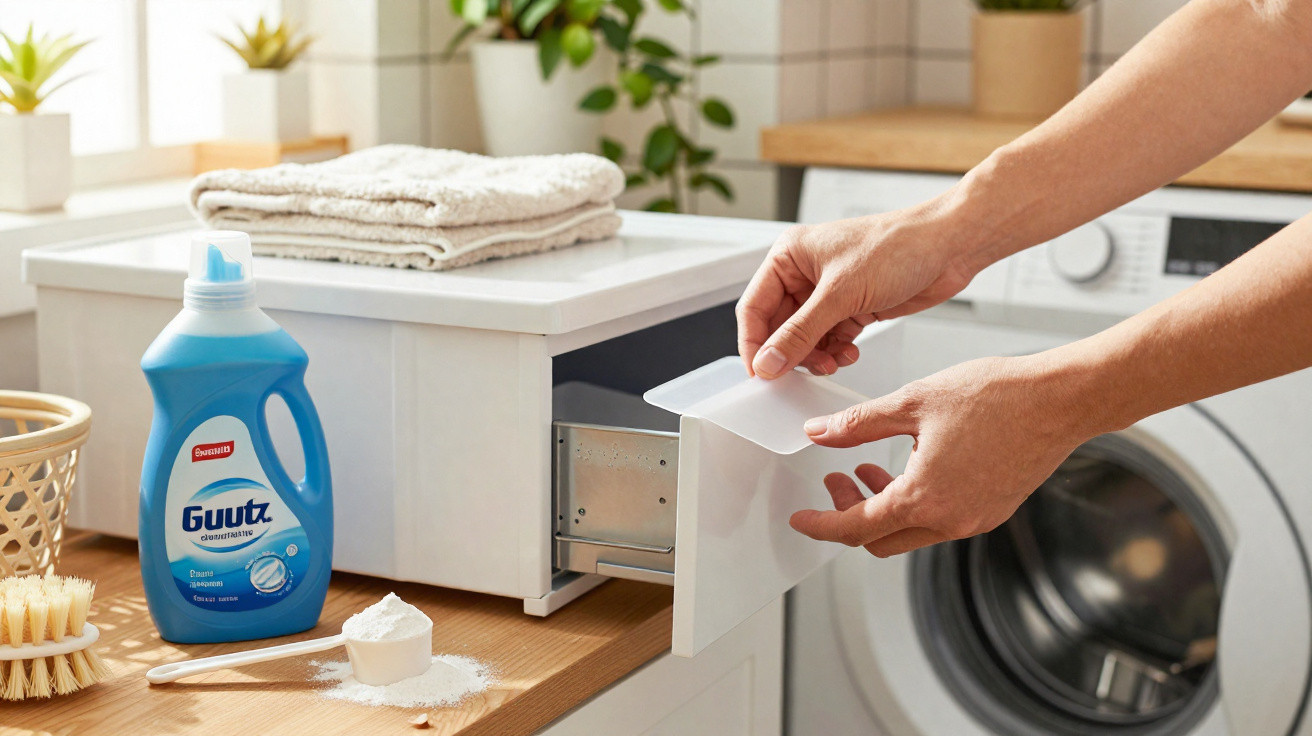
The method that genuinely delivers results lies between science and restraint. Enzyme-based pre-treaters are the unsung heroes. They are made to break down proteins and organic residue without damaging the material. Dab the product on, allow it time to work, then wash using the appropriate cycle for the fabric.
Let’s be honest: nobody really does this every day.
Most of us throw everything into the machine, add a splash of detergent, select “mixed load” and hope for the best. Yet consumer-organisation tests repeatedly reveal the same result: garments pre-treated patiently, with suitable products and good timing, emerge far cleaner than those exposed to improvised “hacks”.
When stains seem impossible to remove, they have often been partly fixed and partly baked into place through overly hot water, aggressive bleaches or repeated trips through the tumble dryer, which can permanently set the pigments.
“Treat the stain like a story on your clothes,” says a veteran cleaner from a small Paris laundry. “If you rush to erase it, you just smear it. If you take one clear step at a time, most of them talk their way out.”
The emotional aspect is seldom discussed, but it matters. A mark on a beloved shirt or a child’s blanket can feel like a minor personal loss. On a white sofa, it may seem like evidence of disorder. That is exactly when frantic errors are made.
- Before doing anything else, blot with a clean white cloth.
- Try every product on an inconspicuous area rather than on the visible part first.
- Give stain remover time to work; scrubbing is nearly always the enemy.
- Do not use the tumble dryer until the stain has fully disappeared, or it may be set permanently.
- Recognise that some stains become scars rather than failures, and that is fine.
Living with stains and recognising when to stop
On a peaceful Sunday, you may take out a shirt with a faint coffee ring on its cuff. You recall the café, the rush and the laugh that caused you to knock over the mug. Looking at the mark, you may briefly think about attempting another method you spotted on TikTok.
Yet not every stain warrants another fight. Some fabrics have already been damaged, while certain pigments have been set too deeply by time and heat. Sometimes the most realistic choice is to turn the shirt into “home wear” and allow the stain to remain as a small, private reminder.
The same issue arises with a sofa, rug or favourite jacket. How much time, money and emotional effort do you genuinely want to give to one persistent halo? In practical terms, there comes a point at which professional cleaning - or simply accepting a slightly imperfect item - is more sensible than endlessly chasing flawless white.
On a human level, stains can hold memories of birthdays, first flats, new babies, break-up dinners, late-night pizzas and quiet cups of tea spilled because your hands were shaking.
Everything online appears immaculate. In an actual home, fabrics bear evidence that life has taken place. One day, you may run a finger over a faint mark on an old tablecloth and smile rather than sigh.
There is value in knowing how to tackle a stain using the right technique. There is also a gentle relief in knowing when to put down the cloth, let the material dry and keep the story instead.
| Key point | Detail | Benefit for the reader |
|---|---|---|
| Identify the type of stain | Check whether it is greasy, protein-based, tannin-based or caused by dye | Select the right technique instead of making the problem worse |
| Act promptly but gently | Blot and dilute with the appropriate water before applying any strong product | Reduce the mark without pressing it into the fibres |
| Choose enzyme-based and oxygen-based products | Pre-treat with targeted products, then wash correctly | Achieve better results than with unreliable “hacks” |
FAQ:
- Why does my stain come back after washing? Because part of the pigment or residue remains inside the fibres and reappears once the fabric dries or oxidises in contact with air.
- Are old stains impossible to remove? Not always, but they’re harder. Enzyme cleaners and oxygen-based removers can still lighten or fully lift them if you repeat the process patiently.
- Is bleach the best solution for white clothes? Chlorine bleach can work on some whites, yet it weakens fibres and can yellow fabrics. Oxygen bleach is usually safer and more versatile.
- Should I use hot water on every stain? No. Hot water can set protein stains like blood, egg, or milk. Start with cold for proteins, lukewarm for most others, and always check the care label.
- When should I call a professional cleaner? For delicate fabrics (silk, wool, upholstery), large stains, or items with sentimental or financial value where you can’t risk a DIY mistake.



Comments
No comments yet. Be the first to comment!
Leave a Comment