
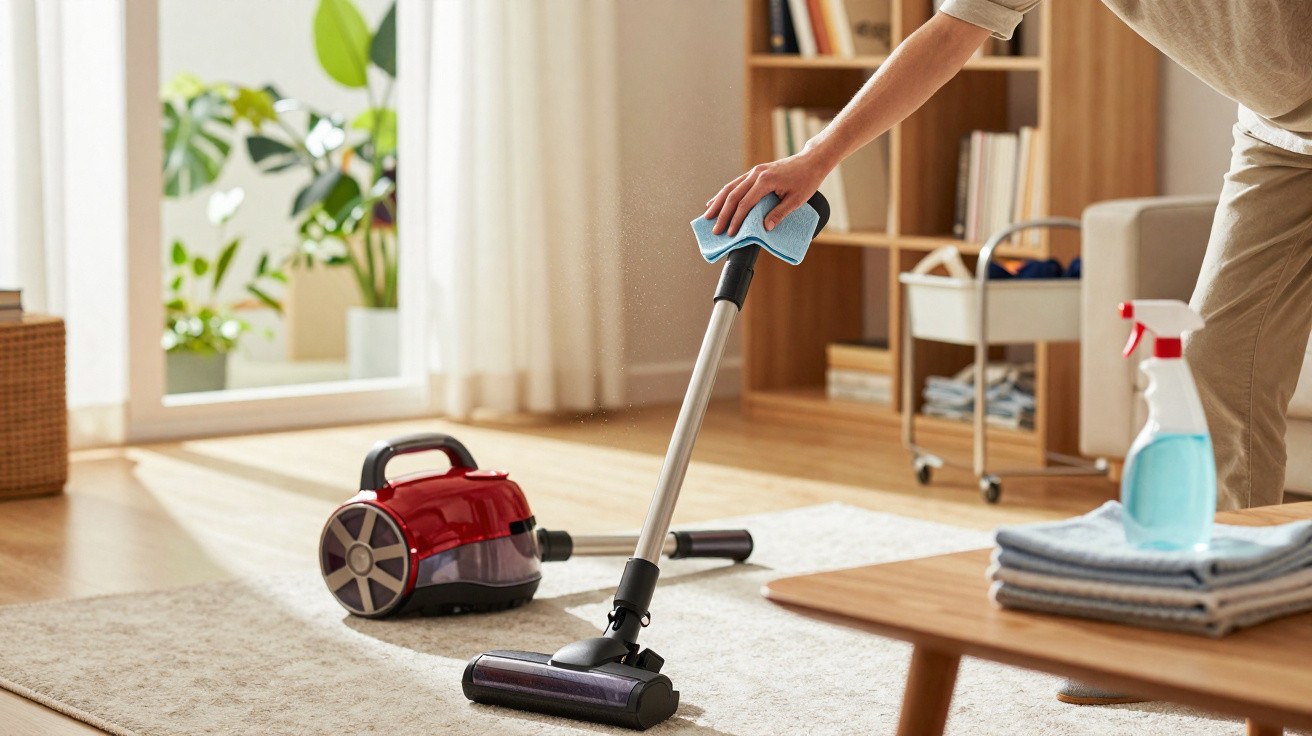
The vacuum starts roaring before the sun has properly risen.
Someone in the building is obviously “in the zone”, hauling it along the corridor, knocking against skirting boards and pursuing crumbs no one can see. In your own home, the worktops have been wiped, the sofa cushions plumped and the bed made with military-level neatness. Everything looks smart. It smells fresh. You settle down with a coffee… then spot a grey layer of dust on the television stand you “cleaned” yesterday.
The following day brings the same story. The floors are finished and the worktops gleam, but the house somehow seems to get grubby more quickly. Each shaft of sunlight through the window reveals another smear, a new rolling clump of hair or an unexplained sticky mark. You begin to question whether you are cleaning incorrectly, or whether your home is simply cursed. One small habit is quietly undermining all that work.
This one cleaning order mistake ruins your hard work
Most of us clean in whatever order feels most rewarding rather than in the sequence that delivers the best result. We start with the floors because it is satisfying to watch crumbs vanish. Then come the worktops, followed by the shelves, perhaps, if there is any energy left. It becomes a kind of reward system: deal with the obvious mess first and trust that everything else will follow.
Homes, however, do not work that way. Dust drifts, and gravity always wins. Whenever you wipe a shelf after doing the floor, minute particles of dust, skin, hair and dirt slowly settle below. You have made a new mess on a surface you believed was finished. It is hardly surprising that your home looks grimy again within 24 hours.
Cleaning science has a straightforward principle: work from top to bottom and from the cleanest space to the dirtiest. Reverse that sequence and you are effectively chasing your own tail. You vacuum, then sweep crumbs from the table on to your “clean” rug. You mop, then dislodge dust from a picture frame into the damp streaks beneath it. It may feel productive at the time, but it wastes your time.
Researchers examining indoor air quality estimate that much of the dust visible on household surfaces has already been airborne several times before finally settling. So, when you disturb a dusty surface, you are not merely shifting particles around; you are launching them back into the air. If the floor is already spotless, it makes an ideal landing strip.
Picture a typical Sunday clean. You mop the kitchen floor until it squeaks, then notice that the light fittings look slightly dull and decide to wipe them down. Fine flecks of dust fall like snow, although they are invisible to the naked eye. Half an hour later, you walk barefoot into the kitchen and feel grit underfoot. You think, “Didn’t I literally just do this?” Yes. You did. The order of your cleaning cancelled out the effort.
A 2022 survey by a major cleaning brand found that people spend more than six hours a week “maintaining” their home, yet still feel it appears untidy by the middle of the week. That frustration is not necessarily caused by laziness or a shortage of products. Very often, the sequence itself is wrong. You are not bad at cleaning; your strategy is.
There is a less obvious health consideration too. Disturbing dust on high surfaces after the floor has been cleaned sends allergens and particles back into the air you breathe. Where someone in the household has asthma, hay fever or sensitive skin, that haphazard order may quietly aggravate their symptoms. The house looks nicer, but the air feels harsher.
In practical terms, it is like washing your car and deliberately driving through a muddy puddle afterwards. Our brains favour instant gratification, which is why tackling floors or the kitchen island first feels “worth it”. The transformation is immediately visible. But that sense of reward can trap you in a cycle of redoing jobs twice as often. The dirt is not building up faster; you are simply moving it around inefficiently.
Professional cleaners generally avoid this trap. They use a route and a rhythm: high to low, clean to dirty and dry tasks before wet ones. Think of it as choreography. Respect gravity and airflow, and every action prepares for the next; ignore them, and each action undoes the last. The order is not a detail, it’s the backbone of the whole routine.
The simple cleaning sequence that keeps your home cleaner for longer
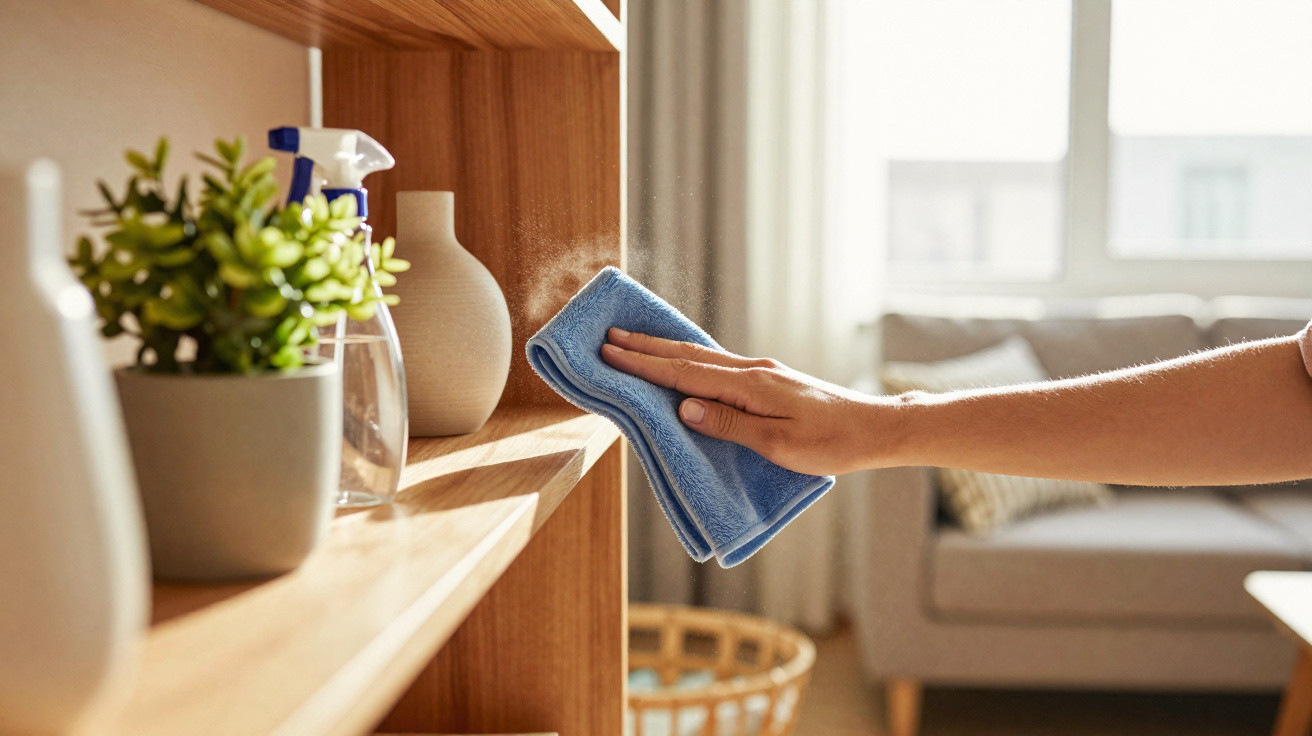
The solution is almost embarrassingly easy: alter the order. Begin with the highest surfaces and gradually work downwards. In practice, that means lights, shelves, the tops of picture frames and cupboard doors, followed by worktops and tables, with the floors left until the very end. At first, it can feel odd because it goes against your usual cleaning instincts.
Treat every room as a series of layers. Layer one covers anything above head height. Layer two is made up of eye-level surfaces touched regularly. Layer three includes low storage and skirting boards. Layer four is the floor. By working through those layers in that order, anything you loosen falls on to an area that has not yet been cleaned. You are no longer undoing your own work as you go.
Use one further principle: clean from the least dirty room to the dirtiest. Do the bedrooms before the kitchen, and the living room before the bathroom. You spread less grime around and your equipment remains cleaner as well. Once the bathroom is complete, you will not be carrying microscopic bathroom bacteria into the hallway on your mop. It may sound rather intense, but it is simply habit combined with logic.
People often miss out the high-level dusting stage because it does not provide an instant dramatic result. No one posts a photograph of a clean ceiling fan on Instagram. As a result, it might only happen once in a blue moon, if at all. Then, whenever the fan is switched on, a light cloud of dust scatters over the bed, chest of drawers and the floor you mopped yesterday.
This is also where cleaning guilt can take hold. You look around and think, “I’m always cleaning and it still feels dusty.” That feeling weighs heavily. It can convince you that you are disorganised, untidy or “just not that type of person.” In reality, the explanation is often kinder: your routine has a few leaks. Fix them and the emotional burden eases.
Let’s be honest: nobody really does all of this every day. Most people carry out one substantial weekly “reset”, then deal with small emergencies for the rest of the week. That is precisely why the cleaning order matters so much. When time is limited, every minute needs to last. If a 45-minute Saturday clean gives you three or four days of freshness rather than one, that is a major benefit for both your mind and your diary.
One professional cleaner I interviewed put it this way:
“Your house isn’t getting dirty faster. You’re just waking the same dust up again and again. Change the order, and suddenly it looks like you’ve doubled your effort without working more.”
To make the method manageable, many professionals use a short mental checklist in every room. It need not be perfect or strict; it simply needs to be consistent enough to become automatic. Once your body knows the next step, cleaning becomes less of a struggle and more of a routine you can complete even when tired.
- Begin high: lights, furniture tops, frames and vents.
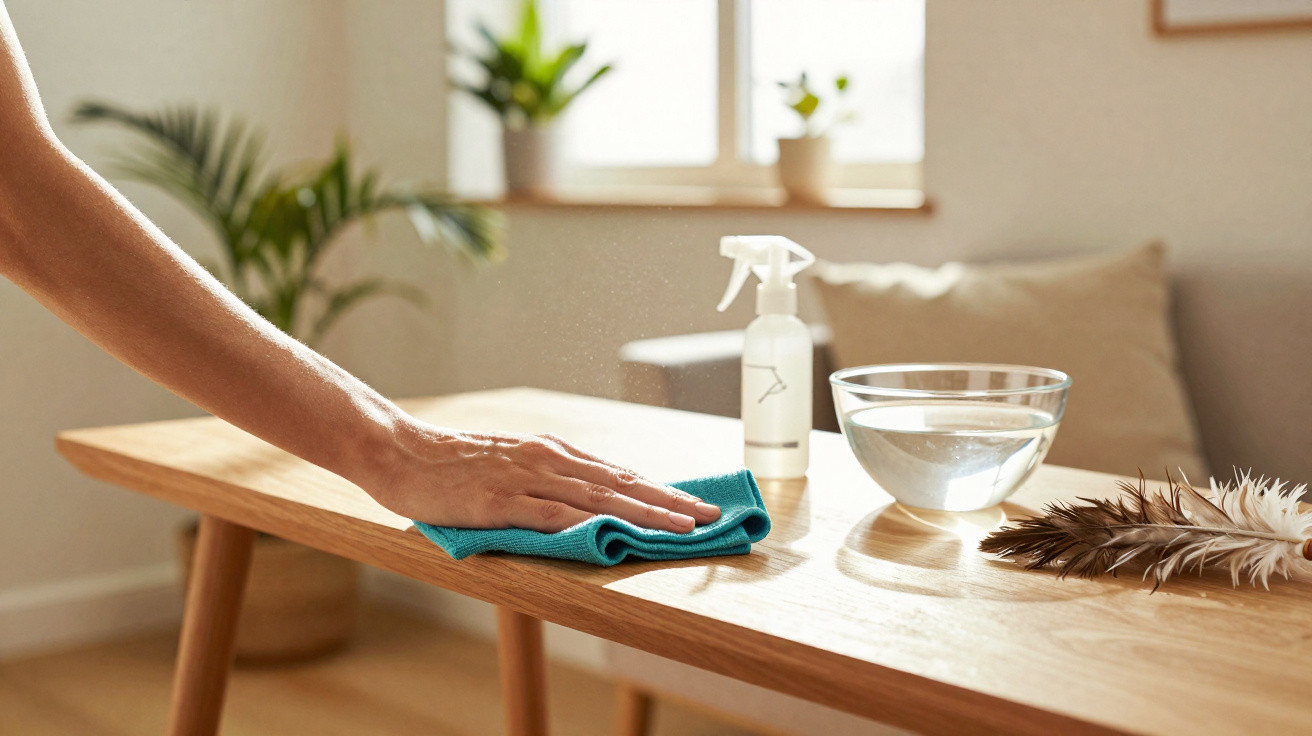
- Continue with middle surfaces: desks, worktops and tables.
- Clean the low details: skirting boards and cabinet fronts.
- End with the floors: vacuum, then mop when necessary.
How to “reprogram” your cleaning brain without burning out
Adjusting a habit you have followed for years will always seem strange initially. Your hand may still reach for the vacuum first, and you may still feel compelled to deal with the pile of crumbs before anything else. The answer is not greater discipline; it is creating small prompts that guide you towards the new order without requiring much thought.
Try placing your duster or microfibre cloth somewhere impossible to miss, such as by the door or on top of the vacuum. Make that the first item you pick up, even if you use it for only five minutes. Once the “top” layer is complete, allow yourself to enjoy the more satisfying stage: vacuum lines in the carpet, gleaming tiles and the quiet feeling of “I did something today.”
One gentle caution: do not make this another reason to criticise yourself. There will still be days when you mop before remembering the bookshelves. You may wipe the bathroom mirror and forget the light fitting above it. You are a person, not a cleaning machine. The aim is direction rather than perfection. Most of the benefit comes from “usually in the right order,” not “always flawless.”
If you share your home, say the sequence aloud. Children can grasp “high, middle, low, floor” far more readily than a vague instruction to “tidy your room”. Partners can take responsibility for one layer while you deal with another. That way, the new order does not live solely in your head; it becomes part of the household routine. Within a few weeks, it begins to feel… normal.
The emotional change is quiet but genuine. When the same amount of effort keeps your home clean for longer, you experience something uncommon in adult life: progress. You start to believe that a 20-minute evening reset actually achieves something. You return from work on Wednesday and the place still looks “okay” rather than prompting, “what happened here?” Less visual clutter means less mental clutter.
There is another benefit: once you follow the right order, you may realise you can clean less rather than more. Perhaps you do not need to mop every time if yesterday’s dusting has not sent fresh dirt to the floor. A quick vacuum might be sufficient. Cleaning stops being an endless battle against an opponent that always wins and becomes maintenance rather than war.
You may still have moments when sunlight catches dust on the television stand. That is simply life. Homes are for living in, not for preserving as museum pieces. But when the underlying routine works with gravity rather than against it, that dust no longer feels like a judgement. It is just a quiet reminder that today, you will start with the shelf and leave the floor until last.
| Key point | Detail | Benefit for the reader |
|---|---|---|
| Cleaning order | Work from top to bottom, from the least dirty area to the dirtiest | Reduces time spent repeating the same tasks |
| Thinking in “layers” | High, eye level, low and floor in every room | Provides a simple method to repeat without overthinking |
| Emotional impact | An efficient order makes the clean-home feeling last longer | Less guilt and more lasting satisfaction |
FAQ
- What is the most common cleaning order mistake? The main mistake is beginning with the floors and then dusting or wiping high surfaces, which dirties freshly cleaned floors again.
- Does the “top to bottom” rule really make a difference? Yes, because dust and crumbs follow gravity. Cleaning high surfaces first means anything that falls lands on areas you have not cleaned yet.
- How often should I dust high surfaces like shelves and light fixtures? In most homes, every 2–4 weeks is sufficient, unless you have allergies or pets, when weekly dusting is useful.
- What’s the best room order for a full-house clean? Begin with bedrooms and living spaces, then clean the kitchen and finish with bathrooms, moving from the least dirty rooms to the dirtiest.
- Can this method work if I only have 20 minutes? Yes. Choose one room and follow the same sequence: high, middle, low, floor. Even one “layered” clean can make a room feel calmer.
Comments
No comments yet. Be the first to comment!
Leave a Comment