
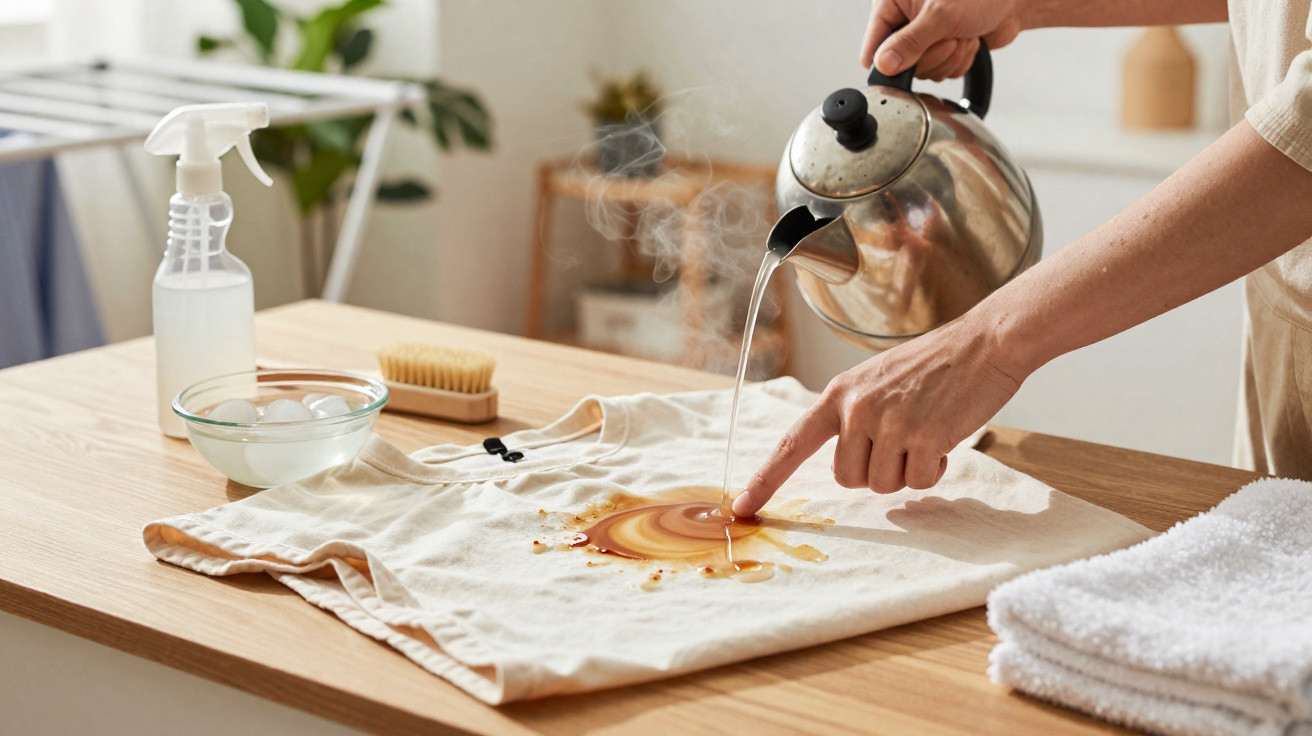
A mug hits the worktop, and a dark tea ring slowly spreads across a pale cotton tea towel. There is that instant rush of panic and the automatic response: reach for the kettle, flood the stain with boiling water and hope for the best. The water sizzles, steam rises… and the mark clings on even more stubbornly.
A few hours later, the fabric is mostly clean, yet the stain remains, embedded in the fibres like an unwelcome memory.
Whether it is a white shirt, a sofa or a light-coloured carpet, the pattern is always much the same. We react without thinking, panic takes over and we want to erase what has just happened. Far too often, that is exactly when we make the worst possible choice: using the kettle.
Some stains thrive on heat. They use it to lock themselves into the fabric.
The habit seems sensible, even comforting. We associate boiling water with ‘purifying’, having seen it in adverts or watched previous generations do the same. Chemistry, however, does not work according to instinct.
Once a stain has effectively been cooked into the fibres, the fabric is never quite the same again.
Why boiling water turns some stains into permanent marks
Watch somebody spill coffee over a work shirt at 7.42 am on a Monday and you will see a brief drama unfold. Their eyes drop, they sigh, then reach for the cup or kettle, convinced that the hotter the water, the better the result.
That is precisely where things go wrong.
For protein-based stains - including milk, blood, egg, yoghurt and even certain sauces - heat acts like a locking switch. The proteins denature, tighten and then set within the fibres, much as egg white solidifies in a frying pan.
Rather than sitting on the surface of the material, the stain sinks deeper and takes hold.
Most of us have put a stained sheet through a hot cycle because it seemed likely to clean more effectively, only to find that the mark has not disappeared when it comes out. It has simply changed colour.
Boiling water does the same thing at speed. It sets pigments, cooks food residue and seals red wine into fibres like a handmade dye. Once this has happened, even the best stain removers lose some of their power.
The bad news is that this response is deeply ingrained. The good news is that it can be unlearned.
Stains that should never meet boiling water - and what to use instead
The first thing to establish is the type of stain. If it includes protein or fat - such as blood, milk, cheese, Bolognese sauce, ice cream, cream, egg yolk, vomit or sweat - boiling water is the enemy.
These stains respond well to lukewarm water, not being cooked.
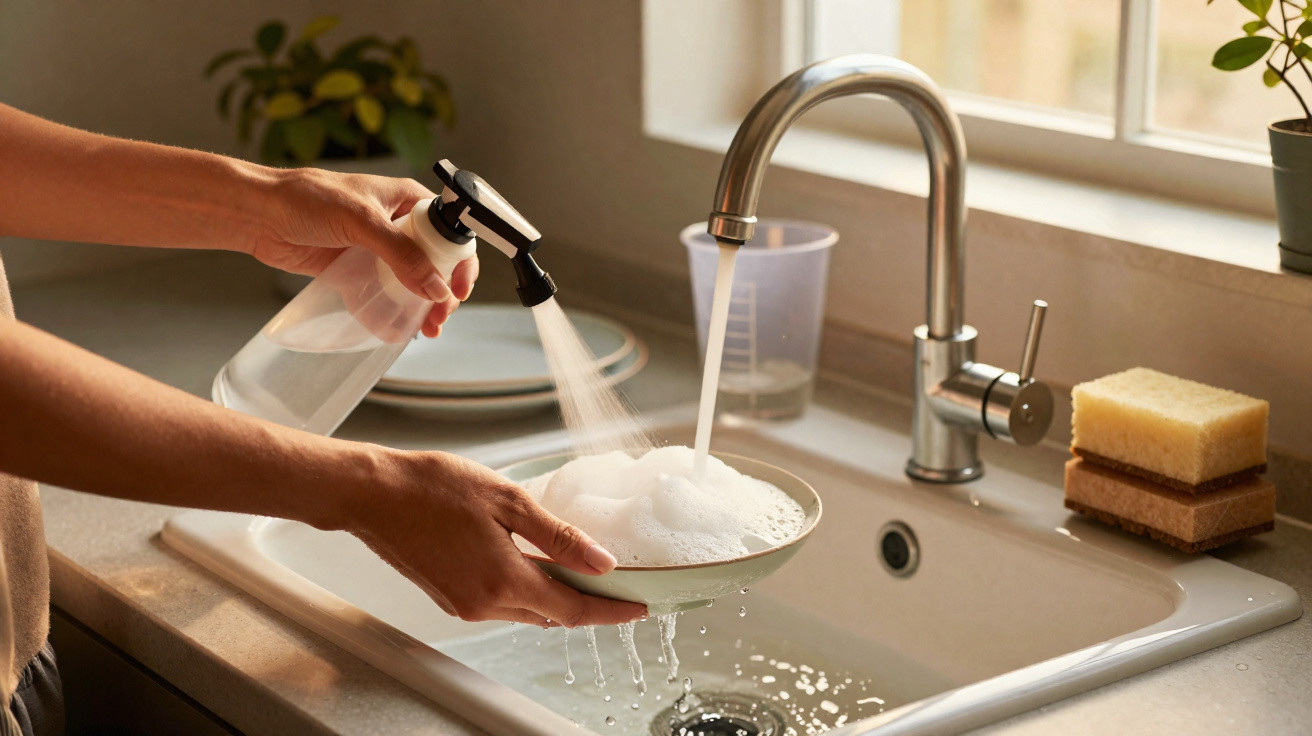
The right approach comes down to three straightforward steps: rinse, dilute and treat. Place the fabric over the sink and run a gentle stream of cold water through the stained area from the reverse side, so it is pushed outwards.
Then apply a little mild soap or washing-up liquid, rub it gently with your fingertips, leave it for a few minutes and only then put it in the washing machine at a moderate temperature.
In reality, hardly anybody does this perfectly every day, down to the minute, as in polished online tutorials. Usually, it is more like: ‘I’ll add some water, use a bit of soap and deal with it later.’
Even that later stage, though, should stay cold or lukewarm. Water at 30°C–40°C is more than enough to start cleaning without cooking the stain into place. Speed matters almost as much as technique: the sooner you act, the less time a stain has to bind to the fibres like chewing gum on tarmac.
“La chaleur est un amplificateur : si la tache est mal préparée, l’eau bouillante ne la détruit pas, elle la rend plus tenace.”
- Golden rule: unknown stain = cold water, never boiling water.
- Proteins (blood, milk, egg): always use cold water, with a long pre-soak if necessary.
- Fats: use lukewarm water and washing-up liquid, without a sudden heat shock.
- Only move to heat once the stain is almost invisible to the naked eye.
Small changes mean fewer ruined fabrics
A stain says more than simply what was spilled. It also reveals how we respond to everyday mini-emergencies. The kettle reflex is rather like the laundry version of saying ‘I’ll deal with it later’, except that the delay is paid for in damaged shirts and yellowed sheets.
Changing that one habit is economical, environmentally friendly and, honestly, calming.
What is most revealing is that, by noticing how a stain disappears - or fails to - you soon understand how your home routines work. Clothes last longer when they are not repeatedly exposed to excessive heat. A sofa retains its original colour when it is not heated after every hot-chocolate mishap.
These small temperature adjustments also lower the washing machine’s electricity use, prevent unpleasant shrinkage surprises and slow down fibre wear.
Then there is pride. Accepting that boiling water may have been the wrong answer for years is not particularly pleasant, but it is freeing. You may find yourself turning on the cold tap, pausing before starting a 60°C cycle and keeping a small bottle of stain remover beside the washing machine instead of relying on a kettle on the worktop.
Over time, what once felt like a chemistry lesson simply becomes a gentler instinct: another way to deal with things that go wrong without burning them in an attempt to remove them.
| Key point | Details | Why it matters to readers |
|---|---|---|
| Boiling water ‘cooks’ protein stains | Stains from blood, milk, egg and yoghurt contain proteins that denature and set when exposed to very hot water, just as egg white turns solid in a frying pan. | Starting with boiling water can turn a removable mark into a permanent ring, meaning clothes, sheets or towels may need replacing sooner than necessary. |
| Begin with cold water from the reverse of the fabric | Rinse from the back so that the stain is forced out of the fibres rather than pushed further into the weave. | This minor change makes old T-shirts and delicate materials easier to rescue, particularly when a stain is only spotted after a busy day. |
| Apply heat only once the stain has mostly faded | When cold water and soap have removed most of the stain, a warm wash at around 40°C can finish the job without setting remaining pigment. | Readers can still benefit from the cleaning strength of warm cycles without discovering that a mark has been permanently baked in. |
FAQ
- Can I ever use boiling water on stains? Yes, but only in specific cases. Boiling or near-boiling water can help with certain tannin stains, such as fresh tea or herbal infusions on sturdy white cotton, provided that no milk or protein is involved and the fabric can withstand high heat. Test an inconspicuous area first, and never use this method on coloured or delicate items.
- What should I do immediately after a blood stain? Rinse it as quickly as you can under cold running water, ideally from the reverse of the fabric, until the water becomes clearer. Next, apply a small amount of mild soap or liquid laundry detergent, rub gently, leave it for 10–15 minutes and wash on a cool cycle before the stain has a chance to dry completely.
- Why did my coffee stain get worse after a hot wash? If your coffee contained milk, cream or a milk alternative containing proteins, the high temperature probably set those proteins into the fibres. The coffee pigment then bonded more firmly, creating a yellow-brown shadow that is much harder to remove after that first hot wash.
- Is cold water always the safest choice? Cold water is the safest place to start when you do not know what caused the stain. It will not set most substances into the fabric and gives you time to choose the appropriate treatment, whether that is stain remover, soap or a later warm wash.
- How long can I wait before treating a stain? The sooner the better, as stains oxidise and sink further into fibres as they dry. If you cannot deal with it properly straight away, at least rinse it quickly in cold water or dab it with a damp cloth so the mark remains ‘fresh’ until you have time for a thorough clean.

Comments
No comments yet. Be the first to comment!
Leave a Comment