
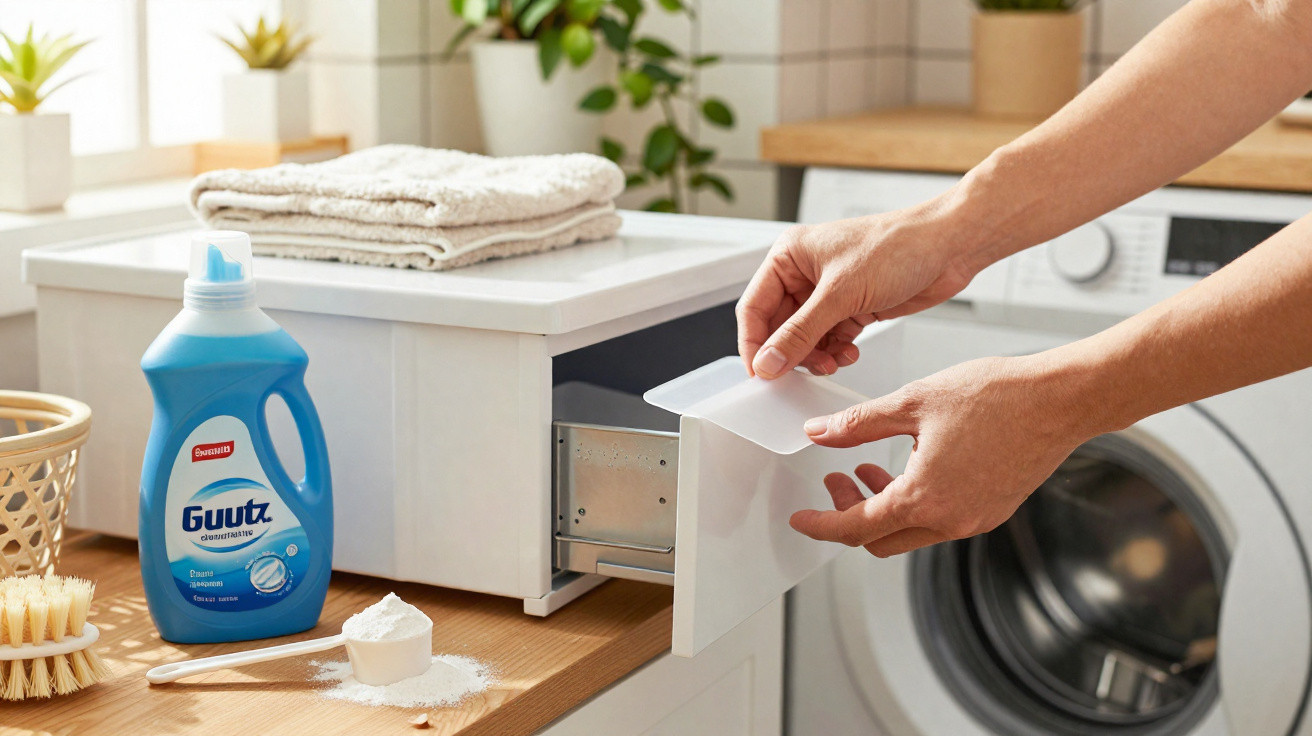
Most people fill the drum, add detergent, press start and get on with their day. But within the dispenser drawer is a small, easily overlooked section that has more influence on the wash than many owners appreciate, particularly when using liquid or powder detergents.
The detergent drawer’s quiet role
Although modern washing machines appear straightforward from the outside, manufacturers have designed the dispenser drawer to direct detergents and fabric conditioners. Each compartment releases its contents at a particular stage of the programme: pre-wash, main wash and conditioner during the final stage.
Within the main detergent compartment, normally on the left-hand side of the drawer, there is a small adjustable flap or insert. It may resemble a low plastic slope and can feature minimum and maximum level markings. Plenty of people leave it untouched or mistake it for an unimportant design feature.
This discreet flap decides how water flows through the detergent, and whether the product reaches your clothes in the right way and at the right time.
This small component becomes increasingly important when households alternate between liquid detergents, powders and concentrated products. Selecting the incorrect flap setting may cause liquid to dilute too rapidly, powder to remain undissolved, or a sticky residue to form and eventually obstruct the drawer.
Finding the “hidden” compartment
Fully pull out the dispenser drawer. In most front-loading washing machines, the left-hand compartment is intended for main-wash detergent. Inside, you should find:
- A plastic flap or insert that can be positioned either up or down.
- In some cases, a liquid symbol, such as a droplet, or a powder symbol, such as a heap, beside the flap.
- Fill lines indicating the amount of detergent to use.
This is the “hidden” feature that many people overlook: the flap alters the route water takes through the compartment. In turn, this determines how the detergent is fed into the drum.
Lower position: designed for liquid detergents.
Raised position: designed for powder detergents.
Overlooking the setting will not normally damage the washing machine, but it can gradually undermine results: fabrics can become dull, dark garments may retain detergent deposits, and towels can develop a sour odour that seems impossible to shift.
Using the flap for liquid detergents
Why the lowered position is important
For liquid detergent, the flap needs to remain in the lowered position. This lets water pass over the detergent steadily, moving it into the drum over the course of the wash rather than rinsing it through immediately.
This produces several practical benefits:
- Detergent concentration remains more consistent in the wash water throughout the main cycle.
- Less product is wasted by being flushed directly to the drain at the beginning.
- Active ingredients make steadier contact with fabrics, helping to lift body oils and everyday dirt.
Many dispenser drawers include markings for typical load sizes. Following these lines rather than measuring with the detergent bottle cap can help prevent overdosing. Adding excessive liquid detergent does not produce cleaner washing; instead, it often causes:
- Residue to cling to fibres, leaving towels feeling hard.
- Additional rinse cycles while you attempt to clear the suds.
- Biofilm and mould to develop more quickly in the drawer and door seal.
When liquid detergent is used incorrectly
If the flap is set incorrectly for liquid detergents, water may enter too rapidly. A substantial amount of detergent can then be carried away with the early rinse water. Laundry may still appear clean, but persistent smells and faint stains are more likely to remain. In time, colours can look faded even where the fabric is not strictly “dirty”.
Using the flap for powder detergents
Why the raised position helps powder detergents dissolve
Powder detergents require the reverse approach: lift the flap into the raised position. This turns the compartment into more of a small reservoir, allowing water to flow in a manner that gives the powder time to dissolve before it reaches the drum.
When the flap is left down and powder is added on top, the following problems are common:
- Clumps of detergent remain caught in the corners of the drawer.
- Half-dissolved powder creates a crust that restricts water channels.
- Chalky residue starts to appear on dark clothing.
A ten-second adjustment of the flap can mean the difference between powder that works hard in the drum and powder that sticks to the drawer walls.
Since powder is generally more tolerant of hard water, many households choose it for towels and heavily soiled laundry. However, when wash performance declines, they may blame the detergent rather than the dispenser setting that is quietly working against it.
Why cleaning the drawer improves the wash
Residue, odours and obstructed channels
Detergents, particularly concentrated liquids and fabric conditioners, leave behind a coating. Over time, this becomes a sticky layer that collects lint and minerals from the water. The consequences are slower water flow, restricted channels and areas where detergent does not fully rinse away.
Most drawers can be taken out by pressing a catch at the rear or sides, then sliding the whole drawer free. A simple cleaning routine may involve:
- Soaking the drawer in warm water with a small amount of washing-up liquid.
- Scrubbing corners, beneath the flap and inside small openings with an old toothbrush.
- Cleaning the cavity inside the machine with a damp cloth to remove slime and black marks.
- Ensuring the flap moves smoothly and clicks into both positions before refitting the drawer.
A clean drawer allows products to travel at the correct pace and in the correct direction. It can also reduce the musty smell often blamed on “bad detergent” or “old towels”.
Liquid vs powder: how the hidden flap works in practice
| Type | Flap position | Common result when misused |
|---|---|---|
| Liquid detergent | Down / lowered | Too fast dilution, weak cleaning, lingering odours |
| Powder detergent | Up / raised | Undissolved grains, white streaks, clogged drawer |
Many homes use both types: powder for sheets and towels, and liquid for coloured items and delicates. This makes the flap position especially significant because it may need adjusting several times each week. Leaving it unchanged creates a compromise that does not properly suit either product.
Energy, money and fabric care: the broader effect
Why a plastic flap can affect household bills
Incorrect detergent use can result in loads being washed again. When clothes do not smell fresh, people put them back through the machine. This uses more water and electricity, while also putting extra strain on the motor. When the dispenser functions as intended, detergents can perform more closely to the results manufacturers achieve in laboratory testing, particularly at lower temperatures.
Accurate dosing also keeps foam under control, allowing the drum to rotate freely. The motor does not have to work against a cushion of suds, while the spin cycle can reach higher speeds. More water is removed from laundry as a result, reducing drying time, particularly when using energy-intensive tumble dryers.
Long-term fabric health
Too much detergent or fabric conditioner can form a coating on fibres. This layer holds onto dirt and makes sportswear less breathable. It can also leave whites looking grey as tiny particles become lodged in the weave. Setting the flap correctly and staying within the fill lines helps the final rinses remove more remaining product.
Correct dispenser use does not just change how clean clothes look today; it shapes how long fabrics stay comfortable and bright across hundreds of cycles.
Extra ways to improve your wash
Matching detergent, temperature and programme
The hidden compartment works most effectively when the other wash settings are appropriate too. For regular mixed loads, a 30°C or 40°C programme with a good-quality liquid or powder detergent will usually deal with perspiration and light staining. More heavily soiled items, including garden mud or cooking splashes, may need a slightly hotter wash or a pre-wash compartment containing a small additional amount of powder.
For those with allergies or sensitive skin, using the right detergent quantity and ensuring the drawer is thoroughly rinsed are even more important. Residue caused by untidy dosing and a dirty dispenser drawer can irritate skin long after laundry has been removed from the machine.
When to review your routine
If you spot any of these issues, it is worth checking the small flap in the drawer:
- An odour that remains even after washing.
- White marks on dark laundry or blue streaks from liquid detergent.
- Water pooling or slightly overflowing at the front of the drawer.
- A heavy, slimy coating inside the drawer or around the flap.
Setting the flap for the detergent type, cutting the dose back to the marked level and cleaning the drawer properly once a month can often resolve these problems without replacing the washing machine or changing detergent brands.
For households keeping a close eye on costs, this little plastic part can be an understated ally. A more efficient wash makes it possible to use cooler programmes, wash less frequently and keep clothes in use for longer. All because of a compartment that most people ignore when closing the drawer.


Comments
No comments yet. Be the first to comment!
Leave a Comment