
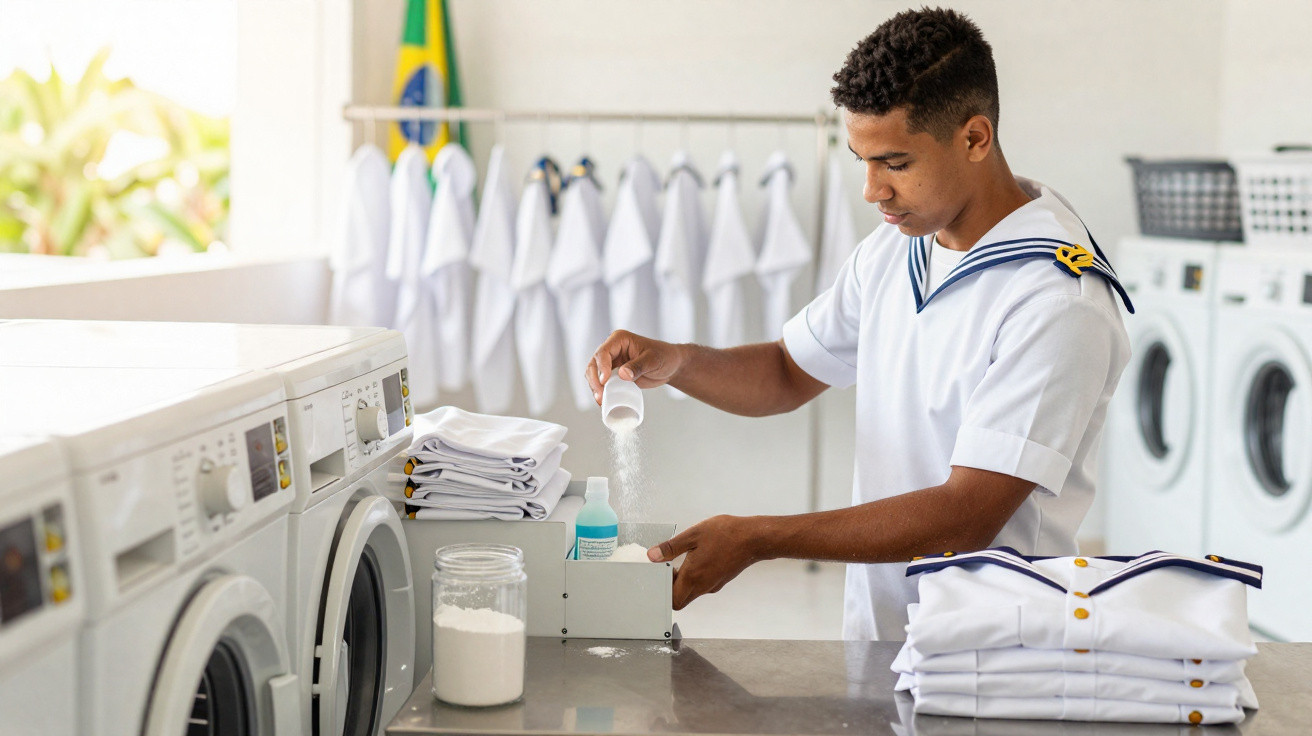
The difference is not about spending more money.
The Brazilian Navy says the immaculate appearance of its formal white uniforms owes less to premium detergents than to a firm routine, straightforward chemistry and practices that can easily be adopted at home.
The viral tip that made a military routine a laundry hack
A brief video shared through the Brazilian Navy’s official channels has gradually become a useful reference for both laundry enthusiasts and ordinary households. In the footage, a sailor wearing full ceremonial whites explains how the force maintains bright uniforms in a hot, humid, salty environment, where textiles normally deteriorate quickly.
At first, the process seems almost underwhelming: there is no classified military detergent, industrial washing system or expensive whitening set. Instead, it relies on liquid detergent, an oxygen-based laundry booster and a consistent set of rules.
The Brazilian Navy’s “secret” is less about products and more about discipline: wash smart, wash often, protect fabric between wears.
The advice drew attention online because it is so easy to apply elsewhere. Techniques that preserve a ceremonial uniform on a warship’s deck can also help restore school shirts, chefs’ jackets and worn gym socks at home.
Step by step: washing white uniforms the Brazilian Navy way
Wash matching garments together for an even white
The opening rule may sound largely aesthetic, but it has practical value both in photographs and everyday wear: wash an entire white outfit together. For sailors, this means placing the shirt and trousers in the same load.
Repeatedly laundering matching garments separately causes them to fade at unequal rates. One item may spend more time in hot water, while another is exposed to stronger spin programmes or a different detergent. After several months, the shirt and trousers can develop subtly different shades of white, making them appear mismatched.
- Put tops and bottoms from the same outfit through the same wash cycle.
- Do not combine substantial coloured loads with whites, even where the colours appear “safe”.
- Rotate uniforms and white outfits as complete sets rather than as separate pieces.
This basic approach helps prevent the blotchy, uneven appearance that can make clothing look older than it really is.
Choose liquid detergent rather than powder, regardless of brand
The Navy’s second recommendation surprised plenty of viewers. In its view, the name on the bottle is less important than the detergent format: liquid detergent is preferable to powder.
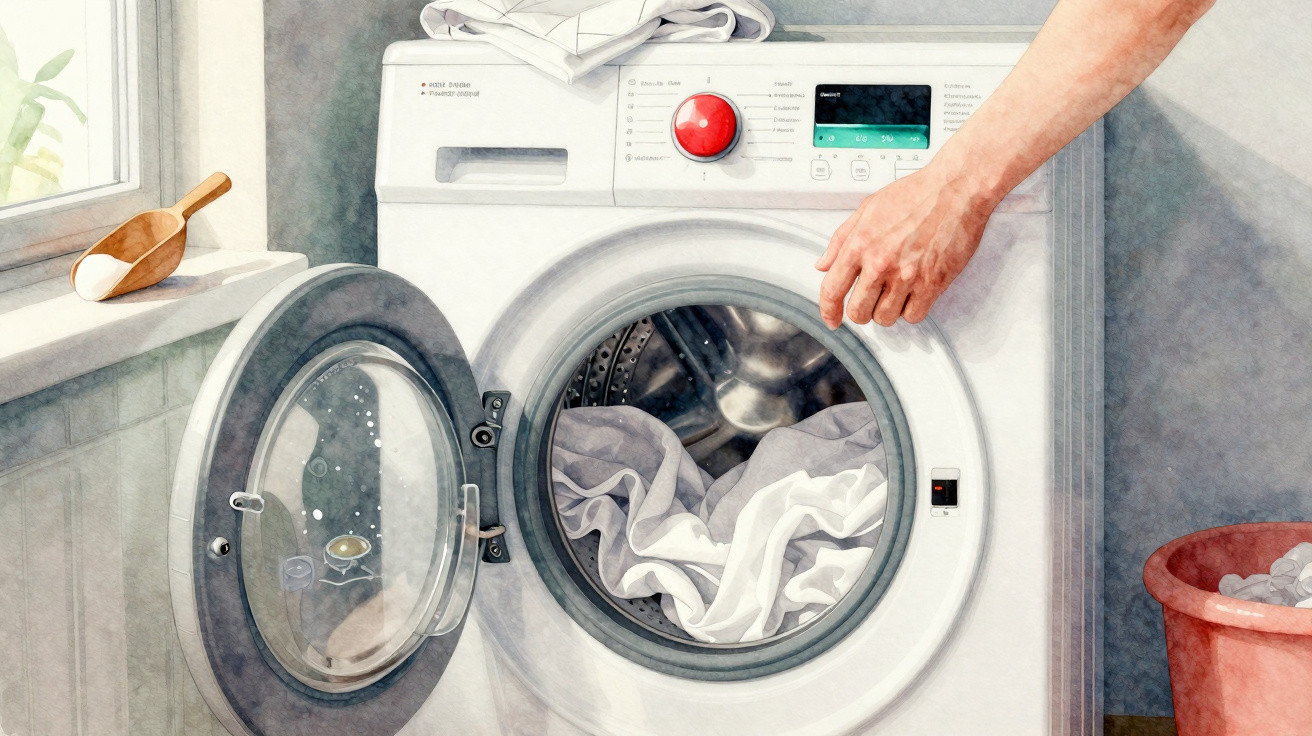
Liquid detergents dissolve readily, leave behind less residue and generally rinse more effectively from densely woven materials such as uniform cotton or poly-cotton blends. Powder detergent, particularly on quick programmes or in cold water, may form clumps and leave chalky deposits that hold dirt and make the fabric surface look dull.
From the Navy’s point of view, detergent is a tool, not a miracle cure. The sailor’s hand on the settings and habits matters more than the logo on the bottle.
This thinking cuts through much of the marketing. Many households pursue the latest “optic white” product and change brands every few months. The Brazilian Navy method instead indicates that people should concentrate on:
- Choosing a reliable liquid detergent.
- Measuring the correct amount for the water hardness and the size of the load.
- Giving the detergent sufficient time to work during washing rather than relying on extremely short cycles.
Sodium percarbonate: the understated key ingredient
The single additive specifically emphasised by the Brazilian Navy is sodium percarbonate, commonly marketed as oxygen bleach or a stain-removing booster. Once combined with water, particularly warm water, it releases hydrogen peroxide and helps remove organic staining without chlorine.
For domestic users, this chemical offers several benefits:
| Benefit | What it does for white clothes |
|---|---|
| Gentler whitening | Makes fabric brighter without the severity of chlorine bleach. |
| Stain removal | Works on sweat, food and body-oil marks that become grey or yellow. |
| Odour control | Cuts down lingering odours held within fibres. |
| Fabric lifespan | Helps fibres remain stronger compared with frequent chlorine use. |
When used properly, sodium percarbonate produces the crisper white finish often promised in advertising, while causing less long-term harm than repeated chlorine bleaching.
Beyond washing: storage and everyday discipline
Keep whites protected between wears
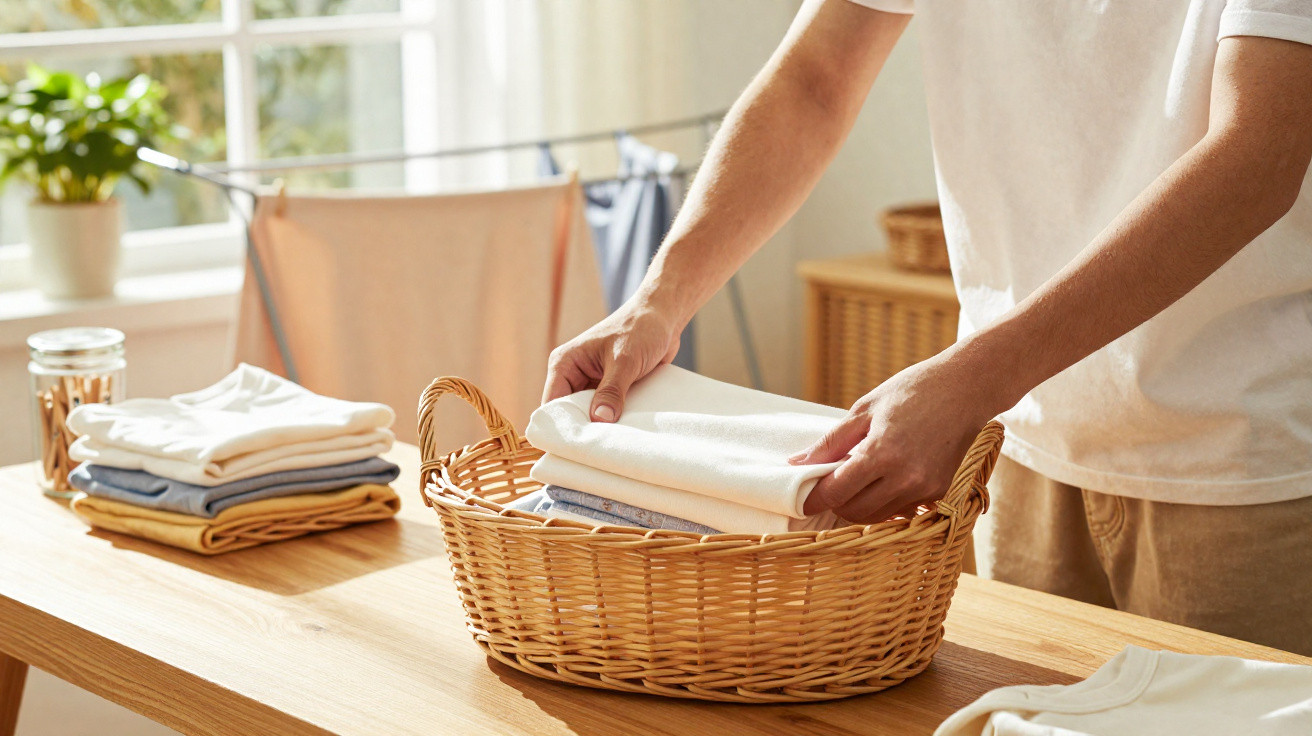
After uniforms come out of the washing machine, the Navy does not merely fold them and place them on an uncovered shelf. Freshly cleaned whites are kept in protective garment bags or covers, preventing dust, airborne pollution and wardrobe dirt from settling on the material.
A more straightforward version can work effectively at home:
- Store infrequently worn white shirts on hangers inside simple garment covers.
- Do not squeeze whites into the far end of crowded wardrobes, where they rub against darker, lint-producing clothes.
- Keep clean sheets and towels away from open windows in dusty urban areas.
Creating this barrier against tiny particles of dirt slows the gradual greying that many people regard as unavoidable wear and tear.
“Not a miracle, just routine”
The Navy does not claim that whites can stay bright forever. Uniforms inevitably age, especially when exposed to sunlight, sweat and salt water. The difference comes from consistency.
Frequent, gentle washing stops grime from settling deep into the fibers, which later demands harsher chemicals and shortens a garment’s life.
Military laundries do not wait until white garments appear “really dirty”. They follow a timetable based on how intensively each item has been worn. For home laundry, this means:
- Washing shirts after one or two demanding wears rather than after four or five.
- Rinsing swimwear and sports clothing straight away instead of leaving it in a laundry basket for days.
- Treating stains on the day they happen instead of waiting until wash day.
Routine also involves following care-label instructions. Running a delicate white blouse through a heavy-duty hot programme for a fast result might remove one stain, but it can weaken the garment as a whole. The Navy’s tightly controlled procedures prevent that type of improvisation.
Adapting the Brazilian Navy method for everyday laundry
From ceremonial whites to school uniforms and bed linen
Parents, healthcare workers and restaurant staff face comparable demands: their clothing often needs to look clean, hygienic and presentable, frequently in bright white. By applying parts of the Navy’s approach, they can extend the life of their wardrobes while retaining that fresh appearance.
Useful adaptations include:
- Setting aside a dedicated whites-only wash day using liquid detergent and a percarbonate booster.
- Laundering uniforms as full sets to preserve matching colour tones.
- Drying white items in shade or mild sunshine, without overexposing fabrics in the midday sun.
- Using garment bags for a limited number of important pieces, including ceremonial shirts, lab coats and school blouses.
There is a financial benefit too. Whites that last longer mean fewer urgent purchases, fewer replacement shirts during the school year and less need for aggressive chlorine bleaches that damage fibres.
Environmental and health considerations of “disciplined” laundry
The Navy’s preference for maintenance over last-minute rescue measures reflects broader discussions about sustainable garment care. If stains are not allowed to become deeply embedded, fewer intensive chemicals are needed, cooler wash temperatures can be used more regularly, and shorter programmes may be possible without compromising hygiene.
Sodium percarbonate also creates fewer air-quality concerns than strong chlorine fumes in a small flat bathroom. For people with sensitive skin, a routine focused on thorough rinsing, gentler bleaches and regular laundering may reduce the need for heavily fragranced “overcovers” that can sometimes aggravate allergies.
Common mistakes that undermine whitening efforts
Why so many white clothes become grey or yellow
Households often fault the washing machine when white clothing loses its brightness. The Navy’s process suggests a different explanation: numerous minor habits can accumulate.
- Filling the drum too full, preventing detergent from circulating around every garment.
- Failing to pre-soak heavily stained sections, such as collars and underarms.
- Washing microfibre cleaning cloths with clothing, which spreads grime back onto fabrics.
- Drying whites beside smoky kitchens or dusty roads with windows left wide open.
Even the choice of detergent can cause problems. Products loaded with optical brighteners reflect light to

Comments
No comments yet. Be the first to comment!
Leave a Comment