
The odour reaches you before your hand gets to the door.
You enter the laundry room with a basket, imagining crisp sheets and freshly washed T-shirts… only to catch a faint sour, boggy smell. It is not quite rubbish, but almost. You open the washing machine expecting a rush of freshness, yet the air feels humid, heavy and slightly mouldy.
You stop and smell again, wondering whether your nose has got it wrong. The laundry appears spotless. The drum looks bright. The detergent in its bottle smells normal. Yet, somewhere unseen, something is going wrong inside a machine meant to keep things clean.
You shut the door, mildly annoyed, and try to dismiss it. Still, you know it will only get worse next week if you leave it alone. The question is not “is there a problem?”. It is: what, exactly, is decaying in there?
Why your “clean” washing machine begins to smell
Many of us picture a washing machine as a domestic spa: hot water, foam, spinning, finished. In reality, it is far less glamorous. Each wash leaves a light blend of detergent deposits, fabric conditioner, body oils, skin cells and tiny particles of dirt. This mixture sticks to rubber seals, gathers in the drawer and coats the pipes in a tacky layer.
With frequent low-temperature loads, that coating is never properly rinsed away. Instead, it remains warm and damp between washes. Think of a used washing-up sponge sealed inside a jar. At first, you cannot see anything. Then, one day, the whole place smells stale.
One UK household survey found that over half of homes had noticed a “musty” smell coming from their machine at least once during the previous year. Many assumed their appliance was simply “too old”. Most had never cleaned it at all.
A woman I spoke to recently was close to replacing her five-year-old washing machine. Every load came out carrying a slight wet-dog odour. She changed detergents, used extra fabric conditioner and tried different programmes. Nothing made a difference. The breakthrough came when a neighbour suggested pulling back the rubber door seal. Inside its fold sat a black, slimy ring and a missing baby sock that had half-rotted.
She had never really noticed the seal before. “I felt so stupid,” she laughed. “I was about to spend hundreds on a new machine, and all it needed was a deep clean with stuff I already had in the kitchen.” Within two days, the smell had gone. The machine remained.
The explanation is straightforward biology. Heat + moisture + organic residue = an ideal resort for bacteria and mould. Low-temperature eco programmes do not always destroy them. Heavily dosed liquid detergents, in particular, may leave behind more film than they wash away. Thick, fragranced fabric conditioner clings to pipework and becomes a sticky feast. The smell is merely the result of all this unseen life inside the machine.
Simple, low-cost washing machine habits to prevent smells
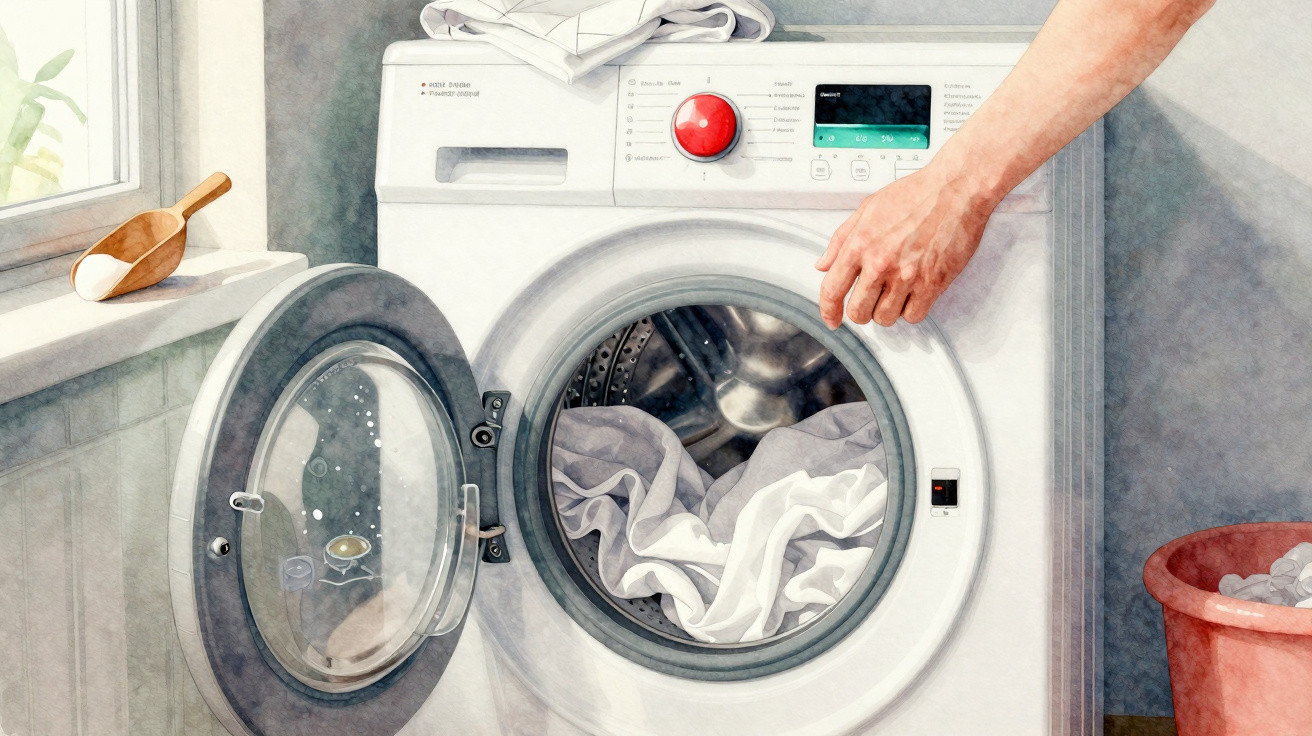
The positive news is that costly washing-machine “bombs” and fancy cleaning tablets are unnecessary. For most households, a cup of white vinegar, some bicarbonate of soda and a dependable routine will do the job. Begin with one simple practice: after every wash, leave the door and detergent drawer open for a few hours. Give the machine air and allow it to dry.
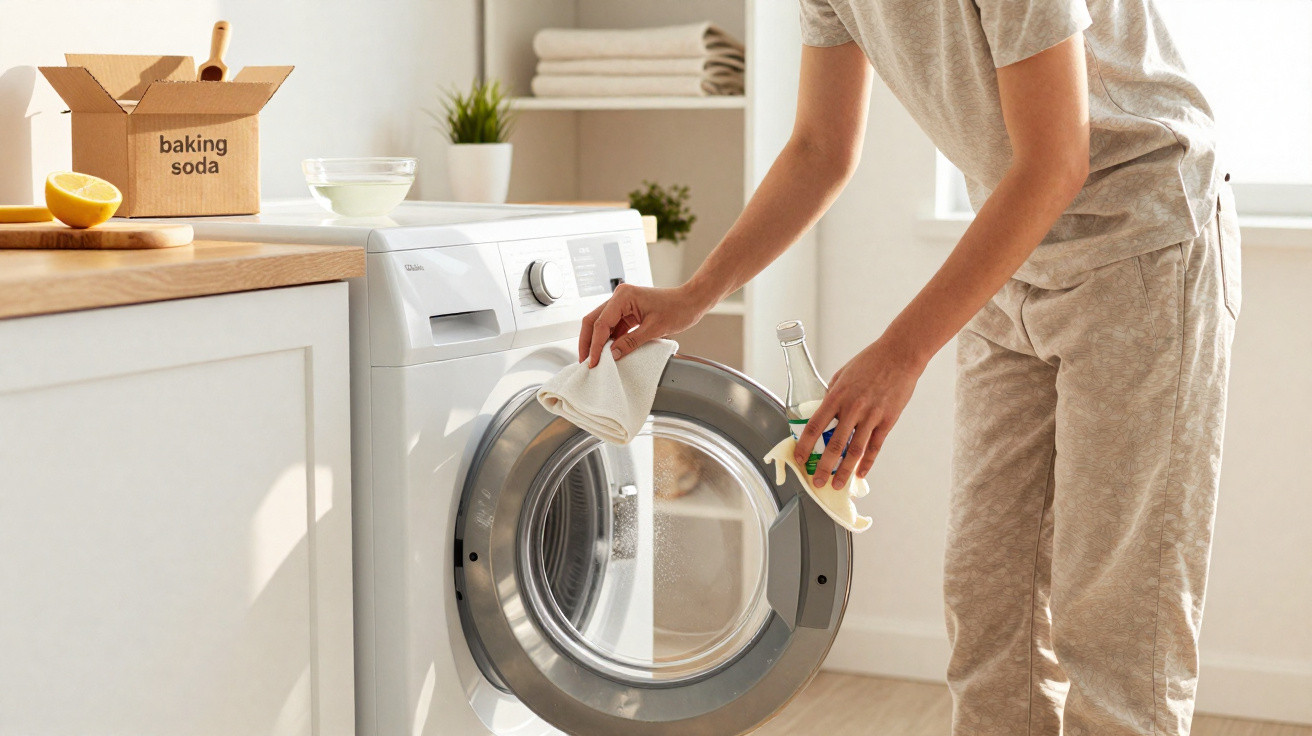
Once a month, add a generous cup of white vinegar straight into the drum. Then scatter in two or three tablespoons of bicarbonate of soda. Set the machine to its hottest and longest empty programme. Use no laundry and no detergent. Vinegar helps break down mineral deposits and detergent build-up, while bicarbonate of soda helps neutralise odours. The initial scent is a little sharp, but it soon becomes oddly neutral.
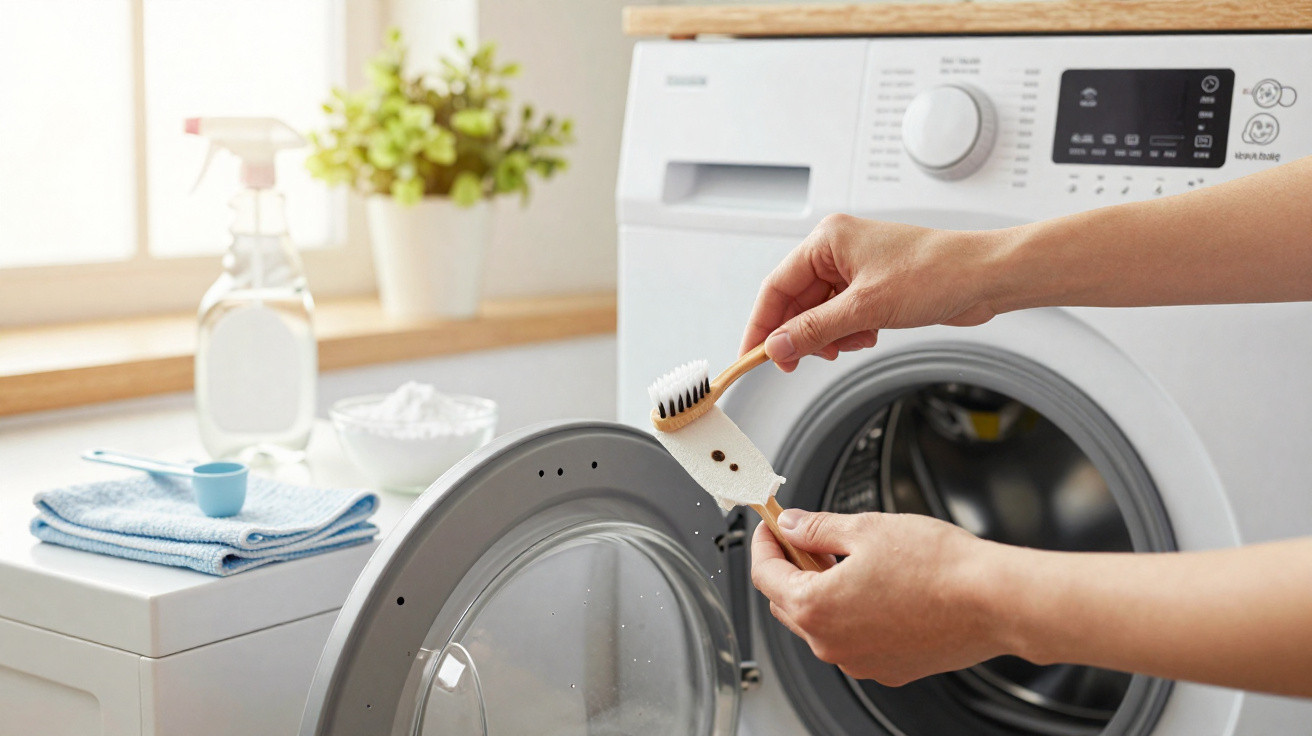
Following this “reset wash”, use an old towel to wipe the rubber seal. Carefully pull it back and work around the entire ring. On your first attempt, you will probably discover grime tucked into the fold. Watching it come away is surprisingly satisfying.
Consistency is where most people find it difficult. They wait until the machine reeks, then carry out a frantic deep-clean as though it were an emergency. That is tiring. A kinder approach is to incorporate brief tasks into things you already do. As you remove the final load, spend five seconds wiping the door seal. When topping up the detergent, run a paper towel around the edges of the drawer.
Let us be honest: nobody truly does this every day. Keep the aim modest instead. Perhaps you do it twice a month, or on the same weekend that you change the bed sheets. Repetition matters more than perfection. In time, these small habits remove the conditions that allow the smell to develop in the first place.
Keep an eye on what you use, too. Using more detergent doesn’t mean “more clean”. Often, it simply creates more residue. Liquid detergents and fabric conditioners are convenient and feel luxurious, but they are also major causes of the sticky film on which bacteria feed. Consider using slightly less than the cap recommends, particularly in soft-water areas. Sometimes, the most effective “cleaner” is simply very hot water and time.
“I stopped buying machine cleaners when I realised my grandma’s habits worked just as well,” said one reader. “She ran a hot wash every month with vinegar and always left the door open. Her washer lasted 20 years and never smelled once.”
For an easy reference, here is a quick cheat sheet to screenshot:
- After every wash: leave the door and drawer slightly open so they can dry
- Once a month: run a hot empty cycle with vinegar + bicarbonate of soda
- Every few weeks: wipe the rubber seal and the area around the door
None of this is glamorous. It is hardly the sort of thing anyone boasts about. Even so, these ordinary little actions quietly alter how your laundry room will smell in future.
A fresh washing machine without becoming a cleaning robot
Laundry has an unusual intimacy to it. Our sweat, sleep, working days and children’s muddy knees all turn together in the same drum. When the machine smells wrong, it can feel like a minor betrayal: clothes are clean, but they do not truly smell clean, and a chore no longer delivers the result it should.
The real issue, then, is not only “how to fix the smell”. It is also how to make it fit into an already busy life. You don’t need a perfect routine, you need a realistic one. Leave the door ajar. Put on a hot programme while watching a series. Give the seal a fast wipe using the towel that was about to go into the wash anyway.
Some people post before-and-after images of their machine seals on forums, resembling tiny horror films. Others quietly follow their grandmother’s methods, stop buying cleaner altogether and simply enjoy the soft, neutral smell when they open the door. Somewhere between those approaches is a routine that suits you.
Perhaps you will begin with only one step: leaving the door open tonight. Or maybe you will finally run the hot empty cycle you have been putting off. Later, you may pass the advice to a friend complaining about musty towels. This is how habits spread: from one laundry room to another, one conversation at a time.
| Key point | Detail | Benefit for the reader |
|---|---|---|
| Ventilation after every wash | Leave the door and drawer slightly open to dry the interior | Reduces the dampness that feeds bacteria and mould |
| Monthly vinegar/bicarbonate cycle | Run a very hot empty cycle with 1 cup of vinegar and a little bicarbonate of soda | Removes residue and neutralises odours at low cost |
| Less product, used better | Reduce the detergent dose and limit liquid fabric conditioner | Cuts down the sticky deposits responsible for unpleasant smells |
FAQ:
- How frequently should I clean my washing machine to prevent smells? For most homes, wiping the seal briefly every few weeks and running a hot empty vinegar cycle once a month is enough to keep odours under control.
- Can I use bicarbonate of soda on its own, or vinegar on its own, rather than both? Yes. Vinegar by itself is effective at dissolving deposits, while bicarbonate of soda alone helps tackle odour. Combining both in the drum for a hot cycle creates a stronger “reset”, although either one still helps when used alone.
- Is vinegar safe to use in my washing machine? Yes. When used occasionally and in sensible quantities, around one cup, white vinegar is generally safe for modern machines and can help reduce limescale and soap scum.
- Why do my towels smell even after they have been washed? They might not be drying fully between uses, or there may already be a build-up problem in the machine. Try drying towels completely, giving them one hotter wash and cleaning the machine as outlined above.
- Do I genuinely need commercial washing-machine cleaners? No. They may be convenient, but ordinary household ingredients such as white vinegar and bicarbonate of soda, along with good drying habits, are generally sufficient to prevent smells.



Comments
No comments yet. Be the first to comment!
Leave a Comment