
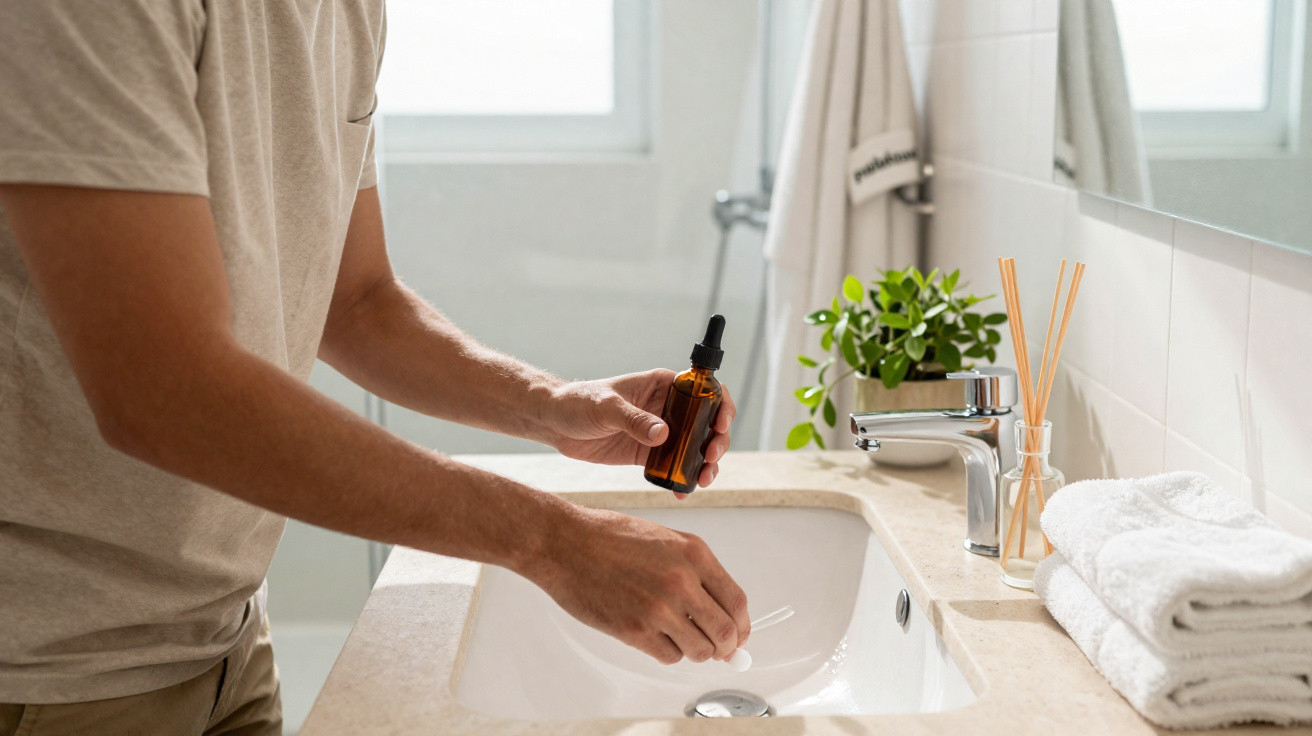
The hotel bathroom door clicked shut behind me, and it was not the marble basin or the plush towels that caught my attention first.
It was the air: clean, neutral and almost imperceptible. There was no cloud of perfume or sharp bleach smell. Simply… nothing. I remember feeling a little envious and wondering how they managed to maintain that atmosphere around the clock, with guests constantly arriving and leaving.
At home, my own bathroom was another matter entirely. The air held a blend of moisture, shampoo and cleaning products, plus, on certain days, something I would rather not examine too closely. I tested sprays, candles and diffusers, but the smells invariably returned, as though they were concealed in the walls and waiting for their chance.
Then, during an informal conversation in a corridor, a hotel housekeeper shared a small, understated secret that transformed the way I handle bathroom odours. It is such a simple, discreet method that most guests never spot it.
The unseen battle hotels fight against bathroom odours
If you have ever entered a quality hotel bathroom, you have probably experienced it without consciously registering it. The room does not merely smell “pleasant”. It seems to smell of nothing whatsoever. Your nose settles, your shoulders loosen, and you immediately feel that the room is trustworthy.
That effect is not accidental, nor is it achieved simply by using more powerful cleaning products. It comes from a daily effort that begins well before your arrival and carries on quietly once you have gone. In every bathroom, someone works to remove every sign of the last guest, including whatever remains in the air.
There is good reason for this. Smell can create disgust or comfort faster than anything else. A gleaming bathroom with an unpleasant odour feels unclean, while an ordinary bathroom with neutral air can instantly seem spotless. Hotels understand that one bad smell can spoil an entire stay, so their procedures are built around this unspoken principle.
An executive housekeeper I spoke to at a city hotel explained that odour complaints are monitored almost as carefully as cleanliness scores. In a survey conducted by a major chain, unpleasant smells were among the leading reasons for negative bathroom reviews, alongside hair in the shower and stained grout.
Hotels therefore adjust the air much as sound engineers balance audio. They do not depend on one solution alone. Ventilation plays a part, as does regular deep cleaning and the careful selection of products that will not clash. Then there are the small actions that guests seldom witness, repeated daily in every room.
These actions are usually modest, silent and almost dull to observe. Together, though, they create the “nothingness” you breathe in the moment you enter: that nearly magical neutrality which feels luxurious, even where the nightly price is not.
Remove the branding, chrome fittings and gentle lighting, and the same approach remains underneath: prevent odours at their source, capture what gets out, and ensure the air always has somewhere to go. The hotel trick you can recreate at home fits neatly within that approach.
The discreet hotel trick for bathroom odours - and how to recreate it at home
Here is what many hotels do without drawing attention to it: they set up a permanent, concealed “odour trap” in the bathroom using a very basic item. It may be a small cup or container, often placed behind the toilet or inside a cupboard, containing a neutralising material such as bicarbonate of soda or activated charcoal.
There is no scented spray and no blue-glowing device. Instead, it is a passive absorber working throughout the day. The purpose is not to disguise odours, but to capture them before they travel through the room. It is rather like the open box of bicarbonate of soda your grandmother insisted on keeping in the fridge: the same principle, in a different setting.
In some hotels, staff add a light dusting of bicarbonate of soda to the bin liner or position a sachet of charcoal beads close to the base of the toilet. Guests generally notice nothing. There is nothing to look at, nothing to hear and very little to smell. Yet odours that would normally linger in the room are quietly drawn into this small, unobtrusive “trap”.
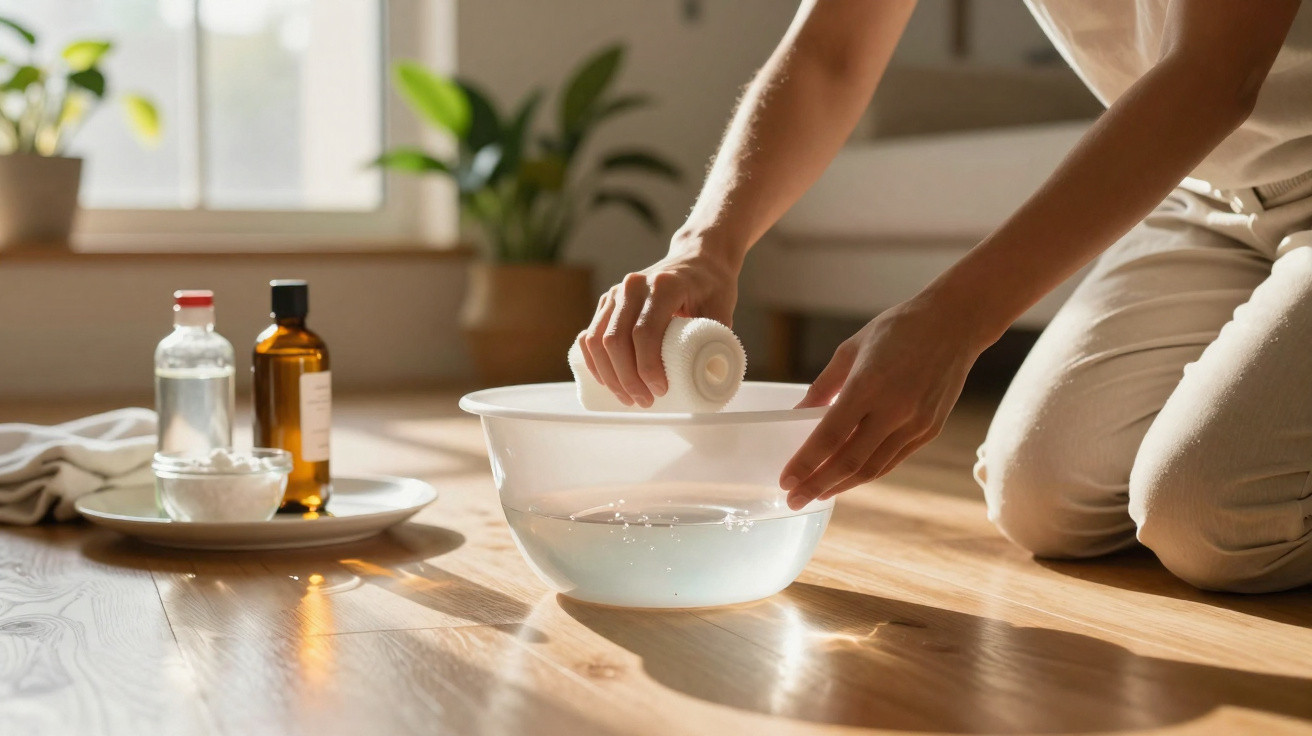
You can use precisely the same method at home. Find a small, shallow bowl or jar, fill it with bicarbonate of soda or activated-charcoal pellets, and place it behind the toilet, beneath the basin or on a high shelf. Keep it there for a month, stir it occasionally, then replace it.
Let us be honest: nobody really does this every day. Make it effortless instead. Link the task to something you already do, such as changing the toilet roll or replacing the hand soap. The less effort it seems to require, the more likely you are to maintain the habit.
The most common error is relying entirely on strong fragrance. Heavily scented sprays can feel effective for five minutes, but they do not address the underlying issue. They merely add perfume over lingering bacteria, dampness and trapped air.
Another regular mistake is positioning the odour absorber incorrectly. If it is tucked into a closed cupboard, it cannot achieve much in the wider room. It needs some exposure to the open air and should be near the places where odours arise, such as the toilet bowl, bin or drain.
There is also the risk of overlooking the essentials. Even an excellent odour absorber cannot overcome a permanently shut window, a blocked vent or a damp bath mat that never properly dries. No trick can replace fresh air and dry surfaces. The absorber should quietly complete the work, rather than attempt an impossible task.
“The best-smelling bathrooms,” a veteran hotel cleaner told me, “are the ones that don’t smell like anything at all. Guests think it’s a fancy fragrance. Most of the time, it’s just baking soda doing its job where no one can see it.”
For lasting results at home, create a small, invisible routine around the method.
- Put one bowl of bicarbonate of soda or charcoal behind the toilet.
- Add a teaspoon of bicarbonate of soda to the bathroom bin bag.
- Hang up a dry, clean hand towel and replace it twice a week.
- Open the window or run the extractor fan for 10 minutes after showering.
- Replace the odour absorber every 30–45 days.
It is a straightforward system, but it reflects what happens in many hotels. There is nothing showy or difficult about it: only small, repeatable actions that preserve the fresh feeling you notice as soon as you walk through the door.
Living with a bathroom that never welcomes you with a smell
On a quiet morning, when you enter your bathroom and… nothing reaches your nose, it can alter the tone of your day. You do not tense up or reach for a spray. You simply move around, wash and get ready, while your brain no longer treats the room as a problem needing attention.
There is a subtle comfort in that. You may not associate it with the little bowl behind the toilet or the habit of airing the room for five minutes, but your body recognises it. You feel noticeably more relaxed about having visitors and less worried that a guest may ask to “just use the bathroom quickly”.
At a deeper level, adopting this quiet hotel method can change the way you view your home. Rather than continually attacking smells with increasingly strong fragrances, you begin to notice where they originate and deal with them at source. “Vanilla breeze” becomes less appealing than clean, dry, neutral air.
We have all had the experience of opening a bathroom door and pausing for half a second, just in case. When your bathroom no longer makes you hesitate, you have gained more than a victory over odours. You have reclaimed a small piece of mental space without realising it had gone.
Perhaps that is why hotels protect these small routines so carefully. They are not only safeguarding their brand; they are preserving the immediate sense of calm that makes you think, often wordlessly: I can relax here. With one simple, discreet trick that most visitors will never see, you can create the same feeling at home.
| Key point | Detail | Benefit for the reader |
|---|---|---|
| Odour “traps” | Bicarbonate of soda or activated charcoal placed discreetly in the bathroom | Neutralises odours at the source rather than masking them |
| Correct placement | Close to the toilet, bin or drains, with contact with open air | Maximises effectiveness with virtually no daily effort |
| Simple routine | Replace the absorber monthly, air the room and keep textiles dry | Creates lasting, hotel-like freshness at home |
FAQ:
- How often should I change the bicarbonate of soda or charcoal? Every 30 to 45 days is generally sufficient. If your bathroom is particularly damp or used heavily, replace it a little earlier.
- Can I use scented candles instead of an odour absorber? You can, but candles mainly conceal smells. For a hotel-like result, use them alongside a neutraliser rather than relying on fragrance alone.
- Where exactly should I put the bowl for the best results? Behind the toilet or next to the bin are both effective, provided air can circulate around it and it is not sealed inside a cupboard.
- Is it safe to leave bicarbonate of soda out if I have children or pets? It is usually safe, although eating a large amount may cause stomach upset. If this is a concern, use a high shelf or a container with small holes.
- What if my bathroom does not have a window? Run the extractor fan after showers, leave the door slightly open where possible, and rely even more on absorbers and dry textiles.
Comments
No comments yet. Be the first to comment!
Leave a Comment