
When the dryer buzzer sounds, you press snooze with your thumb as though it were an unwanted morning alarm.
You are busy, exhausted and your phone will not stop flashing. The warm, freshly dried clothes can wait a moment, you tell yourself. One hour goes by, then another. By the time you make it back, the drum has gone cold, the T-shirts have tangled into a slightly damp bundle, and your “fresh” washing smells… not quite so fresh.
You pull everything apart, smooth out the creases and ask yourself why your black jeans already seem covered in dust. It can feel as if laundry loses a day of freshness simply by being left there. Perhaps it does.
One understated, decidedly unglamorous habit can prevent all of it.
Why a short delay makes “clean” clothes get dirty sooner
Imagine the dryer has finished: its drum remains warm and tiny bits of lint drift around like snow indoors. Your clothes are clean, certainly, but they are also surrounded by residual fibres, heat and moisture that you cannot see. Once they remain inside that enclosed metal space, all three begin to work against them. Fibres attach themselves, creases settle as firmly as folds in paper, and lingering humidity stays in the material.
The cosy tumble that was meant to deliver freshness gradually becomes a bath of stale air. Technically, the garments have been washed, but they are already beginning to lose their freshness. When folded immediately, they cool in the open air, sit in clean layers and pick up far less of what is floating around the room. Leave them in the drum and they attract it all.
A young couple living in a small Manchester flat tested this almost by chance. They put their drying rack in the hallway and agreed that the first person to hear the dryer had to pause what they were doing and fold the load. They kept it up for a month: no “I’ll do it later” and no pile on a chair. By the second week, they had noticed that their light-coloured T-shirts remained brighter, while the faint musty smell from their wardrobe had disappeared. They changed nothing else in their cleaning routine.
A laundry-care brand survey of customer habits revealed a similar pattern: people who folded their clothes within 30 minutes of drying said they needed to rewash them less frequently. It was not a major scientific laboratory study, merely real households, real appliances and the same human tendency to put things off that we all have. The change did not come from the detergent, but from what happened during that half-hour period.
At its most basic, fabric is a web of fine threads separated by small gaps. When garments are left in a scrunched-up heap, those gaps hold moisture and microscopic particles from the air. Even a small amount of dampness can allow odour-producing bacteria to become active again, including on “clean” cotton. Crumpled clothing also creates pressure spots where lint and dirt become more deeply lodged. Folding promptly opens out the fabric, allows warmth and steam to escape, and limits the surface available to collect dust. It is more than tidying: it prevents a second, unseen cycle of soiling from beginning.
The simple clothes-folding routine that improves your laundry
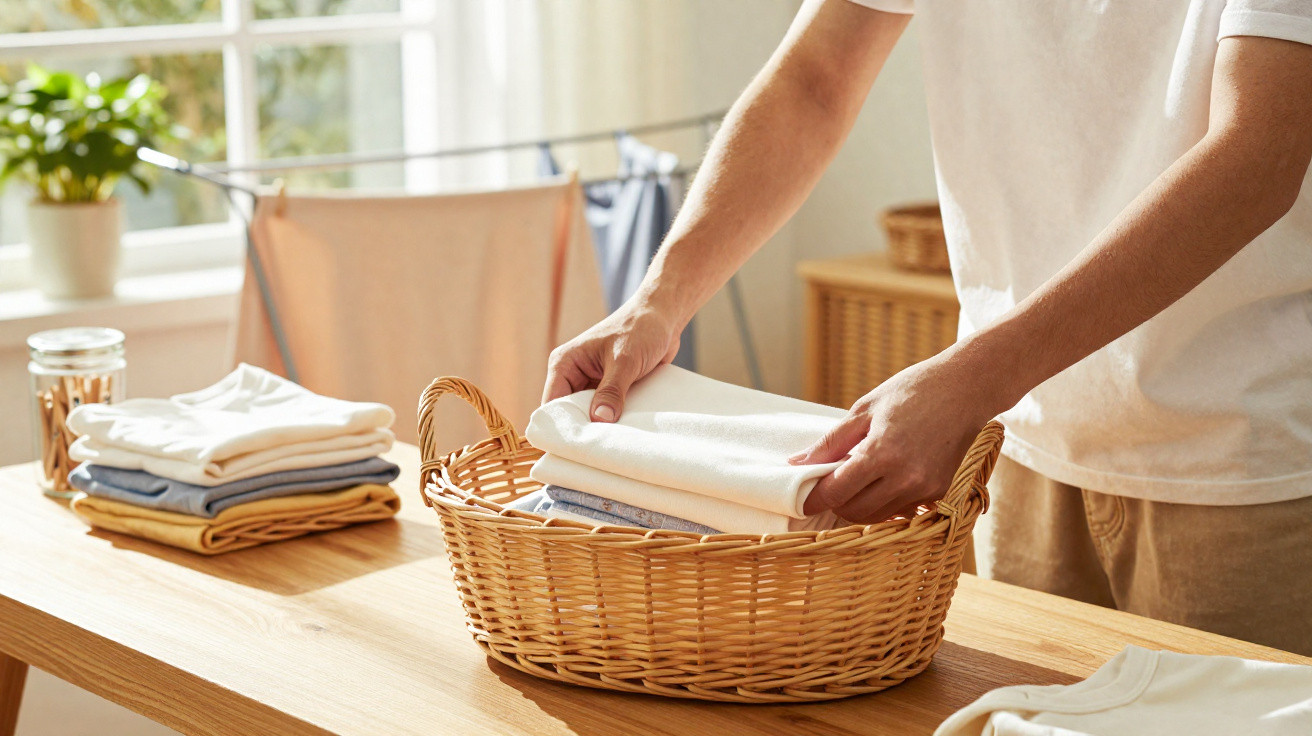
The simplest approach begins before the dryer door is opened. Put the laundry basket nearby, clear a surface and commit to dealing with this load alone. Do not multitask or scroll while handling T-shirts. Open the dryer, take out one garment at a time and give it a brisk shake in the air. That quick snap dislodges loose lint and eases early creases while the material remains warm and slightly pliable.
Place the item flat on a table, bed or clean sofa arm. Fold it along its natural shape: shoulder to shoulder for tops, leg to leg for trousers. Make broad rather than tight folds, allowing the fabric to keep breathing. Arrange the pile by weight, with heavier jeans underneath and lighter T-shirts and underwear above. In effect, you are making a small barrier that keeps the cleanest surfaces protected inside. For a typical load, the entire task takes less than 10 minutes.
On a difficult day, even that small window can seem enormous. You may be racing out of the house, children may be shouting and dinner may be boiling over. The dryer buzzer then becomes just another sound demanding attention. This is where most people slip. We say we will “just leave it for later”, only for later to mean waking up to a miserable, cold tangle. Let’s be honest: nobody truly manages it every day.
The answer is to make the standard easier to reach. Target “good enough folding” rather than shop-display-perfect piles. A fast half-fold and an approximate stack are vastly preferable to a heap. Do not use elaborate individual folds for every garment; choose one uncomplicated method and repeat it without thinking. Miss a day? That does not make you a failure. Simply restart the habit with the next load as though nothing occurred. Guilt will not remove stains; consistency will.
We have all experienced the moment when a clean shirt smells as though it never really left the laundry basket. That is the lingering effect of poor timing. As one textile care specialist told me:
“The way you handle clothes in the first 30 minutes after drying can add days to how long they feel freshly washed.”
Treat your folding area as a small “clean zone” in the home. It tells your mind that laundry will not become clutter there. To make the routine stick, remember this short checklist:
- Clear the lint filter before each load to reduce loose fibres.
- Remove clothes within 30 minutes of the cycle finishing.
- Shake every item once in the air before folding it.
- Fold loosely and build stacks by weight rather than garment category.
- Put the piles away on the same day, even if that only means placing them on open shelving.
This brief ritual does more than keep garments cleaner. It also discreetly cuts down on rewashing, ironing time and that sinking sensation of opening a drawer to find a pile of creased “clean” clothes looking back at you.
Cleaner for longer: what those 10 minutes really mean
There is something almost traditional about standing over a warm heap of laundry and giving it your complete attention. No appliance can do this part on your behalf. You spot a small tear in a sleeve before it becomes a hole. You notice the unusual mark that somehow survived the wash. You can tell which fabrics cooled quickly and which items may benefit from airing rather than being buried at the back of a drawer. Those minutes of handling turn anonymous laundry back into your actual wardrobe.
When people say immediate folding keeps clothes “cleaner”, they also mean it changes how they experience their home. A bedroom without the notorious “chair of shame” - the familiar mountain of laundry that is neither quite dirty nor quite clean - simply feels calmer. Tidy shelf stacks collect less dust than exposed piles. A folded T-shirt is less likely to gather stray hairs, crumbs or the inexplicable fluff found on every floor. You are not only preserving clean fabric; you are reducing the disorder that tends to cling to it.
There is also a longer-term benefit. Fabrics that are folded rather than crushed are stretched less and lose fewer fibres every time they are worn. Darker garments therefore stay darker, whites remain less grey and printed designs do not crack as rapidly. You replace fewer items, discard fewer clothes that appear worn out, and laundry day becomes less like a battle you cannot win. One quiet, mildly dull practice after the dryer chime changes the story your clothes tell over time.
| Key point | Detail | Benefit for the reader |
|---|---|---|
| Act within 30 minutes | Take out and fold clothes while they are still warm | Reduces odours, dust and the need to rewash |
| Broad folds and stable stacks | Use simple, loose folds and sort piles by weight | Fewer creases and neater clothes for longer |
| A short, repeated routine | Spend 10 minutes per load, even if the folding is imperfect | A realistic habit that makes daily life and the wardrobe easier |
FAQ:
- Do I really need to fold clothes immediately after drying? Not every single time, but the nearer you get to that 30-minute window, the fresher your clothes will remain and the less often you will want to rewash them.
- Is hanging better than folding for keeping clothes clean? Hanging works well for shirts and dresses, but folding quickly after drying still helps remove lint and leaves the fabric in a cleaner state before it goes onto hangers.
- Why do my clothes smell musty even after washing? They may have remained warm and bunched together for too long, allowing moisture and bacteria time to settle in again, or they may have been stored before they had fully cooled and dried.
- Does the type of fabric change how fast clothes get dirty again? Yes. Synthetic fibres generally retain odours and oils more readily than natural ones, so quick handling and folding make an even greater difference.
- What if I don’t have time to fold a full load? Begin with garments worn closest to the skin - underwear, T-shirts and gym kit - and fold them quickly; leave towels and less sensitive items until later.
Comments
No comments yet. Be the first to comment!
Leave a Comment