
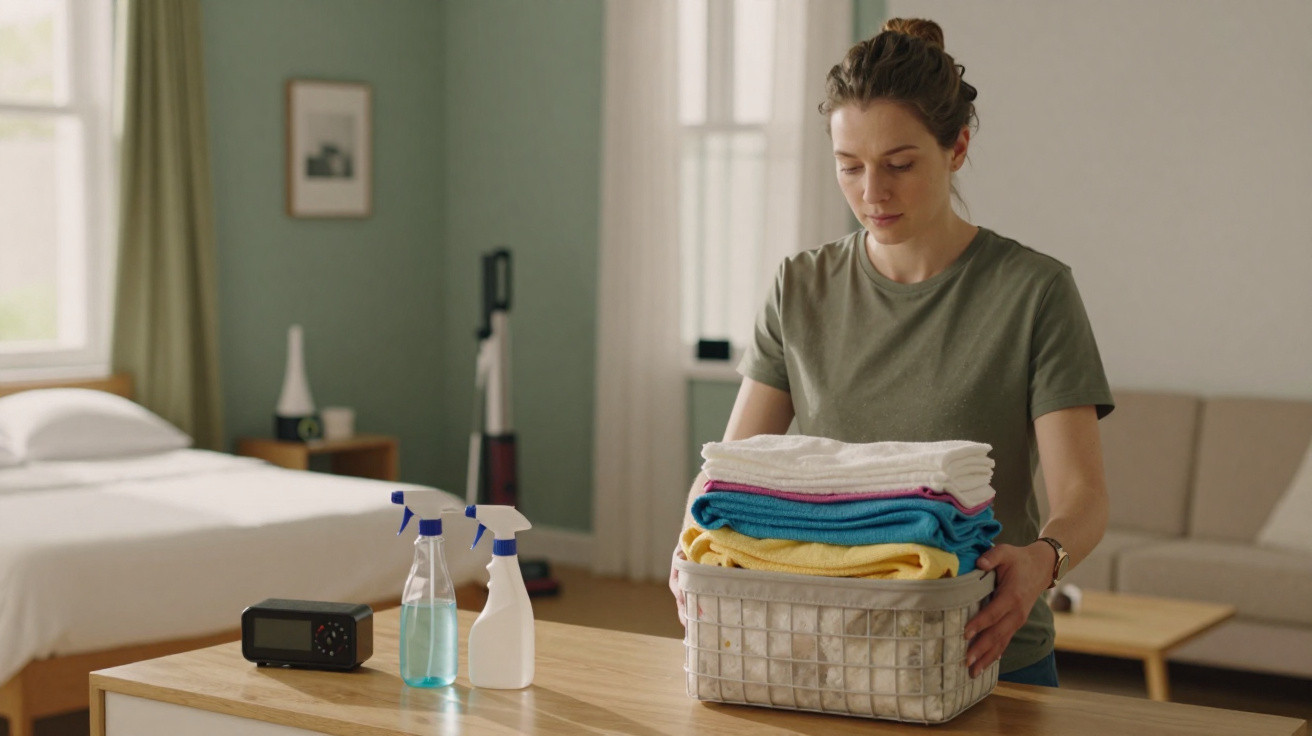
The sink gleams, the cushions are plumped and a candle flickers on the coffee table. Two hours later, her kitchen will still look just the same. Yours, by contrast, will already have a sink full of dishes, crumbs across the floor and an overflowing laundry basket again. The effort is identical, yet the outcome is very different. It is not about how vigorously or how frequently she cleans. It comes down to the sequence she uses, almost like an understated choreography.
Most of us start on the clutter that irritates our eyes first: an untidy worktop, toys covering the sofa or a questionable mark on the floor. We dart about, scrub, shift piles from place to place, and somehow the mess simply moves into another room. The shared secret of homes that stay tidy is less exciting, but far more effective, than any miracle cleaning product. It means doing each job at the right time, rather than unknowingly reversing your own progress.
This is when cleaning begins to work like a line of dominoes. Follow the right sequence and you deal with everything once - and it genuinely remains done.
Why the order you clean in changes everything
Spend ten minutes watching a professional cleaner and one thing becomes obvious: they do not drift around. They follow deliberate loops, beginning at a room’s highest points, working down to the floor and leaving through the doorway. They do not return to repair an area they have already cleaned. Without noticing, most of us do precisely the reverse. We dust after vacuuming, clean the sink before carrying in dirty dishes, or straighten shelves before shaking blankets out.
That haphazard routine wastes more than minutes. It creates the dispiriting sense that your home will never remain clean, however much work you put in. Reverse the sequence and the atmosphere shifts completely. You no longer dirty areas you have already dealt with. Clear surfaces remain clear for longer, and floors stop requiring a rescue operation every evening. Instead of working against you, the house begins to work with you.
Professional cleaning schedules usually rely on straightforward principles: large to small, dry to wet, top to bottom and back to front. They begin at the source of dirt rather than where it eventually lands. This is why windows, vents, high shelving and neglected corners matter more than we might assume. Dust drops, crumbs slip and moisture spreads. A well-planned order takes account of gravity and everyday behaviour. You are doing more than cleaning; you are shaping how clutter and grime are permitted to travel through your home. Apply that approach deliberately once, and every speedy tidy suddenly lasts much longer.
The “longer clean” order: how to make it work at home
The sequence that quietly makes the difference is broadly this: declutter → high dusting → surfaces → bathrooms → kitchen → floors → details. At every stage, work from the point furthest from the room’s exit towards the door. That way, you keep moving dust and belongings forwards instead of pulling them back again. Picture yourself as a slow, steady wave: nothing needs to be dealt with twice.
Begin by decluttering every room quickly. Put laundry in baskets, take dishes to the kitchen, collect rubbish in one bag and place miscellaneous belongings in a “later” box. This is not the moment to organise your entire life; the aim is simply to reveal your surfaces. Once they are clear, dust high shelves, picture frames, lamps and the tops of doors. Afterwards, wipe tables, desks and bedside tables. Deal with bathrooms before the kitchen, as bathroom grime should not be taken near food. Save the kitchen until the end of the wet cleaning, immediately before tackling all the floors in one run.
A family in Leeds tested this exact sequence for a week, using a phone to time themselves. It was the same home and the same hectic routine, with three children and one dog. Previously, their Saturday clean lasted nearly four hours, but by Wednesday it all felt “gone” again. Using the new order, they reduced the main clean to 2 hours 20 between two adults, while the house still looked remarkably pulled together on Thursday night. The greatest change was not the shine; it was how many after-work “crisis cleans” they no longer had to do.
They discovered that they vacuumed once rather than three times, because dust from high shelves was no longer dropping on freshly cleaned carpets. The bathroom stayed fresher too, as toothpaste splashes and hair were not being carried from sinks to floors and back again. The mother laughed about one unexpected result: “The kids are finally learning that if it’s not in the basket in time, it doesn’t get washed this round.” The sequence established unspoken rules, creating a boundary between “before the wave” and “after the wave”. That boundary helps a home feel as though it remains clean rather than continually sliding backwards.
There is a simple reason for this. Every time you cross cleaned flooring with dirty tools, dirty feet or dirty items, you quietly start the countdown again. The correct sequence reduces the number of times this happens. Decluttering first ensures every wipe reaches the actual surface rather than piles of toys and paperwork. Dusting high up early allows tiny particles to settle on areas that have not yet been cleaned. Grouping wet zones together also means your cloths travel from cleaner places to dirtier ones, rather than the other way round.
Keeping floors until the end makes them your final reset. They catch each crumb, dust particle and hair that you have chased down from above. You can then leave the room, without returning with a bucket or a load of laundry. Logic may sound less appealing than eucalyptus-scented spray, but its effect lasts longer. The more closely your tasks follow gravity and your daily habits, the longer every room retains that newly settled appearance.
The step-by-step order that keeps rooms clean for days
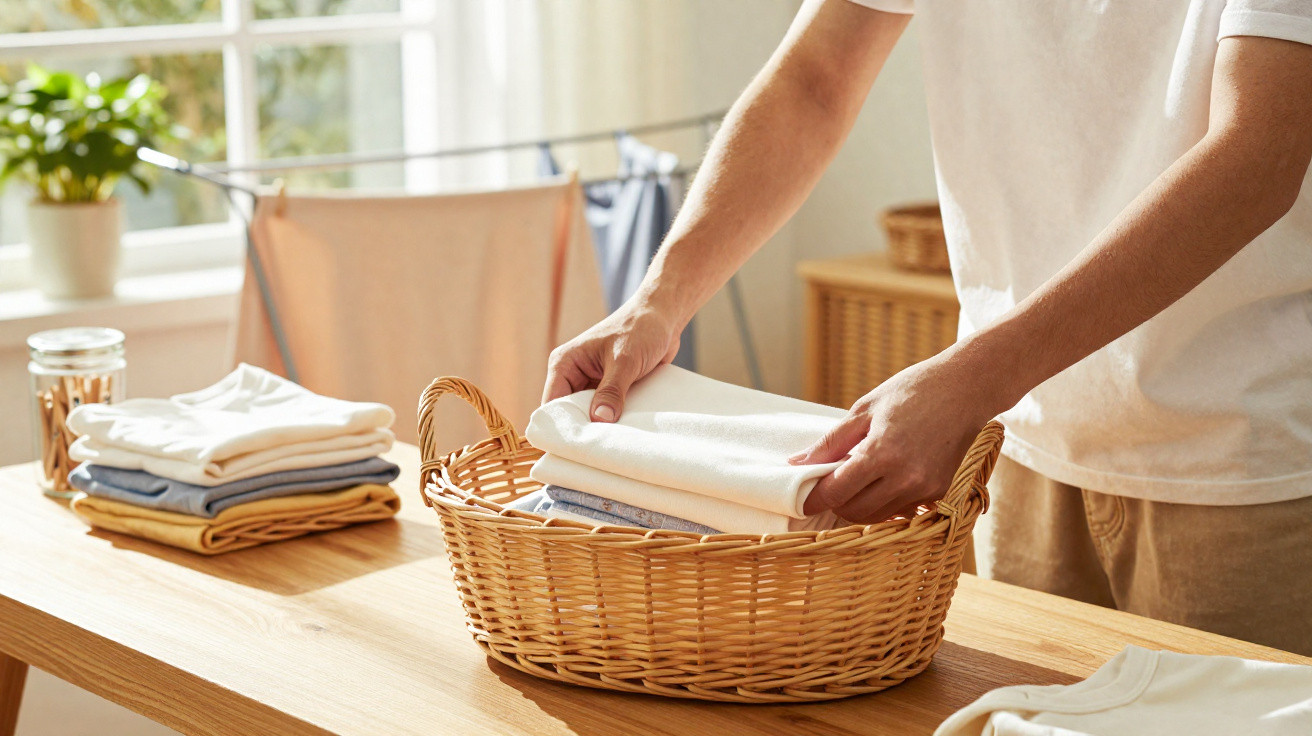
First, make a whole-home pass without using any cleaning product. Take a laundry basket and a rubbish bag, then move clockwise from your front door for a quick “grab and go”. Pick up clothing, toys, stray mugs, parcel boxes and empty packaging. Do not judge anything or pause to sort sentimental items; simply clear clutter from visible surfaces quickly. That initial circuit makes all the following jobs simpler, and it is also the point at which many people unknowingly undermine themselves.
Next, move on to high dusting and other dry tasks. Clean shelves, frames, vents, ceiling fans and cabinet tops. In each room, start with the highest point you can reach and work down to shoulder height. Once that is complete, tackle horizontal surfaces such as tables, desks, bedside tables and television stands. Only after all dry work is finished should you introduce water or cleaning products. Start with bathroom sinks, showers and toilets, then clean kitchen worktops, the hob and sink, followed by mirrors and glass. Floors provide the final step: vacuum or sweep the entire home at once, then mop only where it is genuinely necessary.
Let us be honest: nobody really does this every day. Treat this “perfect order” as a weekly or fortnightly reset instead. On busy days, simply use parts of it. Doing a quick bathroom wipe? Clean the mirror last so splashes from the sink do not mark newly polished glass. Have five minutes in the kitchen? Clear and wipe the hob before the worktops, allowing crumbs to fall onto places you have not cleaned yet. Even when used in small doses, this sequence quietly extends the time your home feels manageable.
One frequent error is attempting a deep clean and a full reorganisation in the same session. That is how you end up on the floor at 11 p.m., sorting old receipts with a half-mopped kitchen behind you. Save organisation and emotionally loaded decisions for another day. During your “order run”, only move belongings into their broad zones: laundry, dishes, rubbish or “belongs elsewhere”. Another common pitfall is cleaning room by room rather than task by task. It leads to dragging products and equipment repeatedly between rooms, while carrying grime from one space to another.
Cleaning by task can feel unusual initially. During that first week, you may walk more. However, your tools remain cleaner, your rhythm becomes more consistent and your results improve. You’re trading little bursts of chaos for one continuous line. If you have children or share your home, say the order aloud. People often appreciate knowing what happens next. Complaints tend to lessen when the rules are consistent: clutter goes into baskets before the “wave”, and floors are out of bounds once they have been finished.
“Once I stopped fighting the house and started following the same order every time, it felt like cleaning finally had an off switch,” confided Emma, 39, who lives in a small two‑bed flat with her partner and a toddler. “Before, I was always half‑cleaning something somewhere. Now, when I finish the floors and close the cleaning cupboard, my brain believes me. It’s done.”
That feeling of mental completion matters just as much as gleaming taps. When your routine follows the same route each time, your body learns it. Your thoughts can drift, podcasts can play and children can take on small tasks. You are no longer constantly deciding what comes next or wondering whether the bathroom was forgotten. Everything feels calmer. Your home also remains in that calm state longer because each room has been handled in a sequence designed to endure.
Here is a quick cheat sheet to put on your fridge:
- Declutter quickly with a basket and rubbish bag before using any product.
- Dust and dry-clean high areas first, followed by surfaces at eye level.
- Clean bathrooms before the kitchen, so grime does not travel towards food.
- Vacuum or sweep the entire home in one go, then mop selected areas.
- Keep final “prettifying” - cushions, throws and candles - for the final 5 minutes.
| Key point | Details | Why it matters to readers |
|---|---|---|
| Always declutter before you clean | Use one laundry basket and one rubbish bag to clear surfaces in a single circuit around your home. Prioritise speed over perfection, placing items only into their broad category zones. | Cleaning is quicker and less tiring when you are not wiping around piles. Visible results appear sooner, making it more likely that you will complete the task rather than burn out halfway through. |
| Clean “top to bottom” and “back to front” | Begin with high shelves, frames and vents, then work down to tables and finally the floor, always moving from the furthest corner towards the door. | Dust and crumbs land on areas you have not cleaned yet, preventing you from repeating work. Floors remain cleaner for days because they are genuinely the final area you touch. |
| Group tasks instead of rooms | Dust throughout the house first, then complete bathroom tasks, followed by the kitchen and floors, rather than fully completing one room at a time. | You maintain a consistent rhythm, carry fewer products and establish a habit that can run almost automatically. The home remains evenly clean rather than having one “perfect” room and three neglected ones. |
A home that stays clean starts with how you move
On a peaceful Sunday afternoon, pay attention to how mess comes into your home. Shoes gather by the door, post lands on the table, snacks appear by the sofa, and towels migrate from bathroom hooks to bedroom chairs. None of this is dramatic. It is the gradual, unseen tide that unravels your major cleaning days. Altering your cleaning order is one way to draw a new map across that tide.
Practically, you spend fewer hours pursuing the same crumbs and dust bunnies. On an emotional level, something gentler changes too. Your home stops feeling like a never-ending test that you are failing. Each weekly run has a beginning, middle and end. You start noticing your own habits: the corner that always collects shoes, the chair that attracts clothes worn once, or the kitchen spot where unopened post gathers. Once you identify the pattern, you can adjust it.
We have all had that moment of looking at the living room and wondering how it got out of hand so quickly. Changing your order will not make you love scrubbing grout or folding fitted sheets for enjoyment. It will, however, make every effort you already put in go further. Your Tuesday morning coffee will feel different when the worktops still resemble Saturday’s. Your evenings will seem longer when you are not taking out the vacuum at 9 p.m. The choreography is straightforward, but the result can strangely feel like reclaiming a small part of your life.
FAQ
Do I really need to follow this order every time I clean? You do not. Consider this your “full reset” sequence for weekly or fortnightly cleans. On hectic days, just use the logic: declutter before wiping, dust before vacuuming and floors last. Even following part of the sequence helps your home remain clean for longer.
How long should a whole-home clean take with this method? It depends on the size of your home and how much you own, though many people can clean a small flat in 90 minutes and an average house in 2–3 hours. The main benefit is not necessarily speed, but avoiding the need to redo the same places during the week.
What if I prefer cleaning one room at a time? You can still apply these principles in every room: a fast declutter, high dusting, surfaces and then the floor. If a stronger sense of completion suits you, start with your most-used spaces - kitchen, bathroom and living room - in that sequence.
How do I handle pets and constant hair on the floor? In homes with pets, retain the same order but add brief daily “spot sweeps” in high-traffic areas. A quick pass with a cordless vacuum around food bowls and favourite sleeping spots will extend the results of your weekly deep clean.
Which cleaning products work best with this routine? Keep to a small selection: all-purpose spray, bathroom cleaner, glass cleaner, microfibre cloths, and a good vacuum or broom. It is the routine rather than the brand that makes the clean last longer. Fewer products also mean less back-and-forth.

Comments
No comments yet. Be the first to comment!
Leave a Comment