

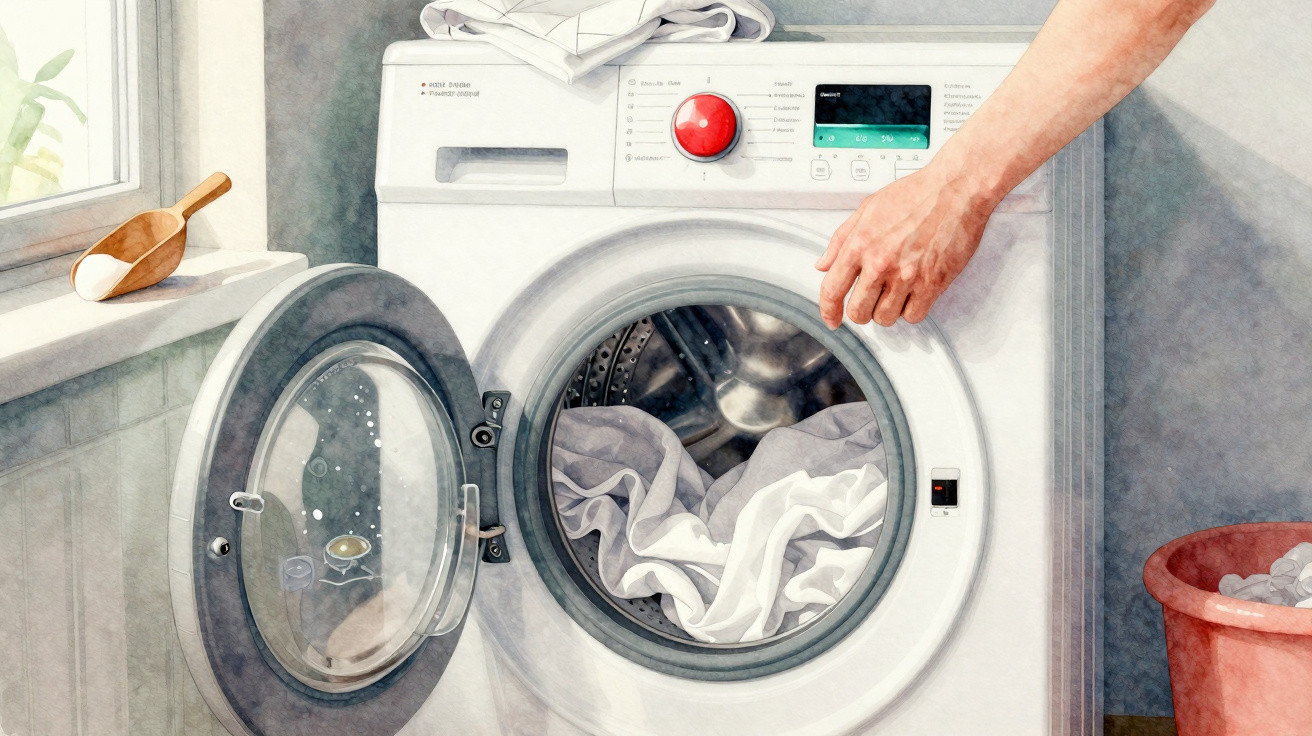
The washing machine droned in the darkness, with its small flashing display providing the kitchen’s only light.
Outside, the road was still and the final buses had long since passed. Emma looked at her energy app in disbelief: running a laundry cycle at 10:48 p.m. had cost nearly half what the identical cycle usually cost at 6 p.m. The appliance and clothes were unchanged, but the charge was completely different.
She looked through the previous weeks’ data. The figures peaked around dinner time and dipped in the late evening or mid-morning. No one had explained that the precise time she washed her socks could alter the cost of electricity so dramatically. Until then, she had simply pressed “start” whenever the laundry basket became too full.
Once those rises and falls become visible, they are hard to ignore.
Why the time of day quietly changes everything
Stand on a city balcony at 6:30 p.m. and listen carefully. Televisions switch on, ovens warm up, kettles boil and chargers illuminate. That unseen wave of demand travels through cables and transformers, with your washing machine adding to it. You may not notice the rush, but your meter certainly does.
Electricity grids resemble railway stations during rush hour. If everyone turns up at once, the system must quickly bring in extra “trains”. Those are frequently the dirtiest, least efficient power stations. A straightforward wash of towels at the wrong time therefore costs more than money: it also pushes the grid towards greater waste.
Move that same cycle away from the rush period, however, and the picture changes.
In Germany, grid operators publish charts showing hourly electricity demand. They resemble a camel, with one rise in the morning and a larger hump in the early evening. When households run laundry appliances between 5 p.m. and 9 p.m., these humps become higher and prices rise with them. When heavier appliances are shifted to late evening or late morning, the camel’s back becomes flatter.
A UK smart-meter trial found that households moving appliances away from peak periods reduced their evening demand by up to 23%. They did not need new machines or have to live by candlelight. They simply changed the moment they pressed the button. Across the country, that modest adjustment would be comparable to switching off an entire gas-fired power station at dinner time.
For an individual household, it may mean the difference between having some breathing room at month-end and facing another painful bill.
Why is timing so important? Energy companies do more than sell electricity: they must keep the grid balanced. When demand surges, they start “peaking” plants, often gas-fired facilities or older generators that consume fuel rapidly and inefficiently. The grid also loses more electricity as heat when currents are high. As a result, 1 kWh at 7 p.m. can be dirtier and more wasteful than 1 kWh at 11 p.m.
This is why many tariffs discreetly favour night owls and early risers. Off-peak periods often coincide with plentiful, less expensive electricity and cables under less strain. Your washing machine has no awareness of this; it just turns. Yet the hour you choose determines how hard the grid has to work behind the scenes.
In a sense, every wash cycle is a small vote for the energy system we use.
The best washing machine hours for lower energy costs
If your bill lists “peak” and “off-peak” times, the best time to do laundry is almost always outside the evening rush, roughly between 5 p.m. and 9 p.m. Late evening, overnight and late morning are the unsung champions. Many suppliers charge less after 10 p.m. or 11 p.m., then again in mid-morning once people have left for work.
The useful approach is to choose one or two laundry slots that suit your routine rather than trying to fit your life around the grid. That might mean Wednesday evenings after 9:30 p.m., once the children are asleep, or late Sunday morning when people are relaxing rather than cooking. Use the delay-start function to ensure the cycle runs entirely within the cheaper period.
Over the course of a month, this simple pattern can take a meaningful amount off your bill without any need to adjust the thermostat.
On a wet Tuesday in Lyon, a young couple tried this in practice. They had recently moved to a time-of-use tariff and were curious, if somewhat doubtful. During the first week, they did laundry whenever the basket demanded it. In the second, they washed only between 10 p.m. and 7 a.m. Their only other change was switching from a 40°C wash to a 30°C cycle.
By month-end, their energy app made the outcome clear: the cost of washing and drying had fallen by 27%. Their clothes were equally clean. Their evenings also felt less rushed, as the washing machine was no longer competing with the oven and dishwasher. Did they keep to that ideal timetable every day? Naturally not.
Let’s be honest: nobody really does that every day.
Even so, managing the late slot two times out of three was enough to make a difference.
The reasoning behind these “magic hours” is unexpectedly straightforward. Overnight, many factories reduce activity, offices are unlit and electric cars charge steadily rather than all at once. Renewable sources such as wind can often generate strongly during late evening and early morning, while lower local demand means that electricity is not immediately absorbed.
Your ordinary load of laundry can therefore use a calmer, cleaner energy mix. The grid does not have to start those reactive peaking plants. Voltage is more stable, cable losses decrease and the cost per cycle may fall because your supplier is not scrambling to secure the final megawatt.
The same principle applies to late mornings in many areas: after the breakfast rush but before the evening surge. Look at your supplier’s tariff periods, align them with your actual schedule, and a routine chore becomes a small piece of energy judo.
Turning timing into a low-effort habit
The simplest method is to think of your washing machine as a slow cooker rather than a microwave. Fill it when you have a spare minute, set the delayed start and let it run while you sleep or work. Most machines include a basic timer, including older models in rented flats that appear to have survived the 1990s.
Choose one main laundry window and place a note near the basket: “Runs after 10 p.m.” or “Mornings only, after coffee.” On a hectic day, that small reminder can be enough. In a smooth week, you may hit the cheaper period every time. In a chaotic one, you will at least avoid the most expensive peaks. The aim is not perfection, but gradual movement.
Over a year, that gradual change can cover a few extra meals out.
Energy advice can make many people feel guilty, as if it creates yet another task to manage. Real life is more complicated. On a day when the baby is ill, the car has broken down and your manager has moved a deadline, you will press “start” at 6 p.m. without hesitation. That is absolutely fine.
The mistake is to see it as “all or nothing”. It is not. If you normally do four loads each week and shift only two away from peak times, that is already a 50% improvement in your timing. Combine it with cooler washes and full loads, and the annual saving can start to look worthwhile.
When money is tight, those “worthwhile” figures can feel like oxygen rather than theory.
“The cheapest, cleanest kilowatt-hour is the one that never has to be produced at peak time,” says an energy analyst I spoke to in Paris. “Changing when you wash clothes isn’t glamorous, but multiplied by millions of households, it reshapes the daily heartbeat of the grid.”
To make the idea easier to remember, here are several useful points for your fridge or notes app:
- Laundry done outside 5 p.m.–9 p.m. uses electricity from a less stressed grid.
- Late evening and late morning are generally the best periods.
- Delay start + 30°C cycle = clean clothes at a lower cost.
- Using off-peak hours even half the time still makes a difference.
- One manageable habit is better than ten perfect intentions you never follow through.
A small, quiet power we hold at home
On a grey Sunday, when the drone of appliances mixes with rain against the windows, it is easy to overlook how connected household routines are to the wider world. The washing machine turns, the lights shine and, somewhere outside the city, turbines spin faster to supply that simple domestic orchestra.
Moving your laundry by a couple of hours will not save the planet alone. Nor will it make a bill disappear. But it shifts the story enough to count. You spend slightly less, the grid has a little more room to breathe and the dirtiest plants operate less often. These are quiet gains that accumulate over months.
We have all experienced the moment a bill arrives and our stomach tightens. Small, nearly invisible decisions such as “not at 7 p.m.” are among the few controls we have without purchasing anything new. They turn an everyday chore into a subtle form of influence. As more people use those quieter hours, the daily demand curve begins to move.
That is the odd, encouraging aspect of timing: individually, it may seem insignificant. Collectively, it redraws the day’s shape.
| Key point | Detail | Benefit for the reader |
|---|---|---|
| Choose off-peak hours | Run appliances outside the 5 p.m.–9 p.m. period, particularly late in the evening or late in the morning | Pay less for every cycle without replacing your washing machine |
| Use delayed start | Set the machine to run during lower-price tariff periods | Save money without needing to stay awake or at home |
| Aim for progress, not perfection | Move only some laundry loads into quieter periods | Lower bills and reduce impact without disrupting daily life |
FAQ:
- What is the single best time of day to do laundry to save energy? In most places with time-of-use tariffs, late evening after 10 p.m. or overnight into early morning offers the lowest rates and a less stressed grid. Check your specific tariff bands to match exactly.
- Is it really safe to run the washing machine at night? Modern machines are generally safe, but use common sense: keep the filter clean, avoid overloading, and don’t run a very old or faulty appliance unattended. Many people choose late evening while they’re still awake as a compromise.
- Does washing at 30°C actually make a difference? Yes. Dropping from 40°C to 30°C can cut energy use for that cycle by around a third, since heating water is what consumes the most electricity during a wash.
- What if my energy plan doesn’t have off-peak prices? You still help the grid and the climate by avoiding peak hours, because your load won’t trigger extra inefficient generation. Your bill might not change much, but your indirect impact does.
- Should I buy a new “eco” washing machine to save more? If your current machine is very old and inefficient, upgrading can help, but it’s not mandatory. Timing your washes, using cooler cycles, and running full loads often deliver surprising savings with the machine you already own.





Comments
No comments yet. Be the first to comment!
Leave a Comment