
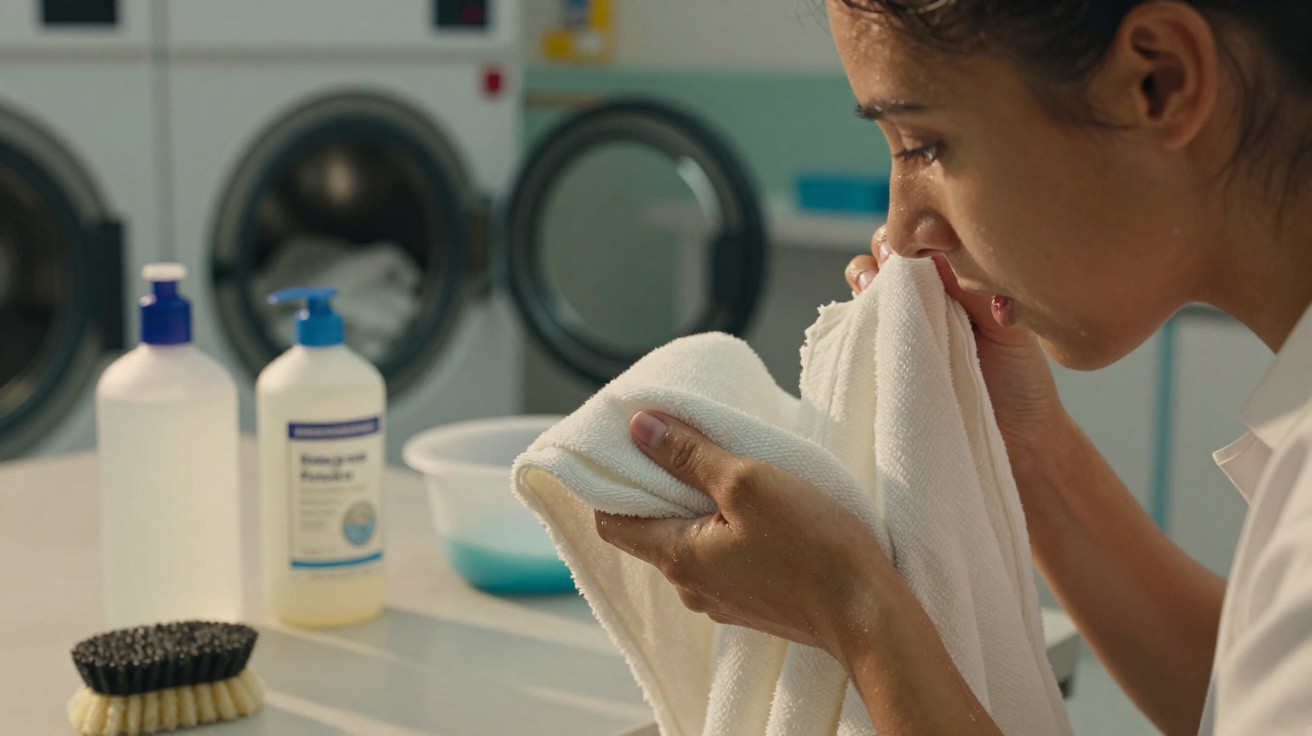
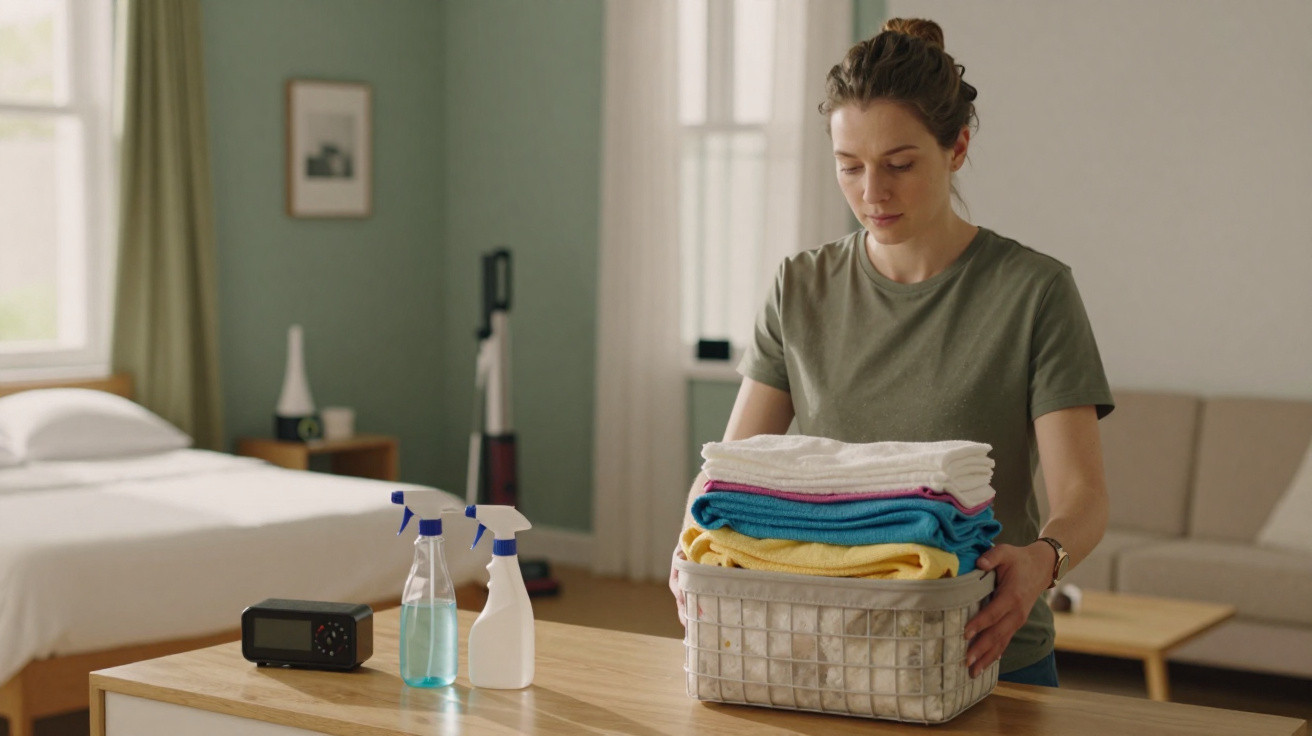
Freshly washed towels come out of the drum still warm, and we fold them into neat stacks. A few days later, we reach for the first one, lift it to our face… and there it is: that smell of being “not quite clean”. It is not the strong odour of genuinely dirty laundry, but a damp, slightly rancid note that spoils the moment after a shower and makes you want to wash everything again. Some people blame the machine, others the detergent or the bathroom. But what if the real cause lies somewhere else - quietly and almost invisibly, working its way into every fibre?
That puzzling “clean but not fresh” smell
It tends to happen in the same way. You pick up a towel that appears completely clean, wrap it around yourself and notice a faint sour smell close to your face. You sniff it again to check. There are no marks and no obvious dirt, yet something is clearly wrong. It is as though the smell of a gym changing room has attempted to pass itself off as fresh laundry - without quite pulling it off. That small sensory let-down can spoil an otherwise peaceful morning.
We have all had the moment of wondering whether we are being overly fussy. Perhaps we are simply too particular? Yet, once you have detected it, you cannot stop noticing it. The odour hangs around in the bathroom, on your hands and sometimes even on your skin. You begin washing the towels at a higher temperature, using extra detergent or adding fabric conditioner to disguise it. The stack looks more fluffy and smells pleasant when it leaves the machine… but a week later, the same lingering odour returns. As though it never truly went away.
Behind this familiar situation is an unobtrusive culprit. Nothing dramatic: no leak, no overflowing washing machine and no visible mould on the walls. Instead, with every wash, there is a gradual accumulation of substances lodged in the fibres. Body oils, dead skin cells, detergent residue and bacteria all thrive in warmth and damp conditions. The towel may look clean on the outside, while inside it becomes a small sponge for microscopic life. That is the hidden cause: not the dirt you can see, but the film you cannot.
The hidden cause: a sticky film you rarely notice
When you imagine a dirty towel, visible mess probably comes to mind: mud from the garden, make-up marks or perhaps a little fake tan. However, the main problem is often impossible to see. Every time you dry yourself, a fine layer of sebum, creams and skin cells transfers to the towel and settles into its fabric loops. A wash cycle removes enough of this material for the towel to look clean. But some remains attached, particularly when the fibres are also coated with generous amounts of detergent and fabric conditioner. Eventually, the towel is no longer simply cotton; it is cotton covered in layers.
Research into household textiles indicates that even towels considered clean can contain a busy microscopic environment. This can include bacteria feeding on remaining sweat and oils, yeast, and other microbes that flourish in warm, humid settings. One US household survey identified bathroom towels as among the most contaminated objects in a home, alongside dish sponges. Your favourite fluffy grey towel - the one you use every evening - could therefore harbour more microbial inhabitants than your smartphone screen. That does not mean it will make you ill. It does, however, confirm that the smell is not imagined.
Once you understand this, the pattern is easy to explain. A towel that does not dry fully and is kept in a humid bathroom provides ideal conditions for growth. Add detergent left behind after insufficient rinsing, and the sticky residue retains moisture, holds body oils in place and offers bacteria a ready meal. As these microbes break down organic matter, they produce volatile compounds. Your nose recognises these compounds as a musty or sour smell. The towel may appear fine and the washing machine may have cleaned its surface, but its inner layers retain the memory of every shower taken that month.
How to “reset” your towels and break the smell cycle
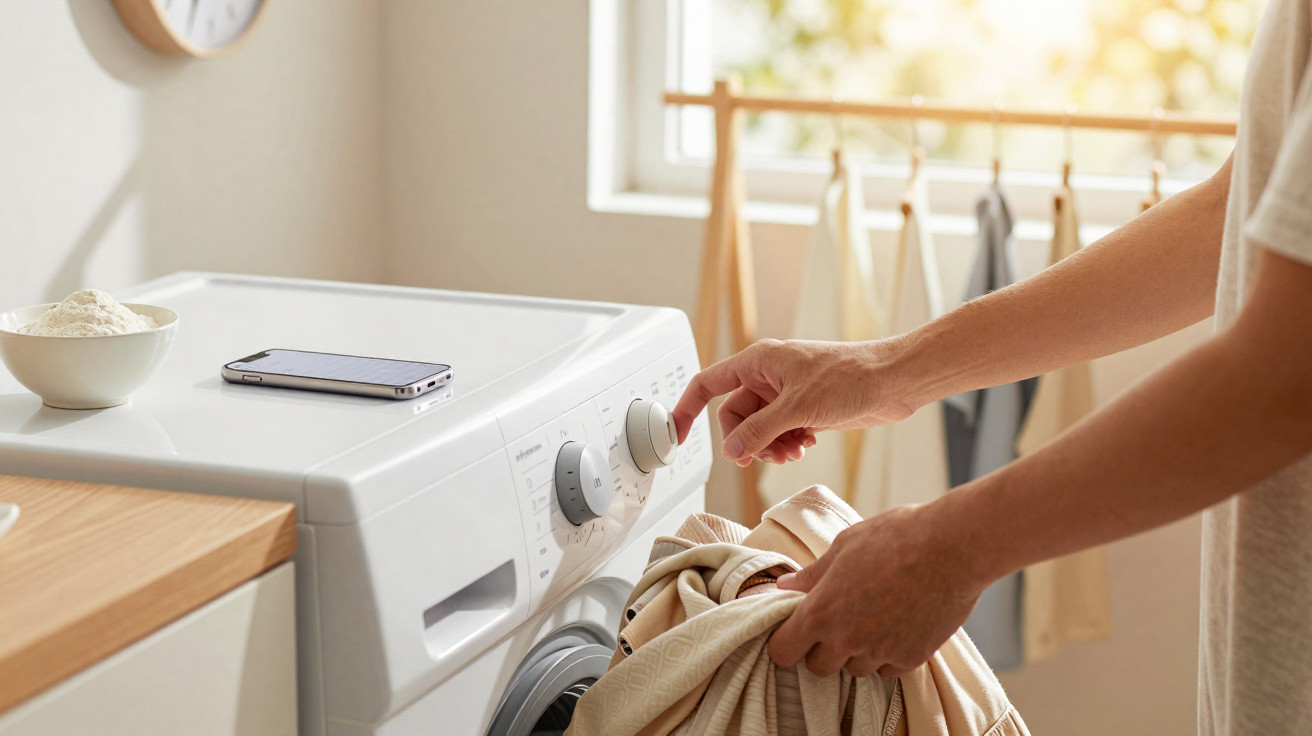
The most useful step is not buying an expensive detergent but giving your towels a reset. Removing that concealed film can make a major difference. A straightforward method is to run a hot wash without detergent, adding a generous cup of white vinegar directly to the drum. Vinegar can help loosen mineral deposits and product build-up, while also encouraging the fabric to release trapped oils. Follow this with a second wash using a small amount of detergent and a spoonful of bicarbonate of soda. Treat it as a deep clean rather than part of your usual routine.
After this reset, the important part is how towels are handled after every use. Hang them fully open so that they dry as quickly as they can. Rotate your towels instead of repeatedly using the one at the top of the pile while the rest become old and stale underneath. Let practical circumstances rather than routine determine washing frequency: some households may need to wash towels after three uses, while others may need to do so twice weekly depending on humidity and the number of showers taken each day. Let us be honest: nobody really follows this perfectly every day. Still, every small adjustment can help.
“Smelly towels are rarely a sign of poor hygiene,” explains a domestic hygiene researcher. “They’re a sign of modern habits: small bathrooms, quick showers, lots of products, and not enough drying time. The towel becomes a diary of all that.”
- Use less detergent than the cap recommends: most people use too much, leaving residue behind.
- Avoid fabric conditioner for towels: it coats the fibres, locks in odours and makes towels less absorbent.
- Ensure towels are completely dry: dry them outdoors in sunlight where possible, or tumble-dry them until fully dry rather than merely “almost” dry.
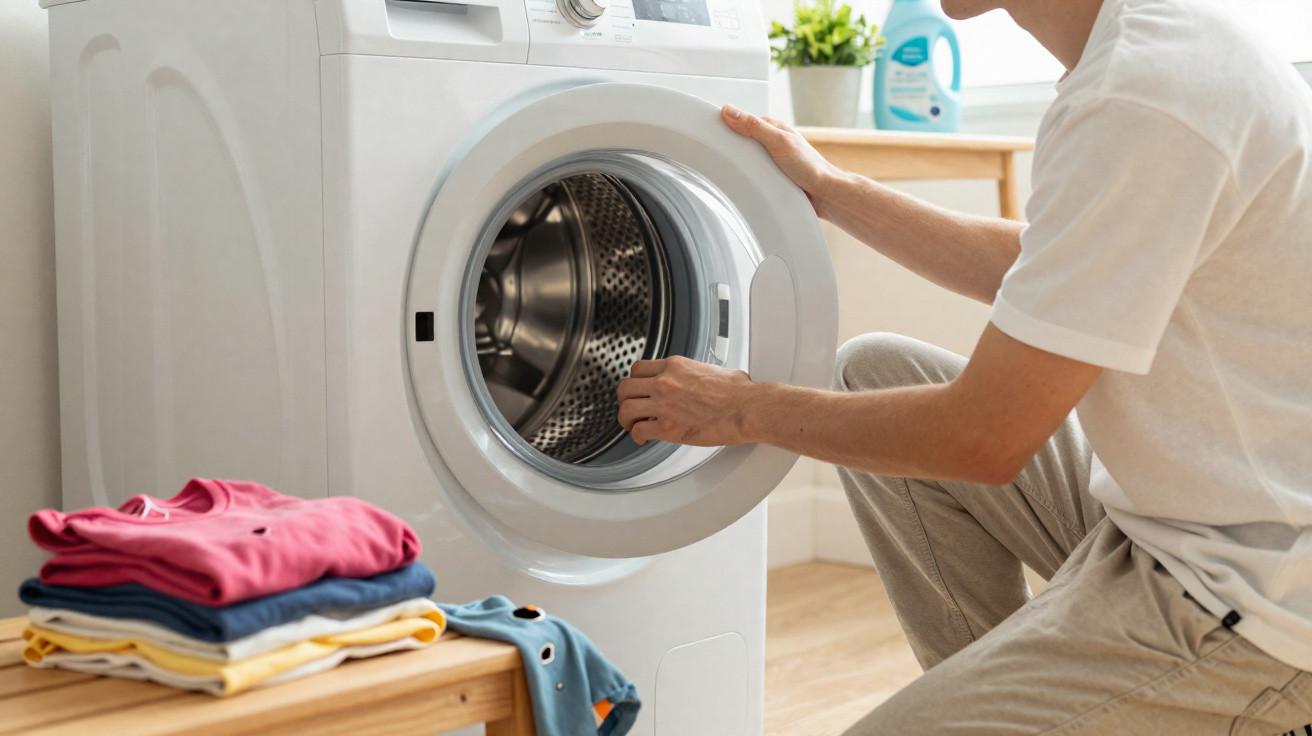
- Regularly clean the washing machine seal and detergent drawer, so towels are not washed in a musty drum.
- Keep two sets of towels per person and alternate between them, so one towel is not carrying the full burden of the week.
Rethinking “clean” in everyday fabrics
Once towels are seen as holders of memories rather than just pieces of fabric, the bathroom begins to look different. You notice the hook positioned too near the shower, the towel that never has a real opportunity to air, and the bathroom window left shut throughout winter. Suddenly, cleanliness has several layers. There is visible cleanliness, which reassures the eye, and a deeper form of cleanliness that your nose and skin quietly seek. Sometimes, what we call “bad smell” is simply the story of our routines speaking aloud.
Discussing it helps to remove a minor taboo. No one enjoys admitting that their towels occasionally smell unpleasant, as though this reflects their standards. Yet almost every household experiences it at some stage. Once one person shares a solution - a vinegar rinse, greater spacing between hooks or fewer products - others respond with a small sense of relieved recognition. This is how modest household revolutions begin: not through grand announcements, but with a friend admitting, “My towels used to stink too, here’s what changed.” It feels strangely personal and entirely ordinary at the same time.
Perhaps that is the subtle power of this hidden cause. It shows that being clean is not only about appearances, but also about what gathers gradually and silently within the everyday objects we use. A smelly towel is a signal, not a judgement. It invites us to pause, make adjustments and pay closer attention to the invisible layer of life within our homes. Once you have felt the difference between a towel that has simply been washed and one that has been properly reset, you may start wondering which other objects around you are disguising the fact that they are only half-clean.
| Key point | Detail | Benefit for the reader |
|---|---|---|
| Hidden residue build-up | A mixture of body oils, skin cells, detergent and fabric conditioner becomes trapped in the fibres | Helps explain why towels smell even when they appear spotless |
| Microbial activity | Bacteria feed on residue in warm, damp towels and release odour compounds | Makes the “clean but musty” smell understandable rather than mysterious |
| Reset and routine changes | A vinegar/bicarbonate of soda reset, complete drying, less detergent and no fabric conditioner | Provides clear, practical steps for fresher towels for longer |
Frequently asked questions
- Why do my towels smell even after washing at a high temperature? High temperatures can help, but if detergent and fabric conditioner have built up, the wash may not rinse away oils and residue completely. These leftovers continue feeding bacteria between washes.
- How often should I wash bathroom towels to prevent bad smells? Most experts recommend every three to four uses, and more often in humid homes or busy families. If a towel does not dry completely between showers, it should be washed more frequently.
- Does fabric conditioner really make towels smell worse? It can. Fabric conditioner coats the fibres, potentially trapping moisture and residue. Towels may initially feel softer, but they become less absorbent and may develop odours more quickly.
- Can I deal with smelly towels without buying special products? Yes. A hot cycle with white vinegar, followed by a wash using a small amount of detergent and some bicarbonate of soda, is normally enough to “reset” most towels.
- Is a musty towel harmful to my health? For healthy people, it is generally more unpleasant than dangerous. However, if somebody has allergies, asthma or sensitive skin, changing towels regularly and drying them properly is a sensible precaution.


Comments
No comments yet. Be the first to comment!
Leave a Comment