
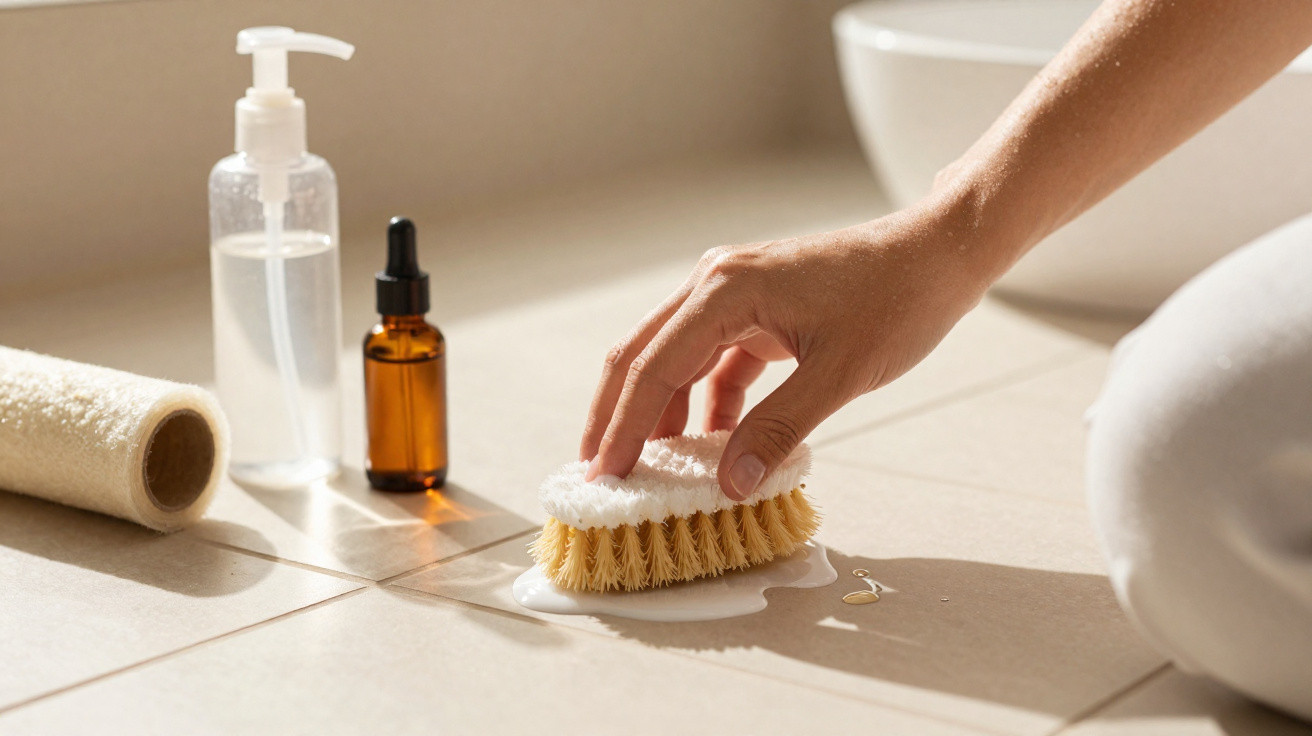
With a squeeze bottle and a swift wipe, the floor suddenly turns a dazzling, hotel-bathroom white. The caption declares “Goodbye to weekly scrubbing”, and the comments erupt. Amid the heart-eyes emojis and “GAME CHANGER” responses, one more restrained warning appears: “I’m a professional cleaner. This will wreck your tiles.”
Within days, the same hack appears in Facebook groups, Instagram Reels and the family WhatsApp chat. Your cousin insists it transformed her kitchen floor. A stranger says it etched her ceramic tiles. Meanwhile, you are looking at your own grey grout and trying to work out who is right.
The grout is grimy. The promise is effortless. The potential damage feels unmistakably real.
The viral grout hack everyone loves – and professionals hate
The appeal of the hack lies in its simplicity. Users combine a powerful household product – most often bleach or a bleach toilet gel – and apply it directly along the grout lines. Some turn it into a paste with baking soda, while others use it as it is. After a brief scrub, a twenty-minute wait and a rinse, the grout looks brilliantly white on camera. The effect can seem almost unbelievable.
Social media condenses the transformation into a polished fifteen-second clip. There are no wet gloves, eye-stinging vapours or sore knees – only addictive before-and-after images. It speaks to that exhausted voice in your head saying, “Maybe this time, the internet really did find a shortcut.”
Professional cleaners view those same videos very differently. They are not seeing magic; they are seeing chemistry.
Consider Hannah, a Leeds mother of two whose kitchen floor unexpectedly became the focus of her week. For months, she had been using a standard floor cleaner without ever quite getting the grout clean. Then she came across the viral method: thick bleach gel, an inexpensive toothbrush and a promise of white grout for six months.
She kept the children in the living room, opened a window slightly and gave it a try. The gel stayed exactly where she put it. The odour was intense, but the change was immediate. Her “after” image looked as though it belonged in a magazine. Friends wrote: “No way that’s the same floor.” She felt strangely pleased, as if she had beaten housework at its own game.
After three months, though, the tiles near the dishwasher began to feel dull and rough. Along one side, the grout started breaking away at the edges. Her floor remained white, certainly, but it also looked… worn. That was when she came across a discussion by professional tilers explaining the reason.
The principle behind the trick is straightforward: powerful oxidising agents, such as sodium hypochlorite – the active ingredient in many bleaches – remove stains from porous grout extremely quickly. Rather than merely lifting surface grime, they penetrate deeply. On video, that produces a miracle-like result. In practice, repeated treatment dries grout out, weakens its binders and can erode protective glazes on certain tiles.
Most household tiles and grout are made to be cleaned regularly with mild, pH-balanced products, rather than subjected to intensive treatments every few weeks. Bleach-based hacks may also react with substances already left on the floor, including old cleaning products, limescale or even bathroom urine, producing more aggressive conditions than many people expect. The surface can therefore look pristine while its structure is quietly compromised.
When cleaning professionals say it “destroys tiles”, they are not exaggerating. For stone, unglazed porcelain and tiles with micro-cracked glazing, the harm is not hypothetical. Repairing it is part of their work.
What people actually do to keep grout white for months
The disputed hack always sells the same idea: skip the weekly scrubbing, use this once and forget about it. Professionals agree with the principle to an extent, but not the product. Their preferred approach is different: one thorough clean, then protection, then light maintenance. It is less dramatic and less photogenic, yet it works in real homes that are actually lived in.
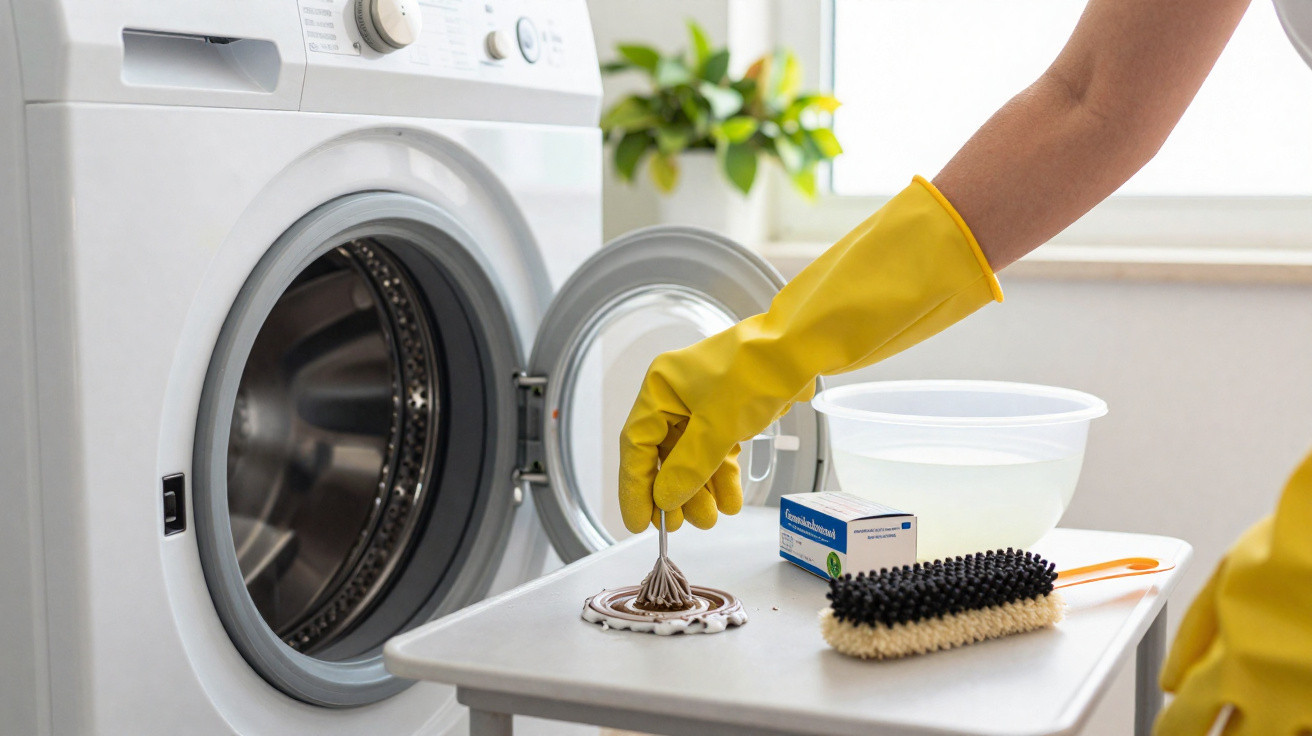
Their recommended process begins with a focused scrub using an alkaline tile and grout cleaner instead of bleach. This type of product tackles grease and soap residue without damaging the grout itself. Spray or pour it over the lines, allow it to sit for a while, then scrub with a stiff brush. It is hardly glamorous, but it provides the essential starting point.
The next step is to seal the grout. A transparent penetrating sealer absorbs into it, leaving stains with nowhere to cling. Applied properly, it can keep grout looking consistent for six to twelve months. The supposed “no scrubbing” benefit then comes from quick weekly mopping with a pH-neutral cleaner, rather than soaking the floor in corrosive chemicals twice a year.
Let’s be honest: nobody really does that every day. Most people wash the floor only once footprints or spills are too obvious to overlook. That is exactly why long-lasting hacks have such appeal. Yet extreme products – highly concentrated chemicals, neat vinegar and undiluted degreasers – often exchange one issue, dirty grout, for another, damaged surfaces. The middle ground is much harder to market in a fifteen-second Reel.
If the viral method still tempts you, professionals advise trying a small, hidden area first. Dilute the product, apply it, rinse it thoroughly and then wait a week. Does it look good beyond the initial clean? Does it still feel smooth, without chalkiness or flaking? Those answers reveal more than any influencer caption. If your tiles are natural stone or have a matt finish, however, most experts advise not starting at all.
“My clients call me when the grout’s already broken and the tiles are etched,” says Mark, a tiler who’s been fixing floors for twenty years. “They always say the same thing: ‘It looked amazing on TikTok.’ Viral hacks don’t show you what happens a year later.”
The emotional pull is powerful because tiles are not really just tiles. On a difficult day, a floor that never looks clean enough can quietly suggest that the rest of life is out of control too. On a better day, crisp, uniform grout can make an entire kitchen seem brighter. We have all experienced that slightly absurd rush of satisfaction after a deep clean, standing barefoot and simply… looking.
- Choose an alkaline grout cleaner for deep cleaning rather than neat bleach or toilet gel.
- Seal grout lines once or twice yearly in busy areas such as kitchens and hallways.
- Use a pH-neutral cleaner in your usual mop water to preserve that “new” appearance for longer.
How to choose your side: speed, safety, or something in between?
The reality is that grout, tiles and lifestyles all differ. If you rent and the floor is already near the end of its life, you may be more willing to take a chance on a risky hack. If you have just spent thousands on a new bathroom, one burned grout line could bother you for years. Understanding the surface beneath your feet changes the calculation entirely.
Porcelain with a robust factory glaze, for example, can tolerate more than soft limestone. Dark grout conceals staining but reveals efflorescence and chalking more quickly. Pale grout looks fantastic when new, but immediately exposes every coffee splash and muddy paw print. That is why some cleaners argue that the genuine hack is not a cleaning bottle at all, but selecting darker grout from the outset.
Nuance, however, disappears quickly on social feeds. “This might damage some tiles over time” will never draw the same response as “GAME CHANGER!!”. The floor hack is therefore shared again and again, becoming slightly more simplified each time and shedding cautions like luggage lost during an airport transfer. What began as a one-off rescue for a particular situation turns into an everyday routine for thousands of strangers.
Some users truly enjoy lasting success with the bleach-based approach. Their tiles are durable, their grout was installed properly and their floors receive moderate use. Others repeat it every few weeks on delicate stone, then wonder why its gentle sheen disappears. The chemical has not acted differently; the circumstances have.
At a human level, this is about control as well. When daily life feels disorderly, a floor that stays white for four months can feel like a small promise fulfilled. Yet cleaners repeatedly offer a quieter option: choose slightly gentler products, allow a little more time and preserve the result with sealer. It is less dramatic, but considerably kinder to the home.
| Key point | Details | Why it matters to readers |
|---|---|---|
| Bleach whitens by oxidising stains | Neat bleach or toilet gels rapidly remove organic stains, particularly from pale grout, creating that “instant hotel bathroom” effect. | It explains both why the hack is so tempting after months of grey grout and why the initial results look so impressive. |
| Repeated use can weaken grout | Strong oxidisers dry cement-based grout, widening tiny cracks and leaving the surface increasingly crumbly over time. | This helps you decide whether saving a few hours this year is worth a full regrouting bill later. |
| Tile type changes the risk | Glazed ceramic is more forgiving, whereas marble, travertine and unglazed stone may etch or discolour when exposed to harsh products. | It prevents you from treating every floor alike and encourages you to identify exactly what is underfoot. |
| Sealing grout is a long-term “cheat code” | A penetrating sealer stops stains soaking in, meaning mild, neutral cleaners can be sufficient for months. | It provides a safer route to the “no weekly scrubbing” goal promised by the viral hack. |
The debate around this hack exposes something surprisingly personal about everyday life. Floors are both public and private: visitors see them, but you are the person cleaning up cereal milk at 7 a.m. as your phone alerts you to another “crazy cleaning trick you need to try”. There is a subtle pressure in that, packaged as entertainment.
Some people will always prioritise speed, accepting the risk for the satisfaction of a bright “after” photo. Others will listen to the warnings of tilers and cleaners who have spent years correcting internet-led mistakes. Many will settle between those positions, perhaps using a milder form of the hack once before moving to sealers and gentler cleaning habits.
The more meaningful change may be in the way we interpret before-and-after videos. They are not instructions, but experiments carried out by one person, on one particular floor, on one specific day. Your tiles have their own history, marks and limitations. Your time, energy and appetite for risk also belong in the calculation.
The next time a video claims you can “throw out your mop forever”, you may still watch until the end. You may still feel that small spark of hope. But perhaps you will also hear the quieter chorus of people who clean for a living, standing in dusty bathrooms after filming has finished and looking down at a floor with a very different story to tell.
FAQ
Does the viral bleach grout hack really keep floors white for months? It can do in the short term. Powerful bleach removes stains deep within pale grout, so it often remains brighter for a period. The compromise is that frequent use may dry and weaken the grout, particularly in high-traffic spaces, meaning those “months of white” can bring a gradual loss of durability.
Is it safe to use this hack on all types of tiles? No. Glazed ceramic and certain porcelains are more resilient, but natural stone such as marble, travertine and limestone can etch or discolour when exposed to harsh chemicals. Matt and unglazed tiles are more susceptible too. If you do not know which tile you have, testing diluted cleaner in a concealed corner is far safer than copying a full-strength hack.
What’s a safer alternative to keep grout looking clean? A practical routine is to deep-clean with an alkaline grout cleaner, rinse thoroughly and apply a penetrating grout sealer. Afterwards, use pH-neutral floor cleaners and deal with spills reasonably quickly. It is less spectacular than bleach, but it will generally keep grout fresher for longer without wearing it away.
Can I use the bleach method just once to rescue very dirty grout? Many professionals say that occasional, carefully managed use is unlikely to destroy a solid, properly installed floor, especially one with hardwearing tiles. If you choose this route, ventilate well, wear gloves, dilute it more than the viral video suggests and rinse several times. Think of it as a one-off reset rather than a new monthly routine.
How often should grout be resealed if I want to avoid harsh hacks? Every 6–12 months is common for high-use kitchens and hallways, depending on foot traffic and the products used. Bathrooms with little traffic can often wait longer. Once water stops beading on the grout and stains begin soaking in more rapidly, the sealer is wearing away and it is time to reapply it.

Comments
No comments yet. Be the first to comment!
Leave a Comment