
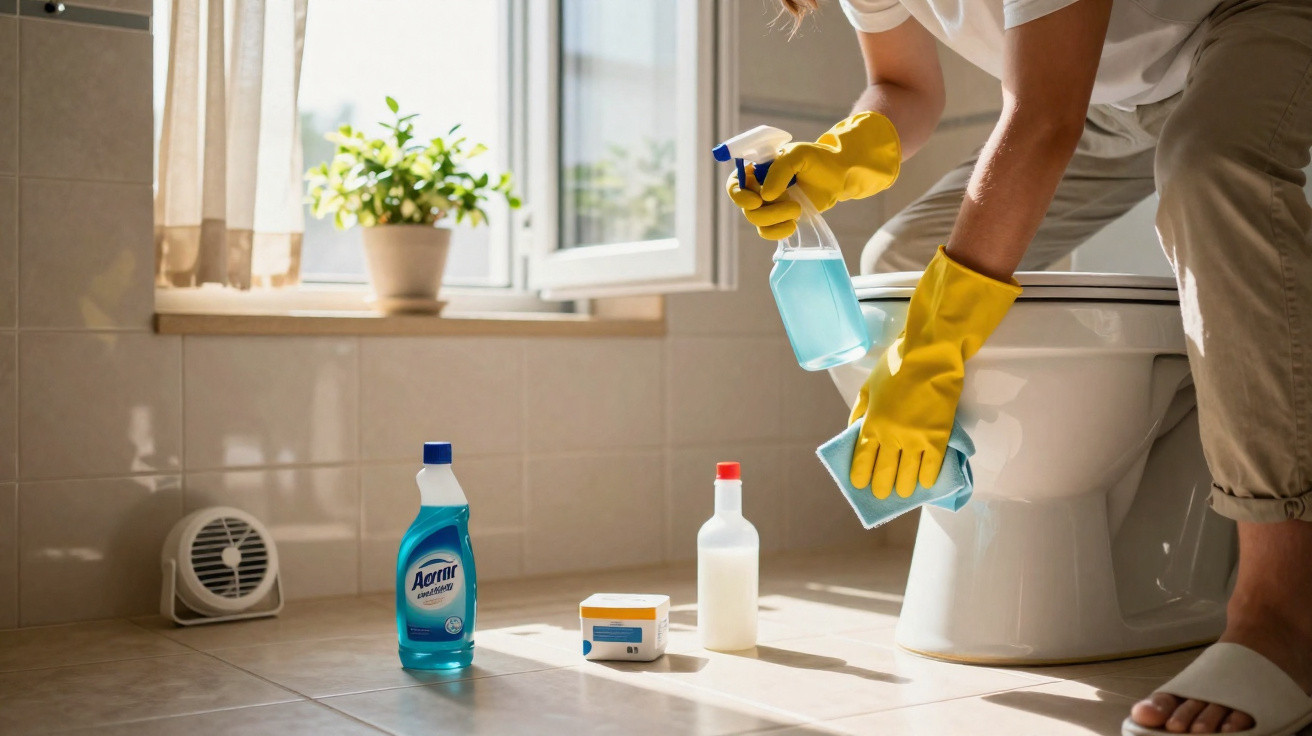
The smell reached her first. Not overpowering, but that faint sour scent you notice while passing the hallway, when it dawns on you that the cat still resents the bargain-basement litter.
She reaches for the familiar weapon: a bottle of bleach, with the reassuring scent of “clean” that our parents trusted. She pours it directly over the damp mark by the skirting board, takes a sponge and begins to scrub.
Then her eyes start to sting. Her throat tightens. The smell changes from “fresh laundry” into something harsher, more chemical and almost metallic.
She opens the window, coughs and puts it down to dust. Yet this scene, playing out in countless bathrooms, children’s bedrooms and pet areas, conceals a reaction that most people never consider.
A silent, invisible gas with nothing to do with cleanliness.
Why bleach and urine are a dangerous duo
When household dangers come to mind, people generally think of exposed wires, wet floors or perhaps a candle left burning on a windowsill. Hardly anyone considers what happens when bleach is poured onto a small patch of urine on the floor.
But that everyday action can turn a home into a miniature chemistry lab. Urine contains ammonia compounds, while bleach contains sodium hypochlorite. Combined, they do not simply produce the scent of a “strong cleaner”; they can create the first fumes of a toxic chemical reaction.
The troubling part? Most of us have done it at least once, particularly when dealing quickly with a night-time accident or toilet-training a puppy.
Imagine a father walking into the bathroom at 6 a.m. There is a damp patch beside the toilet; perhaps a child missed in the dark. He grabs the closest bottle from beneath the sink: standard bleach. A generous splash. A fast wipe. The door stays shut.
Ten minutes later, the room feels hard to breathe in. His eyes begin watering immediately, and he coughs for no clear reason. Perhaps he decides he “used too much product” and dismisses it with a laugh. He does not phone a poison centre. He simply opens the window further and carries on with the day.
Nevertheless, emergency departments receive cases every year involving people who mix cleaning products in confined spaces and suddenly find themselves struggling for breath.
The chemistry is straightforward. Urine naturally contains urea, which breaks down into ammonia. Bleach, meanwhile, gives off chlorine-based compounds. When they meet, they may form chloramine gases and, in more concentrated conditions, chlorine gas.
These gases can irritate the eyes, nose, throat and lungs. With low exposure, you may experience only a mild burning sensation in the throat or unusual tightness in the chest. At higher levels, they can cause coughing bouts, chest pain, breathing problems and even lung damage.
In truth, very few people read the small-print warnings on the back of a bottle. Those labels do clearly instruct users not to mix bleach with ammonia or other products. Urine does not appear to be a “product”, however, so it is easy to forget that it can set off the same reaction.
Safer ways to clean urine stains without gassing your bathroom
The instinct to “kill all the germs” can be powerful, particularly when a stain has been left by a pet, a toddler or an older relative. Bleach can seem like the only product strong enough to remove both the stain and its odour.
There is a safer approach. For a fresh urine mark on a hard floor, begin with the basics: soak it up with kitchen roll, then clean the area with hot water and a mild detergent or washing-up liquid. To tackle odours, white vinegar diluted with water can help neutralise the smell without generating hazardous fumes.
For fabrics or mattress protectors, blot the affected area and rinse it with cool water. Then apply an enzymatic cleaner made for urine, especially where pets are concerned. Such cleaners break down the compounds responsible for the smell rather than merely disguising them. It is less about cleaning in “battle mode” and more about quiet, effective chemistry doing the work for you.
Anyone who has cared for an unwell pet knows the panic of finding the concealed corner it has been using. You want to remove every trace as though it never occurred. That is when people tip bleach directly onto the area, use two or three products together, and keep the windows closed because it is cold outside.
The issue is seldom carelessness or bad intentions. It is disgust combined with urgency. You are exhausted, perhaps frustrated, and the odour is overwhelming. That combination does not encourage calm, sensible choices about cleaning products. A safer method is far less dramatic: put on gloves, open a window, use only one product at a time, rinse, and repeat slowly where necessary.
They are “boring” routines-the sort you learn to follow once your lungs have reminded you that cleaning products are not toys.
Sometimes the air tells the story before your brain catches up. If your eyes sting, your throat burns, or you suddenly start coughing while cleaning, stop immediately. That’s your body saying: “Something in here is wrong.”
- Never pour bleach directly on urine (around a toilet rim, on a floor or mattress, in a litter tray, or near the bottom of a pet crate).
- Ventilate every room where strong cleaning products are being used: open a window or switch on an extractor fan.
- Use only one powerful product at a time, and rinse thoroughly before changing to another.
- Choose enzymatic or vinegar-based solutions for urine marks and persistent odours.
- If you experience difficulty breathing or chest pain after cleaning, leave the room, get into fresh air quickly, and contact a healthcare professional if the symptoms do not ease.
Rethinking what “clean” really means at home
Household cleaning has long been marketed as a battle: the pleasing smell of bleach against the unseen threat of germs. Many of us were raised to believe that a product is not truly cleaning unless it makes your nose sting.
But our homes are not hospital wards. They are bedrooms where night-time accidents happen, hallways carrying traces of old pet behaviour, and bathrooms that encounter more everyday life than any television advert suggests. Pursuing complete sterility with the harshest product available can turn routine cleaning into low-level chemical exposure.
The simple reality is that many of these dangers can be prevented by taking a little more time. Read the small label just once. Keep bleach away from anything with an ammonia-like smell, whether it comes from a bottle or a living body. Pass this information on to teenagers, flatmates and older parents who still favour their “strong stuff” beneath the sink.
The next time you reach for bleach when facing a urine stain, perhaps the question should not be “How do I disinfect this fast?” Perhaps it should be “What’s the gentlest way to make this room safe to breathe again?”
| Key point | Detail | Value for the reader |
|---|---|---|
| Bleach + urine releases toxic gases | A reaction between bleach (chlorine compounds) and ammonia in urine produces chloramines and chlorine gas | Helps prevent a common but underestimated danger in everyday cleaning |
| Safer alternatives exist | Use soap, water, vinegar solutions and enzymatic cleaners for urine stains and odours | Provides practical ways to clean effectively without risking respiratory irritation |
| Listen to your body while cleaning | Stinging eyes, a burning throat, coughing and chest tightness are warning signs | Encourages rapid action that may help prevent serious health problems |
FAQ:
- Can one small splash of bleach on urine really be dangerous? Yes, even a small amount may release irritating gases, particularly in a small, poorly ventilated space such as a bathroom. You may “only” experience eye or throat irritation, but repeated exposure is not harmless.
- Is it safe to pour bleach into a toilet that has urine in it? Urine diluted in a full toilet bowl presents less risk, although a reaction can still happen. It is safer to flush first and then apply bleach to a clean bowl, while keeping the window open or extractor fan running.
- What should I do if I already mixed bleach with urine and feel unwell? Leave the room straight away, get fresh air and open windows if you can do so safely. If you are struggling to breathe, have chest pain or your symptoms do not improve quickly, contact emergency services or a poison centre.
- What’s the best way to remove pet urine smell without bleach? Blot the area, wash it with mild soap and water, then use an enzymatic cleaner formulated specifically for urine. These products break down odour-causing molecules instead of simply masking the smell.
- Are natural products like vinegar always safe to mix with bleach? No. Vinegar must never be mixed with bleach either, as this combination gives off chlorine gas. Use vinegar-based cleaners separately, allowing plenty of rinsing and time between different products.
Comments
No comments yet. Be the first to comment!
Leave a Comment