
At first, you do not notice anything.
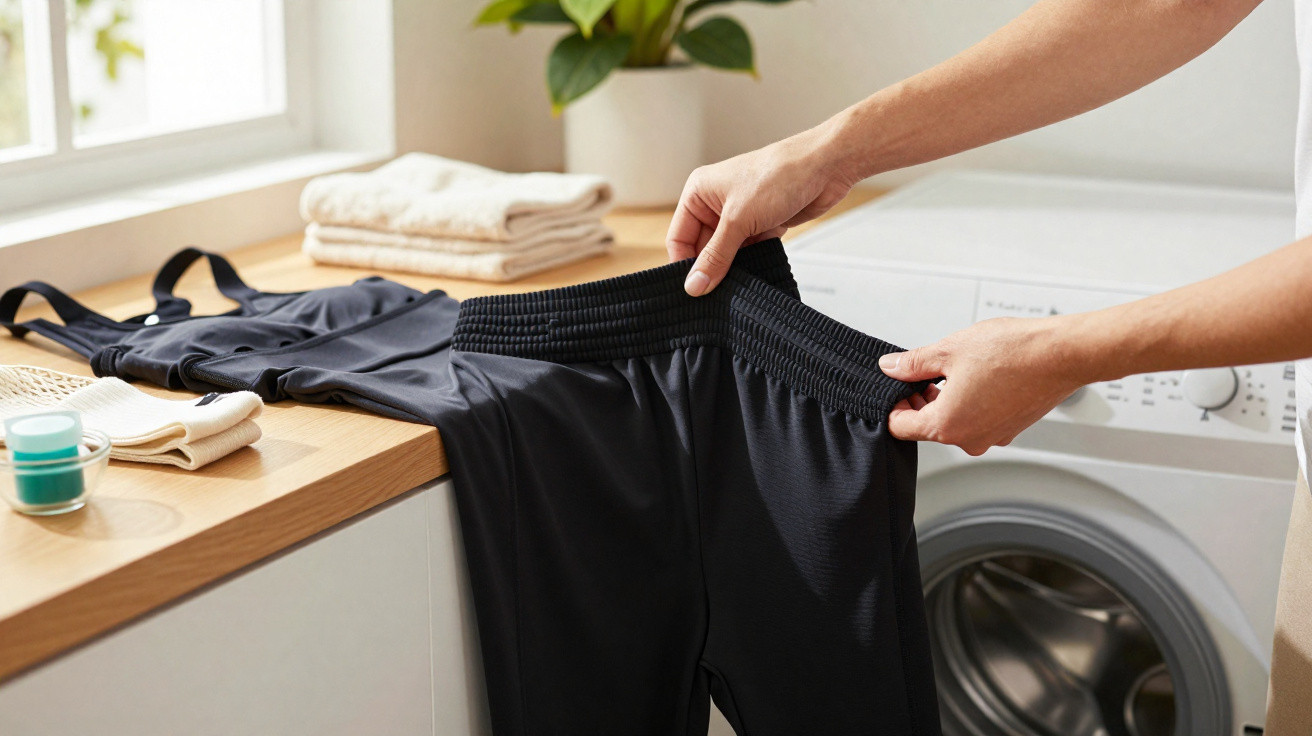
Your stretch jeans still fit perfectly, your sports bra gives the right amount of support and your leggings stay put. Then one morning, you pull on your favourite trousers and find they are oddly loose around the waist. There has been no miracle diet and no dramatic weight change. An elastic section has simply given up without making a fuss.
Your first instinct may be to blame the garment’s quality, the brand or sometimes even your own body. You put it down to wear and tear, one wash too many or an overfilled washing machine.
But what if the real culprit were a very specific washing machine setting that you have used automatically for years?
The washing machine setting that ruins elastic without warning
Most textile-care experts identify the same offender: a hot wash paired with a fast spin. On their own, these settings can appear harmless. Together, however, they are particularly tough on anything made with elastane, stitched-in elastic or stretch fibres.
With every wash, heat expands the fibres, while a harsh spin pulls at them at tremendous speed. As a result, elastic gradually loses its ability to spring back. This does not happen overnight; it is more like a quiet but irreversible form of chronic fatigue.
Think of bras whose underbands loosen after only a few months, knickers that no longer stay in place, or sports leggings that start slipping at the waist within the first kilometre of a run. It is easy to assume that the garment is simply “ageing badly”.
A Manchester-based specialist I spoke to described a loyal client who was a marathon runner and washed all her sportswear on a 60 °C cotton programme with a 1,400-rpm spin, “to properly clean away the sweat”. Within six months, her sports bras, some costing £60 each, had gone limp and could no longer provide any support.
We have all had that moment when we pull at the waistband of a relatively new pair of leggings, convinced we accidentally bought a size too large, when the elastic has merely lost its bounce. Clothing manufacturers also estimate that washing stretch fabric incorrectly can cut its actual lifespan in half.
According to an internal study shared by a major UK retailer, more than 70% of returns citing “loss of elasticity” are connected to unsuitable washing machine use rather than a manufacturing fault. Yet the instruction to “follow the washing instructions” is hardly exciting, so many people barely read the label, if at all.
From a technical perspective, elastane is vulnerable to both heat and repeated strain. At around 40 °C, its structure starts becoming weaker. Add a forceful spin and every programme creates a repeated “extreme stretch” effect. It is rather like pulling a rubber band from an office drawer 200 times in succession. At first it snaps back; eventually, one day, it stays stretched out.
The hot wash and fast spin combination is especially damaging to blended garments: cotton with elastane, polyamide with elastane and stretch microfibres. The fabric may look clean, but internally it is starting to fail. The worst part is that the damage often remains unseen until everything suddenly goes slack.
That is where the misunderstanding begins: fast fashion, poor quality or the brand gets the blame. Yet the issue may come down to a small dial being set too high on the machine.
How to protect elastic fibres without becoming obsessed with laundry
Laundry professionals suggest a straightforward three-part approach for anything containing elastic: cool or lukewarm water, a moderate spin and a sensible wash length. In practice, choosing 20–30 °C and a spin of roughly 800 rpm already makes a substantial difference to leggings, bras and stretch jeans.
Underwear, swimwear, tights and sports bras are treated even more kindly when hand-washed or placed in a laundry bag on a delicate cycle. Yes, it takes a little more effort. Yet these are exactly the items that are most expensive to replace and whose support matters most day to day.
For stretch jeans, stylists often recommend a “delicates” or “synthetics” programme instead of a standard cotton cycle. Gentler water treatment and slower drum action reduce the strain on elastic fibres. Your high waist will not turn into a vague, shapeless waistline after three months.
Let us be realistic: nobody carefully sorts every item every day while inspecting each label with a magnifying glass. We wash clothes with whatever energy we have left, particularly at the end of the day. That is why changing one automatic habit has more impact than following an ideal list that is never put into practice.
One very simple rule is this: whenever a garment includes a word such as “stretch”, “elastane”, “spandex”, “shaping” or “support”, avoid 60 °C washes and maximum spins. Put it in the same pile as delicate knitwear and technical sportswear. It also helps to lower your machine’s default temperature, saving hot washes for laundry that genuinely needs them, such as bed linen or tea towels.
Common mistakes include leaving all your sports clothes in the drum after a run, then later choosing an overly hot cycle “to remove the smell”. Another is using too much detergent, which makes the machine rinse more and therefore subjects fibres to additional wear. Or assuming that a “quick” programme must be gentle, when some combine heat with an extremely powerful spin.
“People think they are protecting their clothes by buying more expensive brands,” a textile-care expert in London told me. “But if you routinely put them through hot washes with the spin turned up full, you shorten their life faster than any poor quality ever could.”
To stay on track without becoming fixated on laundry, a few visual prompts are especially useful:
- Keep a separate tub or section of the laundry basket for anything elasticated or stretch.
- Put bras, tights and swimwear into a laundry bag as soon as you take them off.
- Lower the washing machine’s default spin speed once and for all.
These habits are quick to establish, and they help prevent that familiar morning when you discover that the only leggings which held everything in place have become as loose as an old pair of pyjama jogging bottoms.
The hidden life of elasticated clothes and what it says about us
Looking after the elastic in a pair of trousers might sound like a minor detail. Yet behind that discreet washing machine setting lies a real question about the pace of life, our relationship with time and even respect for what we own. We replace things that fail very quickly, without always asking why they failed so soon.
Experts regularly describe their customers’ surprise when they learn that simply switching to 30 °C and using a gentler spin can double the life of a sports bra or shaping jeans. It touches on something almost personal: comfort, how clothes sit on the body and the confidence we feel while getting dressed in the morning.
What happens in the washing machine is a quiet trade-off between saving ten minutes on a programme and keeping a favourite item wearable for several more seasons. This is not about being perfect; it is about small, repeated choices, often made without thinking, that can ultimately cost money, clothing and patience.
Perhaps the question to ask tonight, when starting the washing machine, is not “what will come out clean?” but “what do I still want to be able to wear in a year?”. The temperature button and spin dial then take on a different significance. Nothing dramatic, just a little more considered.
And perhaps talking about the setting that quietly kills elastic could spark some genuinely practical conversations among friends, housemates and couples. We are happy to share recommendations for television series or restaurants. Passing on two or three washing machine tips might save someone from saying goodbye to their favourite jeans far too soon.
| Key point | Detail | Benefit for the reader |
|---|---|---|
| Hot wash + fast spin | The most aggressive combination for elastic fibres (elastane, spandex, stitched-in elastic) | Understand why stretch garments lose their shape so quickly |
| Choose 20–30 °C and a moderate spin | Reduces mechanical and thermal stress on fibres, helping them retain their shape for longer | Keep leggings, bras and fitted jeans for longer |
| Look for the terms “stretch” and “support” | These items should be washed on delicate or cool programmes, sometimes in a laundry bag | Build a simple habit to protect your most valuable clothes |
FAQ:
- Which exact setting damages elastic the most? The most destructive combination is a hot programme (40–60 °C) with a maximum-speed spin for clothes containing elastane or integrated elastic.
- What temperature should I use for sportswear? Ideally, use 20–30 °C on a delicate or synthetics cycle, with a moderate spin and air-dry it away from radiators and tumble dryers.
- Does a tumble dryer damage elastic too? Yes, particularly on a hot setting: repeated heat weakens elastic fibres. Choose air-drying or a very gentle setting instead.
- How can I tell whether a garment contains sensitive fibres? Check the label: if it lists elastane, spandex, Lycra or a percentage of stretch fibres, treat it as a delicate textile.
- Should bras and leggings be hand-washed? It is not essential, but hand-washing or using a laundry bag on a delicate cycle noticeably extends their support and elasticity.


Comments
No comments yet. Be the first to comment!
Leave a Comment