
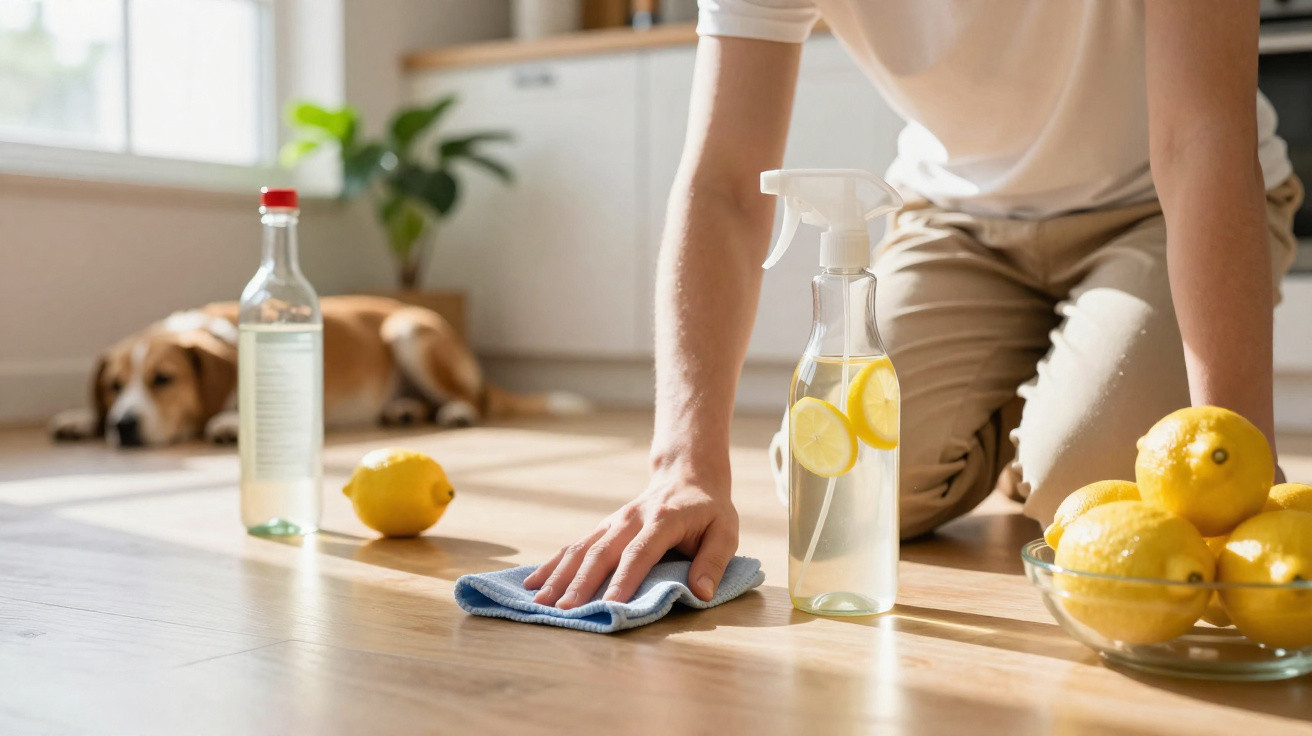
Homes may be cleaner than ever, yet the products kept in cleaning cupboards are becoming more straightforward.
One unassuming pantry essential is now attracting unexpected attention.
In the UK and US, a growing number of households are reconsidering harsh cleaning products, questioning both their odour and their effect on indoor air. A modest liquid normally associated with cooking is replacing bleach and ammonia on many floors, producing results that surprise even committed bleach users.
Why bleach and ammonia are falling out of favour
For years, bleach and ammonia were the default response to grimy floors. They appear effective, have a “disinfected” smell and are widely considered powerful. That perception is gradually shifting as people consider more carefully what they are breathing in at home.
Bleach vapour may irritate the eyes and airways, particularly in compact bathrooms, hallway cupboards and poorly ventilated flats. Ammonia has a similarly pungent smell and may also irritate. Both products can gradually discolour some materials, making surfaces appear worn instead of well maintained.
More families now want floors that look clean and feel healthy, without turning the living room into a chemistry lab.
Health agencies and researchers caution against combining household chemicals, while social media contains many accounts of accidental reactions in confined kitchens. Meanwhile, indoor air quality is receiving increasing attention: once mainly discussed in workplaces, it is now firmly part of life at home.
A clean floor involves more than its appearance. It influences dust, allergy triggers and the lifespan of a floor covering. The move is towards considered cleaning routines: choosing a product appropriate for the material, diluting it correctly and cleaning regularly enough to make drastic “deep rescues” unusual.
The cupboard ingredient that changes everything
Why white vinegar is back on the floor
The unexpected leading product is white vinegar, the everyday item commonly used for pickling or descaling kettles. It is hardly new, but its place in domestic cleaning is drawing fresh interest as people look for low-tox, low-cost practices that genuinely deliver results.
White vinegar has acetic acid at a modest concentration. Its mild acidity can loosen hard-water mineral deposits, soap residue left by previous detergents and light dirt clinging to kitchen or hallway tiles. It can also neutralise odours lingering on floors, particularly in homes with pets or young children.
When applied properly, it serves as a multi-purpose floor cleaner rather than an emergency shortcut. The process is straightforward:
- Thoroughly dust or vacuum the floor to clear away grit.
- Put 4–5 litres of warm water in a bucket.
- Mix in around one small glass (about 150–200 ml) of white vinegar.
- Immerse the mop, then wring it out until it is only just damp.
- Clean one section at a time, taking care not to flood edges or joints.
For standard ceramic or porcelain tiles, this solution normally does not require rinsing, provided it remains well diluted and the mop is thoroughly wrung out. A brief second pass with plain water can improve the finish on dark or glossy surfaces that show streaks easily.
The strength of vinegar lies less in its smell and more in its gentle ability to strip away the dull film left by everyday life.
The mixture can be adjusted easily. Use less vinegar for a light weekly clean. For a sticky area beneath the dining table, use a slightly stronger solution on a microfibre cloth, first testing an inconspicuous corner before drying the area.
Where vinegar works, and where it does not
Vinegar is suitable for numerous mineral and synthetic surfaces, though not every type. It generally performs well on:
| Floor type | Vinegar use | Notes |
|---|---|---|
| Ceramic or porcelain tiles | Generally suitable | Use a light dilution, a well-wrung mop and, for glossy tiles, rinse if desired. |
| Vinyl and many laminates | Possible with care | Keep the mixture very weak, use little moisture and follow the manufacturer’s guide. |
| Sealed concrete | Often suitable | Carry out a corner test and avoid strong solutions on matt finishes. |
| Marble, terrazzo, limestone, travertine | Not recommended | Acids may etch and dull the surface gradually. |
Modern flooring manufacturers frequently provide cleaning guidance, and it is important to follow it. A vinegar solution that seems harmless on older kitchen tiles may harm a glossy engineered finish intended for neutral cleaners alone.
When lemon makes more sense
Some people dislike vinegar’s smell, particularly in small open-plan flats. Others prefer an even gentler option for fast refreshes. Lemon can provide a more fragrant alternative.
Fresh lemon juice, or lemon slices steeped in warm water, offers gentle acidity for light marks, fingerprints near patio doors and the greyish film that collects in busy walkways. Its citrus fragrance lasts long enough to convey freshness without overpowering the space.
The approach follows the same principle as vinegar: dilute the lemon in warm water, use a thoroughly wrung mop and clean the surface without saturating it. Lemon is useful for quick touch-ups before visitors arrive, when a floor is not seriously dirty but appears slightly dull.
Lemon works less like heavy-duty detergent and more like a bright top coat that restores the “just cleaned” feeling.
However, lemon remains acidic. Even a weak citrus wash may eventually leave subtle permanent marks on limestone, marble, terrazzo and comparable stone surfaces. Testing a discreet corner is still the safest approach, especially in rented properties where floors need to be returned in good condition.
The tricky case of terrazzo and other sensitive stones
Once associated chiefly with Italian corridors and post-war buildings, terrazzo has returned to fashionable kitchens, hotel entrances and minimalist flats. It consists of chips of marble or other stone set in a cement or resin binder, before being ground and polished.
Its appearance is sleek, but acids are unsuitable for its composition. Vinegar and lemon can gradually attack calcium-based elements within the stone. Initially, the finish may only lose some shine. In time, minor pits, pale rings and rough areas may develop.
Specialists commonly advise:
- Sweeping or vacuuming weekly with a soft attachment to remove abrasive dust.
- Mopping occasionally with warm water and a pH-neutral cleaner made for stone or composite floors.
- Using a mop that is barely damp to prevent water entering fine pores or joints.
The same principle applies to marble, travertine and many limestones. These floors benefit most from gentle routines and products marked as safe for stone. Quick “miracle tricks” shared on social media can create problems months later, when etching starts to show in daylight.
The power of a simple routine
The wider move towards vinegar and lemon reflects a deeper change: households are focusing more on routines than “miracle” chemicals. Sand, crumbs and pet hair can scratch floors well before staining occurs. Removing dry debris first makes a substantial difference.
Many households now follow a simple pattern:
- Daily or every two days: quickly sweep or vacuum high-traffic spaces.
- Once a week: damp mop with a mild solution, such as diluted vinegar on suitable tiles.
- Seasonally: treat individual marks and inspect for loose joints or damaged sealants.
Regular, gentle cleaning prevents the need for aggressive “reset” sessions that stress both the floor and the person holding the mop.
On tiled floors, diluted white vinegar removes routine dirt from shoes and cooking, helps minimise lingering odours and leaves a subtle matt finish. Lemon provides fragrance and a rapid lift on days when the floor chiefly needs brightening.
With terrazzo, marble and other delicate surfaces, prevention and neutral cleaners take centre stage. Entrance mats capture grit. Chair-leg felt pads limit micro-scratches. A well-wrung mop prevents moisture marks and swelling at edges or beneath skirting boards.
Good habits and mistakes that still cause trouble
Always test in a hidden spot
Every floor has a different past, including old detergents, previous waxes, sunlight exposure and repair patches. Even two apparently matching tiles may respond differently. Before using another product, test a small area behind a door or beneath a unit to identify dullness, bleaching or stickiness.
Should the test patch look darker, cloudy or rough once it has dried, return to plain water and a pH-neutral cleaner rather than continuing with vinegar or lemon.
Skip the “more product, more clean” reflex
Using too much product can leave films that collect dust and reveal every footprint. Correct dilution is what does the job. Wringing the mop until it is “almost dry” safeguards joints and subfloors, especially in older homes and upstairs flats where leaks spread quickly.
Never mix vinegar and bleach
A particularly concerning social-media trend involves combining household products “for extra power”. When vinegar and bleach are mixed, chlorine gas may be released; it irritates the lungs and eyes and can be dangerous in high concentrations.
When changing products, rinse with clear water, open a window, and wait for the surface to dry before applying anything new.
What to realistically expect from this shift
On compatible tile and synthetic flooring, warm water with white vinegar generally leaves floors looking brighter, feeling less tacky under bare feet and smelling more neutral. Stubborn marks, including old grease and paint drips, may still require dedicated products or careful scraping, but frequent light cleaning prevents most ordinary build-up.
Lemon introduces a sensory benefit valued by many households. Its fragrance conveys freshness, even when cleaning takes just a few minutes. Using it occasionally rather than every day also limits the possibility of gradual damage to sensitive areas.
These modest decisions sit within a broader discussion about living alongside chemicals in the home. Indoor pollution seldom results from one dramatic source. More often, it accumulates from layers of sprays, scented wipes, floor cleaners and air fresheners used within the same enclosed area. Replacing one stage with a low-tech, kitchen-grade ingredient can alter that balance, particularly in small urban flats and family homes where children spend time on the floor.
Floor care is also linked to household budgets. A large bottle of white vinegar normally costs less than branded multi-surface detergent and, when diluted correctly, lasts for many weeks. Households seeking to make grocery budgets go further often choose such multi-purpose staples, combining them with careful habits instead of buying a cupboard full of specialist products.

Comments
No comments yet. Be the first to comment!
Leave a Comment