
m. sharp. Through the thin bathroom wall, I could hear the rough scraping, as if someone were trying to rub the day away. Then, one evening, the sound ceased. Weeks passed. No brushing. No chemical odour in the corridor. Only quiet.
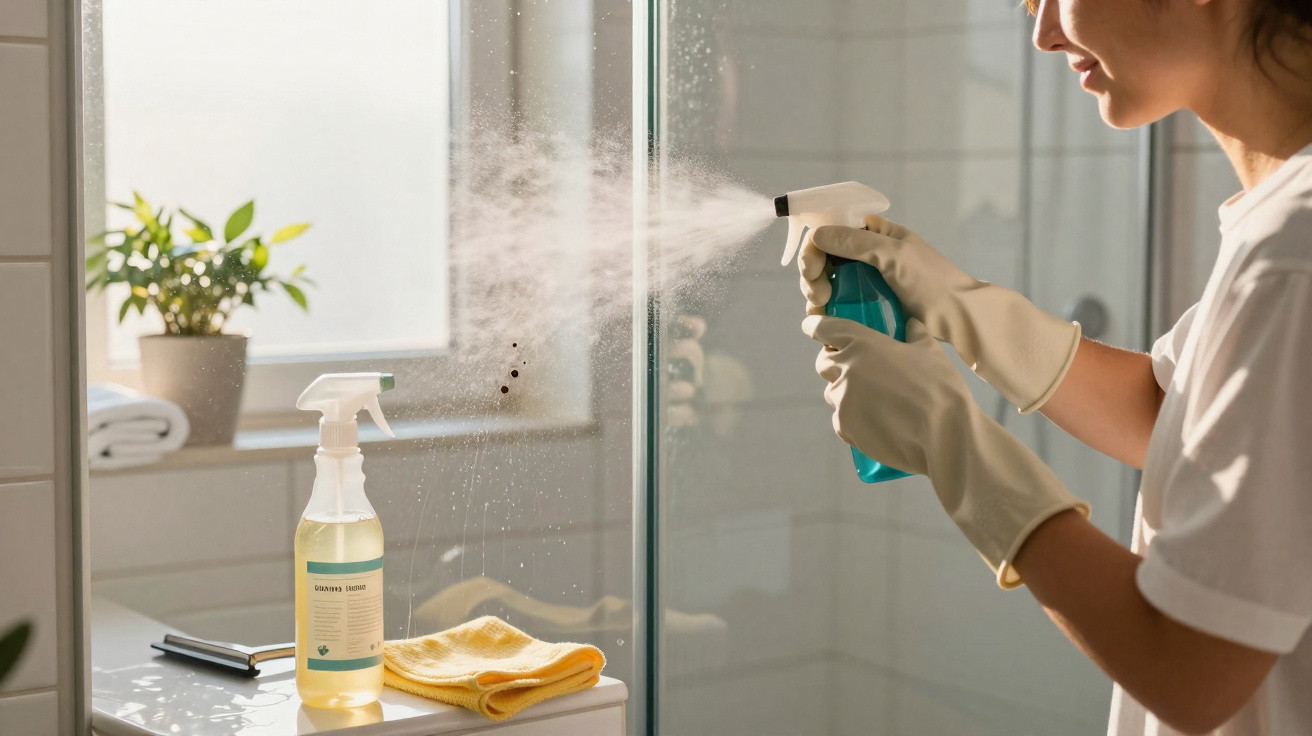
One morning, I ran into her in the hallway and jokingly asked whether she had finally surrendered to the black mould in her shower. She laughed before saying something that made me pause: “I don’t scrub anymore. I just spray, walk away… and it’s gone.”
I assumed she was overstating it, or perhaps paying for one of those costly cleaning services. But then she showed me her method. That was when I realised why professional cleaners are not especially keen to publicise it.
Why shower mould keeps winning the battle
In almost any bathroom, the marks on the tiles can seem to tell the story of someone’s routine. There is the grey shadow in a corner where steam never properly dries, the dark line embedded in the silicone around the bath, and the strange patch behind the bottles where water lingers.
Mould flourishes in the spots we overlook or cannot properly reach with a brush. Your new shampoo and scented candles mean nothing to it. All it needs is dampness, a little warmth and time. Bathrooms provide all three in abundance.
The most irritating part is that the harder you scrub, the more discouraged you can feel when the stains begin creeping back a week later. That is when people start making jokes about “living with it” and quickly pulling the shower curtain closed before visitors notice.
One particularly uncomfortable figure appears in surveys by home-care brands: bathrooms frequently rank as the room people feel most “ashamed” to show others. It is not necessarily because the room is generally unclean, but because persistent mould returns regardless of what they do. Concealing it becomes automatic.
One young father told me he had stopped trying to rescue the silicone around his bath. He had scrubbed until his hands ached and even tested the tiny-toothbrush techniques seen on social media. A month later, the same black specks had returned, taunting him as he bathed his toddler.
On social media, before-and-after photographs can look almost impossible to believe. Bright white grout. Flawless glass shower screens. What is usually missing is the time and effort needed to produce that image. Let us be honest: nobody truly does that every day.
Away from the camera, mould is simply biology at work. Spores settle on damp surfaces and feed on soap residue, skin cells and tiny traces of organic matter. Scrubbing may remove the visible growth, but it seldom reaches what is embedded in porous grout and silicone.
Aggressive scouring can even make surfaces rougher, leaving mould with more microscopic places to grip the next time. Bleach may remove the colour quickly, but without further treatment the result is often only cosmetic and temporary. The same pattern follows: clean, breathe a sigh of relief, then watch it return.
That is why so many people quietly feel there must be a different approach. One that does not demand brute force, aching shoulders and the guilt of failing to “keep up”. A method where chemistry and time handle the unpleasant work in the background.
The no-scrub trick cleaners don’t rush to mention
The basis of the no-scrub trick is almost absurdly straightforward: apply a slow-acting, targeted cleaner and leave it on the mould long enough to dissolve it for you. No frantic arm workout. No wire wool. Just the appropriate product, placed correctly, with enough patience.
In reality, this often involves a spray bottle filled with a mould-killing solution - many people rely on diluted bleach or hydrogen peroxide - lightly misting the affected area, and then doing nothing. Shut the door, leave the extractor fan running, and step away for at least 30 minutes, or sometimes a couple of hours.
For stubborn marks in grout or silicone, some people cover the damp sections with cotton pads or paper towels soaked in the solution. The covering sticks to vertical surfaces and keeps the product in contact with the stain. Once it is removed later, the mould has quite literally faded from view.
This is the approach professionals and experienced renters quietly use when a bathroom must go from “don’t look too closely” to “move-in ready” within a day. It is not about heroic daily cleaning. It is about arranging a chemical ambush from time to time, then allowing it to work while you get on with your day.
The biggest error is treating mould as if it were toothpaste on the basin: something that can be wiped away in 30 seconds between other jobs. Mould is closer to a stain on a favourite shirt. Unless the product is given time to soak in, it comes back even more noticeably.
Many of us also combine methods through impatience. A little bleach, followed by an all-purpose spray, perhaps vinegar straight afterwards “to be safe”. That mixture does not make the treatment more effective; it can create fumes and interfere with certain reactions. Your lungs suffer, not the mould.
Then there is the cycle of guilt. You tell yourself you will clean the shower every other day. You do not. You feel bad, attack the mould in a hurry, achieve only partial results, and conclude that the bathroom is “hopeless”. A slow no-scrub treatment on a quiet Sunday can accomplish more than weeks of frantic brushing. One measured, focused task is better than ten guilty attempts.
One professional cleaner described it to me in a memorable way:
“People think they’re paying me for elbow grease. They’re paying me for knowing when to walk away and let the product sit.”
That is the understated secret many professionals keep: the real heavy lifting is done by chemicals and time. The human role is to target the treatment, protect surfaces and wipe at the right point, rather than scrub for hours like a cartoon character.
- Choose a cleaner made for mould, rather than one that merely offers a “fresh scent”.
- Leave it in place long enough for it to penetrate grout and silicone.
- Keep the room ventilated, even if that makes it cold for a while.
- Rinse and wipe gently; do not treat your tiles like sandpaper.
- Repeat the treatment on a schedule that works in real life, not an idealised one.
The quiet satisfaction of a gleaming bathroom
There is a small, almost personal pleasure in stepping into the shower for the first time after a no-scrub treatment. The corners you had avoided looking at suddenly become... neutral. Not dazzling like a television advert, but calm, clean and pleasingly unremarkable.
When you pull back the curtain, the silicone edge no longer demands attention. The grout lines no longer have that worn grey cast. Rinse the walls once, dry them with a towel or squeegee, and you are finished. No marathon session and no soundtrack of bristles scraping across tile.
At a deeper level, that modest visual improvement changes the atmosphere of the room. A bathroom without mould patches stops being somewhere you hurry through and becomes a space where you can genuinely pause for a few minutes. It is subtle, yet you notice it each morning as hot water falls onto your shoulders.
Some people report additional effects. They cough less after a hot shower. The windows still steam up, but clear more quickly. Visitors no longer make remarks about “that spot in the corner” that you already knew about all too well. The room takes on a quiet dignity without seeking praise.
Practically speaking, the no-scrub method preserves something more valuable than money: attention. Rather than using your limited motivation on harsh weekly cleaning sessions, you put it occasionally into a technique that actually endures.
We have all experienced closing the bathroom door and feeling slightly defeated by its condition. The alternative is not perfection. It is creating sensible habits and small chemical traps that work while you do something else. You may still miss a week, and you may still postpone a treatment. But mould no longer controls the entire story of your shower.
Passing on a tip like this feels almost personal. It is not glamorous, and it will not become viral in the way a dramatic renovation might. Instead, it spreads quietly: from neighbour to neighbour and from message board to message board. The idea is simple: leave the right product to sit, walk away, and let time work for you rather than against you.
| Key point | Detail | Benefit for the reader |
|---|---|---|
| No-scrub principle | Use a targeted mould cleaner and allow a long contact time instead of scrubbing intensely | Less physical effort and better long-term results |
| Soaked wraps on stubborn mould | Put the product on cotton pads or paper towels, then press them onto grout and silicone | Targets deep stains on vertical or difficult-to-reach surfaces |
| Simple aftercare routine | Ventilate, rinse quickly and carry out an occasional repeat treatment | Helps prevent mould returning without the pressure of daily cleaning |
FAQ:
- Do I really not need to scrub at all? For most mould stains, only minimal wiping at the end is necessary - the essential work happens while the product remains on the surface.
- How long should I leave the product on the mould? Thirty minutes is a useful starting point, but for deep stains many people leave it for one to two hours, while checking ventilation and surface compatibility.
- Is bleach the only option for this trick? No, many people use hydrogen peroxide or dedicated mould removers; the method works provided the product is intended to kill mould and can safely remain on the surface.
- Will this damage my grout or silicone? If you follow the directions on the product label and do not use harsh treatments every day, surfaces generally cope well.
- How often should I repeat the no-scrub treatment? Most households find that once every few weeks, together with basic ventilation, is enough to stop mould taking over again.



Comments
No comments yet. Be the first to comment!
Leave a Comment