
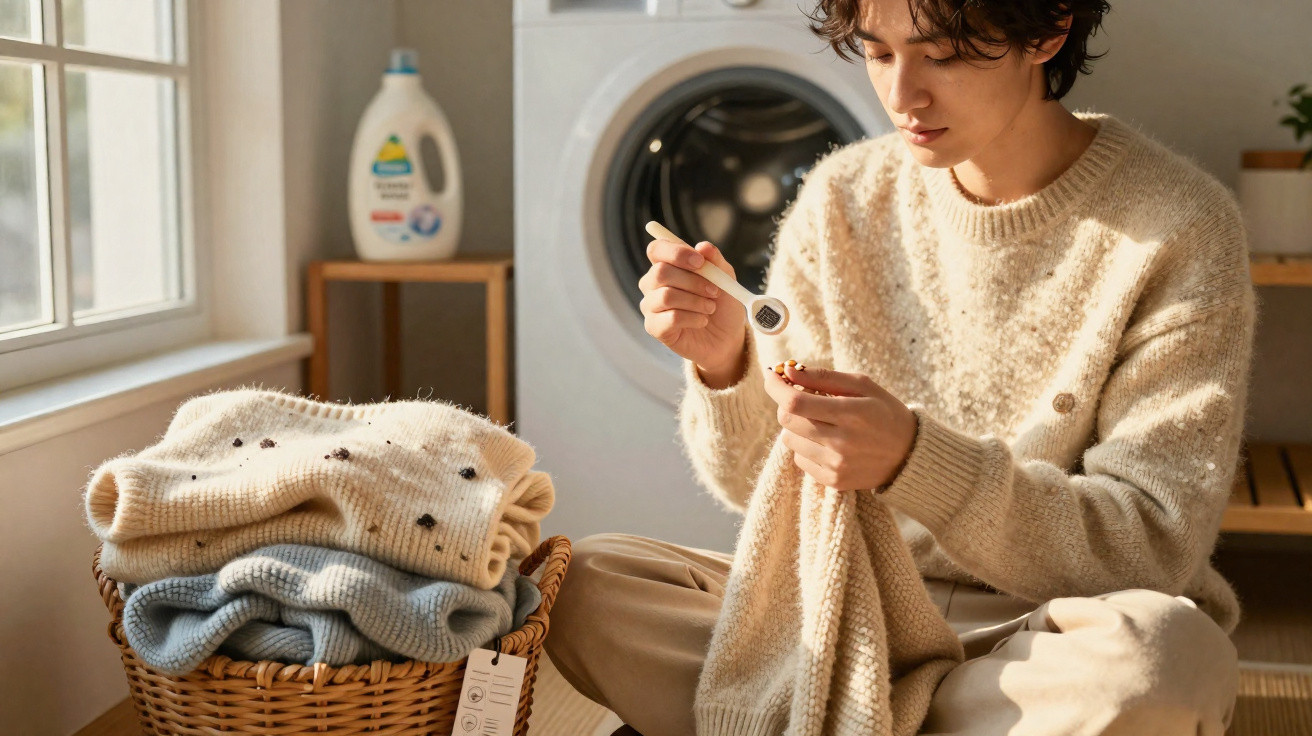
The jumper looked flawless on its hanger.
It was soft and substantial, made for cosy weekends and late-night calls on the sofa. After only two washes, however, tiny bobbles covered the sleeves, the sides appeared worn, and the neckline no longer had that fresh, crisp look. The wash cycle, detergent and wardrobe were all unchanged. Even so, this jumper seemed to wear out twice as quickly as the rest.
I spotted the same thing at a friend’s flat. Her cashmere jumper was draped over a chair, with bobbles beneath the arms as though it had completed a marathon. Laughing, she said, “It’s from last winter,” as though that accounted for it all. In a single season, her favourite had become something she wore only at home.
Strangely, the jumper you adore most is often the one that disappoints you first. And the real culprit is frequently an unnoticed error made in the laundry room.
Why one jumper wears out before the others
Some jumpers are destined to struggle from the moment they leave the shop, though not for the reasons we tend to assume. Pilling is commonly blamed on “poor quality”, as if the fabric has somehow failed morally, but the explanation is seldom so straightforward. Two knits may have the same price, feel alike and respond completely differently once they enter the washing machine.
Behind their softness and colour, jumpers are simply interwoven fibres trying to stay together. Shorter fibres work loose sooner, while looser knits leave them more opportunity to escape. Once free, they gather into those little bobbles that catch the light in exactly the wrong way. It seems unfair, since we are usually drawn to the softest, most tactile and most delicate jumpers.
Picture two friends buying nearly identical jumpers on a chilly November afternoon. One chooses a 100% cashmere piece as soft as a cloud, while the other selects a wool blend containing a little nylon. When they meet for coffee a month later, the cashmere has fuzz along its sides and underarms, whereas the wool blend still appears almost brand new.
In the changing room, you cannot see fibre length or the twist of the yarn. You notice the colour, the shape and how the fabric sits across your shoulders. Yet those concealed construction features determine how soon pilling appears. Very soft, short fibres feel luxurious, but they separate from the yarn more readily. Closely twisted yarns and dense knits keep fibres in place for longer, even if they feel slightly less “buttery” against the skin.
Daily rubbing completes the process. A bag strap against the shoulder, a seat belt across the chest, or your arms brushing your sides as you walk or type all contribute. Underarms, sides and chest are familiar bobble-prone areas, regardless of how costly the jumper was. The important part is that what happens in the wash can either preserve what remains or speed up the damage caused simply by wearing it.
The laundry mistake that damages your favourite jumpers
The uncomfortable reality is that a washing machine often handles your favourite jumper as though it were a bundle of towels. The easily missed mistake is usually washing it alongside the wrong items. Jeans, zip-up hoodies, coarse cotton fabrics and even a forgotten tote bag in the drum can all work like sandpaper on delicate knits.
Every cycle creates a small storm of friction. Bobbles develop when loose fibres become tangled and roll together on the surface. Put a soft wool or cashmere jumper in with metal fittings, rough denim and stray lint, and you have created ideal conditions for pilling. The spinning action is not the only issue; the other items sharing the spin matter too.
One quiet Sunday, a woman I interviewed insisted that she was “babying” her knits. She used a cold wash, a delicate setting and good detergent. Then she looked inside her laundry basket. In the same load were her favourite merino jumper, black skinny jeans, a bra with metal hooks and her child’s school sweatshirt with a rigid printed logo. Like most people, she had run one mixed wash of “dark colours” to save water and time.
At the end of the cycle, fresh bobbles had appeared along the jumper’s sides and cuffs. It was not disastrous, but there were enough for her to notice. The jeans had chafed the sleeves, the bra had scraped the knit, and the seemingly harmless printed logo had caught and pulled out fine fibres. Lint from older garments had also clung to the areas where the jumper was most vulnerable.
The reason for this damage is ruthlessly simple. Pilling requires three elements: loose fibres, movement and abrasion. Movement cannot really be eliminated in a washing machine. Soft knits naturally contain loose fibres, particularly early in a jumper’s life. Abrasion, though, is something you can manage. When a favourite jumper is washed with textured fabrics, zips and hooks, every turn of the drum amounts to hundreds of tiny strokes of sandpaper.
A crammed drum makes the problem worse as well. When the machine is overfilled, it cannot move garments gently. Everything rubs together, and the softest pieces come off worst. Ironically, the item you most want to protect often becomes the sacrifice in a mixed load.
How to wash jumpers so they remain beautiful for longer
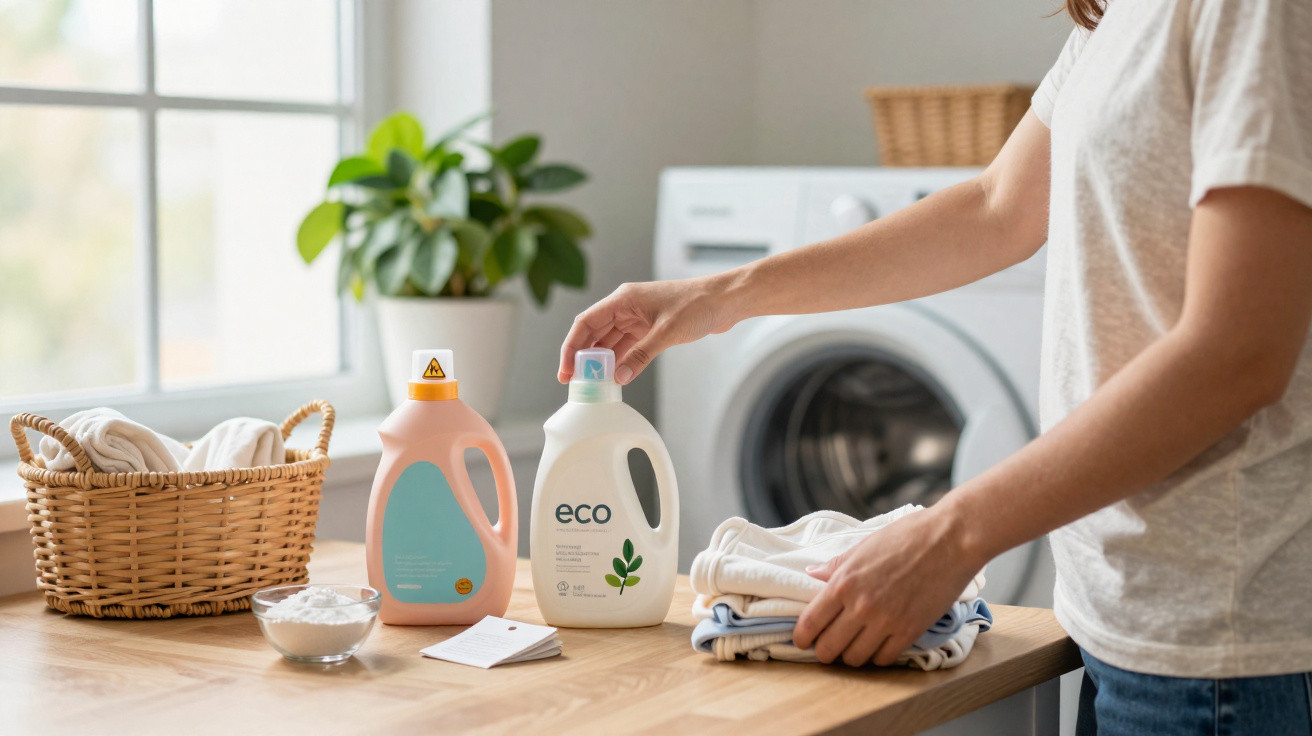
The most useful method is not especially glamorous: give jumpers a calm space of their own. A small separate load containing only soft pieces, such as other knits, plain T-shirts and perhaps a lightweight scarf, can make a considerable difference. There is less friction, fewer hard surfaces and greater control.
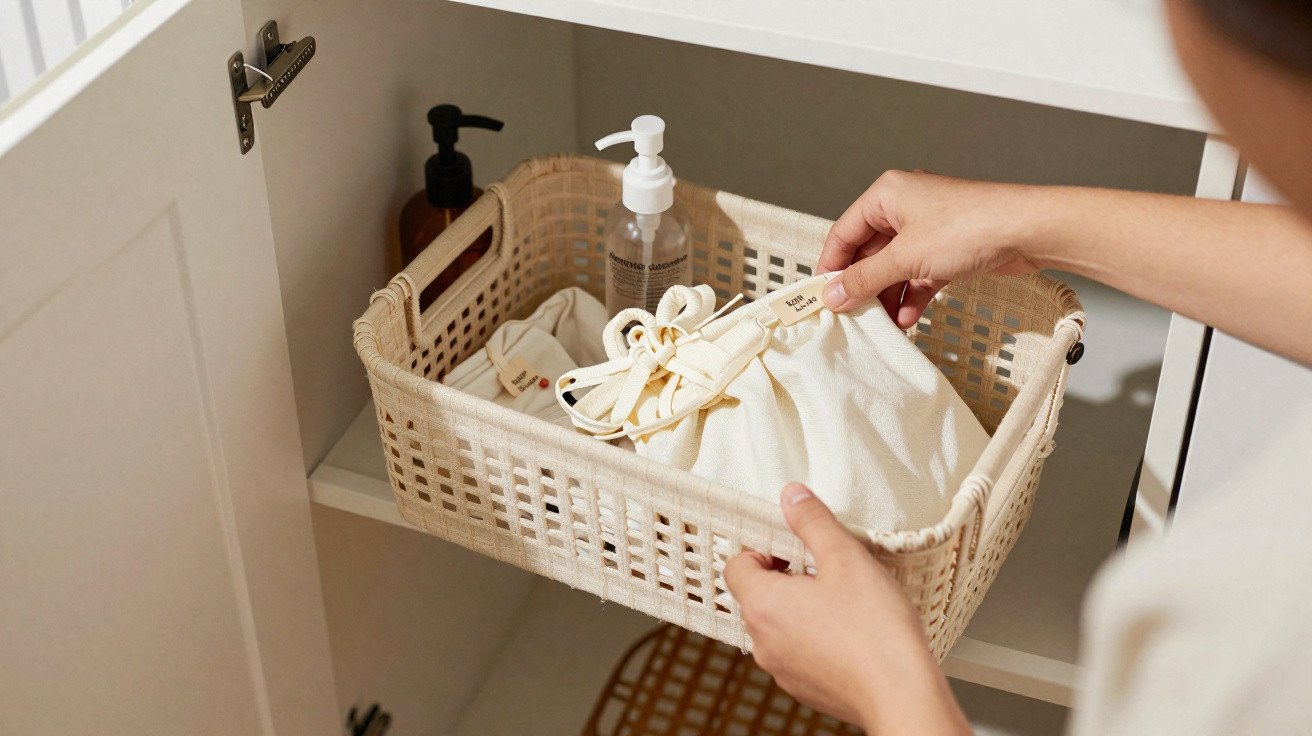
Before washing, turn the jumper inside out. This straightforward step means the inner surface absorbs most of the rubbing rather than the side everybody sees. If you own one, use a mesh laundry bag. It gives the knit a protective cocoon within the drum’s chaos. Short, cold washes on a delicate programme work best. Avoid a powerful spin too, because high speeds stretch and rub fibres when they are soaked, heavy and at their most fragile.
Let’s be honest: hardly anyone does this every day. Life is busy, washing accumulates, and a “jumper-only load” can sound indulgent. Instead, aim for better rather than perfect. If your knits cannot have a separate wash, at least keep them apart from jeans, towels, coats, sportswear with Velcro, and anything fitted with zips or hooks.
Drying is just as important as washing. Place the jumper flat on a towel rather than hanging it from the shoulders. Hanging stretches the knit and shifts fibres out of place, increasing the likelihood of future pilling. Be gentle with the jumper while it is wet. Do not twist it or wring it out as though you are cross with it. The less strain you put on the yarns at this stage, the longer they are likely to remain intact.
There is some comfort in recognising that pilling does not automatically mean an item is “cheap”. A textile engineer I spoke to explained it this way:
“Pilling is often the price we pay for softness. The question isn’t ‘Will it pill?’ but ‘How fast, and how much will your habits speed it up?’”
The aim is not to make laundry feel like a laboratory experiment. It is to alter a few small habits that deliver a significant result. Before your next wash, spend ten seconds looking for the usual offenders and set your knits aside. That brief pause could readily give your favourite jumper another season of wear.
- Keep soft knits separate from abrasive fabrics, including jeans, towels, fleece, Velcro and zips.
- Turn jumpers inside out and use a mesh bag for additional protection.
- Select cold, short, gentle cycles with lower spin speeds.
- Dry flat on a towel and never suspend a jumper from its shoulders.
- Occasionally use a fabric shaver to remove bobbles without roughly scraping the fibres.
The reassuring truth about why jumpers age
Once you understand how pilling happens, you begin to handle clothes differently. You notice where a bag rubs against your side and sense how much denser one jumper is than another. When a soft knit starts to develop fuzz, you stop blaming yourself quite so severely, because you understand that the fabric was always somewhat delicate.
At a deeper level, this is about having control over one small part of the day. We cannot prevent time passing, stains appearing or the mysterious disappearance of a single sock after every wash. But we can decide what shares the drum with our jumpers. We can choose a gentler programme, a flat towel and a brief pause before pressing “start”. These decisions require very little time, yet they alter how your clothes wear over time.
On a winter evening, there is something quietly satisfying about putting on a jumper that has lasted three seasons rather than one. It is not only about saving money or avoiding another hurried shopping trip. It is about keeping an item you enjoy for longer, seeing less waste in the laundry basket and having fewer “almost new” pieces relegated to loungewear.
Socially, these are the small tips people pass on discreetly. A friend might show you her jumper comb. A parent may reveal that they always wash knits inside pillowcases. A colleague might swear by hand-washing only collars and cuffs. We do not often discuss laundry as though it matters, yet everyone recognises the small disappointment of seeing a favourite item wear out too soon.
Perhaps that is the real change: replacing “Why does this always happen to my favourite jumper?” with “What can I adjust to help this one last a little longer?”. It is not about perfection, only giving the clothes that keep us warm a slightly kinder life.
| Key point | Detail | Why it matters to the reader |
|---|---|---|
| Fibres and construction matter | Short, very soft fibres and loose knits develop bobbles faster than dense yarns with a tight twist. | It helps you select jumpers that are likely to age better before you buy them. |
| Mixed loads cause hidden damage | Washing knits alongside jeans, zips and rough fabrics speeds up pilling through friction. | It exposes the laundry mistake behind favourites wearing out first. |
| Small laundry changes have a major effect | Turning jumpers inside out, choosing gentle cycles and drying flat significantly slow pilling. | It provides practical, realistic ways to make jumpers last longer. |
Frequently asked questions
- Why does my expensive cashmere pill more than my cheap jumper? Cashmere is made from exceptionally fine, short fibres that feel luxurious but come away from the yarn more easily. The softness you enjoy is precisely what makes it more susceptible to pilling.
- Is pilling a sign of poor quality? Not necessarily. Some high-quality soft fibres pill early but can be carefully shaved and restored to a nearly new appearance. Heavy, persistent pilling across the whole garment very quickly may indicate lower-quality yarn or a loose, unstable knit.
- Does hand-washing completely prevent pilling? No, although it greatly reduces friction, particularly if you avoid rubbing and harsh wringing. Hand-washing slows pilling down; it does not prevent it indefinitely.
- Are fabric shavers safe for jumpers? Yes, when used gently on a flat surface. Work slowly, avoid applying too much pressure, and never use one over loose threads or holes. They are much gentler than pulling bobbles away with your fingers.
- What is the single best change I can make to my laundry routine? If you change only one habit, stop washing jumpers with jeans, towels and items with zips or hooks. Even that modest separation produces a noticeable difference across a season.
Comments
No comments yet. Be the first to comment!
Leave a Comment