
The supermarket cleaning aisle can smell like an artificial garden: lemons that never came from a tree and flowers that have never seen daylight. Faced with shelves of sprays, gels, scented beads and stylish diffusers, it is easy to be drawn in by promises of “fresh linen” for a room whose windows have not been opened.
You add one to your trolley almost without thinking. It costs £4, £5 or sometimes £10 for a bottle that will be empty within a month. It is the sort of minor expense that barely registers, yet gradually drains your budget while filling your home with fragrance that fails to address the actual issue: the air.
Yet there is a quieter, more affordable item already sitting in thousands of kitchens that can do the job much more effectively.
You may already have it.
The cheap, unremarkable item that outperforms your designer spray
It is baking soda: the modest white powder in a slightly battered cardboard box beside the flour and sugar. You might use it in cakes or to clean the sink, before forgetting it at the back of a cupboard.
Rather than covering odours with a competing scent, baking soda captures and neutralises them. There is no tropical breeze or artificial cotton fragrance, only air that no longer smells of last night’s fried fish or a damp dog.
It is neither glamorous nor packaged in a shaped bottle with a chrome lid. Still, it reliably achieves what brightly coloured aerosol cans promise but seldom provide.
Imagine a compact city flat with no extractor fan and a tiny kitchen where cooking smells hang around like unwelcome visitors. A young couple tries plug-in diffusers, scented candles and even fluorescent gel pots. Their living room ends up smelling of vanilla layered over garlic.
One evening, a friend visits, opens the fridge and pulls a face. “You need baking soda in here,” she says. She puts an open box on a shelf. Two days later, the fridge smells of…nothing. Not lemon or melon: nothing at all. Just food, as it should be.
The couple now keep discreet bowls of baking soda above cupboards and behind the litter tray. Their spending on air fresheners has quietly disappeared.
There is a straightforward reason for this. Smells are often created by acidic or basic particles in the air. Baking soda is mildly alkaline, so it interacts with those particles and reduces odours at their source instead of perfuming the room.
Air fresheners, particularly sprays, are like adding perfume to a crowded room rather than asking the loudest guests to leave. You feel like you’re solving something, but the chaos is still there.
Baking soda works more gradually and offers less immediate “wow” factor, which is why it is so often underestimated. Over time, though, it steadily tackles persistent smells that an aerosol merely conceals for 20 minutes.
How to use baking soda so your home genuinely smells clean
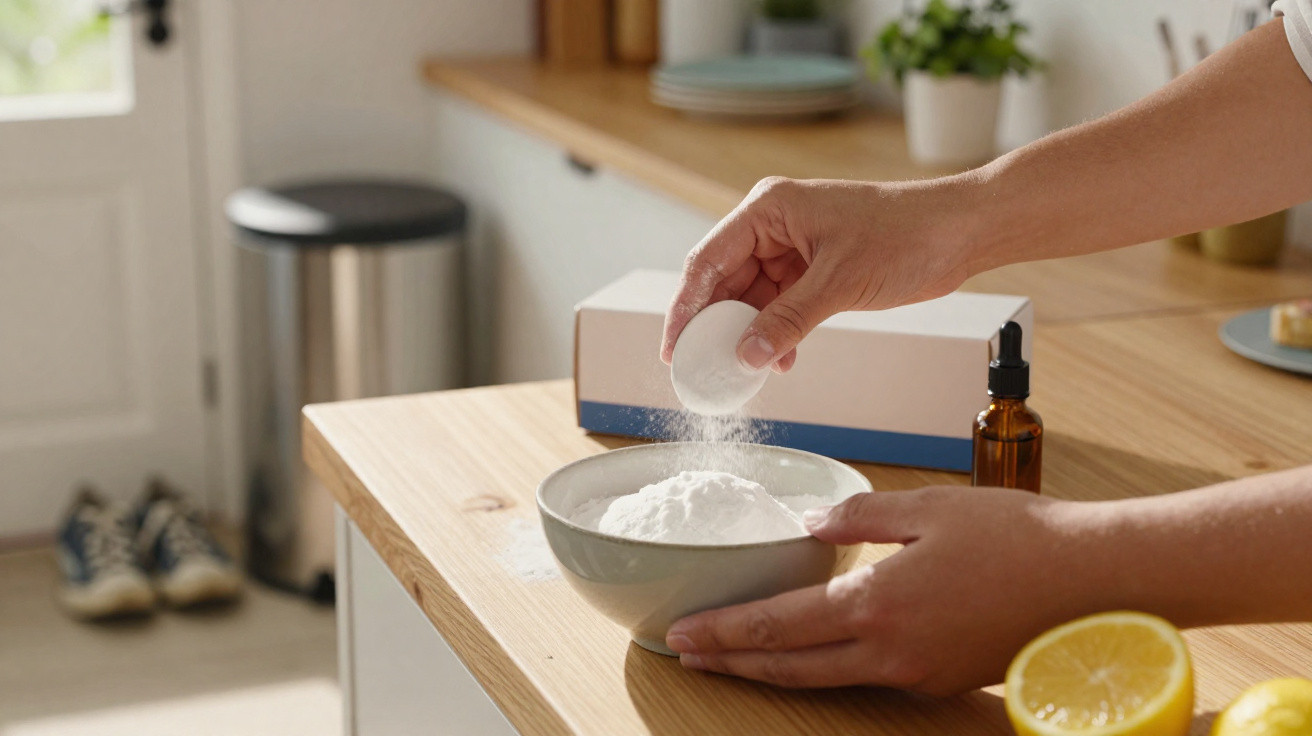
The approach could hardly be simpler. In rooms that tend to smell stale, place a few tablespoons of baking soda in a small bowl or jar. Put it on a shelf, beneath the sofa, behind a plant or on top of a wardrobe. Replace it roughly once a month.
For the fridge, open a small box and leave it at the back of the bottom shelf. Some people make holes in the cardboard and slip it in like a secret weapon.
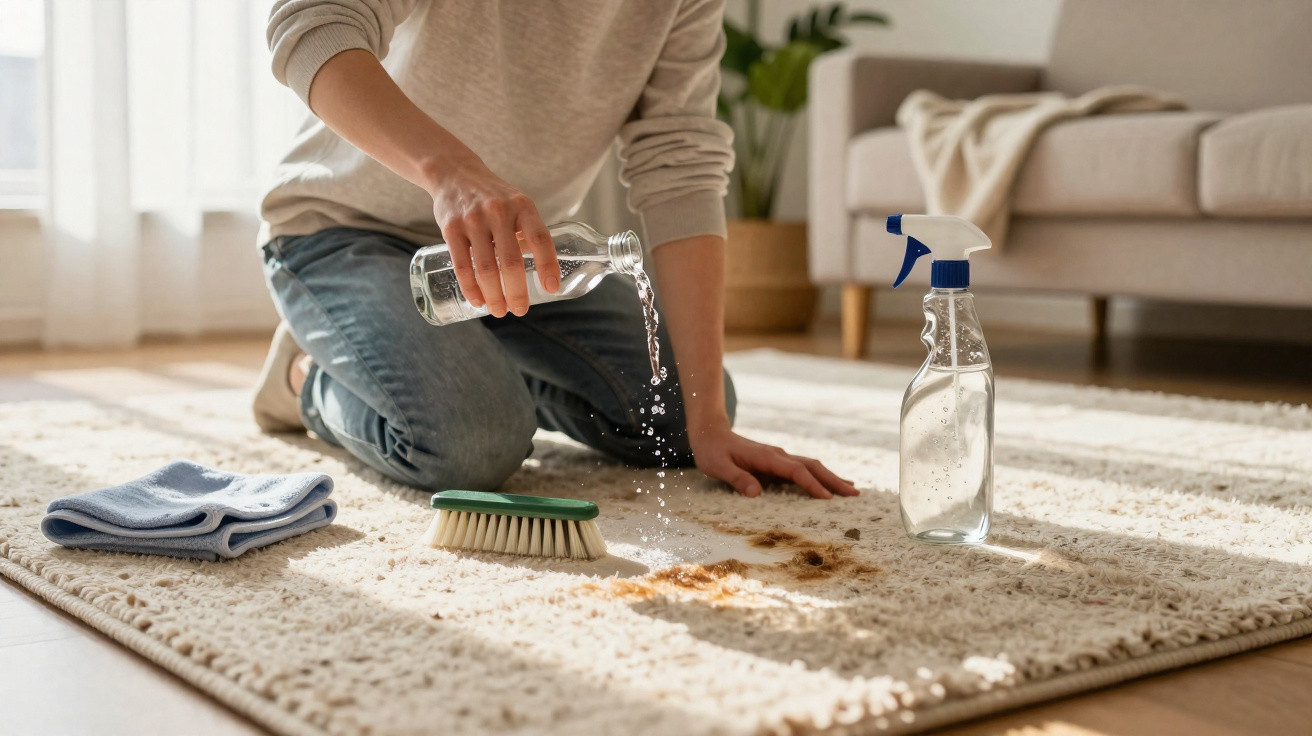
On carpets and sofas, scatter a light layer across the fabric, leave it for 15–30 minutes and then vacuum slowly. It is not a miracle cure, but it reduces that lingering “old dust” smell in a way aerosols cannot match.
People who claim baking soda “does nothing” have usually used it once before forgetting about it. Alternatively, they have put an excessive amount in one corner and expected it to transform an entire three-bedroom house.
Odours settle where moisture, fabrics and everyday life come together: in shoes, bins, dog beds and wardrobes. Those are the places where this unobtrusive white powder needs to work, rather than sitting as one lonely bowl on the kitchen worktop.
Realistically, nobody follows this routine every day. We make do, react once a smell has become unbearable, spray something quickly and hope visitors will not notice. That’s exactly where baking soda shines - it works in the background, even when you forget it.
There is no need to become fixated on it. Begin with a handful of trouble spots: beneath the sink, beside the cat litter, or in the shoe cupboard.
“Once I stopped buying air fresheners, I realised my home didn’t have to ‘smell like something’ to feel clean,” says Laura, 36, who swapped her monthly scented spray habit for a large bag of baking soda. “Now when I walk in, it just smells like… my home. Not a fake hotel lobby.”
A simple room-by-room starting point looks like this:
- Kitchen: an open box in the fridge plus a small bowl beneath the sink
- Living room: sprinkle baking soda over the sofa and carpet, then vacuum, once a month
- Bathroom: keep a jar of baking soda behind the toilet or on a shelf
- Bedroom: place a small bowl in the wardrobe or near the laundry basket
- Entrance: put a little baking soda in each shoe overnight, then shake it out
Rethinking what a “good smell” means at home
When you stop pursuing a constant perfume throughout your rooms, a subtle change takes place. You begin to notice your home’s real scents: morning coffee, clean washing on a chair and a book that has been read one too many times.
You also become aware of what is missing. There is no suffocating floral spray after somebody uses the bathroom, and no chemical cloud after cooking fish. The air simply feels…lighter.
We have all had that moment of spraying half a can before guests arrive, then apologising because “I may have gone overboard”. That anxiety comes from the same instinct that leads us to buy three different fragrances “just in case”.
The honest truth is that a home with a mildly neutral smell is much more inviting than one that greets people with artificial cinnamon at the door. Your friends are not visiting for a fragrance advert; they are there for you, your stories and your slightly burnt lasagne.
Baking soda won’t fix mould, poor ventilation, or serious humidity issues. Instead, it supports the essentials: open windows when possible, wash fabrics regularly and keep bins clean. This cheap, unglamorous powder then quietly deals with what remains.
There is something unexpectedly soothing about that. No repeated decisions over which tropical scent suits your mood, just one straightforward helper bought by the kilogram rather than by the season.
The next time you pass the air freshener aisle, you may feel the familiar urge to believe a new scent will finally make the house “feel fresh”. Or you may remember the box already in your cupboard and keep walking.
You are doing more than saving a few pounds each month. You are choosing less chemical haze in your lungs, less plastic in your bin and less marketing in your mind. You’re also telling yourself that your home doesn’t need to imitate a hotel corridor to be pleasant.
If you ever miss having a fragrance, you can add a drop of essential oil to the same baking soda for a light, short-lived scent. It does not battle the odours; it simply sits above clean air, while the simplest item continues doing its quiet work underneath.
| Key point | Detail | Value for the reader |
|---|---|---|
| Baking soda neutralises odours | Works on particles that cause odours rather than hiding them | Cleaner air without overpowering perfumes |
| Low cost, long-lasting | Large bags can replace several air fresheners over months | Genuine savings on repeated “small” purchases |
| Flexible use around the home | Suitable for the fridge, carpets, shoes, bins, litter trays and wardrobes | One product addresses many everyday smell issues |
FAQ:
Question 1: Does baking soda completely remove all bad smells?
Not always. It greatly reduces most everyday odours, but powerful sources such as mould, leaks or rotting food must still be dealt with at the source.Question 2: How often should I replace baking soda in bowls or jars?
Every 4–6 weeks is a sensible routine for most homes. Replace it slightly more often if the odour is strong or the area is small and enclosed.Question 3: Can I use baking soda on every kind of fabric?
It is usually safe for most fabrics, but first test a small concealed patch, especially on delicate or coloured textiles, before applying it more widely.Question 4: Is baking soda safe around pets and children?
Yes, in small passive quantities, such as bowls kept out of reach or light sprinkling that is vacuumed afterwards. Do not leave large piles where pets could eat it or children could play with it.Question 5: Can I combine baking soda with commercial air fresheners?
You can, but doing so undermines the point. Baking soda is most useful when allowed to neutralise odours instead of continually layering perfume over them.
Comments
No comments yet. Be the first to comment!
Leave a Comment