
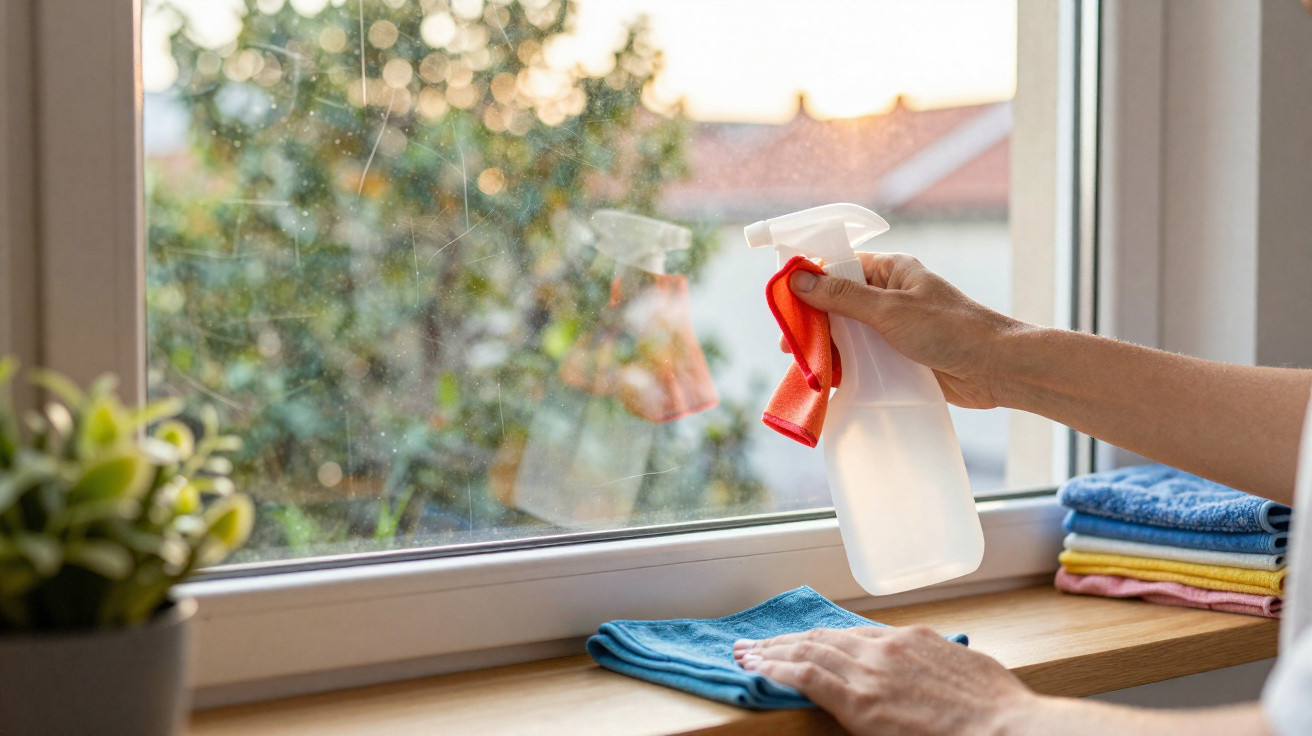
There is a very specific sort of heartbreak that only window owners understand.
You stand there with a spray bottle, a microfibre cloth and perhaps the self-satisfied feeling that you are finally doing something properly grown-up, polishing the glass until it belongs in a cleaning advert. Then the sun shifts by roughly five degrees, catches the pane differently, and every streak, fingerprint and faint trace of yesterday’s cleaning suddenly appears. It is as though your efforts have been mocking you quietly from the far side of the glass.
So you escalate. Tougher sprays. “Professional” formulas. Blue liquids with the scent of hospital hallways and disappointment. Yet a day or two later, the smears, finger marks and strange misty layer that makes the window look as if it has been vaping are back. The catch is that the product is not really letting you down. The answer is far smaller and less exciting - but changing it makes a real difference.
The day I realised the product was not the issue
The revelation came on a Tuesday afternoon, which seems fitting for an ordinary domestic realisation. I was in the living room, staring angrily at the patio doors my children use as a private finger-painting exhibition. I had just bought a “stronger” glass cleaner: the sort with a bold logo and an understated suggestion that professionals use this rather than the supermarket bottle I usually grab alongside milk and bread.
I cleaned every pane twice, working from top to bottom and left to right, using a new microfibre cloth whose packaging proudly promised “streak-free” results. For around ten wonderful minutes, it did exactly that. The glass became so transparent that the outside world looked almost offensively clear, as though I had not properly seen it in months. Then the light changed, exposing faint curves and cloudy patches, as if something had been pulled across the glass while I was not watching.
As it turned out, that something was me - or, more accurately, my cloth. Every appealing claim on the bottle was being defeated because I was spreading a light layer of damp, dirty residue over glass I had otherwise cleaned well. A stronger cleaner, the same habits and exactly the same outcome.
The realisation felt strangely personal: better chemicals were not what I needed. Better timing was.
The small window-cleaning tweak that changes everything
The tip came from an irritatingly relaxed man who cleans shopfronts for a living. You know the type: people who work with an unhurried certainty that communicates, “I’ve done this a thousand times and you are doing it wrong.” That was him. I asked which product he used, ready to note down a brand and search for it online.
He shrugged and mentioned something entirely ordinary. It was neither industrial nor strong-smelling enough to suggest protective goggles. Then he said: “Product doesn’t matter half as much as how long you leave it on and what you use to take it off. Most people rush it.”
With that one sentence, he called out nearly all of us. We hurry. We spray, immediately wipe in a panic, buff until our arms hurt and believe that more work must mean greater shine. He watched me clean a panel in my usual way before calmly identifying what I had overlooked: I was wiping while the pane remained wet and slippery, so I was moving dirty moisture around rather than taking it away.
His adjustment was almost frustratingly straightforward: leave the cleaner in place briefly, then use a totally clean, dry cloth for the final strokes. The important part was not the spray itself, but the wait and the dry finish.
Why windows re-smudge even when you “clean properly”
The unseen layer no one mentions
Glass appears smooth, but it is not. In certain light, even a clean window has tiny pores and flaws that can hold dust, grease and microscopic dirt. Once you apply cleaner, it does not simply sit on top. It works into that fine texture, releases grime and combines with it. If you begin wiping frantically straight away, you remove part of the mixture while leaving the remainder as a slim, greasy coating.
That coating is the discreet villain here. It is what the light reveals from particular angles, what fingertips readily cling to and what encourages each fresh speck of dust to settle and linger. This is why windows can look respectable for 30 minutes, then appear to attract every smudge within an 8-kilometre radius. You blame the children, the dog or the road outside. Yet much of the problem is simply that the grime did not fully go.
A more powerful product may loosen dirt more effectively, but it does not automatically remove it better. In fact, it can create a more substantial mixture of dissolved grime that needs to be completely lifted from the glass. If it remains, it dries into fresh residue of its own. That is how you end up with windows that seem clean but hazy, only for the sunlight to expose the truth and spoil your morning.
Damp cloth, damp glass, the same smear
Here is the genuine betrayal: your dependable cloth. As soon as it is damp, it is no longer helping as much as you think. The first few wipes feel rewarding, of course, because the glass looks clearer and the cleaner seems to vanish. In reality, you are carrying out a form of household mopping: shifting the dirty liquid mixture around the pane and leaving a tiny amount behind as you go.
By the end of one large window, the cloth contains water, cleaning solution and old dirt. Then you use that same cloth on the next pane, because who wants to replace it after every window? With one wipe, all the grime you worked to loosen is generously spread elsewhere. Honestly, nobody cycles through five separate cloths as though they are filming an Instagram cleaning reel.
The tweak is not an elaborate, choreographed cleaning system. It is simply recognising that the first cloth is for the wet stage, while the second, completely dry cloth determines whether the glass is genuinely clean. Damp wiping loosens; dry wiping removes.
The two-cloth routine that outperforms any “super spray”
Step one: stop rushing the spray-and-pray stage
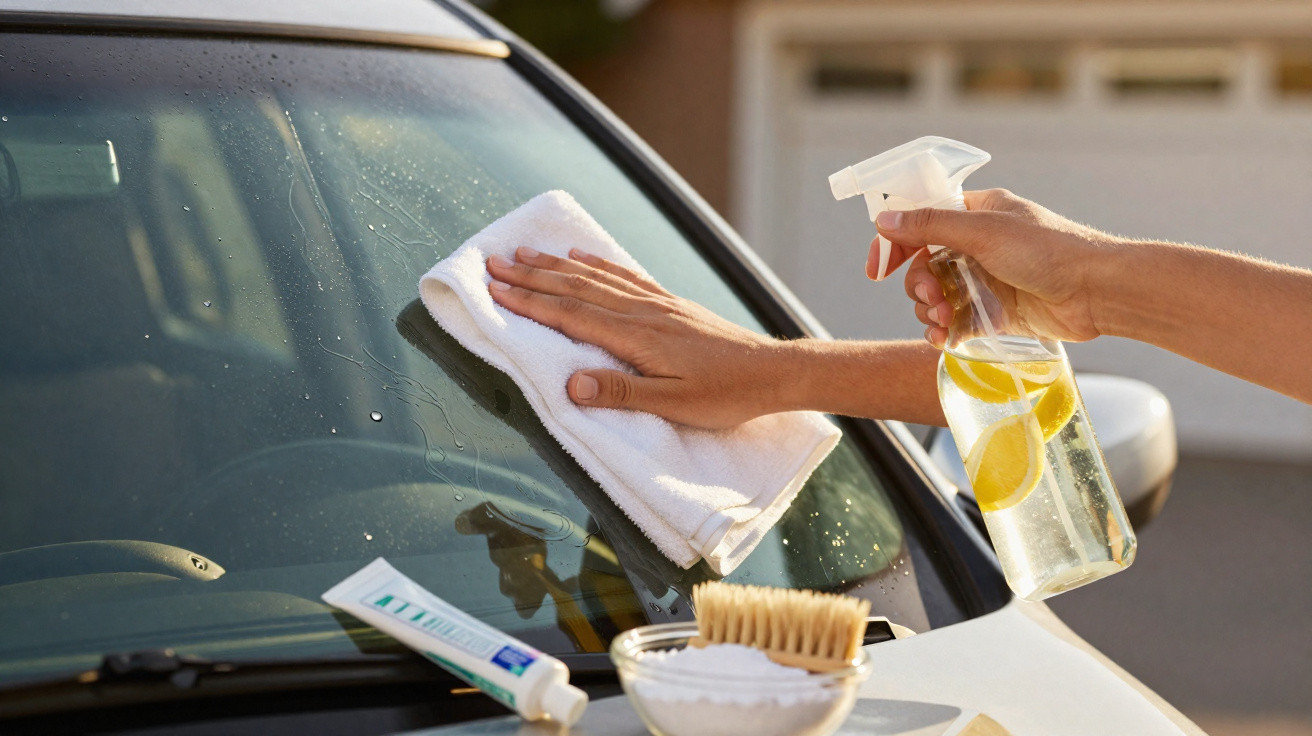
The first adjustment is so minor that it can feel ridiculous. Spray the glass, but do not drench it as though you are trying to flood the pane. A light mist or a few lines of cleaner across the surface will generally do. Then wait. Leave it for 15–30 seconds, particularly on heavily marked areas near handles, at dog-nose level or on the section of glass your children somehow decide to lick.
That brief pause allows the cleaner to do the demanding work. It softens dried dirt, breaks down fingerprints and releases the invisible film. You are not wasting time while you wait; you are replacing frantic scrubbing with more intelligent chemistry. It even feels unexpectedly calm, almost as though the glass is being given a moment to breathe.
Next, take the first cloth - it is allowed to become damp, because that is what it is for - and gently spread the cleaner around. Treat this as washing rather than polishing. Your aim is to ensure that every section has come into contact with cleaner and that the corners and edges have not been missed. At this point, the pane should look clearer but remain a little damp and lightly streaked. That is perfectly normal. The job is not over.
Step two: finish with the dry cloth
This is the essential move. Take a second cloth that is fully dry. Not “probably all right”, and not slightly damp following yesterday’s effort. It needs to be bone dry. This is where most people take shortcuts, despite it being the stage that makes a major difference to re-smudging.
Pass the dry cloth over the glass with light, consistent strokes. You are no longer scrubbing at dirt; instead, you are collecting the remaining moisture and everything carried within it. The glass changes differently beneath your hand, progressing from “clean but wet” to the crisp near-invisibility that makes it seem as though nothing separates you from outdoors. You may see faint grey traces on the cloth even when you believed the pane was already clean - that is the film normally left behind.
This second pass delivers what a stronger product cannot: proper removal rather than simple redistribution. Fingerprints do not immediately collect old residue, and dust is less likely to attach itself to microscopic stickiness. The glass simply stays clear for longer. Not permanently, because life continues, but for long enough that you no longer resent your own windows.
Why the tweak is better than “just buy better stuff”
The cleaning industry depends on a single idea: if a product is not working, you need a more powerful liquid. Extra strength, ultra strength, diamond-core nuclear strength. But behind all those polished bottles lies a quiet and rather awkward reality: many of us have never used the basic products correctly. We approach window cleaning as a hurried task squeezed in between emails and making dinner.
Once you alter your technique, the brand becomes far less important than you may have been led to believe. An uncomplicated mid-range cleaner, used with the two-cloth approach and a short pause, will often beat a premium spray used with the same old routine. You can almost sense the marketing language peeling away from the bottle. Stronger is not smarter; if the cleaner is not removed completely, it just produces more costly smears.
There is also the straightforward point that harsh chemicals are harsher on you as well. You pay for them in other ways when you breathe them in, get them on your skin or use them in poorly ventilated rooms. If a modest change in timing and technique lets you achieve equally good or better results with gentler products, both your lungs and your budget benefit quietly.
There is an unexpected advantage too: when the windows do not re-smudge so quickly, you stop feeling as though you live in a home that is permanently “almost clean”. There is a small psychological lift in walking past the same pane two days later and seeing clear glass rather than fresh fingerprints over a layer of half-clean haze.
The emotional effect of clear glass
We do not often acknowledge the small but continual ways our homes shape our moods. A streaked window seems trivial, yet it can create a sense of background disorder, like a screen that never quite comes into focus. You notice it from the corner of your eye while drinking tea, and it quietly tells you that you ought to sort it out. It is not urgent, merely persistent.
Then, one day, you clean it another way, the smears remain absent for longer and the house feels slightly more peaceful. The view becomes more defined, while the morning light comes through clearly instead of being softened by a faint greasy coating. It is a subtle shift, but it becomes noticeable in calmer moments. You realise that you are no longer fighting the same stupid mark on the same stupid pane in a small, ongoing battle.
We have all experienced that faintly defeated feeling when sunlight lands on a freshly “cleaned” window. It disappears, or at least eases, once your results finally reflect the effort you put in. Nothing will be perfect - dust will always come back and children will always press their noses where they should not - but there is a new feeling that you are not endlessly treading water.
Clean glass will not solve your life, but it can make the view outside seem a little more generous. On a Tuesday afternoon, that can be enough.
Small changes, a major difference
The window-cleaning tweak that genuinely reduces re-smudging is not glamorous. It involves no viral product and no miracle ingredient collected from a rare mountain spring. It is simply this: allow the cleaner a few more seconds, recognise that one cloth washes while another properly dries, and let the dry cloth do its understated work.
You can still choose whichever cleaner suits you. Perhaps you prefer a certain brand, or use a gentler option because pets or children share your home. But once you commit to that two-stage, two-cloth rhythm, you stop expecting the bottle to make up for hurried technique. The bottle becomes a tool rather than a promise.
The next time you find yourself facing a smug, streaky pane, do not reach for something “stronger”. Pick up a second cloth instead. Leave the product in place for a little longer than your patience would prefer. Then see what happens when the light reaches the glass the following day and finds nothing there to embarrass you.
Your windows will not thank you - they are glass, and they do not care - but you may find yourself pausing by them for an extra moment, simply enjoying the view. That quiet sense of satisfaction is better than any “new formula” claim on a bottle.

Comments
No comments yet. Be the first to comment!
Leave a Comment